


Table of Contents
Water damage in commercial buildings rarely stays contained. What begins as a minor leak or small intrusion can quickly spread behind walls, beneath floors and throughout critical systems. When repairs are delayed, the impact grows far beyond the initial issue, affecting structure, operations and financial stability.
For property managers and building owners, waiting is often the most expensive decision.
Small Problems Don’t Stay Small
Water has a way of traveling. It seeps into porous materials, spreads through building systems and settles in places that are not immediately visible.
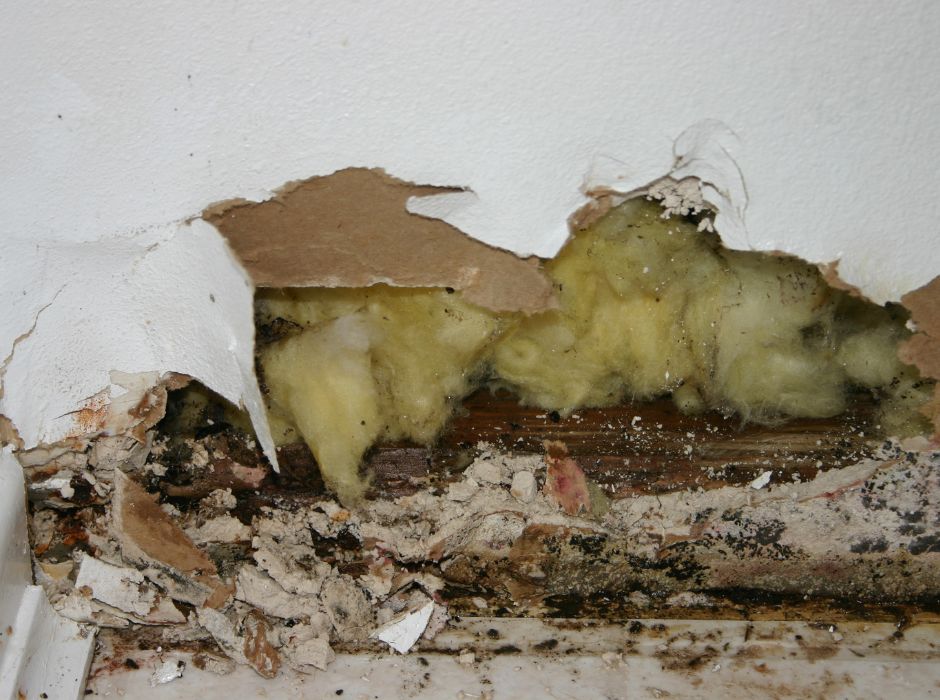
Porous materials like drywall and insulation can begin to degrade within hours of water exposure. What looks like a minor issue today can become a major restoration project tomorrow.
Common early-stage issues that escalate quickly include:
- A slow pipe leak turning into widespread saturation
- Roof seepage leading to ceiling and wall damage
- HVAC-related moisture spreading through multiple units
As water spreads, so does the cost to repair it.
Structural Damage Gets Worse Over Time
Delaying water damage restoration allows moisture to weaken the core components of a building. Over time, this can compromise safety and lead to significant structural repairs.
Prolonged exposure to water can cause:
- Rot and decay in wood framing and supports
- Foundation erosion and instability
- Warping of floors, walls and ceilings
- Corrosion of metal components
When it comes to water damage in commercial buildings, issues can disrupt tenants, trigger code concerns and require extensive reconstruction.
Addressing damage early is the difference between targeted repairs and full-scale structural restoration.
Mold Growth Adds Risk and Cost
One of the most serious consequences of delayed repairs is mold. It can begin forming within as little as 24 hours after water exposure and spreads quickly in damp environments.
Once mold takes hold, the problem shifts from simple water damage to a health and safety issue.
Mold can:
- Spread through HVAC systems and shared air space
- Impact indoor air quality for tenants and employees
- Trigger respiratory issues and other health concerns
- Require specialized remediation and containment
Mold remediation significantly increases the scope and cost of a project. What could have been a straightforward drying process becomes a regulated cleanup effort with added labor, time and disruption.
Business Interruption Costs Add Up Fast
For commercial properties, the true cost of water damage is not just in repairs. It is in lost revenue, tenant disruption and operational downtime.
Delays can lead to:
- Temporary closures of affected areas or entire facilities
- Displaced tenants or interrupted operations
- Lost productivity and revenue
- Damage to tenant relationships and retention
Even a short disruption can have lasting financial consequences. Acting quickly helps contain the problem and keeps business operations moving.
Insurance Complications Can Increase Financial Exposure
Many property owners assume insurance will cover water damage regardless of timing. In reality, delays can create serious complications.
Insurance providers often require prompt reporting and mitigation. If water damage is considered gradual or the result of neglect, claims may be reduced or denied.
In addition:
- Mold-related claims may be limited or excluded if not addressed quickly
- Documentation becomes more difficult as damage spreads
- Claim values can increase significantly, leading to disputes
A delay of even a few days can turn a manageable claim into a complex and costly situation.
Costs Escalate Quickly for Water Damage in Commercial Buildings
The financial impact of waiting is measurable. What starts as a relatively minor repair can multiply in cost as damage spreads and complications arise.
Industry examples show that a small water issue can increase several times over when mold and structural damage develop.
Additional costs often include:
- Demolition and reconstruction
- Mold remediation services
- Extended labor and equipment use
- Business interruption losses
The longer water sits, the more expensive the solution becomes.
Hidden Moisture Requires the Right Tools
One of the most overlooked risks in any water damage is what cannot be seen. Even after visible water is removed, moisture can remain trapped inside walls, ceilings and flooring systems.
This is where advanced detection methods matter. Tools like thermal imaging allow PuroClean of Newark to identify hidden moisture without opening up large areas unnecessarily, helping ensure that no damp pockets are left behind to cause future damage.
Services like Thermal Imaging Inspection in Northern New Jersey can play a critical role in fully diagnosing water intrusion and preventing repeat issues, especially in larger or multi-unit commercial buildings.
Fast Action Protects Your Building and Your Bottom Line
Water damage in commercial buildings requires more than cleanup. To protect the integrity of your building, maintain safe conditions for occupants and minimize financial loss, professional restoration is a must.
Immediate response allows you to:
- Contain damage before it spreads
- Reduce repair and reconstruction costs
- Prevent mold growth
- Support a smoother insurance process
- Keep your operations running
For commercial property owners and managers, timing is everything.
If your building experiences water damage, acting quickly can make all the difference.
Learn more about PuroClean of Newark’s services for commercial properties across Northern New Jersey with fast response, thorough mitigation and full reconstruction services.