 PuroClean of North McKinney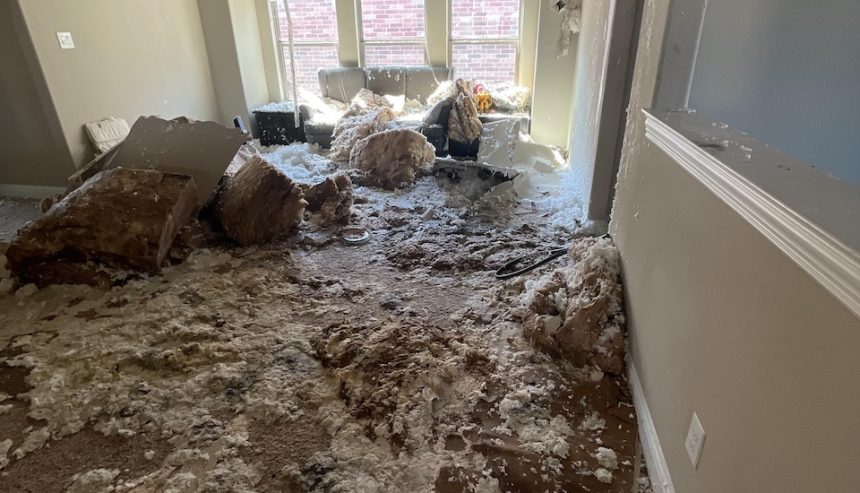
Table of Contents
An electrical fire can start silently and spread within seconds, turning a small spark into a life-threatening emergency. These fires are responsible for thousands of home and business losses every year — often caused by overloaded circuits, damaged wiring, or faulty appliances.
Knowing what triggers an electrical fire, how to prevent one, and what to do if it happens can save lives and property. This guide explains key warning signs, safety steps, and how certified professionals like PuroClean handle cleanup and restoration after an electrical fire.
Understanding Electrical Fires
An electrical fire occurs when heat or sparks from wiring, outlets, or electrical panels ignite nearby combustible materials. These fires often begin behind walls or ceilings, making them difficult to detect until significant damage has occurred.
According to the National Fire Protection Association, U.S. fire departments respond to an average of 46,700 home fires per year involving electrical failure or malfunction. These incidents cause roughly 390 civilian deaths and over $1.5 billion in direct property damage annually.
Common causes include:
- Overloaded circuits from high-demand appliances: Plugging too many devices into one outlet or power strip can cause overheating and spark an electrical fire.
- Frayed or damaged wiring in older systems: Worn or exposed wires can arc and ignite nearby insulation or wood framing.
- Loose or faulty outlets and switches: Poor connections inside outlets create heat and small sparks that can lead to ignition behind walls.
- Improper grounding or outdated panels: Electrical systems without proper grounding or with aging fuse boxes are more likely to short-circuit or overload.
- Lightning strikes that surge through electrical systems: A direct or nearby lightning hit can send a massive surge through your wiring, instantly igniting fires in attics or walls.
A Unique Electrical Fire Restoration Experience
Recently, our PuroClean of North McKinney team assisted with a challenging electrical fire restoration in Wylie, TX. A lightning strike had traveled through the home’s electrical system, sparking a fire that damaged the upstairs structure, carpet, and furniture.
When lightning hits a home, it can send millions of volts through wiring, outlets, and appliances. The heat generated is enough to ignite insulation or wood framing in seconds. In this case, the homeowner acted quickly by calling emergency services, and the fire department responded promptly, using water to control and extinguish the flames.
While the quick response prevented a total loss, the water used to douse the fire introduced additional hazards — such as potential mold, rot, and structural weakening — all of which required careful remediation.
Step 1: Inspection and Safety Assessment
Upon arrival, our first priority was ensuring the property was safe for inspection. We verified that the electrical meter, gas supply, and water lines were all turned off. Safety always comes first in a restoration site affected by both fire and electricity.
Because the fire department had soaked much of the home, our technicians used advanced moisture meters to detect hidden water within walls, floors, and ceilings. This non-invasive technology identifies areas where trapped moisture could later cause mold growth or corrosion.
We documented all affected areas and prepared a detailed report for the homeowner’s insurance provider, ensuring transparency and a smooth claims process.
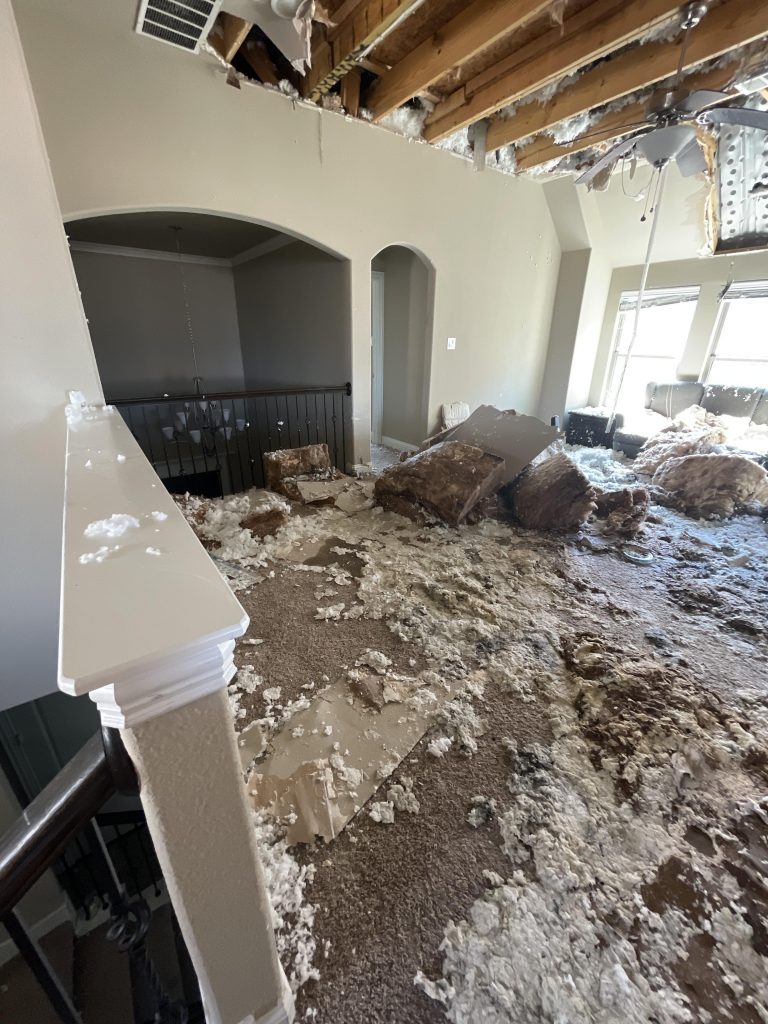
The fire affected the upstairs roofing, carpet, and furniture.
Step 2: Drying and Water Damage Mitigation
In fire restoration, water damage cleanup is often as critical as the fire cleanup itself. Standing water and high humidity can quickly turn a fire-damaged structure into a breeding ground for mold.
Our team set up industrial dehumidifiers and air movers to extract moisture from building materials. We continuously monitored humidity levels and temperature to speed up the drying process without causing additional stress to the structure.
This thorough drying step ensured the home would not develop secondary damage — one of the most common problems after an electrical fire extinguished with water.
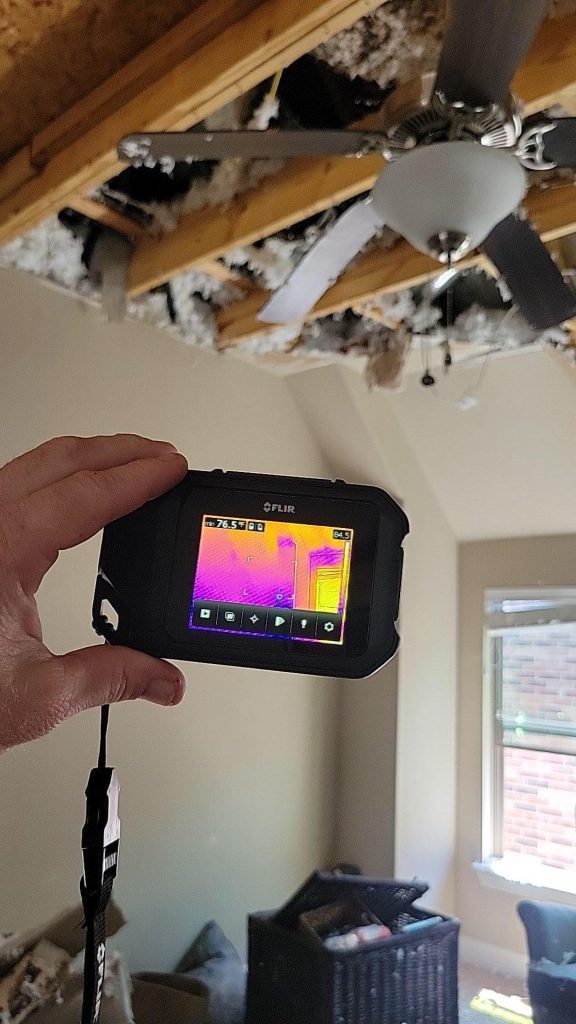
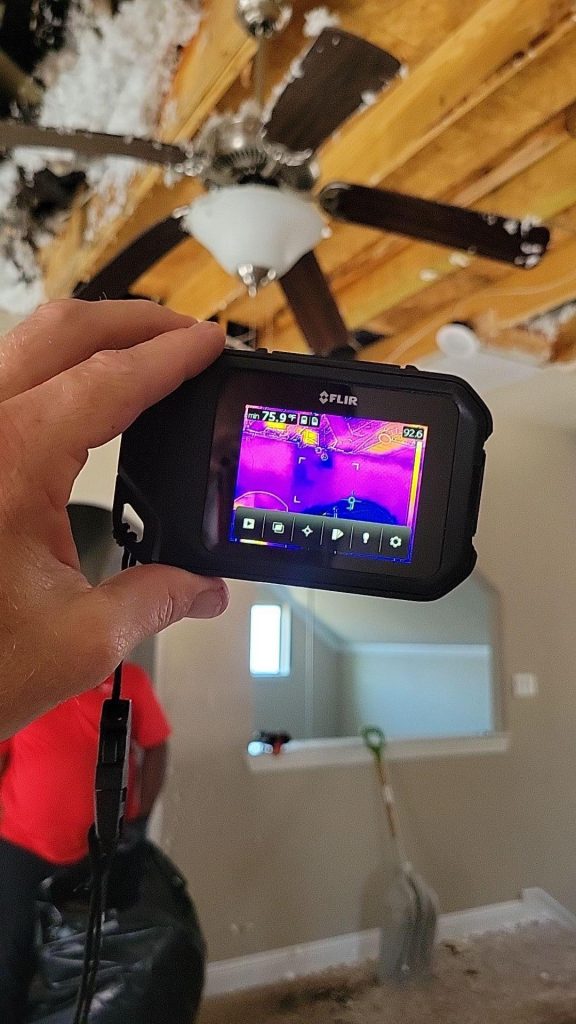
We used moisture meters to determine how much water remained in the walls.
Step 3: Fire Damage Cleanup and Soot Removal
Once the property was cleared and dried, our focus shifted to fire damage restoration. The lightning-triggered electrical fire had burned through parts of the upstairs, leaving heavy soot and smoke odors.
We followed strict safety protocols, wearing Personal Protective Equipment (PPE) to prevent exposure to soot particles. Our process included:
- Removing burned drywall and insulation to expose the framing
- HEPA vacuuming and dry-cleaning of all surfaces to remove soot residue
- Thermal fogging and ozone treatment to eliminate smoke odor molecules
- Surface sanitization to ensure a clean, odor-free environment
Each step was completed following IICRC (Institute of Inspection, Cleaning and Restoration Certification) standards to guarantee a safe, code-compliant result.
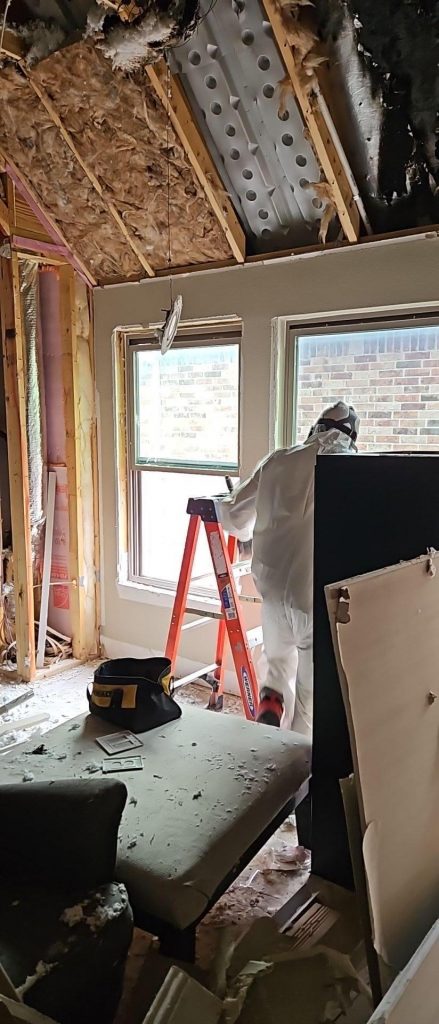

We wore personal protective equipment throughout the restoration process.
Step 4: Structural Restoration and Repairs
Because water from firefighting efforts had penetrated the drywall, much of the upper floor required partial demolition. We carefully removed affected sections of wallboard to expose and dry the wooden framing beneath.
In rooms where fire damage was minimal but smoke and soot were present, we used specialized cleaning agents and sealants to restore surfaces without unnecessary demolition. This hybrid approach allowed us to save more of the original structure while still achieving complete decontamination.
After cleaning and treatment, our reconstruction crew replaced drywall, re-painted surfaces, and restored flooring. By the end of the process, the home had been fully restored to its pre-loss condition — structurally sound, odor-free, and ready for the family to return.
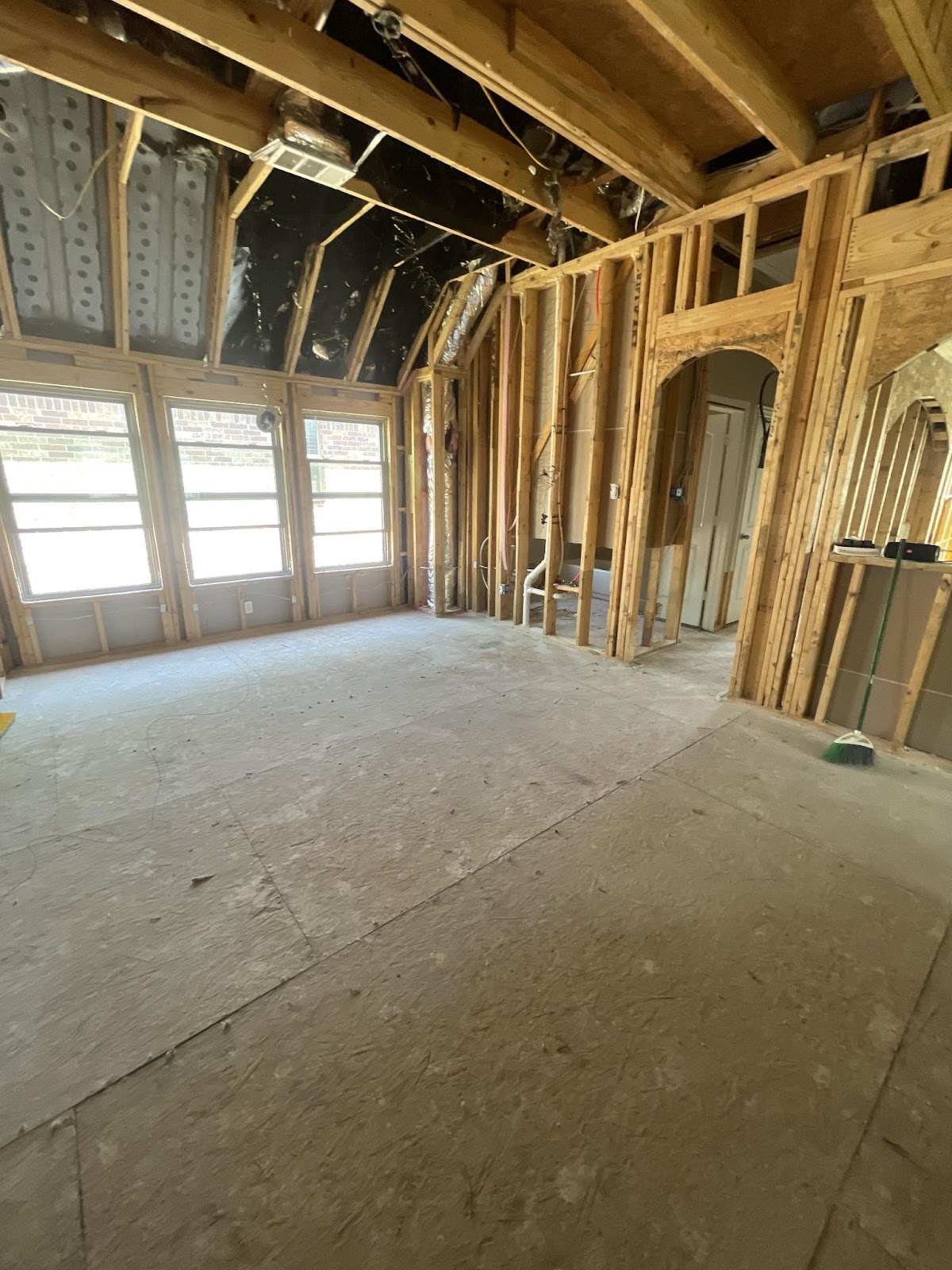
The home was fully restored.
Why Professional Electrical Fire Restoration Matters
Attempting to clean up after an electrical fire without professional help can be risky. What looks like simple surface damage often hides deeper electrical, structural, and health hazards. The table below highlights the key differences between DIY cleanup and professional electrical fire restoration — and why trusting experts like PuroClean of North McKinney ensures lasting safety and peace of mind.
Then it naturally leads into:
| Aspect | DIY Cleanup | Professional Restoration (PuroClean of North McKinney) |
|---|---|---|
| Electrical Safety | Risk of shock from energized or damaged wiring | Certified technicians perform full electrical safety testing before restoration |
| Health Hazards | Exposure to toxic soot and smoke residues containing heavy metals and chemicals | Use of HEPA filtration, PPE, and air scrubbers to remove contaminants safely |
| Mold & Moisture Control | Hidden moisture may lead to mold growth behind walls or under flooring | Advanced moisture detection and drying equipment prevent future mold issues |
| Odor & Air Quality | Lingering smoke odors and poor indoor air quality | Thermal fogging and ozone treatments restore fresh, safe air |
| Insurance & Documentation | No official documentation for claims | Detailed reports and photographic evidence for insurance and reconstruction |
| Time & Cost Efficiency | May seem cheaper but can cause long-term damage and higher costs | Comprehensive restoration prevents secondary damage and speeds recovery |
| Compliance & Peace of Mind | Unverified repairs and safety risks remain | IICRC-certified professionals ensure all restoration meets safety standards |
By partnering with experts like PuroClean of North McKinney, homeowners can rest assured their property is fully remediated — not just superficially cleaned.
Preventing Future Electrical Fires
While lightning strikes are unpredictable, many electrical fires can be prevented with regular maintenance and awareness. Homeowners should:
- Inspect wiring and panels every 3–5 years. Older systems often can’t handle modern electrical loads.
- Avoid overloading outlets or using multiple high-wattage devices on a single circuit.
- Install surge protectors or whole-home lightning protection systems.
- Use only UL-listed electrical products.
- Schedule an annual HVAC and electrical safety check to ensure connections are tight and insulation is intact.
Simple preventive steps can drastically reduce the risk of another electrical fire.
Frequently Asked Questions
1. What causes most electrical fires in homes?
Overloaded outlets, damaged wiring, and outdated panels are the leading causes. Lightning can also trigger fires by overloading circuits.
2. Can I clean up after an electrical fire myself?
It’s not recommended. Soot contains toxic compounds, and damaged wiring poses shock risks. Always contact certified restoration professionals.
3. How long does fire damage restoration take?
Minor incidents may take a few days; severe cases with structural and water damage can take several weeks.
4. Will my insurance cover electrical fire restoration?
Most homeowner policies cover fire damage, but specific coverage depends on the cause and policy terms. PuroClean assists with insurance coordination.
5. How can I tell if my electrical system is safe after a fire?
Only a licensed electrician can confirm that circuits, panels, and wiring are safe to reuse after an electrical fire.
Conclusion: Acting Fast Saves Homes and Lives
An electrical fire can happen suddenly — but with professional help, recovery doesn’t have to be overwhelming. In the Wylie, TX case, our prompt response and advanced restoration techniques transformed a lightning-damaged property into a safe, fully restored home.
If your home or business experiences an electrical fire, don’t wait to act. Contact PuroClean of North McKinney at (945) 234-4566 for 24/7 emergency response, expert restoration, and peace of mind.
 PuroClean of North McKinney