 PuroClean of North McKinney
Table of Contents
It’s every homeowner’s nightmare—coming home to find the floor soaked, water seeping under doors, and a flooded bathroom threatening to ruin everything in sight. When a plumbing fixture fails, minutes matter. Calling a professional water mitigation company immediately is the difference between minor cleanup and extensive water damage.
This recent case in Collin County, TX, highlights how our IICRC-certified technicians handled a flooded bathroom caused by a broken bidet—and how quick, careful action helped the homeowners avoid mold, costly repairs, and further damage.
How We Fixed a Flooded Bathroom
| Problem | Cause | Solution | Result |
|---|---|---|---|
| Flooded bathroom and adjoining rooms | Broken bidet spraying water for hours | Fast water extraction, drying, and dehumidification | Home restored quickly without removing contents |
Understanding the Flooded Bathroom Problem
A couple of weeks ago, a Collin County homeowner contacted PuroClean of North McKinney after discovering a flooded bathroom that extended into nearby rooms. The cause? A broken bidet that had been leaking continuously while the family was out for a walk.
When they returned, they found standing water covering the bathroom floor and spreading into the hallway and bedroom. Understandably, the family was overwhelmed. However, they acted quickly by calling our water restoration experts—an essential step in minimizing long-term water damage.
Initial Inspection and Client Constraints
Upon arrival, our certified team immediately assessed the extent of the flooding. We discovered that water had saturated the bathroom floor, baseboards, and the adjoining bedroom carpet.
In typical water mitigation projects, we remove affected contents—furniture, rugs, and personal items—to make room for drying equipment and prevent secondary damage. However, in this case, the homeowners were firm about not wanting any belongings removed from the house.
This presented a challenge: limited working space filled with valuable personal items. Instead of forcing relocation, we devised a custom strategy to accommodate their request. Our technicians carefully maneuvered drying equipment around furniture, maintaining both safety and efficiency. This flexibility allowed us to continue the drying process without disrupting the homeowners’ preferences.
Step-by-Step Water Mitigation and Drying Process
1. Assessment and Water Extraction
After documenting the damage, our first step was water removal. Using commercial-grade extraction tools, we removed standing water from the bathroom floor and surrounding carpeted areas. The goal was to stop further absorption into building materials like drywall and subflooring. Every minute counts—water left to sit can begin weakening materials and causing mold growth within 24–48 hours.
2. Setting Up Air Movers for Precise Drying
Next, we strategically positioned industrial air movers to target moisture trapped under flooring and behind baseboards. Because the home was cluttered, our team carefully angled each unit to optimize airflow without disturbing personal items. These high-velocity fans accelerated evaporation and shortened the drying timeline significantly.
3. Installing a Professional Dehumidifier
Moisture removed from the flooring doesn’t just disappear—it lingers in the air. To prevent humidity from fueling mold growth, we set up an industrial dehumidifier, a powerful device that extracts moisture from the air and releases clean, dry air back into the space. This ensured the humidity level stayed below 50%, which is essential for effective water damage restoration.
4. Continuous Monitoring and Adjustments
Our technicians monitored moisture readings daily using thermal imaging and hygrometers. This allowed us to adjust equipment placement as materials dried. Tracking progress scientifically ensures thorough drying, reducing the risk of hidden damage or mold later on.
5. Final Cleaning and Restoration
Once moisture levels reached safe standards, we completed a detailed cleaning to remove any residue or musty odor. The homeowners’ flooring and baseboards were disinfected with EPA-approved solutions to ensure a sanitary, safe environment.
Challenges and Creative Solutions
This project required careful coordination between professionalism and client comfort. Working in tight quarters without moving furniture could have slowed the process, but our team’s adaptability ensured both efficiency and respect for the client’s wishes.
We designed a layout plan that maximized airflow while maintaining safe access routes throughout the home. The homeowners were amazed at how well the process went, noting that our crew treated their property with the same care we’d give our own homes.
Real Results: A Satisfied Homeowner
After several days of precise drying and monitoring, moisture readings confirmed the structure was completely dry. The homeowners were thrilled that we completed the flooded bathroom restoration so quickly and without moving any of their belongings.
They shared their appreciation for our professionalism, punctuality, and attention to detail—especially our ability to protect their home from potential mold and odor problems.
Our work passed final quality checks with zero secondary damage, proving that strategic, science-based drying delivers results even under challenging conditions.
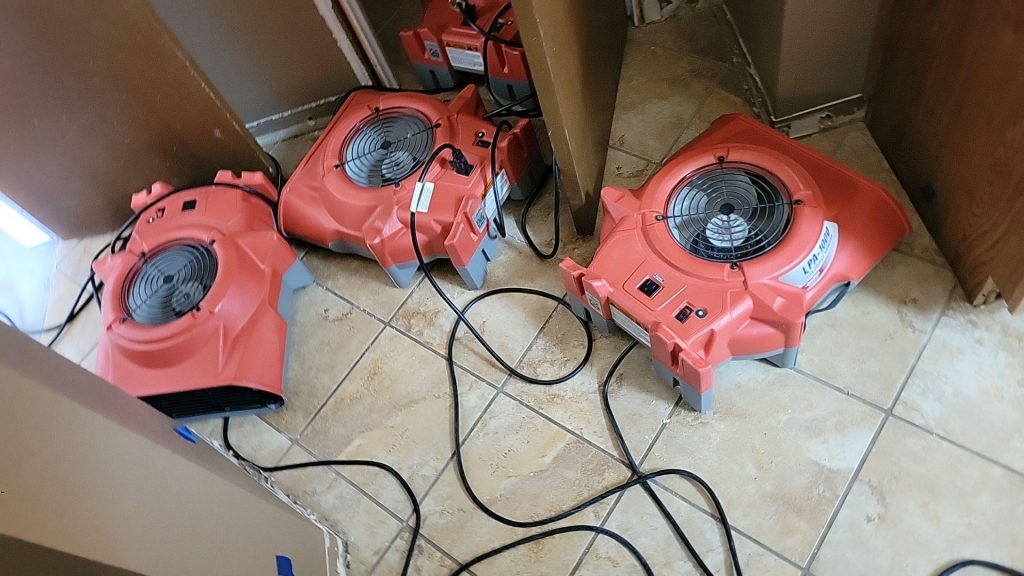
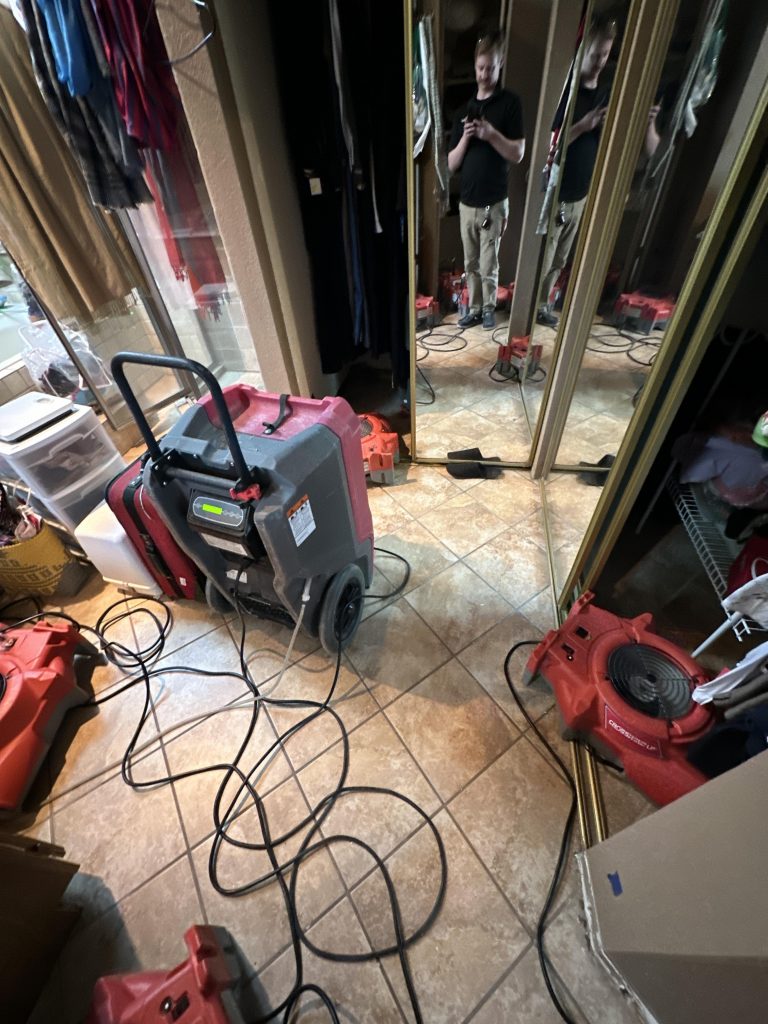


Air movers and dehumidifiers were placed strategically in prime problem areas to restore both the building materials and room contents.
The Importance of Fast Action After a Flooded Incident
Water spreads fast. Within hours, it can soak into walls, flooring, and furniture. Within days, it can lead to mold growth, warped materials, and structural weakening. Acting quickly after a flooded event not only saves your home—it saves money.
Here’s what fast water mitigation achieves:
- Stops active damage before it spreads to unaffected rooms.
- Prevents mold growth, which often begins within 48 hours.
- Protects structural integrity of wood, drywall, and flooring.
- Reduces insurance costs by minimizing repair scope.
Many homeowners underestimate how serious even small floods can be. A leaking toilet or bidet can release dozens of gallons of water per hour, enough to soak entire rooms and damage multiple layers of materials.
FAQ: Flooded Homes and Water Mitigation
Q1: How long does it take to dry a flooded home?
Most residential flooding cases take between 3–5 days to fully dry, depending on the extent of saturation and ventilation.
Q2: Is all water damage covered by insurance?
Generally, sudden and accidental water incidents—like burst pipes or fixture failures—are covered. Gradual leaks or lack of maintenance may not be.
Q3: What’s the difference between water mitigation and water restoration?
Water mitigation focuses on stopping and minimizing active damage, while water restoration repairs and rebuilds affected materials after drying.
Q4: Can I clean up a flooded room myself?
Minor spills can be managed, but significant flooding requires professional extraction and drying to prevent hidden moisture and mold.
Q5: What should I do immediately after discovering a flooded area?
Turn off the water source if possible, unplug electronics, and call a certified water mitigation company immediately. Avoid walking on wet surfaces to reduce contamination risks.
Conclusion: Quick, Professional Help When You’re Flooded
When a plumbing fixture breaks or a pipe bursts, every second counts. A flooded bathroom can escalate into major water damage if not handled promptly and professionally.
At PuroClean of North McKinney, our team specializes in fast, precise water mitigation and restoration. Whether it’s a burst pipe, broken bidet, or appliance overflow, we have the training and equipment to restore your home safely and efficiently.
Don’t let water sit and cause further damage—call us today at (945) 234-4566 for 24/7 emergency response. Our certified professionals will stop the flooding, dry your property, and return it to its pre-loss condition—so you can get back to comfort and peace of mind.

 PuroClean of North McKinney