 PuroClean of North McKinney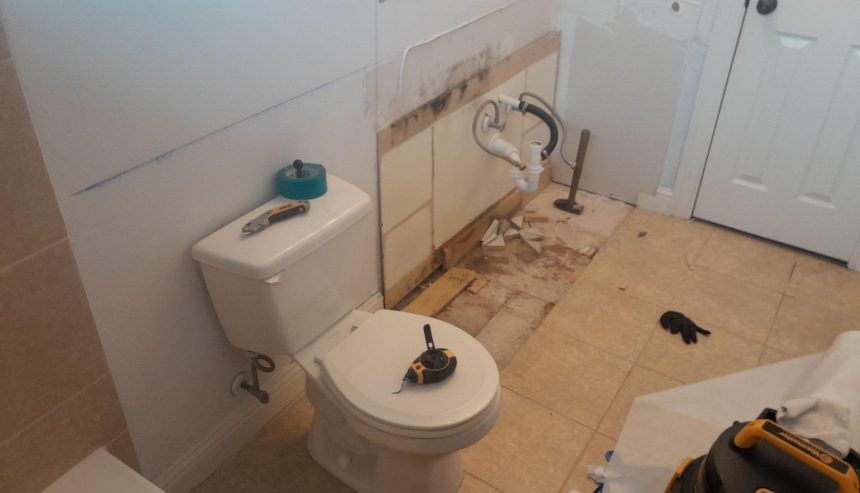
Table of Contents
Mold growth can often spread quietly in hidden areas such as behind walls, under flooring, or inside air ducts—sometimes for years before being discovered. This hidden activity allows spores to multiply and compromise indoor air quality without obvious warning signs.
Ignoring the possibility of mold growth can create a false sense of security, leaving your home or business vulnerable to long-term structural and health problems. If your property has recently experienced water damage, leaks, or high humidity, it’s crucial to stay alert for musty odors, discoloration, or unexplained allergy symptoms—all early indicators that mold growth may be occurring out of sight.
Prompt inspection and professional remediation can prevent the problem from spreading and protect both your property and your health.
Case Study: Mold Growth in a Residential Home
A homeowner in Allen contacted us after discovering mold growth in her bathroom and adjacent rooms. She found our restoration company on Google while researching professional help for mold problems.
Upon inspection, we learned the mold had developed due to a hidden plumbing leak that occurred nearly two years prior. Unfortunately, because the leak went unnoticed and untreated, moisture had seeped into the walls and flooring—creating the warm, damp environment mold thrives in.
When water damage isn’t addressed promptly, materials like drywall, wood, and insulation absorb moisture and become a breeding ground for mold spores. These spores spread quickly through the air and settle on nearby surfaces, leading to escalating contamination and damage.
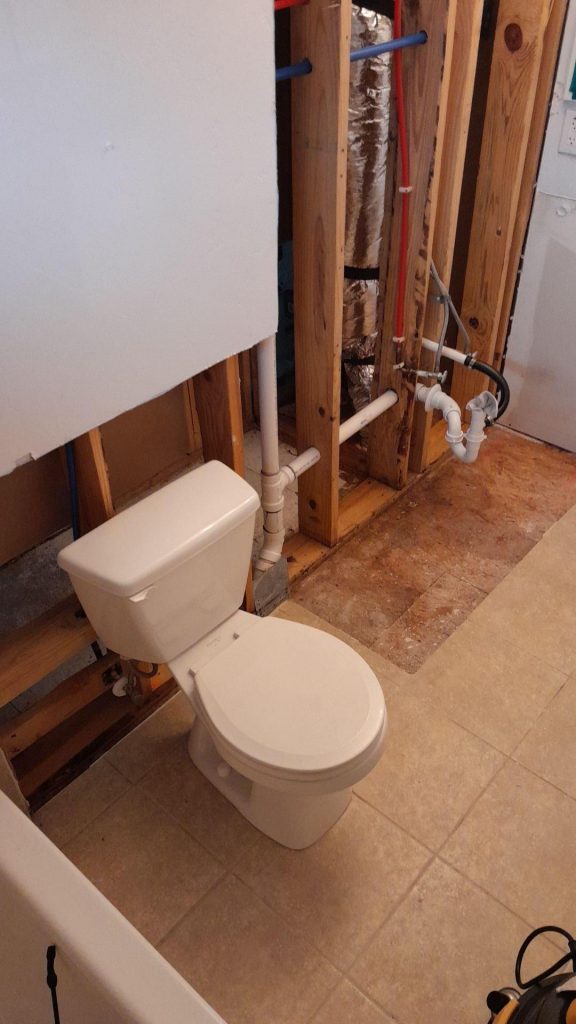

Contaminated materials, including tile and drywall, had to be removed before we began the decontamination process.
Initial Assessment and Mold Testing
Once on site, our IICRC-certified technicians performed a thorough visual and moisture inspection to determine the extent of the damage. Using moisture meters and thermal imaging, we identified the areas most affected by hidden moisture and mold growth.
Because Texas requires licensed professionals for certain mold remediation procedures, we advised the homeowner to hire a state-licensed mold consultant. The consultant’s role was to create a written remediation protocol outlining the steps necessary to safely remove the mold and prevent future outbreaks.
While waiting for the consultant’s clearance and protocol, we stabilized the area to prevent further moisture intrusion and reduce the risk of airborne mold spread.
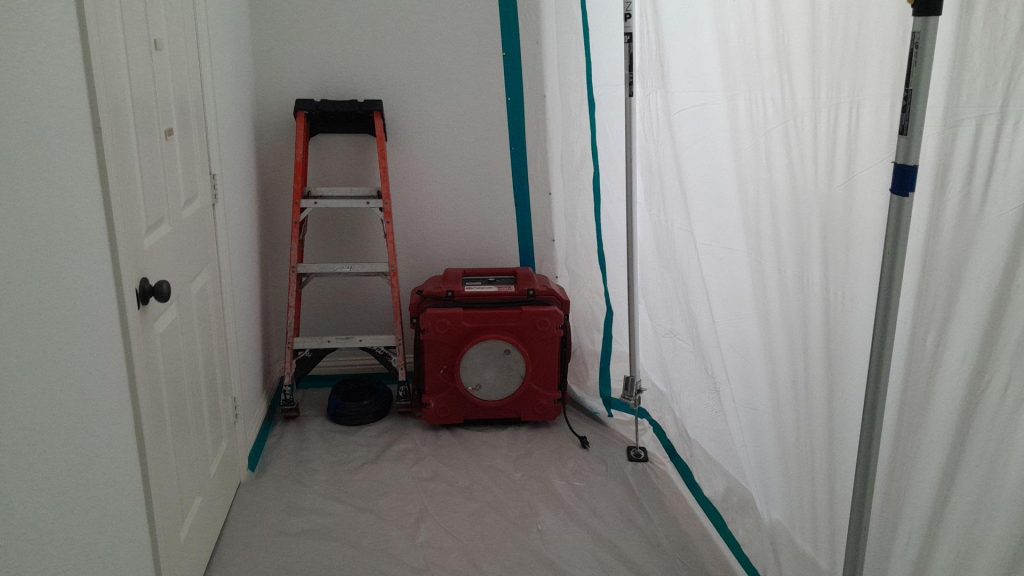
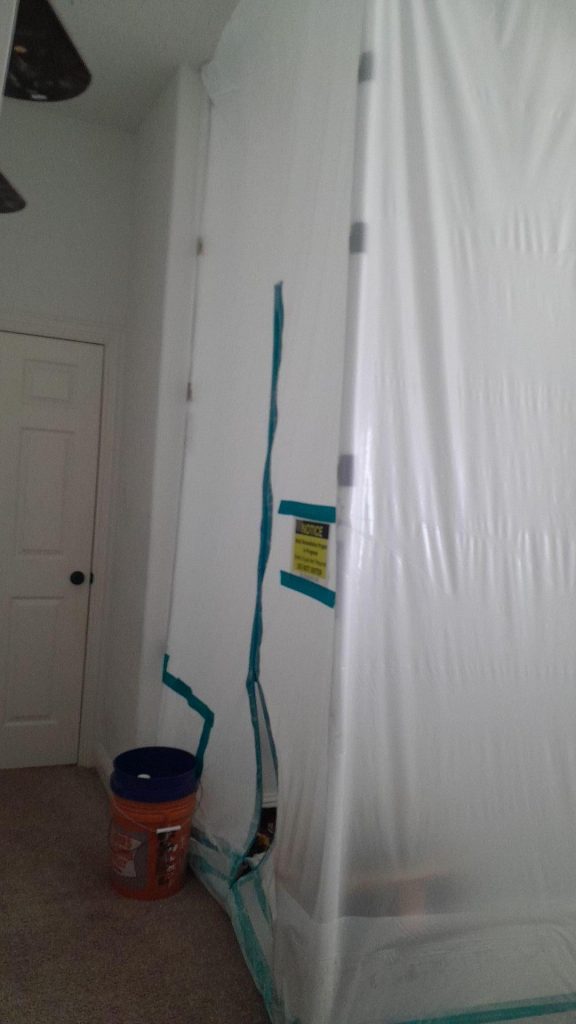
We closed off the contaminated area of the home to avoid cross-contamination.
The Mold Remediation Process
Once we received the official protocol, our team began the mold remediation process in accordance with Texas Mold Assessment and Remediation Rules (TMARR).
1. Containment and Safety Setup
Our first priority was to isolate the affected areas. We sealed off all contaminated spaces using industrial-grade plastic sheeting and established negative air pressure to prevent spores from escaping into clean sections of the home.
This step ensured that microscopic mold spores would not spread during demolition or cleaning. All technicians wore full personal protective equipment (PPE), including respirators and disposable coveralls, to maintain both worker and homeowner safety throughout the process.
2. Air Filtration and Spore Removal
Next, we installed HEPA (High-Efficiency Particulate Air) filtration devices designed to trap even the smallest airborne mold spores. These machines continuously cycled and cleaned the air during the entire remediation project.
By maintaining a constant filtration system, we improved indoor air quality, minimized exposure risks, and created a safe environment for the cleanup crew to work efficiently.
3. Removal of Contaminated Materials
Following the remediation protocol, we carefully removed all mold-infested materials, including drywall, tile, and insulation that had absorbed moisture. Because porous materials can’t be fully disinfected, their removal is essential to stop mold from returning.
Our team sealed and bagged all contaminated debris in EPA-approved disposal bags to prevent spore release during transport. Once the unsalvageable materials were cleared out, we could focus on cleaning and restoring the structure beneath.
4. Detailed Cleaning and Disinfection
After the demolition, we turned our attention to detailed cleaning and disinfection. Every surface—including studs, subflooring, fixtures, and HVAC vents—was cleaned using HEPA vacuums to capture any remaining spores.
We then applied EPA-registered antimicrobial solutions to disinfect all areas and kill residual mold at the microscopic level. Once surfaces were fully treated, our team conducted another round of HEPA vacuuming to ensure the entire space met strict cleanliness and safety standards.
5. Final Clearance and Verification
When remediation was complete, we arranged for the third-party mold consultant to perform final air and surface testing. These clearance tests confirmed that mold spore levels had returned to safe, normal levels.
The homeowner was relieved to know her property was fully restored and verified by an independent expert. Our team’s diligence and communication throughout the process provided her with peace of mind and a healthier living environment.
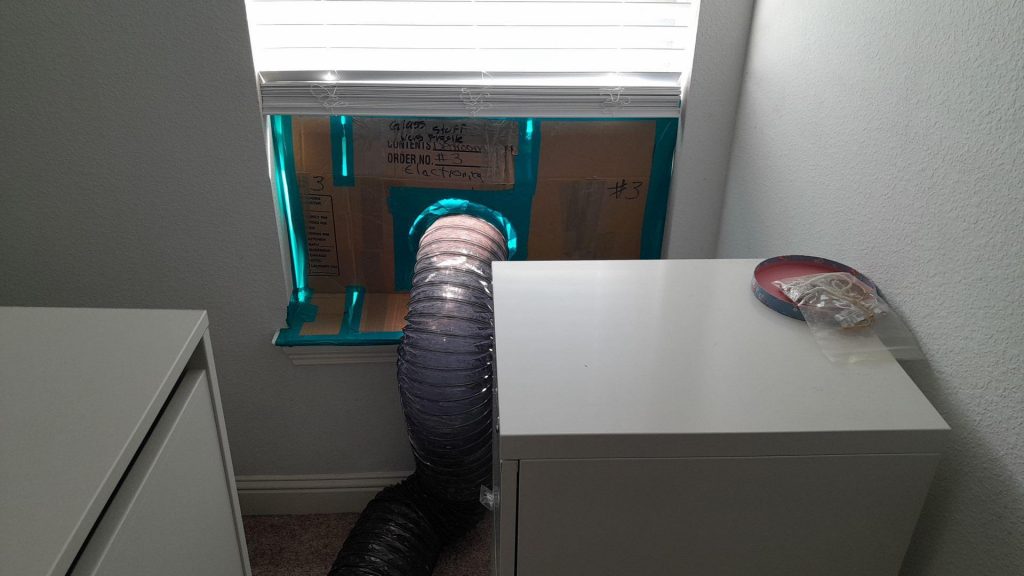

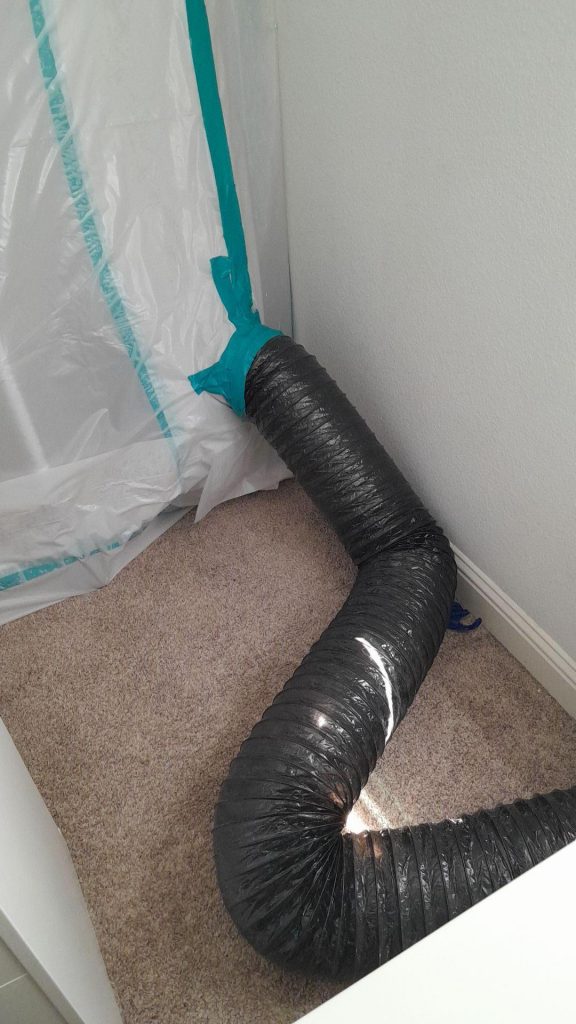
HEPA air filters and vacuums were used to remove additional mold spores.
Client Success Story: Peace of Mind Restored
After passing final clearance testing, our Allen homeowner shared how relieved she felt to have her home restored. What began as an overwhelming mold issue turned into a success story thanks to our team’s efficiency, transparency, and attention to detail.
We understand how stressful mold growth can be—from the fear of health impacts to the concern over property damage. That’s why we focus on clear communication, regulatory compliance, and complete customer satisfaction on every remediation project.
Understanding Mold Growth: Why It Happens
Mold spores are microscopic organisms that naturally exist in the air around us. On their own, they’re harmless—but when they come into contact with moisture and organic materials like drywall, wood, insulation, or carpet backing, they begin to grow and multiply.
When indoor humidity levels rise above 60%, or when water damage isn’t addressed promptly, mold can begin spreading in as little as 24 to 48 hours. Here are the most common causes of mold growth in homes and buildings:
- Leaky Pipes or Roofs. Even small, slow leaks behind walls or under sinks can create persistent dampness that fuels mold growth. Roof leaks are especially dangerous because they often go unnoticed, allowing moisture to seep into ceilings, attics, and wall cavities where mold can thrive for months before being discovered.
- Poor Ventilation in Bathrooms and Kitchens. Areas with frequent steam and moisture—like bathrooms, laundry rooms, and kitchens—need proper airflow to stay dry. Without exhaust fans or open windows, humidity builds up, leading to condensation on walls and ceilings that mold spores quickly colonize.
- Flooding or Water Intrusion. Flood events, plumbing backups, or groundwater seepage introduce large volumes of water that soak into flooring, drywall, and insulation. Even after visible water is removed, trapped moisture deep within materials provides the perfect environment for rapid mold growth unless professional drying methods are used.
- Condensation from HVAC Systems or Windows. Poorly insulated windows and cold HVAC ducts can cause condensation, particularly in humid climates. This excess moisture collects on surfaces and around vents, giving mold the dampness it needs to take hold. Regular maintenance and insulation checks help prevent this problem.
If these moisture sources aren’t resolved promptly, mold growth can continue unnoticed behind walls, beneath flooring, or inside attics—damaging your home’s structure and potentially affecting indoor air quality for years.
FAQ: Mold Growth and Remediation
Q1: How long does it take for mold growth to appear after a leak?
Usually within 24–48 hours, depending on temperature, humidity, and the type of material affected.
Q2: Can I remove mold myself?
Small surface mold can sometimes be cleaned with household products, but larger or hidden infestations require professional remediation to ensure complete removal.
Q3: What’s the difference between mold removal and mold remediation?
Mold removal refers to cleaning visible mold, while mold remediation addresses the root cause, removes spores, and prevents recurrence.
Q4: Does homeowner’s insurance cover mold growth?
Coverage depends on your policy and the cause of the damage. Sudden water leaks are often covered, but ongoing maintenance issues may not be.
Q5: How can I tell if mold is behind walls?
Signs include musty odors, peeling paint, discoloration, and worsening allergy symptoms. A moisture meter or professional inspection can confirm hidden mold.
Conclusion: Don’t Wait to Address Mold Growth
Mold growth can spread quickly, weaken your home’s structure, and impact your health. Whether it starts from a hidden leak, condensation, or water damage, fast action makes all the difference.
If you suspect mold growth in your Allen home, don’t ignore the signs. Contact our IICRC-certified team today for a professional inspection and remediation plan. We’ll restore your home’s safety, comfort, and peace of mind.
Call us now at (945) 234-4566 or schedule your mold inspection online—your home deserves expert care and lasting protection.
 PuroClean of North McKinney