


Table of Contents
Mold in attic spaces often develops when moisture becomes trapped around roof decking, insulation, vents, or wood framing. Common warning signs include dark or fuzzy patches on wood, musty odors, damp insulation, condensation, and staining around roof penetrations. If you notice these conditions, identifying and correcting the moisture source is just as important as addressing the visible mold.
For homeowners in North McKinney, attic moisture can become a concern after months of North Texas heat, heavy HVAC use, high humidity, or roof and ventilation problems.
What Causes Mold in Attic Spaces?
Mold needs moisture and an organic surface to grow. Attics contain plenty of wood, dust, and other materials that can support mold when humidity or water intrusion remains elevated.
Common moisture sources include:
- Roof leaks: Damaged shingles, flashing, or roof penetrations can allow rainwater into the attic.
- Poor attic ventilation: Inadequate airflow can allow warm, humid air to remain trapped.
- Bathroom or dryer vents: Exhaust ducts that terminate inside the attic can release large amounts of moisture.
- HVAC-related condensation: Ductwork or equipment in attic spaces may develop condensation under certain conditions.
- Air leaks from the home: Warm, moisture-containing indoor air can move into the attic through gaps around fixtures, access panels, or ceiling penetrations.
North Texas summers can make these conditions more noticeable. Prolonged heat combined with HVAC use and humidity can create temperature differences that contribute to attic condensation and moisture buildup.
Common Signs of Mold in Your Attic
Attic mold is not always obvious, particularly if homeowners rarely enter the space. Several signs may indicate that further inspection is needed.
1. Dark or Discolored Areas on Wood
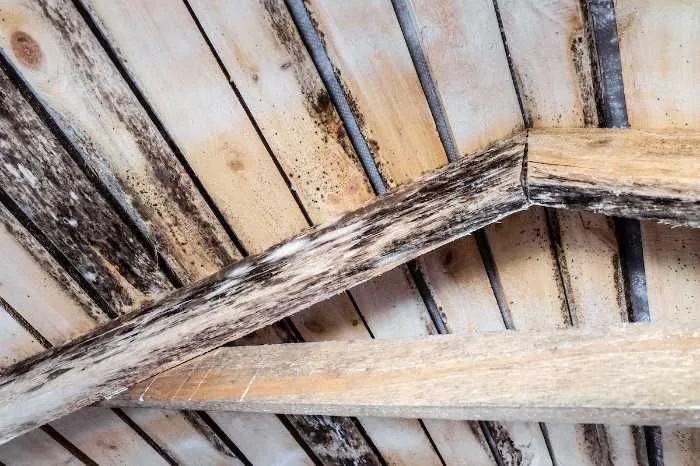
Black, brown, green, or white patches on rafters, trusses, or roof decking may indicate attic mold growth.
Not every discoloration is mold, but widespread spotting, fuzzy growth, or changes that appear alongside moisture problems should be evaluated.
2. A Persistent Musty Odor
A musty or earthy smell near the attic access or on the upper floor can be a sign of excessive moisture or microbial growth.
Odors alone cannot confirm mold, but they can indicate that hidden areas deserve closer inspection.
3. Damp or Compressed Insulation
Insulation should normally remain dry. Wet, matted, or discolored insulation can indicate a roof leak, condensation problem, or another source of attic moisture.
Moist insulation can also reduce its effectiveness and allow moisture to remain trapped against nearby materials.
4. Condensation on Nails or Roof Decking
Moisture droplets on roofing nails, vents, ductwork, or the underside of roof decking can indicate excessive attic humidity.
Repeated condensation may keep wood surfaces damp long enough for mold to develop.
5. Water Stains or Wood Discoloration
Dark streaks, stains, or rings around roof penetrations can suggest previous or ongoing water intrusion.
Even if the material feels dry when you inspect it, older moisture problems may have already created favorable conditions for mold.
Mold, Moisture Staining, or Dirt: What Are You Seeing?
Not every dark area in an attic is mold. This comparison can help homeowners understand when further evaluation may be appropriate.
| What You Notice | Possible Explanation |
|---|---|
| Fuzzy or irregular patches | Possible mold growth |
| Dark areas around a roof penetration | Possible leak or moisture staining |
| Rusted roofing nails | Condensation or elevated humidity |
| Damp or compressed insulation | Water intrusion or condensation |
| Uniform dust near vents | Airborne debris rather than mold |
| Musty odor with visible staining | Possible ongoing moisture problem |
Visual inspection alone may not always determine exactly what is present. More importantly, any active moisture source should be identified and corrected.
What Should You Do If You Find Mold in Your Attic?
If you suspect mold, avoid immediately scrubbing or disturbing a large affected area. Disturbing contaminated materials can release particles into the air.
A practical response includes the following steps:
1. Find the Moisture Source
Check for roof leaks, condensation, disconnected exhaust vents, plumbing issues, or other sources of water.
Removing mold without fixing the moisture problem may allow it to return.
2. Avoid Disturbing Large Areas
Do not sand, brush, or aggressively clean extensive visible growth without appropriate containment and protective measures.
If the affected area is significant or difficult to access safely, professional evaluation may be appropriate.
3. Correct Ventilation or Roof Problems
Roof leaks, damaged vents, and ventilation defects may require repairs before remediation can be effective.
The goal is to prevent the attic materials from becoming wet again.
4. Address Affected Materials
Depending on the extent of contamination and the materials involved, some surfaces may be cleaned while heavily affected porous materials may need removal.
A professional remediation plan should focus on both contamination and moisture control.
Why Moisture Control Matters
The U.S. Environmental Protection Agency (EPA) emphasizes that moisture control is the key to mold control. Its guidance recommends addressing water leaks and moisture problems promptly rather than focusing only on visible growth.
This is especially relevant for North McKinney homeowners after the hottest months of the year. If attic ventilation, roofing, or HVAC conditions have allowed moisture to accumulate, an inspection can help identify problems before they spread.
When Should You Call a Mold Remediation Professional?
Professional help may be appropriate when mold covers a large area, returns after cleaning, is associated with significant water damage, or appears in difficult-to-access attic spaces.
A remediation professional can help:
- Determine the extent of affected materials.
- Identify hidden moisture using specialized equipment.
- Establish containment where appropriate.
- Remove or clean contaminated materials.
- Help confirm that the moisture problem has been addressed.
PuroClean can evaluate attic moisture and mold-related damage and recommend appropriate next steps based on the conditions found.
Frequently Asked Questions
Q: What does mold in an attic look like?
A: Attic mold may appear as black, brown, green, gray, or white spots or patches on roof decking, rafters, and other wood surfaces. Appearance alone cannot always confirm mold, especially when moisture staining or dirt is also present.
Q: Why would mold grow in my attic if my roof does not leak?
A: Roof leaks are only one potential source of moisture. Poor ventilation, indoor air leaks, HVAC condensation, or bathroom exhaust venting into the attic can also create humid conditions that support mold growth.
Q: Can attic condensation cause mold?
A: Yes. Repeated condensation can keep roof decking and other materials damp for extended periods. If the underlying ventilation or humidity problem continues, mold may develop.
Q: Should I remove attic mold myself?
A: Small, limited areas may sometimes be manageable, but larger or recurring problems should be evaluated professionally. The moisture source must also be corrected, or the mold may return.
Q: How can I prevent mold from coming back in my attic?
A: Repair roof leaks, maintain proper attic ventilation, make sure exhaust ducts vent outdoors, and address condensation or air leakage problems. Keeping attic materials dry is the most important step in preventing recurring growth.
Address Mold in Attic Areas Before the Problem Spreads
Mold in attic spaces is often a sign of a larger moisture problem involving roofing, ventilation, condensation, or indoor air movement. Catching the problem early can help limit damage to insulation, roof decking, and other building materials.
If you notice visible mold, musty odors, damp insulation, or other signs of attic moisture in your North McKinney home, contact PuroClean at (945) 234-4566 for professional assessment and mold remediation services.
Key Takeaways
- Mold in attic spaces usually develops because moisture remains trapped around wood, insulation, or roofing materials.
- Dark patches, musty odors, damp insulation, and condensation are common warning signs.
- Roof leaks are not the only cause; ventilation and HVAC-related moisture can also contribute.
- North Texas heat and humidity can increase attic moisture concerns, particularly after the summer months.
- Fixing the moisture source is essential before or during mold remediation.
- Large, recurring, or difficult-to-access mold problems may require professional help.
- EPA guidance emphasizes moisture control as a critical part of preventing mold growth.


