


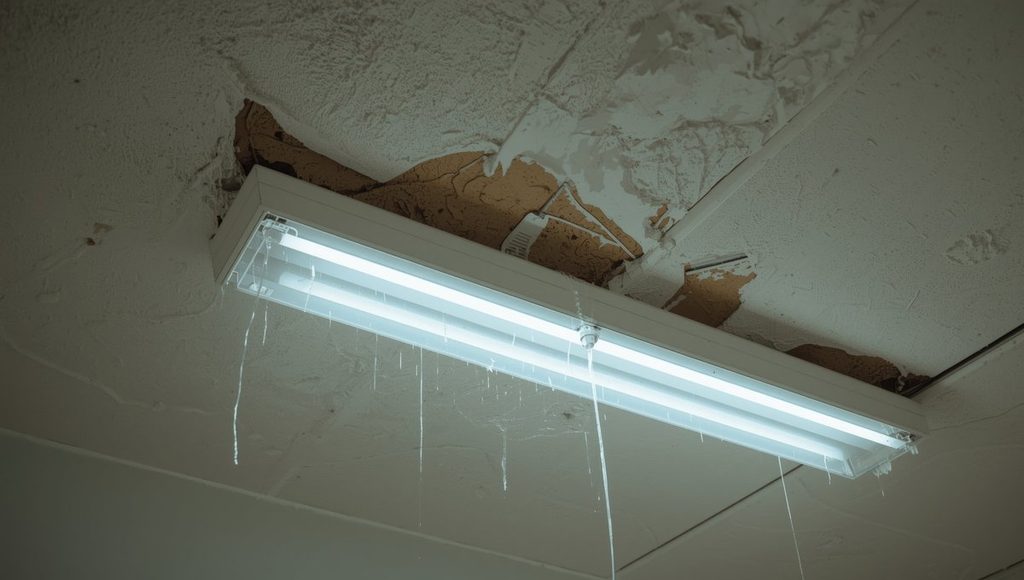
Water leaking from light fixture is an electrical hazard, so the first step is to cut power to that circuit at the breaker panel, if you can reach it safely. Stay away from the fixture and the wall switch, and keep people and pets out from under it. Once the power is off, you can work on stopping the water and protecting the room.
Key Takeaways
- Stop the water at its source only after the power is off.
- Do not touch the light switch, the fixture, or a sagging ceiling.
- Keep the power off until a licensed electrician has inspected the fixture and wiring.
- Water in a light fixture usually means water has also spread into the ceiling and insulation.
Why Water Leaking From Light Fixture Is Dangerous
Light fixtures and ceiling fans connect directly to household wiring. When water reaches the electrical box, it can cause a short circuit, damage wiring, or create a shock risk for anyone who touches the fixture or switch. The Electrical Safety Foundation International (ESFI) offers more electrical safety resources for homeowners.
The water also has to come from somewhere above. By the time it drips through a fixture, it has usually soaked the drywall and insulation around it. If you notice sparking, smoke, or a burning smell, leave the area and call 911. For more on what happens after that kind of damage, read about electrical fire restoration.
What to Do First
- Turn off the circuit at the breaker panel. If you are not sure which breaker controls the fixture, turn off the main breaker. Do not touch the panel at all if it is wet or you would have to stand in water to reach it; call an electrician or your utility instead.
- Stay out from under the fixture. Wet drywall can sag and fall, especially around a heavy light or fan.
- Stop the water if you can. If the leak is coming from a bathroom or appliance above, close its shutoff valve or the home’s main water shutoff.
- Protect the room. Place a bucket under the drip from the side, without standing directly beneath the fixture, and move furniture and electronics away.
- Leave the power off. Do not turn the circuit back on until a licensed electrician says it is safe.
For more on staying safe around water in the home, see the American Red Cross flood safety guidance.
Where the Water May Be Coming From
Water that reaches a ceiling light usually starts directly above it or travels along framing from nearby. Common sources include:
- A toilet, shower, or tub supply line in a bathroom on the floor above
- An air conditioner or its condensate line in the attic
- A roof leak after heavy rain or hail
- A water line running through the ceiling or attic
- A frozen pipe in the attic during a hard freeze
If your AC is in the attic, its drain pan and line are a common source; learn more about an HVAC system water leak.
In winter, a frozen pipe in the attic can also send water through a ceiling fixture. Learn more about water damage in walls after a winter freeze.
When to Call an Electrician, a Plumber, or a Restoration Team
Each professional handles a different part of the problem:
- A licensed electrician inspects the fixture, box, and wiring before power is restored.
- A licensed plumber repairs a leaking pipe, supply line, or fixture above.
- A water damage restoration team dries the ceiling, insulation, and framing, and checks how far the water spread.
Wet materials above a ceiling can stay damp long after the stain stops growing, which is why uncovering hidden water damage early matters.
Get Help Drying Water Damage Behind a Leaking Light Fixture
PuroClean of North McKinney helps homeowners find and dry water damage after a leak reaches a ceiling. The team uses water leak detection to trace moisture through ceilings and insulation, then dries affected materials with air movers and dehumidifiers while monitoring moisture levels. If you have water leaking from light fixture, turn off the power, then call PuroClean of North McKinney at (945) 234-4566 or learn more about its water damage restoration services.
Frequently Asked Questions
Can I Use the Light Once It Dries Out?
Not until a licensed electrician inspects it. Water can leave corrosion or damage inside the fixture and electrical box that is not visible from outside.
Should I Poke a Hole in a Bulging Ceiling Near the Fixture?
No. Draining a ceiling bulge near electrical wiring adds risk. Keep the power off, stay clear, and let a professional handle it.
Can a Roof Leak Come Through a Light Fixture?
Yes. Water from a roof leak can run along rafters and ceiling joists until it finds an opening, and light fixtures are a common one. See how to check for hidden roof leaks after a hailstorm.


