


By Gabriela Miszti, MBA, CFE, Owner / Vice President, PuroClean of Northeast Orange County
How fast does mold grow after water damage? Mold can start growing on materials that stay wet for more than 24 hours, which is why the EPA advises drying water-damaged areas and items within 24 to 48 hours to prevent mold growth. Mold you can actually see usually takes longer, often days to weeks, depending on the material, the amount of moisture, and the temperature.
Water damage doesn’t knock. It kicks in the door, and mold can follow close behind. For Orange County homeowners, the first two days matter most, because mold that has already started can hide inside walls, under flooring, or behind cabinets long before you notice a spot or a smell. Below, we explain what the research says about the mold growth timeline, what speeds it up, the health risks, and what to do right away. If you need help now, our IICRC-certified technicians are on site within 60 minutes, 24/7.
In this guide:
- How Fast Does Mold Grow After Water Damage? The Timeline
- What Speeds Up Mold After Water Damage
- Why Orange County Homes Still Get Mold
- Health Risks of Mold After Water Damage
- What to Do in the First 48 Hours
- Can You Clean Up Mold Yourself? What to Know About Bleach
- How Professional Water Damage Restoration and Mold Remediation Work
- 5 Warning Signs of Mold After Water Damage
- How Fast Does Mold Grow After Water Damage? FAQs
- Mold and Water Damage Help in Northeast Orange County
How Fast Does Mold Grow After Water Damage? The Timeline
There’s no single stopwatch for mold. Growth depends on how wet a material gets, how long it stays wet, the indoor humidity, and the temperature. Government guidance and controlled studies still give a clear picture of what to expect.
0 to 48 hours: the drying window
Mold spores are everywhere. The CDC notes that there is always some mold around, and that spores that land on wet materials will grow. According to the EPA, mold can grow on wood, drywall, carpet, and furniture that remain wet for more than 24 hours. That’s why both agencies recommend drying wet materials within 24 to 48 hours. At this stage, you usually won’t see anything.
Days 2 to 7: growth you can’t see yet
In a study presented at an ASHRAE indoor air conference, researchers inoculated wet drywall and ceiling tile with common indoor molds. The samples didn’t look moldy at seven days, but low magnification showed numerous early mold colonies, some developing within 48 to 72 hours even at 44% to 45% relative humidity. In other words, mold can be growing well before it’s visible.
1 to 2 weeks or longer: visible mold and musty odors
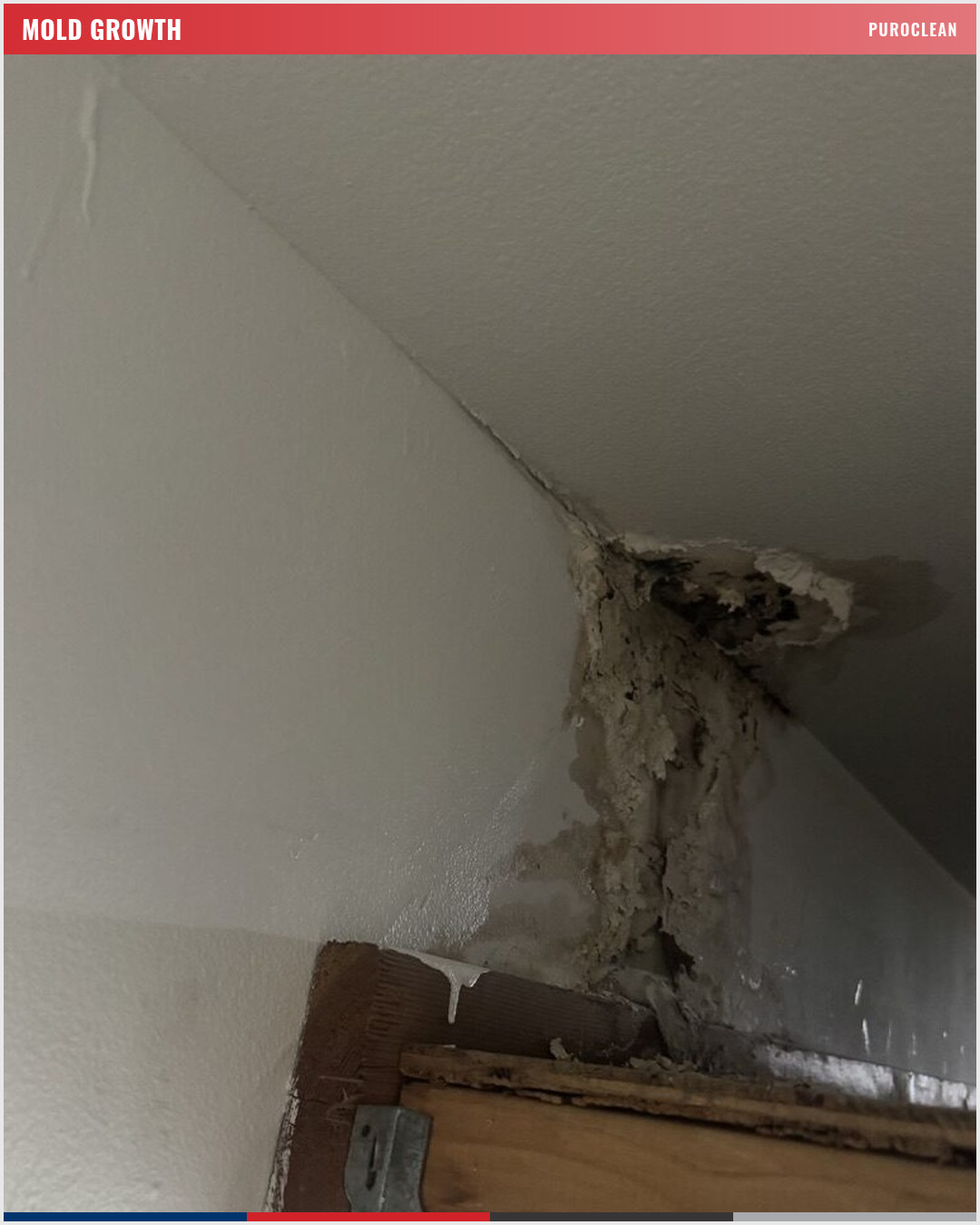
In a controlled study of wet drywall published in the Journal of Occupational and Environmental Hygiene, no mold was detected visually or with tape samples after one week, and growth was detected on untreated drywall at two weeks. Real homes vary. Dirty water, warmth, and materials like paper-faced drywall, carpet pads, and wood can change the pace. Once mold is visible, it can come in many colors, and the CDC notes it can smell musty.
Weeks to months: hidden mold
If the moisture isn’t fixed, mold can keep spreading where you can’t see it. The EPA lists hidden spots such as the back side of drywall, wallpaper, or paneling, the underside of carpets and pads, areas inside walls around leaking pipes, and the inside of ductwork.

The EPA’s mold remediation guide adds a caveat: 48 hours is a guideline, not a guarantee. Mold won’t always grow after 48 hours, and it may already have started even if materials were dried within that time. So, how fast does mold grow after water damage in a real home? Often faster than you can see, which is why drying quickly and confirming that materials are truly dry both matter.
What Speeds Up Mold After Water Damage
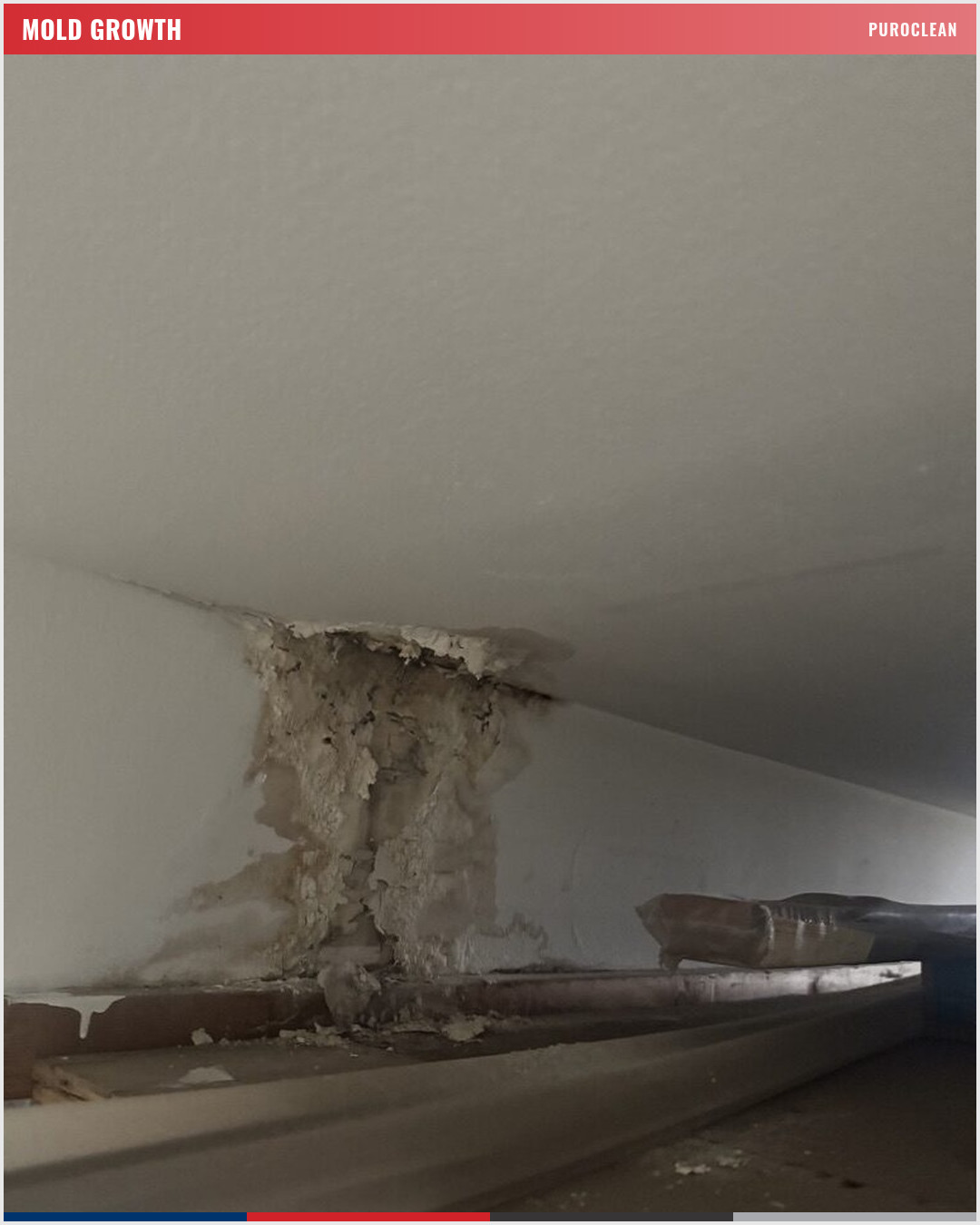
Mold needs moisture, something to feed on, and time. Paper, cardboard, ceiling tiles, wood, drywall, insulation, carpet, and upholstery all give it a food source, according to the CDC. These conditions make mold after water damage more likely:
- Materials that stay wet. Drywall, carpet pads, and insulation hold water and are hard to dry. The EPA says mold can grow on or fill in the empty spaces and crevices of porous materials, so some may need to be thrown away.
- High indoor humidity. The EPA recommends keeping indoor relative humidity below 60%, ideally between 30% and 50%. The CDC says no higher than 50%.
- Hidden moisture. Leaks inside walls, under floors, or above ceilings can stay wet long after the visible water is gone.
- Contaminated water. Floodwater and sewage can contain bacteria, chemicals, and other hazards, according to the EPA, so cleanup needs extra care.
Why Orange County Homes Still Get Mold
Northeast Orange County has hot, dry summers and cooler winters with occasional heavy storms, so it’s easy to assume mold isn’t a local problem. But mold depends on moisture indoors, not the weather outside. Common causes of indoor water damage in Orange County include:
- Roof leaks, especially after storms (see our guide to the causes of a leaky ceiling)
- Burst pipes and other plumbing leaks
- Overflowing sinks, bathtubs, and toilets
- Dishwasher and washing machine failures
- Slab leaks, a common issue in California homes
- Air conditioning drip pans and drain lines, which work hard during long, hot summers (the EPA advises keeping drip pans clean and drain lines flowing)
This winter brings another reason to be ready. NOAA’s Climate Prediction Center has an El Niño Advisory in place, with a strong to very strong El Niño likely through January to March 2027, and the NOAA winter outlook favors wetter-than-average conditions for California. That doesn’t guarantee storms, but heavy rain raises the odds of roof leaks and water getting inside. Our flash flood facts guide covers how to prepare.
In Yorba Linda, where many homes have aging plumbing, fixing water damage quickly is the best way to protect your home long term.
Renters and landlords should also know that California law lists visible mold growth, as determined by a health officer or code enforcement officer, among the conditions that can make a building substandard (Health and Safety Code 17920.3). Minor mold on surfaces that normally get wet as part of their intended use is excluded.
Health Risks of Mold After Water Damage
Mold affects people differently. According to the CDC, exposure to damp and moldy environments may cause a variety of health effects, or none at all. For some people, mold can cause a stuffy nose, sore throat, coughing or wheezing, burning eyes, or a skin rash. People with asthma or mold allergies may have severe reactions, and immune-compromised people and people with chronic lung disease may get lung infections from mold.
Study after study links damp, moldy homes to breathing problems. In 2004, the Institute of Medicine found sufficient evidence linking indoor mold exposure to upper respiratory symptoms, cough, and wheeze in otherwise healthy people, and to asthma symptoms in people with asthma, as summarized by the CDC. A meta-analysis in Indoor Air found that building dampness and mold are associated with roughly 30% to 50% increases in a variety of respiratory and asthma-related health outcomes, and a review in Environmental Health Perspectives found consistent links between dampness or mold and asthma, cough, wheeze, and respiratory infections.
The EPA notes that symptoms other than allergic and irritant types are not commonly reported from inhaling mold. If you’re worried about your health, talk to your doctor, and don’t wait to fix the moisture and remove the mold.
What to Do in the First 48 Hours
What you do right after a leak or flood has the biggest effect on whether mold after water damage becomes a problem:
- Stay safe. Turn off the electricity only if it’s safe to do so, and stay out of standing water near outlets or appliances.
- Stop the water. Shut off the main water valve or the supply to the leaking fixture if you can.
- Document the damage. Take photos and video for your insurance claim before you move or throw anything away.
- Dry everything fast. Remove standing water and run fans and dehumidifiers. The EPA says increasing air circulation and temperature will speed up drying.
- Remove what can’t be dried. The EPA’s water damage table recommends discarding and replacing wet ceiling tiles and insulation, and removing drywall that is swollen or has broken seams.
- Treat floodwater and sewage as contaminated. The EPA recommends an N-95 respirator, goggles without vent holes, gloves, long sleeves, and boots during cleanup.
Our FAQ on what to do after a flood or water leak walks you through these steps in more detail.
Can You Clean Up Mold Yourself? What to Know About Bleach
For small areas, often yes. The EPA says that if the moldy area is less than about 10 square feet, roughly a 3 ft. by 3 ft. patch, you can handle the job yourself in most cases. Scrub mold off hard surfaces with detergent and water, dry them completely, and wear an N-95 respirator, gloves, and goggles. If there has been a lot of water damage, or the mold covers more than about 10 square feet, the EPA points to its remediation guidance, and that’s when professional help makes sense.
Bleach isn’t the cure-all many people expect. The EPA says using a biocide such as chlorine bleach is not recommended as a routine practice during mold cleanup, and dead mold may still cause allergic reactions, so it has to be removed, not just killed. If you do use bleach on hard surfaces, the CDC advises no more than 1 cup of household laundry bleach per gallon of water. Never mix bleach with ammonia or other cleaners, and open windows for fresh air.
Be careful with hidden mold, too. The EPA warns that disturbing it, for example by pulling off wallpaper with mold growing underneath, can lead to a massive release of spores.
How Professional Water Damage Restoration and Mold Remediation Work

When water has soaked into walls, floors, or cabinets, or mold covers a large area, professional help can be faster and safer. Our IICRC-certified technicians handle water damage restoration and mold removal following industry standards such as the IICRC S500 for water damage and the IICRC S520 for mold remediation. A typical job includes:
- Assessment. We find the water source and measure moisture in walls, floors, and cabinets with moisture meters. Thermal cameras can help spot temperature differences that may point to hidden moisture.
- Water extraction. Standing water is removed with pumps and extraction equipment.
- Drying and dehumidification. Air movers and dehumidifiers dry hidden areas, from baseboards to wall cavities.
- Mold remediation, if needed. Containment and HEPA filtration help keep spores from spreading while moldy materials are cleaned or removed.
- Cleaning and odor control. Surfaces are cleaned and, where appropriate, treated with EPA-registered disinfectants or antimicrobial products used as the label directs.
- Final check and repairs. Moisture readings confirm materials are dry before drywall, flooring, or cabinets are repaired.
Drying and cleanup only last if the water problem is fixed. As the EPA puts it, if you clean up the mold but don’t fix the water problem, then, most likely, the mold problem will come back. Fixing the moisture source is the most important step.
5 Warning Signs of Mold After Water Damage
Think mold may already be growing after a recent leak? Watch for:
- Musty or earthy smells. The EPA says you may suspect hidden mold if a building smells moldy but you can’t see the source.
- Discoloration or spots on walls, ceilings, grout, or the backs of cabinets.
- Warped baseboards, peeling paint, or buckling floors, which can be signs of lingering moisture.
- Condensation or high humidity in one room.
- Allergy-like symptoms at home, such as a stuffy nose, wheezing, or itchy eyes.
If you’ve had a leak or flood in the past few weeks and notice any of these signs, have the area checked. You usually don’t need a mold test. The CDC does not recommend mold testing, and finding and fixing the moisture comes first.
How Fast Does Mold Grow After Water Damage? FAQs
How long does it take for mold to grow after water damage?
Mold can start growing on materials that stay wet for more than 24 hours, which is why the EPA advises drying water-damaged areas within 24 to 48 hours. Visible growth usually takes longer. In one controlled study, wet drywall showed no visible mold after a week, and growth appeared at two weeks.
Can mold grow in 24 hours?
It can start. The EPA says mold can grow on wood, drywall, carpet, and furniture that remain wet for more than 24 hours. At that stage it usually isn’t visible. Lab research found microscopic colonies developing within 48 to 72 hours.
If I dry everything within 48 hours, will I avoid mold?
In most cases, quick drying prevents mold. But the EPA says 48 hours is only a guideline. Mold won’t always grow after 48 hours, and it may have started even if materials were dried in time, so check for hidden moisture.
What indoor humidity prevents mold?
The EPA recommends keeping indoor relative humidity below 60%, ideally 30% to 50%, and the CDC says no higher than 50%. An inexpensive humidity meter, an air conditioner, or a dehumidifier can help.
Can I clean up mold myself with bleach?
For areas under about 10 square feet, the EPA says you can usually handle the job yourself with detergent, water, and protective gear. The EPA doesn’t recommend bleach as a routine practice. If you use it, the CDC says no more than 1 cup per gallon of water, and never mix it with ammonia.
Is mold after water damage a health risk?
It can be. The CDC says mold can cause a stuffy nose, sore throat, coughing or wheezing, burning eyes, or a skin rash, and people with asthma, allergies, weakened immune systems, or chronic lung disease face higher risks. A meta-analysis linked home dampness and mold to 30% to 50% increases in respiratory and asthma-related outcomes.
Should I test for mold after a leak?
Usually not. The CDC does not recommend mold testing, and the EPA says sampling is usually unnecessary when mold is visible. The priority is to fix the moisture and remove the mold.
What should I do right after water damage to prevent mold?
Stop the water if it’s safe, document the damage, remove standing water, and dry everything within 24 to 48 hours. Remove soaked materials that can’t be dried, and treat floodwater or sewage as contaminated. Professional water damage restoration can find hidden moisture and dry your home thoroughly.
Mold and Water Damage Help in Northeast Orange County
PuroClean of Northeast Orange County serves homes and businesses in Anaheim, Anaheim Hills, Yorba Linda, Placentia, Brea, Fullerton, Orange, and Villa Park.
Our IICRC-certified technicians are on site within 60 minutes, 24/7, for water damage restoration, structural drying, and mold remediation, and we work with your insurance company. How fast does mold grow after water damage? Often faster than you can see, so don’t wait for a spot or a smell. Explore our restoration services, read why mold remediation can’t wait, or visit PuroClean of Northeast Orange County to learn more about our local team.
Call us 24/7 at 714-643-2558 or contact PuroClean of Northeast Orange County.