 PuroClean of Northeast Sacramento
 Restoration Project Management: Ensuring Success

Every year, more than 35 percent of American properties experience serious water, fire, or mold emergencies requiring urgent restoration. For property managers in Northeast Sacramento, handling these crises demands more than quick repairs—it calls for strategic planning and strong teamwork. This overview guides you through proven restoration management practices designed to limit downtime, reduce costs, and protect both residential and commercial assets.
Table of Contents
- What Restoration Project Management Involves
- Essential Phases Of The Restoration Process
- Key Roles And Team Responsibilities
- Common Risks And How To Control Them
- Regulatory Compliance And Insurance Coordination
- Cost Factors And Avoiding Project Pitfalls
Key Takeaways
| Point | Details |
|---|---|
| Comprehensive Project Management | Effective restoration involves systematic planning, execution, and continuous monitoring to minimize disruption. |
| Phased Approach to Restoration | Understanding and implementing essential phases ensures thorough recovery of damaged properties. |
| Defined Roles and Responsibilities | Clear team roles are crucial for coordination, enhancing communication, and facilitating efficient project completion. |
| Proactive Risk and Cost Management | Anticipating potential financial and operational risks allows for effective problem resolution and budget control. |
What Restoration Project Management Involves
Restoration project management represents a sophisticated approach to systematically addressing property damage through strategic planning, coordinated execution, and comprehensive recovery strategies. At its core, this discipline involves managing complex processes that restore properties to their pre-damage condition while minimizing disruption and maximizing efficiency.
The management of restoration projects requires a multifaceted approach that encompasses several critical components. Restoration ecology seeks to understand and implement scientific interventions that guide ecosystem and property recovery. This involves detailed assessment, strategic planning, precise implementation, and continuous monitoring. Property managers must develop comprehensive strategies that address multiple dimensions of damage, including structural integrity, moisture control, material preservation, and potential environmental risks.
Key elements of effective restoration project management include:
- Rapid initial damage assessment
- Comprehensive risk evaluation
- Development of detailed restoration blueprints
- Coordination with insurance providers
- Selection of appropriate restoration techniques
- Quality control and progress tracking
- Documentation of restoration processes
Successful restoration project management demands technical expertise, strategic thinking, and adaptable problem solving. Professionals must integrate advanced technological tools, scientific principles, and practical field knowledge to achieve optimal recovery outcomes.
Pro Tip: Always develop a comprehensive emergency response plan before disasters strike to streamline your restoration management process and reduce potential long-term property damage.
Essential Phases of the Restoration Process
Restoration projects follow a systematic and comprehensive approach designed to effectively return damaged properties to their original condition. Understanding these essential phases helps property managers navigate complex recovery scenarios with precision and strategic planning.
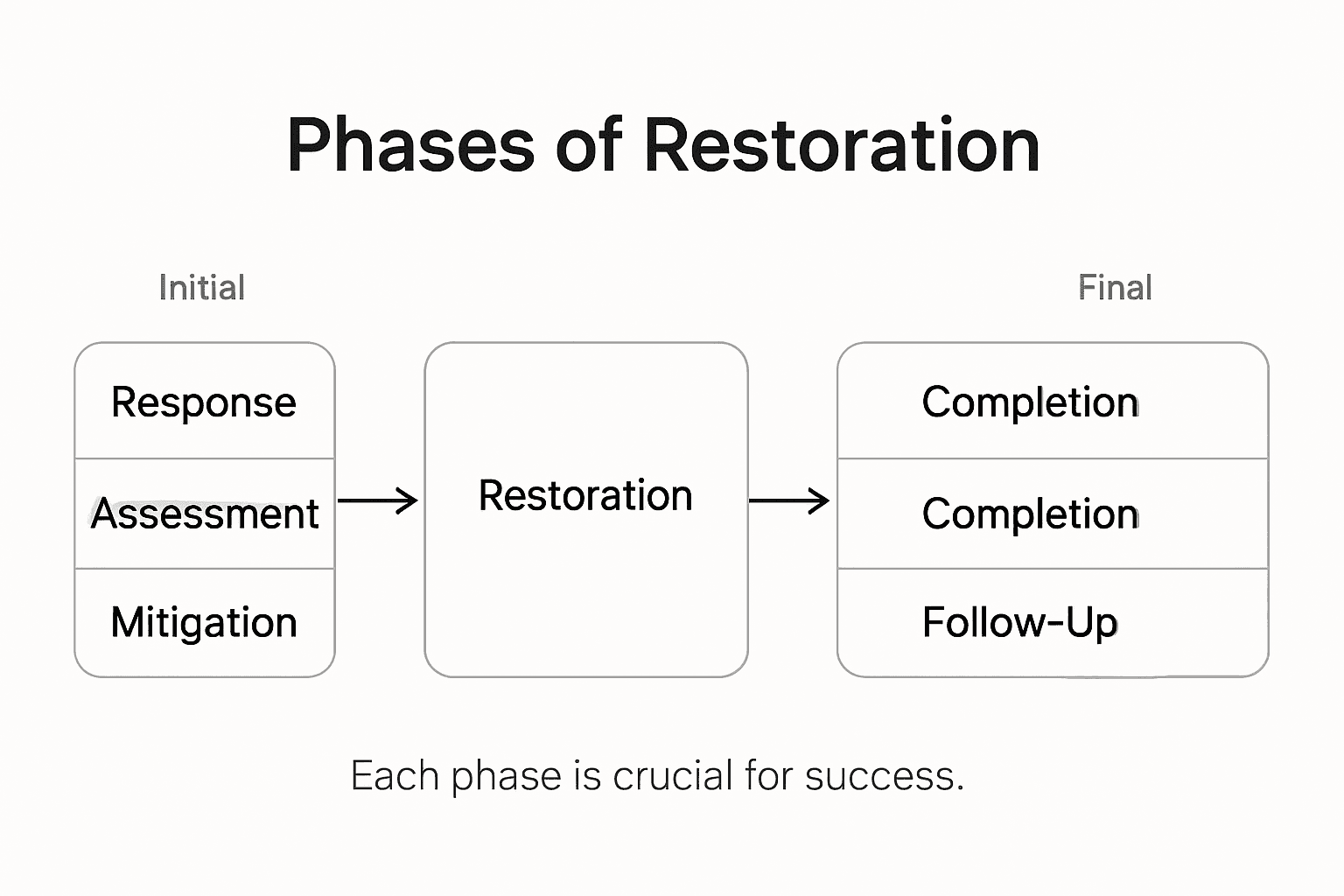
Land restoration involves a carefully structured process of assessing damage, planning objectives, and implementing targeted techniques that address specific property challenges. The restoration process typically encompasses several interconnected phases that ensure thorough and effective recovery.
The key phases of the restoration process include:
- Emergency Response and Initial Assessment
- Immediate damage evaluation
- Safety hazard identification
- Documentation of initial conditions
- Mitigation and Stabilization
- Preventing additional damage
- Implementing temporary protective measures
- Controlling moisture and environmental risks
- Detailed Damage Diagnosis
- Comprehensive structural analysis
- Material condition assessment
- Advanced diagnostic testing
- Restoration Planning
- Developing customized recovery strategies
- Establishing project timelines
- Budgeting and resource allocation
- Restoration Execution
- Implementing targeted repair techniques
- Using specialized restoration equipment
- Conducting systematic property reconstruction
- Verification and Quality Control
- Final inspection processes
- Meeting industry restoration standards
- Ensuring complete property recovery
Successful restoration requires adaptable strategies, technical expertise, and a methodical approach that addresses every aspect of property damage and recovery.
Pro Tip: Create a comprehensive digital documentation system that tracks each restoration phase, enabling better communication with stakeholders and providing a clear record of the recovery process.
Key Roles and Team Responsibilities
Restoration project management requires a collaborative approach with clearly defined roles and responsibilities. Each team member plays a critical part in ensuring successful property recovery, with responsibilities that intersect and complement one another to create a comprehensive restoration strategy.

Project teams typically consist of multiple specialized roles that facilitate communication, resource allocation, and risk management, each bringing unique expertise to the restoration process. Understanding these roles helps property managers create efficient and effective recovery teams.
Key restoration project team roles include:
- Project Executive
- Provides overall strategic leadership
- Ensures project alignment with organizational goals
- Makes high-level decision-making
- Project Manager
- Coordinates all restoration activities
- Develops comprehensive project plans
- Manages team communication and resources
- Tracks project progress and budgets
- Damage Assessment Specialist
- Conducts initial and detailed property damage evaluations
- Documents existing conditions
- Recommends specific restoration strategies
- Technical Restoration Expert
- Implements specialized restoration techniques
- Operates advanced restoration equipment
- Ensures technical precision in recovery processes
- Insurance Liaison
- Coordinates with insurance providers
- Manages claim documentation
- Facilitates financial aspects of restoration
- Safety Compliance Officer
- Monitors workplace safety protocols
- Ensures adherence to industry regulations
- Manages risk mitigation strategies
Successful restoration projects depend on seamless collaboration, with each team member understanding their specific responsibilities and how they contribute to the overall recovery effort.
Here’s a summary of how each restoration team role impacts project success:
| Role | Core Responsibilities | Impact on Project Outcomes |
|---|---|---|
| Project Executive | Strategic oversight | Ensures goal alignment |
| Project Manager | Coordination and planning | Directs workflow, prevents delays |
| Damage Assessment Specialist | Damage evaluation | Improves accuracy and efficiency |
| Technical Restoration Expert | Technique implementation | Ensures high-quality repairs |
| Insurance Liaison | Claims management | Secures financial resources |
| Safety Compliance Officer | Risk monitoring | Minimizes accidents and fines |
Pro Tip: Develop a comprehensive team communication matrix that clearly outlines each role’s responsibilities, reporting structures, and communication channels to minimize potential misunderstandings and streamline project execution.
Common Risks and How to Control Them
Restoration projects inherently involve complex challenges that can potentially derail project success if not managed proactively. Understanding and anticipating these risks is crucial for property managers seeking to minimize disruptions and maintain project efficiency.
Risk management requires a structured approach to identifying, evaluating, and mitigating potential events that could impact project objectives. Successful restoration teams must develop comprehensive strategies that address potential challenges before they escalate into significant problems.
Key restoration project risks include:
- Financial Risks
- Unexpected cost overruns
- Inaccurate initial damage assessments
- Budget allocation challenges
- Operational Risks
- Equipment failures
- Supply chain disruptions
- Workforce availability issues
- Technical Risks
- Complex damage scenarios
- Inadequate restoration techniques
- Technology or methodology limitations
- Regulatory Compliance Risks
- Changing safety standards
- Environmental protection requirements
- Insurance documentation complexities
- Communication Risks
- Miscommunication between stakeholders
- Inadequate progress reporting
- Unclear project scope definitions
Risk control strategies involve continuous monitoring, proactive planning, and developing flexible response mechanisms. Property managers must create robust risk management protocols that anticipate potential challenges and create contingency plans.
Effective risk management requires a holistic approach that integrates detailed assessment, strategic planning, and adaptive problem-solving techniques. By implementing comprehensive risk control measures, restoration teams can significantly improve project outcomes and minimize potential disruptions.
The table below outlines common restoration risks and how proactive strategies can mitigate their impact:
| Risk Type | Typical Impact | Proactive Control Strategy |
|---|---|---|
| Financial | Budget overruns | Early cost reviews and contingency funds |
| Operational | Project delays | Equipment checks and supplier backup plans |
| Technical | Reconstruction errors | Expert review and method validation |
| Regulatory | Compliance violations | Ongoing standards audit and legal updates |
| Communication | Stakeholder confusion | Regular reporting and defined channels |
Pro Tip: Develop a dynamic risk register that tracks potential challenges in real-time, allowing for immediate strategic adjustments and proactive problem resolution.
Regulatory Compliance and Insurance Coordination
Restoration projects operate within a complex landscape of legal requirements, safety standards, and insurance protocols. Navigating these intricate systems demands comprehensive knowledge and strategic coordination to ensure successful property recovery while maintaining full legal and financial compliance.
Restoration projects require careful alignment with federal and local regulatory standards that govern property recovery and damage mitigation, involving multiple stakeholders and intricate documentation processes. Property managers must develop sophisticated approaches to meet diverse regulatory requirements while managing insurance claim procedures effectively.
Key compliance and coordination elements include:
- Regulatory Compliance Framework
- Federal safety regulations
- State-specific restoration guidelines
- Environmental protection standards
- Building code requirements
- Historic property preservation rules
- Insurance Documentation Requirements
- Detailed damage assessment reports
- Photographic evidence documentation
- Cost estimation accuracy
- Claim submission protocols
- Transparent communication channels
- Risk Management Strategies
- Comprehensive liability assessment
- Insurance policy alignment
- Proactive risk mitigation
- Continuous regulatory monitoring
- Standard operating procedure development
- Stakeholder Communication
- Clear reporting mechanisms
- Regular status updates
- Collaborative problem solving
- Transparent decision making
- Coordinated documentation processes
Successful regulatory compliance and insurance coordination requires a multidisciplinary approach that integrates technical expertise, legal understanding, and strategic communication. Property managers must develop robust systems that anticipate potential challenges and create adaptive response mechanisms.
Pro Tip: Develop a centralized digital documentation system that tracks all regulatory requirements, insurance communications, and compliance metrics in real-time to streamline restoration project management.
Cost Factors and Avoiding Project Pitfalls
Restoration projects are complex financial undertakings that require meticulous planning and strategic financial management. Understanding the intricate cost landscape helps property managers anticipate potential challenges and develop robust financial strategies that prevent budget overruns and project failures.
Cost estimation in restoration projects involves comprehensive analysis of capital expenses, including planning, design, construction, and ongoing maintenance costs. Property managers must balance immediate expenses with long-term financial implications, creating a holistic approach that accounts for both visible and hidden cost factors.
Critical cost factors and potential pitfalls include:
- Direct Restoration Expenses
- Equipment and material costs
- Labor and specialized technician fees
- Immediate property damage repair
- Emergency response expenditures
- Specialized restoration technology
- Indirect Financial Considerations
- Temporary relocation expenses
- Business interruption costs
- Insurance deductible management
- Potential legal and compliance fees
- Additional living expenses
- Hidden Cost Risks
- Unforeseen structural damage
- Potential mold or secondary damage
- Complex restoration requirements
- Extended project timelines
- Additional remediation needs
- Long-Term Financial Implications
- Property value preservation
- Future insurance premium impacts
- Potential ongoing maintenance costs
- Energy efficiency considerations
- Preventative restoration investments
Successful cost management requires proactive monitoring, flexible budgeting strategies, and a comprehensive understanding of potential financial challenges throughout the restoration process.
Pro Tip: Develop a dynamic financial contingency plan that includes a 15-20% buffer in your restoration budget to accommodate unexpected challenges and prevent potential project derailment.
Take Control of Your Restoration Project with Expert Support
Restoration project management demands precise coordination, rapid damage assessment, and proactive risk control to fully restore properties and prevent costly setbacks. If you are facing the challenges of complex property damage, from water intrusion to mold growth or fire-related issues, you need a trusted partner who understands every phase of recovery and can guide you with proven strategies.
At PuroClean of Northeast Sacramento, we specialize in comprehensive restoration solutions designed to help property managers, homeowners, and insurance professionals successfully navigate emergency response, mitigation, and quality restoration techniques. Our 24/7 availability, insurance liaison expertise, and commitment to regulatory compliance ensure faster recovery and peace of mind during your most critical moments.
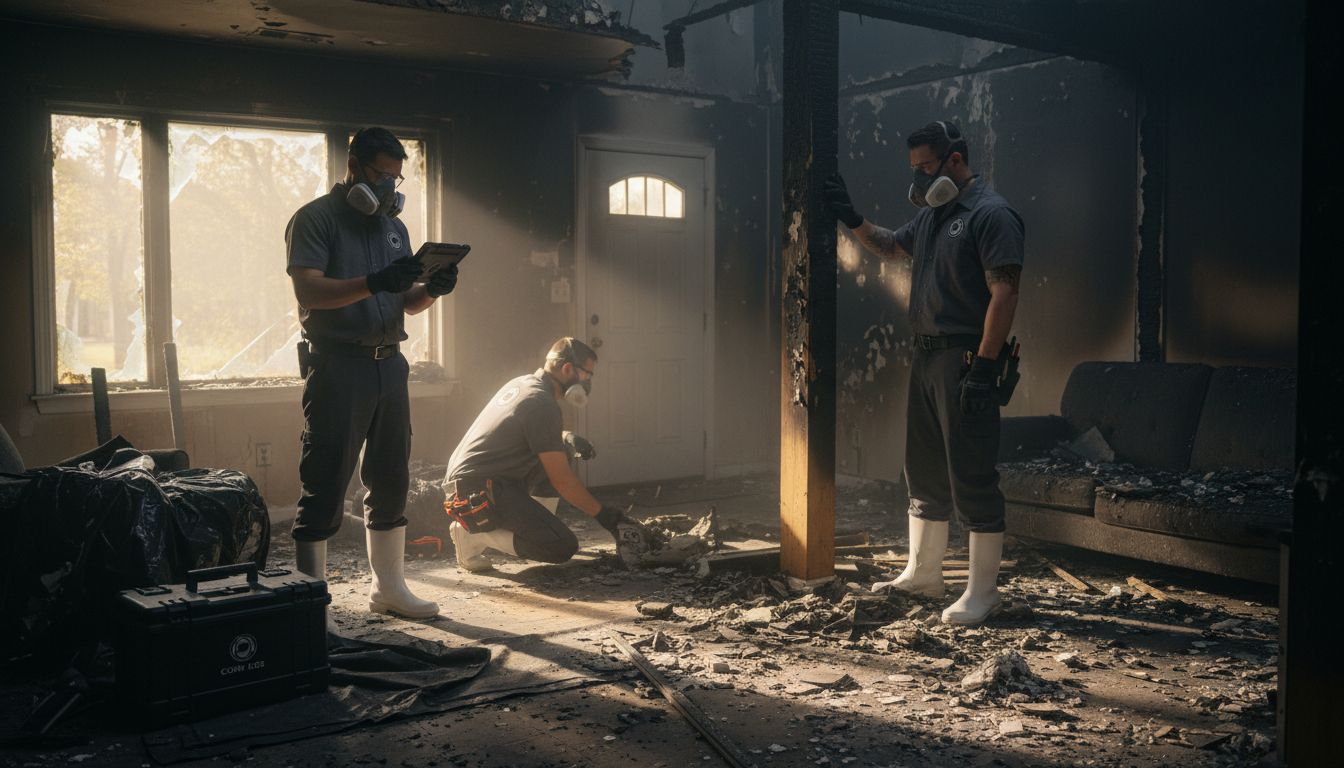
Don’t let restoration risks hold you back or cause unexpected costs. Act now to protect your property with our certified professionals who deliver efficient and compassionate care tailored to your unique situation. Visit PuroClean of Northeast Sacramento to start your restoration journey or learn more about how we manage complex projects and reduce your stress today.
Frequently Asked Questions
What are the main components of restoration project management?
Restoration project management involves several critical components including initial damage assessment, comprehensive risk evaluation, development of restoration plans, coordination with insurance providers, and quality control throughout the restoration process.
What are the essential phases of the restoration process?
The essential phases of the restoration process include emergency response and initial assessment, mitigation and stabilization, detailed damage diagnosis, restoration planning, restoration execution, and verification and quality control to ensure effective recovery.
How can risks be controlled in restoration projects?
Risk control in restoration projects involves identifying potential risks, continuously monitoring them, and developing flexible response strategies to mitigate issues like financial overruns, equipment failures, and compliance violations.
Why is regulatory compliance important in restoration management?
Regulatory compliance is crucial in restoration management to ensure that all recovery efforts meet legal standards, maintain safety guidelines, and adhere to environmental regulations, which helps avoid legal complications and enhances project success.
Recommended
3 Pillars of Successful Team Management – Summit Scale
Tips to Restore Your Michigan Business Safely
Top 5 Flood Restoration Mistakes Homeowners Make – PuroClean Emergency Restoration Specialists

 PuroClean of Northeast Sacramento