


7 Essential Steps for a Biohazard Cleanup Checklist Guide
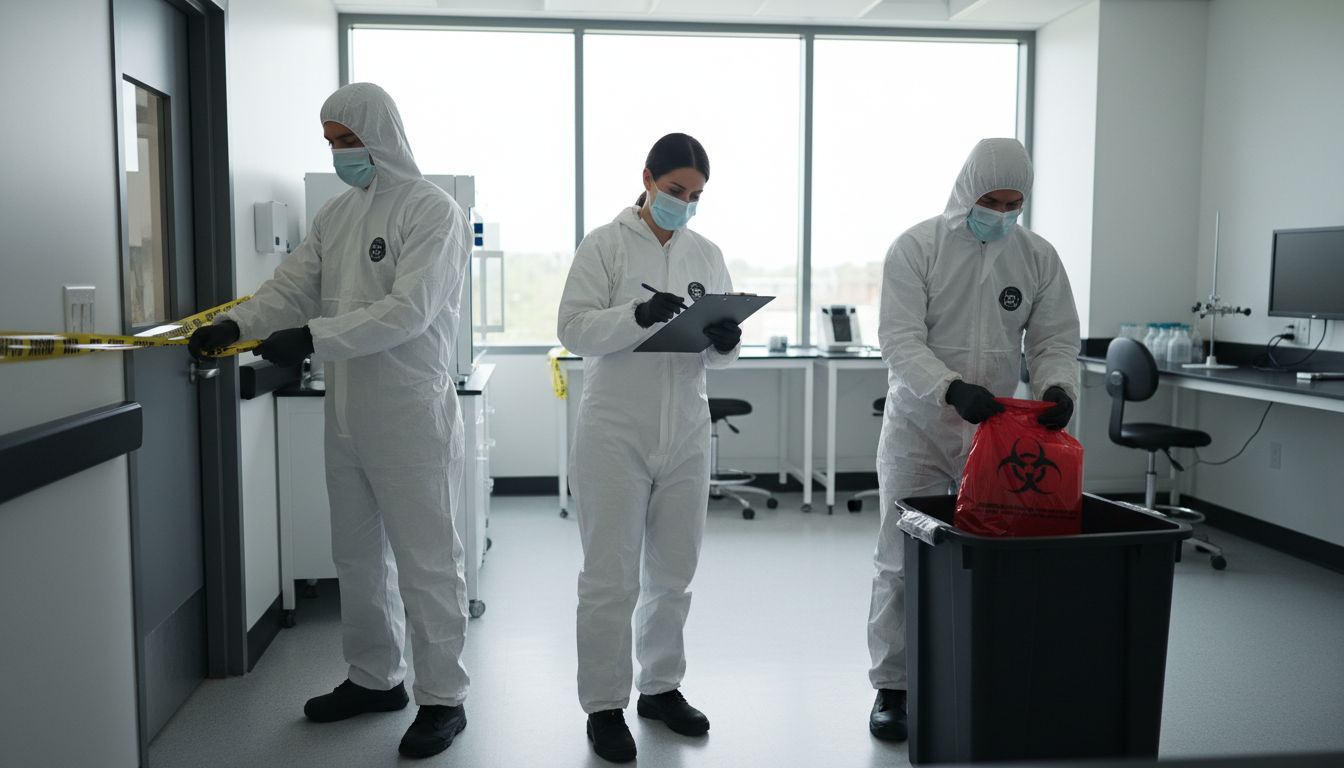
Biohazard cleanup is not as rare as many people think. Each year thousands of workers face dangerous exposure risks in contaminated environments. Whether you are managing a workplace accident scene or handling sensitive materials at home, understanding the right steps for safe cleanup is crucial. The right knowledge protects your health, prevents further contamination, and ensures everyone stays safe throughout the process. This guide breaks down each step with practical tips you can trust to keep your environment secure.
Table of Contents
- 1. Assess The Area And Identify Biohazards
- 2. Secure The Site And Restrict Access
- 3. Gather Personal Protective Equipment (PPE)
- 4. Remove Contaminated Materials Safely
- 5. Clean And Disinfect All Surfaces Thoroughly
- 6. Dispose Of Waste According To Regulations
- 7. Document The Cleanup Process For Records
Quick Summary
| Takeaway | Explanation |
|---|---|
| 1. Assess for Biohazards First | Conduct a thorough area assessment to identify potential health risks, including blood, bodily fluids, and medical waste. |
| 2. Secure the Cleanup Area | Implement access restrictions with barriers and warning signs to keep unauthorized personnel away from contaminated sites. |
| 3. Use Appropriate PPE | Select and wear proper personal protective equipment tailored to the specific biological risks to ensure maximum safety. |
| 4. Follow Safe Material Removal Protocols | Utilize double bagging and proper labeling to minimize the risk of spreading contaminants during removal. |
| 5. Document Cleanup Process Thoroughly | Maintain detailed records of assessments, procedures, and waste disposal for safety compliance and future reference. |
1. Assess the Area and Identify Biohazards
Biohazard cleanup begins with a comprehensive area assessment that identifies potential health and safety risks. Understanding what constitutes a biohazard is the critical first step in protecting yourself and others during cleanup operations.
According to OSHA, proper identification involves recognizing biological materials that can potentially transmit infectious diseases. These include blood, bodily fluids, medical waste, and other organic substances that pose significant health risks.
To effectively assess an area, you need to systematically scan the environment and look for specific warning signs. This means wearing appropriate personal protective equipment (PPE) and conducting a careful visual inspection. Key indicators of biohazards include:
- Visible blood or bodily fluid stains
- Discarded medical equipment
- Unusual organic material residue
- Signs of potential infectious contamination
The CDC emphasizes that thorough identification is crucial for determining the appropriate remediation strategy. Professional assessment helps categorize the level of risk and select the correct cleanup protocols.
Remember that personal safety comes first. If you are uncertain about the extent or type of biohazard present, always consult with professional biohazard cleanup specialists who can provide expert guidance and comprehensive remediation services.
2. Secure the Site and Restrict Access
Securing a biohazard site is more than a precautionary measure its a critical safety protocol that protects people from potential health risks. Your primary goal is to create an immediate barrier between contaminated areas and potential human exposure.
OSHA emphasizes the critical importance of site isolation during hazardous waste management. This means implementing immediate and comprehensive access control strategies to prevent accidental contamination or exposure.
Effective site securing involves several key actions:
- Establish clear physical boundaries using warning tape or barriers
- Post prominent warning signs indicating biological hazard risks
- Lock or block entry points to the contaminated area
- Remove unnecessary personnel from the immediate vicinity
Practical steps for restricting access include:
- Using bright yellow or red warning tape
- Placing clearly visible warning signs with specific hazard information
- Ensuring all entry points are physically blocked or locked
- Communicating the restricted status to all nearby personnel
The CDC recommends comprehensive site control as a fundamental step in preventing potential disease transmission. Professional biohazard teams understand that proper site restriction is not just about physical barriers but also about creating a safe zone that minimizes risk for everyone involved.
3. Gather Personal Protective Equipment (PPE)
Personal Protective Equipment is your critical defense shield against biological hazards during cleanup operations. Proper PPE selection and use can mean the difference between safety and potential health risks.
OSHA provides comprehensive guidelines for selecting and utilizing appropriate protective gear during hazardous waste management. The right PPE creates an impenetrable barrier between you and dangerous biological contaminants.
Essential PPE components include:
- Full body disposable coveralls
- Chemical resistant gloves (double layer recommended)
- High quality respiratory protection
- Splash resistant face shield or safety goggles
- Waterproof boots or shoe coverings
As CDC guidance suggests, your PPE selection must match the specific biohazard risk level. This means understanding the potential contaminants and choosing equipment that provides comprehensive protection.
Proper PPE usage requires:
- Inspecting equipment before use
- Ensuring proper fit and full body coverage
- Understanding correct donning and removal procedures
- Disposing of contaminated PPE safely after use
Remember that no single piece of equipment provides complete protection. A systematic approach combining multiple layers of protective gear is your best defense against potential biological exposure.
4. Remove Contaminated Materials Safely
Removing contaminated materials requires precision and careful methodology to prevent further spread of biological hazards. This step is crucial in preventing potential health risks and ensuring complete decontamination.
CDC guidelines emphasize the importance of systematic removal of biohazardous materials with minimal risk of additional contamination. Your approach must be methodical and controlled from start to finish.
Key strategies for safe material removal include:
- Use double bagging for all contaminated items
- Seal bags completely with no air pockets
- Label bags as biohazardous waste
- Use puncture resistant containers for sharp objects
- Avoid dragging or dropping contaminated materials
OSHA recommends specific techniques to minimize exposure during waste handling. This means maintaining your personal protective equipment throughout the entire removal process and using controlled movements to prevent accidental splashing or spreading of contaminants.
Professional cleanup teams follow a strict protocol of containment and disposal. They understand that each movement can potentially create additional risk. Slow. Deliberate. Careful. These are the watchwords of safe biohazard material removal.
5. Clean and Disinfect All Surfaces Thoroughly
Cleaning and disinfecting surfaces is far more complex than a simple wipe down. This critical step requires precision and specific techniques to eliminate potentially dangerous biological contaminants completely.
CDC guidelines emphasize the critical difference between cleaning and true disinfection. Cleaning removes visible dirt while disinfection destroys microscopic pathogens that cannot be seen with the naked eye.
Comprehensive surface disinfection requires:
- Use EPA registered disinfectants effective against specific biohazards
- Apply disinfectant systematically from least contaminated to most contaminated areas
- Ensure sufficient contact time for disinfectant to kill pathogens
- Use disposable cleaning materials to prevent cross contamination
- Clean surfaces multiple times using different techniques
EPA and CDC joint guidance recommends a multistep approach. This means understanding that surface disinfection is not a one time event but a carefully orchestrated process requiring attention to detail and thorough methodology.
Professional biohazard cleanup teams know that true disinfection goes beyond surface appearance. It requires scientific precision and a methodical approach to ensure complete pathogen elimination.
6. Dispose of Waste According to Regulations
Proper waste disposal is not just a recommendation its a critical legal and safety requirement for biohazard cleanup. Your disposal strategy must align with complex regulatory standards to protect public health and avoid potential legal consequences.
CDC guidelines emphasize the importance of understanding specific waste classification and disposal protocols. Different types of biohazardous materials require unique handling and elimination procedures.
Critical waste disposal requirements include:
- Segregate different types of biohazardous materials
- Use color coded containers for specific waste categories
- Seal containers completely to prevent leakage
- Label all waste containers with appropriate biohazard markings
- Document waste removal process for compliance tracking
OSHA standards mandate strict adherence to waste management protocols. This means every step from collection to final disposal must follow precise regulatory guidelines.
Professional biohazard teams understand that waste disposal is more than just removing contaminated materials. It is a complex process requiring scientific precision technical knowledge and unwavering commitment to safety regulations.
7. Document the Cleanup Process for Records
Documenting your biohazard cleanup process is not just bureaucratic paperwork its a critical legal and safety requirement that protects you and future occupants of the space. Thorough record keeping serves as your professional shield and historical reference point.
OSHA standards mandate comprehensive documentation to ensure worker safety and regulatory compliance. Your records become an official narrative of the entire cleanup operation.
Essential documentation elements include:
- Detailed initial site assessment report
- Photographs of contaminated and cleaned areas
- Inventory of materials removed and disposed
- PPE used during cleanup
- Disinfection methods and products applied
- Time and personnel involved in cleanup
- Waste disposal documentation and tracking numbers
CDC guidelines emphasize that documentation is more than just protection. It creates an audit trail that can be crucial for insurance claims legal protection and future property management.
Professional biohazard teams understand that meticulous record keeping is the final layer of protection in a comprehensive cleanup strategy. Your documentation tells the complete story of how potential health hazards were systematically identified eliminated and resolved.
Below is a comprehensive table summarizing the main steps and strategies involved in biohazard cleanup, as discussed in the article.
| Main Step | Key Points & Actions | Benefits/Outcomes |
|---|---|---|
| Assess the Area and Identify Biohazards | Systematic scanning; Wear PPE; Look for warning signs like blood or medical waste | Accurate identification of risks; Foundation for proper cleanup |
| Secure the Site and Restrict Access | Use barriers and warning signs; Restrict entry | Prevents accidental exposure; Protects public health |
| Gather Personal Protective Equipment (PPE) | Select appropriate gear (coveralls, gloves, mask); Ensure proper fit | Provides safety against contaminants; Reduces health risks |
| Remove Contaminated Materials Safely | Use double bagging; Seal and label bags; Handle sharp objects with care | Prevents contamination spread; Ensures safe material handling |
| Clean and Disinfect All Surfaces Thoroughly | Use registered disinfectants; Follow a systematic approach | Eliminates pathogens; Ensures sanitation |
| Dispose of Waste According to Regulations | Segregate and label waste; Use proper containers | Meets legal requirements; Prevents environmental impact |
| Document the Cleanup Process for Records | Keep detailed records and photographs; Track waste disposal | Ensures compliance; Provides legal protection |
Take Control of Biohazard Cleanup with Trusted Experts
Facing the challenge of biohazard cleanup can be overwhelming. From identifying hazards to safely removing contaminated materials and properly disposing of waste, each step demands precision and expert care. The risks of improper handling are serious and immediate. You need a team that understands the critical importance of safety protocols like PPE use, site securing, and thorough disinfection to protect your health and property.
PuroClean of Northeast Sacramento offers the comprehensive biohazard cleanup solutions your home or business requires. With 24/7 emergency response, advanced technology, and industry certified professionals, we bring peace of mind in your most urgent moments. Whether you need careful site assessment or detailed documentation for insurance purposes, we are ready to step in with quick, compassionate action.
Don’t wait until risks escalate. Visit our biohazard cleanup service page now to learn how our expert team can help you safely and effectively restore your property. Take the first step toward a safer, cleaner environment by contacting us today at PuroClean of Northeast Sacramento. Your health and peace of mind depend on swift professional care.
Frequently Asked Questions
What are the first steps in a biohazard cleanup checklist?
Begin your biohazard cleanup by assessing the area and identifying potential biohazards. Systematically scan the environment for visible blood, bodily fluids, and discarded medical equipment, and wear appropriate personal protective equipment (PPE) during this assessment.
How do I secure a site for biohazard cleanup?
To secure a biohazard site, establish clear physical boundaries using warning tape or barriers. Post prominent warning signs to indicate biological hazards and ensure that all entry points are locked or blocked to restrict access.
What personal protective equipment (PPE) do I need for biohazard cleanup?
Essential PPE for biohazard cleanup includes full-body disposable coveralls, chemical-resistant gloves, and high-quality respiratory protection. Ensure you inspect and properly fit each piece of equipment to maximize your safety.
How should I remove contaminated materials safely?
Remove contaminated materials by using double bagging techniques and sealing bags completely to prevent leakage. Handle items carefully to minimize the spread of any contaminants and avoid dragging or dropping them during the removal process.
What methods should I use for cleaning and disinfecting surfaces?
For cleaning and disinfecting surfaces, use EPA-registered disinfectants effective against the specific biohazard present. Ensure that you apply disinfectants systematically and allow for sufficient contact time to eliminate pathogens effectively.
What documentation is necessary after a biohazard cleanup?
Documentation after a biohazard cleanup should include a detailed site assessment report, photographs of the areas cleaned, and an inventory of materials disposed. Record the disinfection methods used and document the time and personnel involved to create a comprehensive record of the cleanup process.
Recommended
Crime Scene Cleanup – PuroClean of Abilene
Guide to Biohazard Cleanup Alexandria VA for Owners
Top 5 Biohazard Cleanup Scenarios Alexandria That Need Professional Cleanup