


Effective Fire Damage Response Steps for Safe Recovery
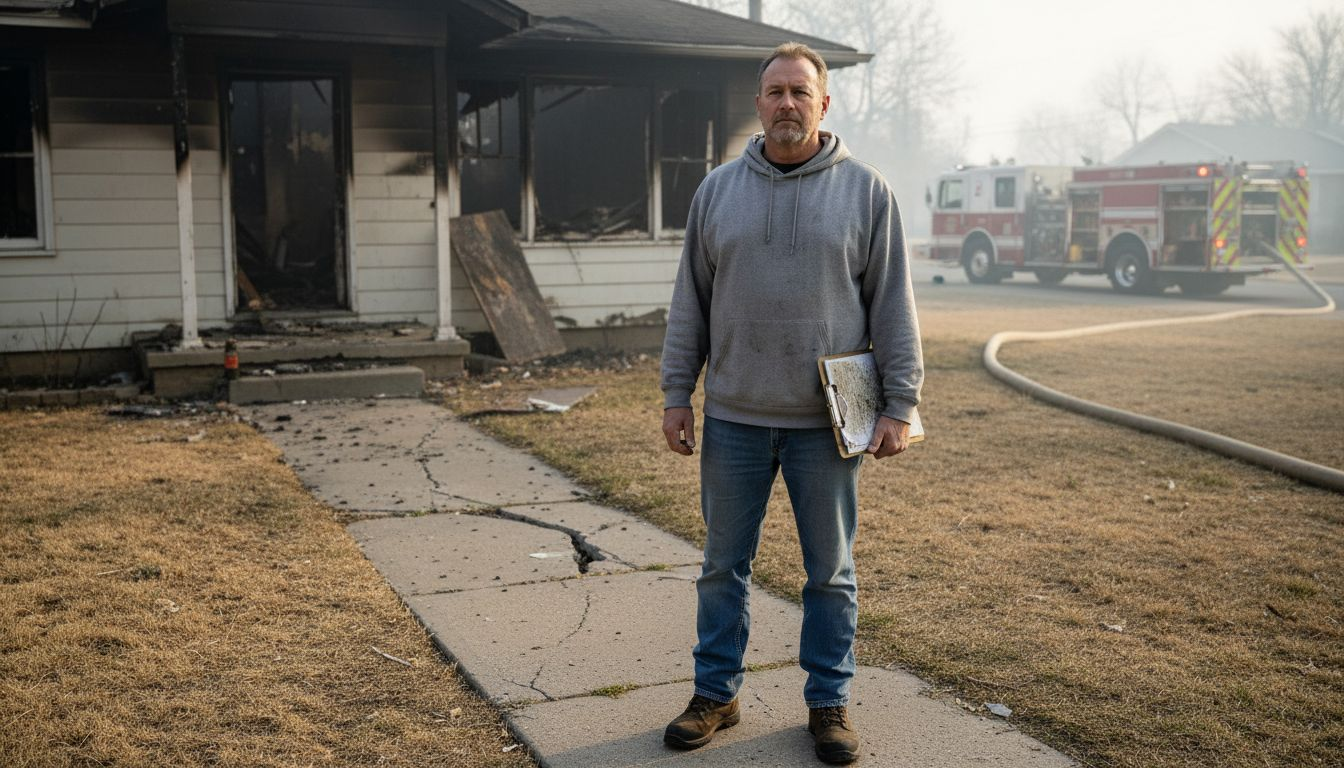
Every year, thousands of American families experience the stress and uncertainty brought by residential fires, especially in areas like Northeast Sacramento. The sudden impact can leave homeowners unsure of which steps truly protect their safety and property. Knowing how to assess hazards, contact professionals, and begin secure restoration can make a crucial difference. This guide offers actionable insights for immediate response and long-term recovery after fire damage, helping Northeast Sacramento residents find clarity and reliable direction.
Table of Contents
- Step 1: Assess Property Safety and Hazards
- Step 2: Contact Emergency Services and Professionals
- Step 3: Secure and Document Affected Areas
- Step 4: Remove Debris and Begin Cleanup
- Step 5: Restore Damaged Structures and Belongings
- Step 6: Verify Restoration Quality and Safety
Quick Summary
| Key Message | Explanation |
|---|---|
| 1. Assess Property Safety First | Before re-entering after a fire, check for structural damage and hazards to ensure safety. |
| 2. Contact Emergency Services Immediately | Report the fire, request medical help, and get an official report for insurance claims. |
| 3. Document Fire Damage Thoroughly | Take photos and videos of all affected areas to support your insurance claims and restoration efforts. |
| 4. Use Protective Equipment for Cleanup | Wear appropriate gear while cleaning up to minimize exposure to toxic substances present in fire debris. |
| 5. Verify Restoration Quality Regularly | Conduct follow-up inspections to ensure all repairs meet safety standards and prevent future issues. |
Step 1: Assess Property Safety and Hazards
After a fire, your first priority is determining whether your property is safe to enter. Checking home safety requires careful evaluation of multiple potential hazards that could compromise your immediate environment.
Begin by examining the exterior of your home for significant structural damage. Look for signs like cracked foundations, sagging rooflines, broken support beams, or unstable walls. These indicators suggest potential catastrophic structural weakness that could make re-entry dangerous. Check power lines and gas connections for damage electrical systems or gas leaks can create immediate life threatening scenarios. Do not attempt to enter if you observe any compromised utility lines or massive structural damage.
Once exterior assessment is complete, carefully evaluate interior conditions. Watch for hazards like weakened floors that might collapse, hanging ceiling materials, smoke residue, and potential toxic chemical remnants from burned synthetic materials. Move slowly and deliberately when inside, testing each surface before placing full weight. Wear protective equipment like respirator masks, safety goggles, and sturdy boots to minimize exposure to potentially harmful particulates.
Pro Tip: Always consult a professional building inspector before attempting independent property assessment after significant fire damage.
Here’s a summary of common hazards to check after a house fire:
| Hazard Type | Potential Risks | What to Check |
|---|---|---|
| Structural Damage | Collapse or injury | Foundation, roof, walls |
| Utility Compromise | Fire, explosion, electrocution | Power lines, gas, wiring |
| Chemical Exposure | Respiratory issues | Soot, melting plastics, residue |
| Environmental Dangers | Mold, debris, toxins | Water damage, leftover debris |
Step 2: Contact Emergency Services and Professionals
Immediate communication with emergency services is critical after experiencing a fire incident. Coordinating emergency response quickly ensures safety and initiates the recovery process.
Call 9-1-1 first to report the fire and request medical assistance if anyone has sustained injuries. Emergency responders will assess the scene, confirm safety, and provide immediate medical treatment if needed. After ensuring personal safety, contact your local fire department for an official incident report which will be essential for insurance claims. Next, reach out to your insurance provider to start the claims process and document the extent of fire damage. Professional restoration services can offer comprehensive assessments and guide you through the recovery steps.
During this process, document everything carefully. Take photographs of the damage, keep receipts for emergency expenses, and maintain clear communication with all professionals involved. Professional emergency support networks can also provide emotional support and resources to help you navigate this challenging time.
Pro Tip: Keep a physical and digital file of all documentation including emergency contact numbers emergency responder reports and insurance information in an easily accessible location.
Use this table for quick reference on professional roles during fire recovery:
| Professional Type | Key Responsibilities | When to Involve |
|---|---|---|
| Emergency Responders | Medical care, scene safety | Immediately after fire |
| Insurance Adjuster | Damage assessment, claim processing | After initial safety ensured |
| Restoration Experts | Cleanup and repairs guidance | As soon as damage assessed |
| Building Inspectors | Structural integrity verification | Before re-entry and repairs |
Step 3: Secure and Document Affected Areas
Documenting fire damage comprehensively is crucial for insurance claims and recovery efforts. Documenting property damage thoroughly helps ensure you receive appropriate assistance and support.
Begin by taking detailed photographs and videos of all damaged areas both inside and outside your property. Capture wide angle shots that show overall damage as well as close-up images highlighting specific destruction points. Include images of structural damage, burned items, water damage from firefighting efforts, and any personal property impacted. Use good lighting and multiple perspectives to create a comprehensive visual record. Make digital backups of these images immediately and store them in cloud storage or on an external hard drive.
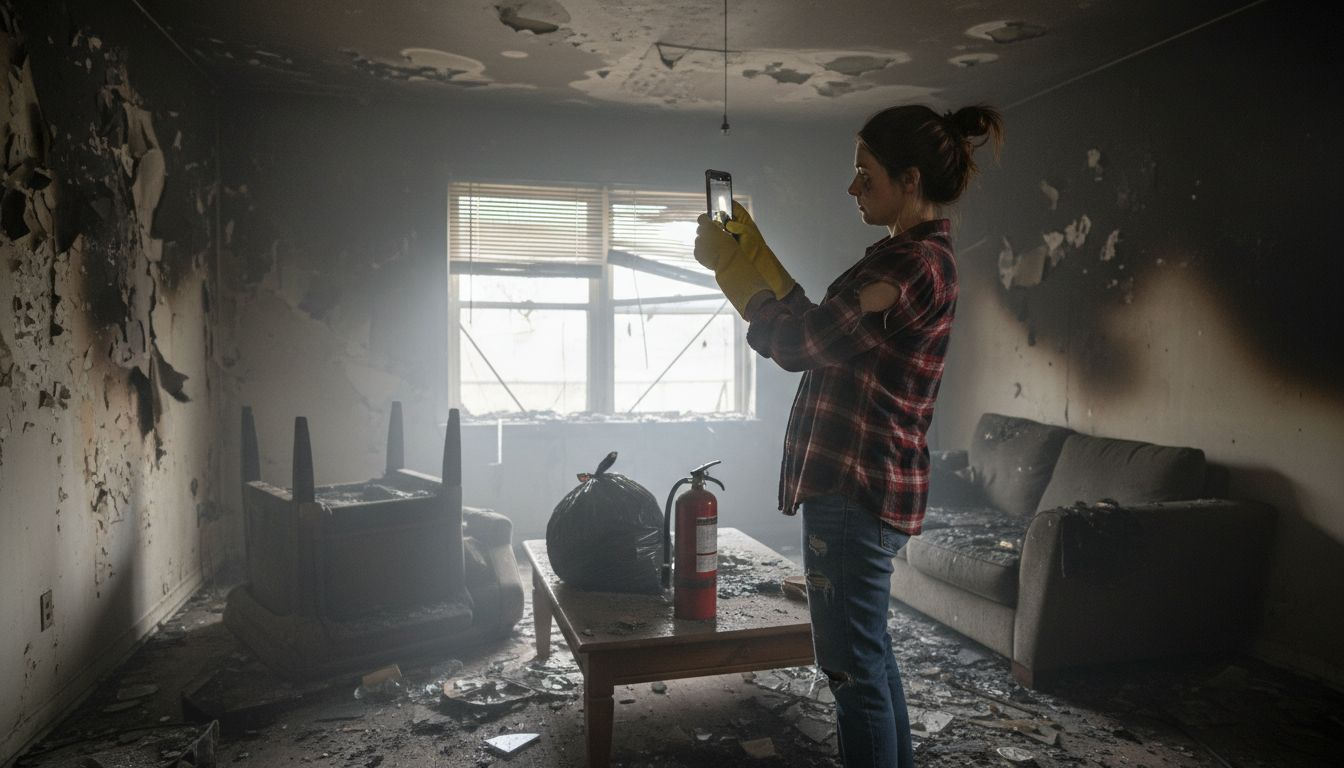
Secure the property to prevent further damage or unauthorized access. Board up broken windows, cover damaged roofs with weatherproof tarps, and lock all entry points. Careful property documentation supports insurance claims and helps professional restoration teams understand the full extent of damage. Collect all relevant documents including utility bills, mortgage statements, and property ownership records to support your recovery process.
Pro Tip: Create a detailed inventory list of damaged items including estimated value purchase date and replacement cost to streamline your insurance claim process.
Step 4: Remove Debris and Begin Cleanup
Cleaning up after a fire requires careful strategy and comprehensive safety precautions. Fire debris cleanup involves significant hazards that demand professional attention and methodical approach.
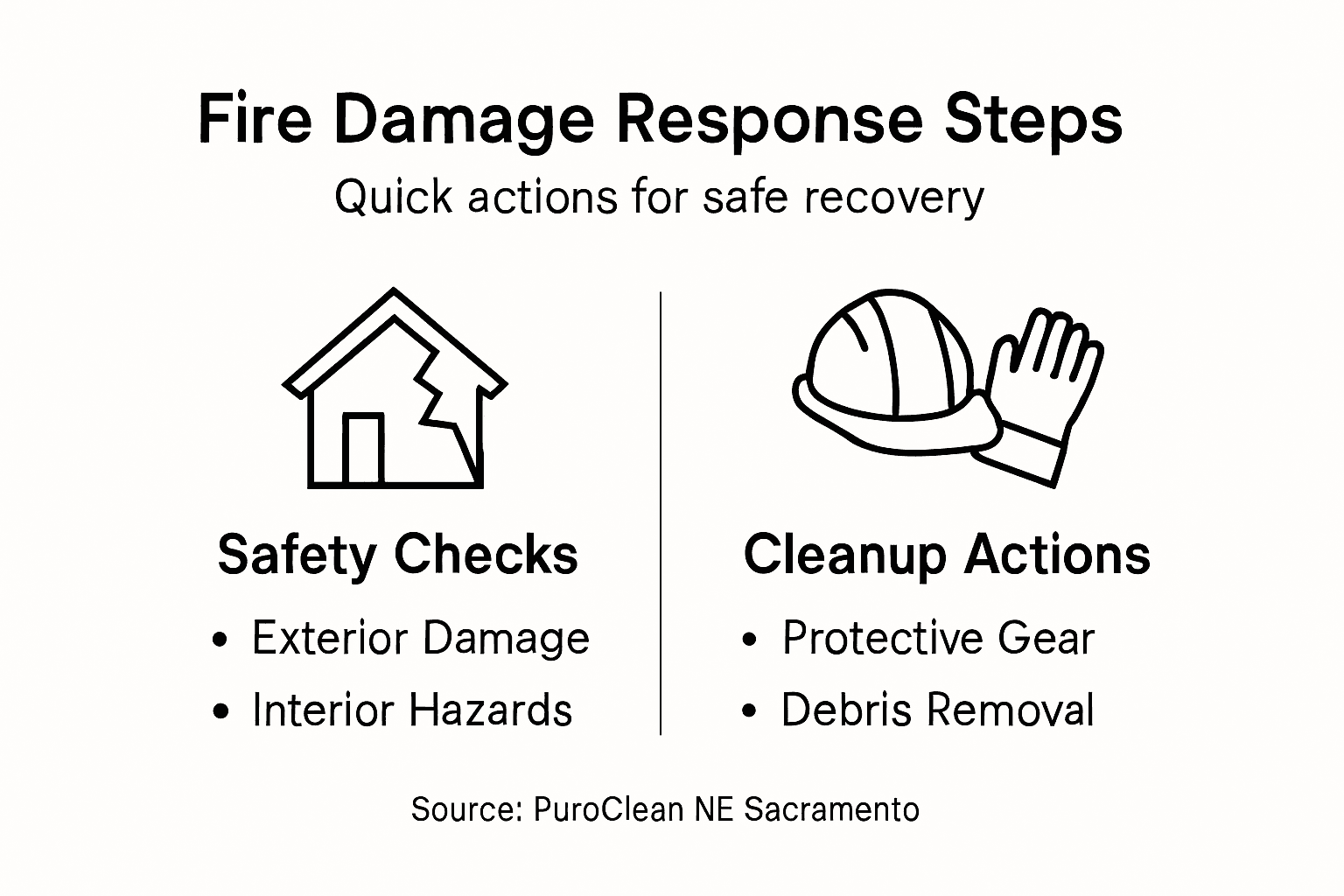
Start by wearing appropriate personal protective equipment including respirator masks, thick gloves, protective eyewear, and full body coverage to prevent exposure to toxic ash and soot particles. Before handling any debris, wet down materials to minimize dust and reduce potential inhalation risks. Carefully sort through damaged items identifying those that can be salvaged versus those requiring immediate disposal. Separate materials into categories like metal scraps, wood debris, electronics, and household items to facilitate proper disposal and potential insurance documentation.
Cleaning techniques for fire damage require specialized approaches for different surfaces. Use specific cleaning agents designed for smoke and soot removal on hard surfaces, and be prepared to discard porous materials like fabric, carpeting, and insulation that may be irreparably damaged. Work systematically through each area of your property focusing on thorough yet careful removal of debris and potential contaminants.
Pro Tip: Photograph each area before and after cleanup to provide comprehensive documentation for insurance claims and restoration professionals.
Step 5: Restore Damaged Structures and Belongings
Restoring your property after fire damage requires systematic and careful planning to ensure safety and minimize long-term damage. Disaster restoration involves comprehensive assessment of structural integrity and potential health risks.
Begin with a thorough professional inspection to evaluate the extent of structural damage. Look for compromised foundation elements, weakened support beams, water damage from firefighting efforts, and potential electrical system issues. Professional restoration experts will help determine which structures can be repaired and which might require complete replacement. For personal belongings, create a detailed inventory and categorize items into salvageable and non-salvageable groups. Certain porous materials like fabrics, carpets, and upholstery might need professional cleaning or complete replacement due to smoke and soot penetration.
Post-fire recovery strategies emphasize rapid response to prevent additional deterioration. Address moisture issues immediately to prevent mold growth, and use specialized cleaning techniques for different surfaces. Metal and hard surfaces can often be professionally cleaned, while wooden structures might require more extensive restoration. Work closely with restoration professionals who can provide specialized treatments for smoke odor removal and structural stabilization.
Pro Tip: Prioritize structural safety assessments and document every restoration step for insurance purposes and future reference.
Step 6: Verify Restoration Quality and Safety
The final stage of fire damage recovery requires meticulous verification of restoration efforts to ensure your property is truly safe and fully restored. Post-recovery monitoring ensures comprehensive restoration and protects your long-term investment.
Engage professional inspectors to conduct thorough environmental and structural assessments. These experts will test for hidden hazards like residual smoke particles, potential mold growth, compromised electrical systems, and structural weaknesses that might not be immediately visible. Request detailed reports documenting their findings, including air quality measurements, moisture levels, and structural integrity evaluations. Pay special attention to areas like electrical systems, load-bearing walls, foundation, and potential chemical residues from fire suppression materials.
Home restoration safety standards require comprehensive testing and verification. Schedule follow-up inspections at different intervals to ensure no secondary damage develops over time. Compare restoration results against initial damage assessments and confirm that all repair work meets professional industry standards. Request certification documentation from restoration professionals to validate the quality of work completed.
Pro Tip: Always request and retain comprehensive documentation of all restoration work for insurance records and future property assessments.
Expert Fire Damage Restoration Starts Here
Experiencing fire damage is overwhelming and complex. From assessing safety hazards to documenting damage and beginning cleanup, every step demands precision and care. The challenges of addressing structural damage, chemical exposure, and securing your property are just the beginning. Recovery requires trusted professionals who understand these critical steps and can help you restore your home or business safely and efficiently.
At PuroClean of Northeast Sacramento, we specialize in comprehensive fire and smoke restoration services. Our team is available 24/7 with industry certifications and advanced technology to handle every phase of your recovery, including detailed damage assessment, debris removal, and final restoration. We also assist with insurance claims to ease your burden during this difficult time. Start your journey to safety and restoration now.
Don’t wait until hidden dangers or secondary damage worsen your loss. Contact PuroClean of Northeast Sacramento today for immediate emergency response and expert fire damage remediation. Your property and peace of mind deserve the fastest and most professional care available.
Frequently Asked Questions
What should I check first when assessing fire damage to my property?
Begin by examining the exterior for structural damage such as cracks in the foundation or sagging rooflines. If you notice any significant issues, do not attempt to enter; prioritize your safety by waiting for professionals to evaluate the situation.
How can I ensure safety before entering my home after a fire?
Wear protective equipment like respirator masks, safety goggles, and sturdy boots to minimize exposure to harmful particulates. Move slowly and test each surface before placing full weight to avoid hazards like weakened floors or hanging ceiling materials.
What documents should I gather for my insurance claim after a fire?
Collect everything related to the property, including photographs of the damage, utility bills, mortgage statements, and an inventory list of affected items. Organizing these documents will streamline the claims process and facilitate communication with your insurance provider.
When is it appropriate to contact restoration professionals after a fire?
Contact restoration experts as soon as you have documented the damage and ensured safety. They can assist in comprehensive assessments and provide guidance on effective cleanup and restoration steps to minimize further damage.
How can I prevent mold growth after experiencing fire damage?
Address any moisture issues immediately, as standing water or wet materials can lead to mold growth. Implement drying techniques promptly, and consider professional help if necessary to ensure thorough moisture removal before restoration commences.
What steps should I take to verify the quality of restoration work?
Request detailed reports from professional inspectors to assess structural integrity and environmental safety. Schedule follow-up inspections to monitor for potential secondary damage and ensure all restoration meets industry standards.
Recommended
What to Do After Fire Damage in Apex NC | Recovery Guide
Your First 24 Hours After a House Fire: The Dos & Don’ts – PuroClean Disaster Mitigation