 PuroClean of Northeast Sacramento
 Flood Damage Explained: Complete Restoration Guide
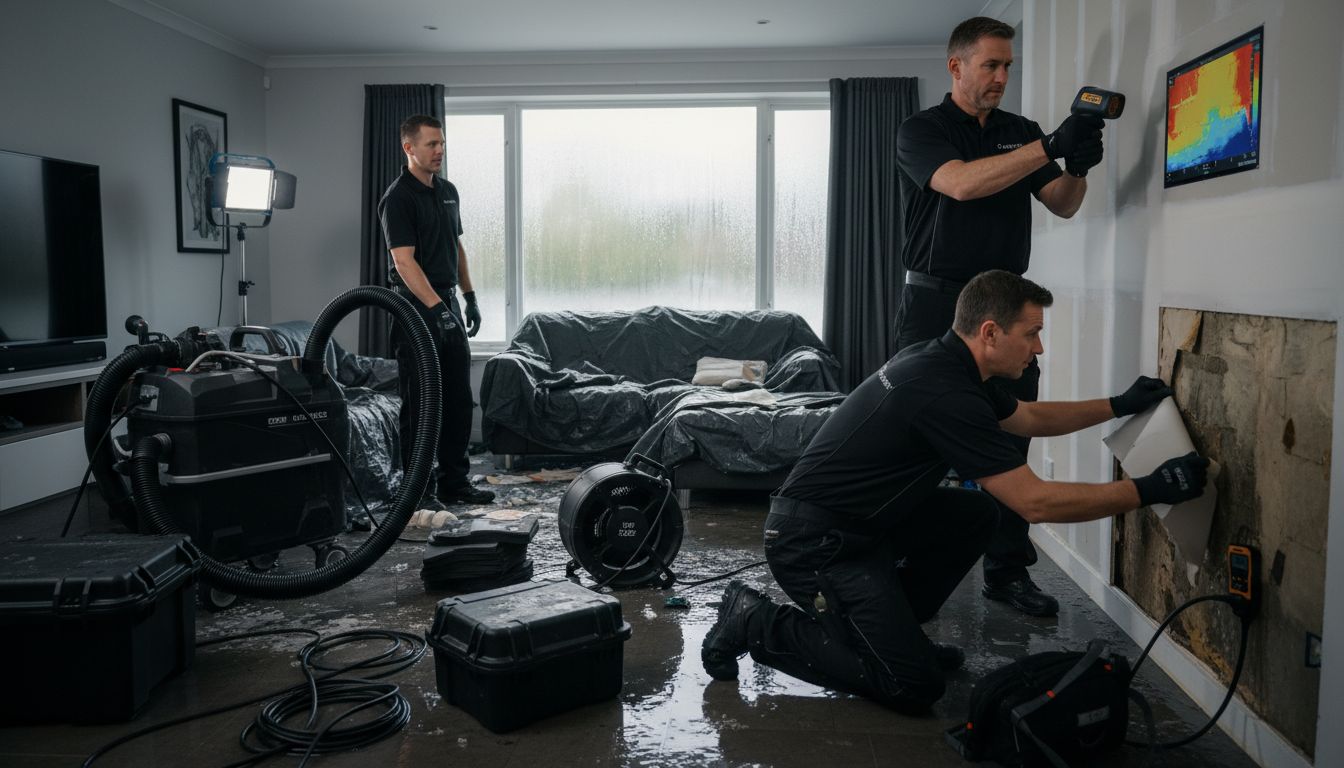
Nearly one in four american homes faces a serious risk of flood damage during their lifetime, yet many property owners still underestimate the long-term effects. Understanding how floodwater seeps into walls, flooring, and electrical systems helps explain why simple cleanup is rarely enough. Clearing up the confusion around these risks empowers homeowners to protect their investment, avoid health hazards, and make informed decisions in emergencies.
Table of Contents
- Defining Flood Damage And Common Myths
- Types Of Flood Damage In Properties
- How Professional Restoration Works
- Insurance, Costs, And Coverage Considerations
- Steps To Prevent And Minimize Flood Damage
Key Takeaways
| Point | Details |
|---|---|
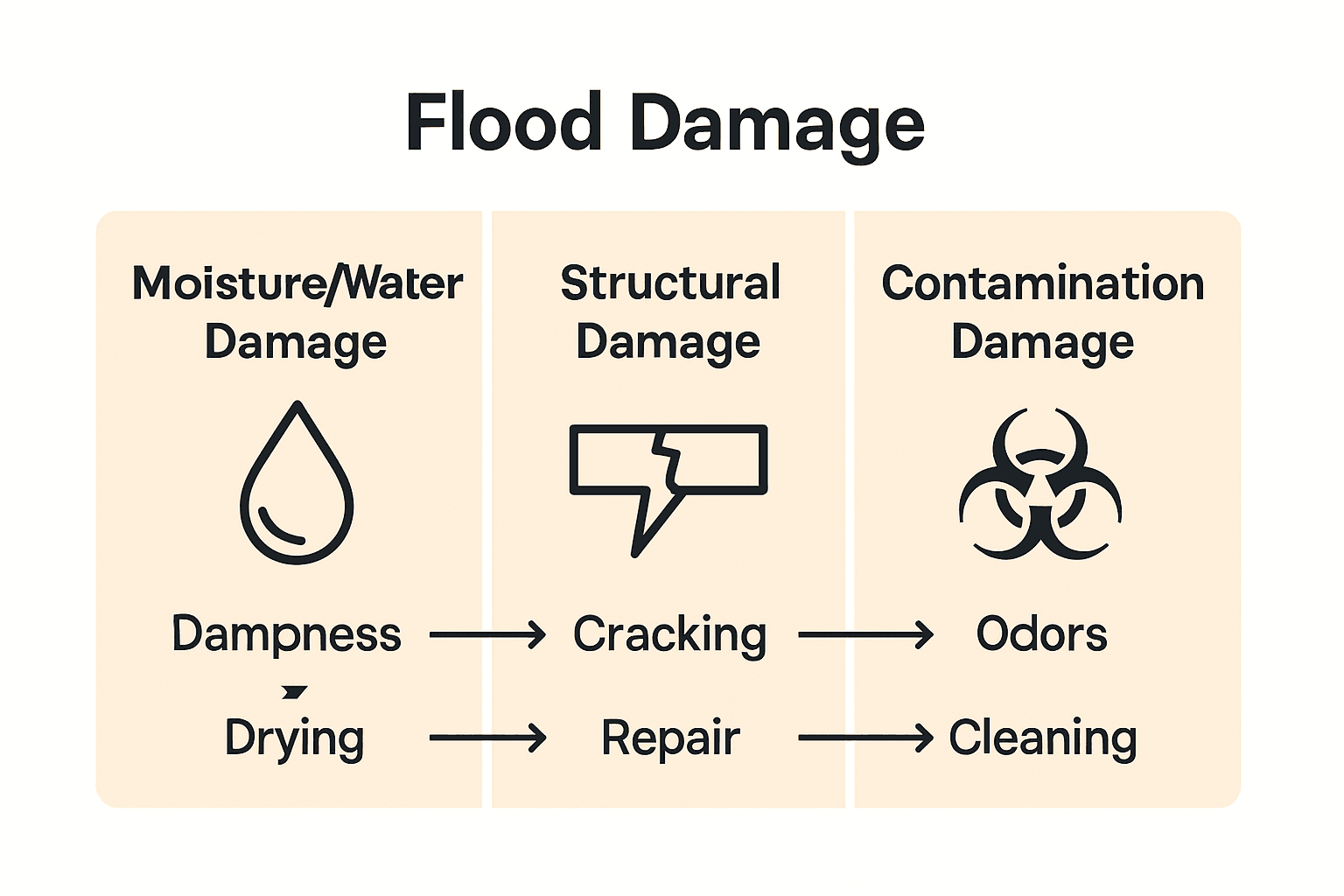
| Understanding Types of Flood Damage | Flood damage falls into three main categories: moisture/water damage, structural damage, and contamination damage, each requiring different restoration approaches. |
| Importance of Professional Restoration | Professional restoration includes comprehensive damage assessment, rapid water extraction, and thorough sanitization to ensure complete recovery from flood damage. |
| Insurance Coverage Awareness | Standard homeowners insurance often has limited coverage for flood damage, necessitating additional specialized policies to protect property owners. |
| Proactive Prevention Strategies | Homeowners can mitigate flood damage through proper landscaping, structural reinforcements, and maintaining emergency preparedness plans. |
Defining Flood Damage and Common Myths
Flood damage represents a complex and potentially devastating impact on properties, involving multiple layers of destruction beyond simple water accumulation. According to research from ijsrp, flood damage encompasses three critical categories: moisture/water damage, structural damage, and contamination damage – each presenting unique challenges for property restoration.
Water damage isn’t just about visible wetness. It penetrates building materials, compromising structural integrity, electrical systems, and creating ideal conditions for mold growth. Wooden structures absorb moisture rapidly, causing warping, rotting, and potential long-term structural weakening. Drywall becomes a breeding ground for microbial growth within 24-48 hours of water exposure.
Common myths about flood damage can lead property owners to make costly mistakes. Many believe that small amounts of water won’t cause significant harm or that DIY cleanup is sufficient. Six Common Property Restoration Myths highlights these misconceptions. In reality, even minor flooding can trigger extensive damage requiring professional intervention:
- Water can spread quickly through porous materials
- Invisible moisture can cause long-term structural deterioration
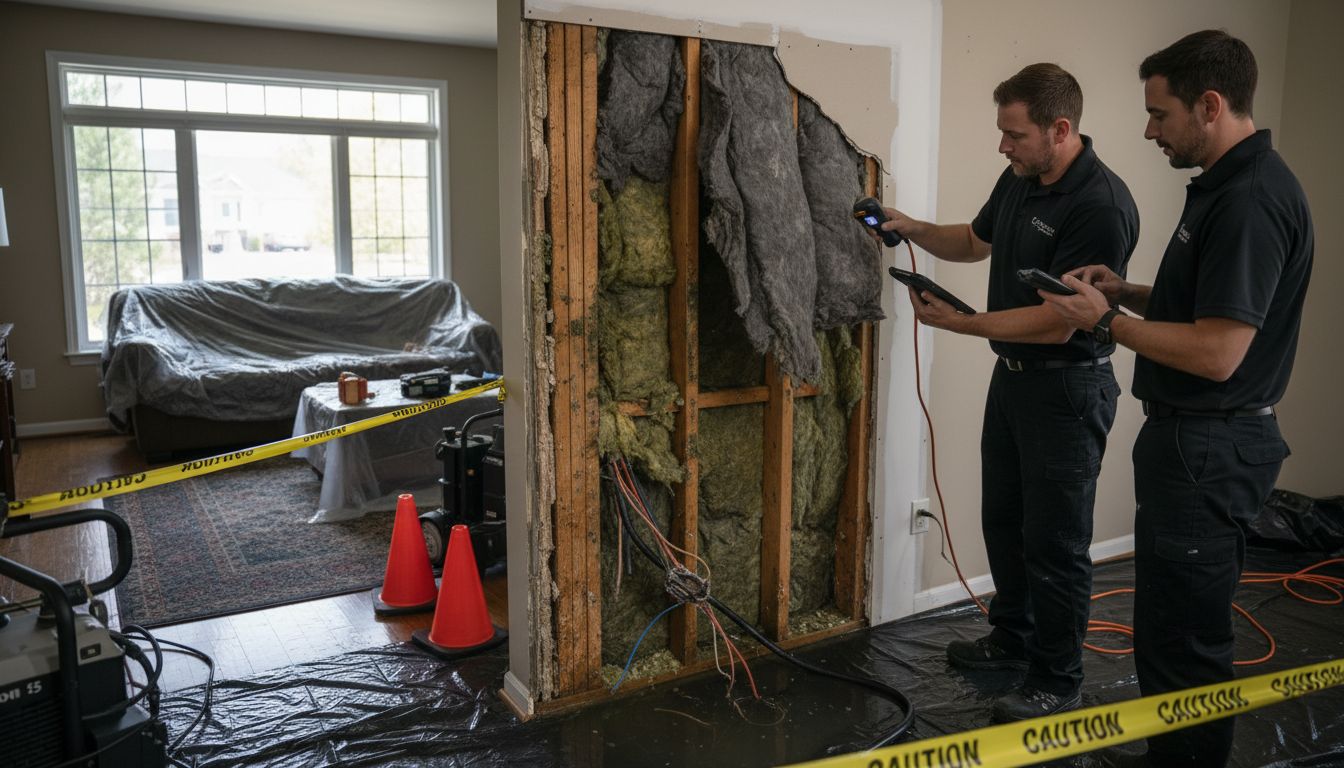
- Contaminated floodwater introduces serious health risks
- Professional assessment is crucial for comprehensive restoration
Understanding flood damage requires recognizing its multifaceted nature. It’s not just about removing visible water, but systematically addressing potential structural, electrical, and health-related risks that emerge in the aftermath of water intrusion.
Types of Flood Damage in Properties
Flood damage is a complex phenomenon that goes far beyond simple water accumulation. Research from ijsrp systematically categorizes flood damage into three critical types: moisture/water damage, structural damage, and contamination damage – each presenting unique challenges for property owners.
Moisture and Water Damage represents the most immediate and widespread form of flood impact. Water rapidly infiltrates building materials, causing immediate and long-term destruction. Porous surfaces like drywall, wood, and insulation absorb moisture quickly, leading to warping, swelling, and potential microbial growth. Electrical systems become particularly vulnerable, with water creating short-circuit risks and potential electrical system failure.
Structural Damage emerges as a secondary but critical consequence of flooding. Foundation walls can develop cracks, concrete may deteriorate, and load-bearing structures can weaken significantly. The 5 Common Types of Floods and how they can damage property highlights how different flood intensities impact structural integrity. Wood frames can rot, metal components may rust, and cement structures can experience long-term degradation.
Contamination Damage represents the most insidious flood damage type. Floodwaters typically carry sewage, chemicals, soil sediments, and potentially hazardous microorganisms. This contamination introduces serious health risks:
- Bacterial and viral exposure
- Potential toxic chemical infiltration
- Risk of mold and fungal growth
- Long-term environmental hazards within living spaces
Understanding these damage categories is crucial for effective flood recovery.
 Professional assessment becomes essential to comprehensively address the multifaceted risks posed by flood damage, ensuring both immediate restoration and long-term property safety.
How Professional Restoration Works
Research from ijsrp reveals that professional flood damage restoration is a systematic, multi-stage process designed to comprehensively address the complex challenges of water-related property destruction. Unlike DIY approaches, professional restoration combines advanced technology, specialized expertise, and a structured methodology to fully rehabilitate damaged properties.
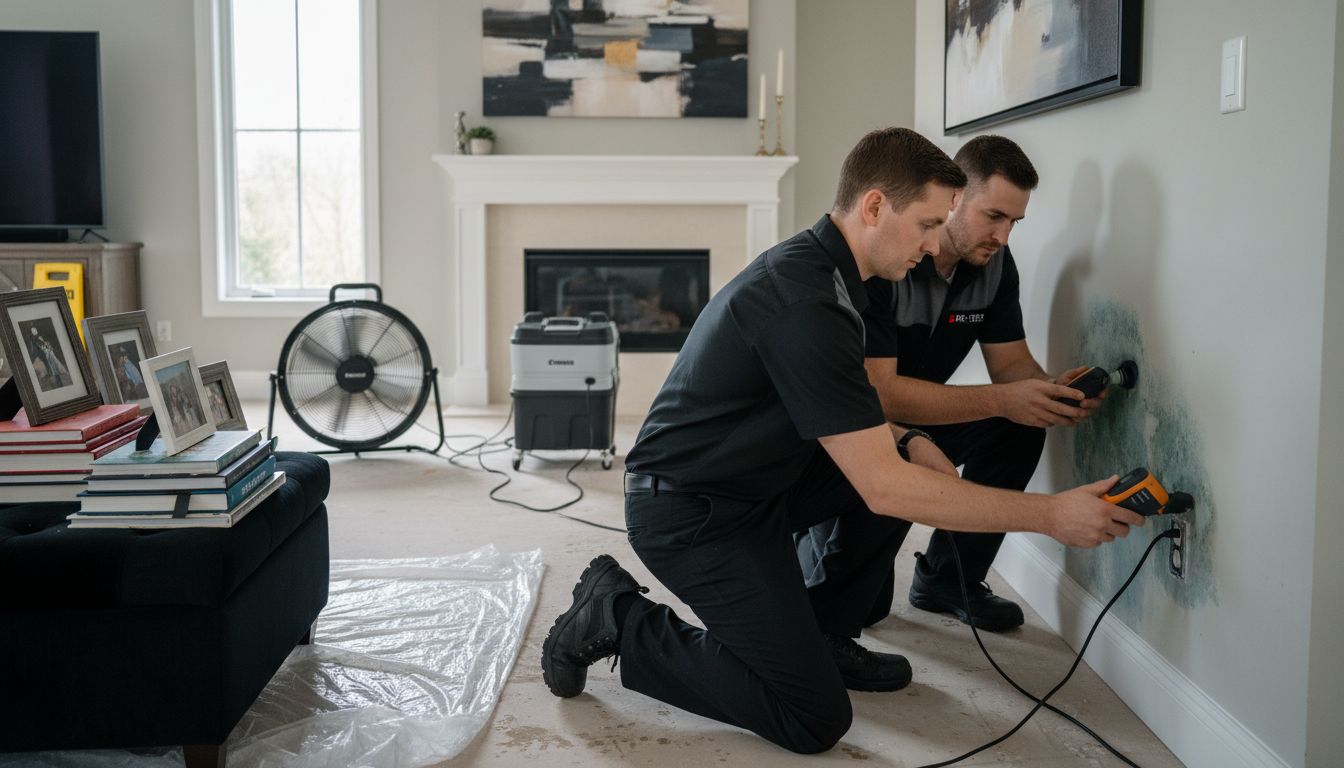
The restoration process typically begins with a comprehensive damage assessment. Professionals use advanced moisture detection equipment, thermal imaging cameras, and specialized sensors to map out the full extent of water infiltration. This critical first step goes beyond visual inspection, revealing hidden moisture pockets within walls, floors, and structural components that could lead to long-term damage if left unaddressed.
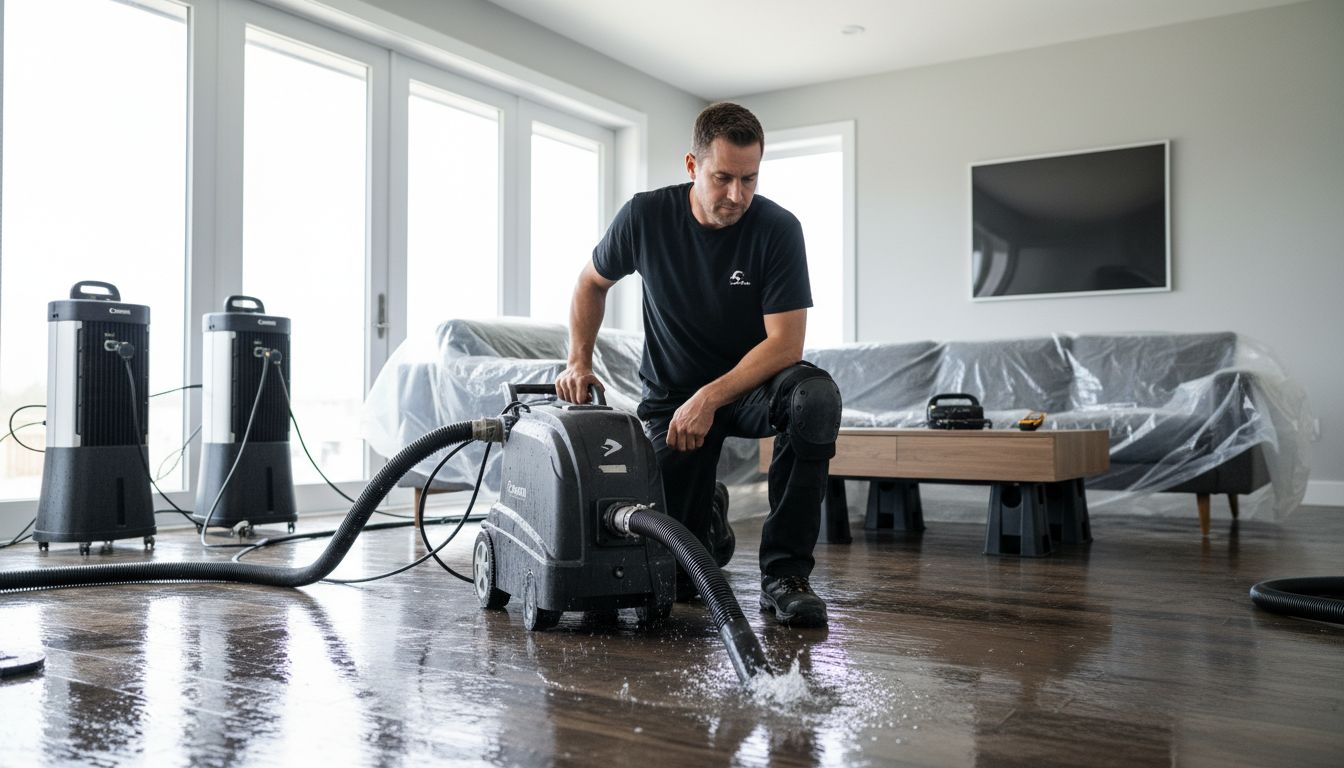
Water Extraction and Mitigation represents the next crucial phase. 10 Benefits of Hiring a Professional Water Damage Restoration Company highlights the importance of rapid, thorough water removal. Professional teams utilize industrial-grade water pumps, vacuum systems, and dehumidifiers to:
- Remove standing water quickly
- Extract moisture from porous materials
- Prevent secondary damage and mold growth
- Stabilize the affected environment
The final stages involve thorough cleaning, sanitization, and restoration. This includes specialized antimicrobial treatments, structural drying, content restoration, and potential reconstruction of damaged areas. Professionals understand that flood damage isn’t just about removing water – it’s about comprehensively restoring the property to its pre-damage condition, addressing potential health risks and structural vulnerabilities throughout the process.
Insurance, Costs, and Coverage Considerations
Flood damage insurance represents a complex and often misunderstood aspect of property protection. 7 Surprising Things Your Homeowners Insurance Won’t Cover highlights the critical importance of understanding exactly what your current insurance policy encompasses – and where significant coverage gaps might exist.
Standard Homeowners Insurance typically provides limited flood damage coverage, leaving many property owners vulnerable to substantial financial risks. Most basic policies exclude flooding caused by external water sources, meaning homeowners must secure additional specialized flood insurance through separate policies. These specialized policies can range from basic coverage to comprehensive protection, with costs varying significantly based on property location, flood risk zones, and historical damage patterns.
Understanding flood damage insurance requires careful evaluation of multiple factors:
- Flood zone classification
- Property elevation
- Historical flood data for your region
- Potential reconstruction costs
- Extent of potential damage
The financial implications of flood damage can be staggering. Restoration costs frequently range from $2,000 for minor water damage to over $50,000 for extensive structural repairs. Professional restoration services work closely with insurance providers to document damage, provide detailed assessments, and help homeowners navigate the complex claims process. This collaboration is crucial in maximizing insurance reimbursement and ensuring comprehensive property recovery.
Steps to Prevent and Minimize Flood Damage
Tips for Landscaping to Prevent Flooding reveals that proactive prevention is the most effective strategy against potential water damage. According to property-care, comprehensive flood defense involves a multi-layered approach targeting both external property conditions and internal structural protections.
External Property Preparation plays a crucial role in flood mitigation. Homeowners should focus on strategic landscaping techniques that direct water away from foundation walls. This includes:
- Creating proper ground slope away from building foundations
- Installing effective drainage systems
- Using native plants with robust root structures
- Maintaining clean gutters and downspouts
- Implementing French drain systems around property perimeters
Structural Reinforcement represents another critical prevention strategy. Historicengland emphasizes understanding building vulnerabilities and implementing targeted protective measures. Homeowners should consider waterproofing basement walls, installing flood barriers, and using water-resistant building materials. Elevating critical electrical systems, installing backflow valves, and sealing potential entry points can significantly reduce potential flood damage risks.
Additional preventative measures include maintaining comprehensive emergency preparedness. This means creating an evacuation plan, keeping important documents in waterproof containers, and maintaining an emergency kit with essential supplies. Regular property inspections, understanding local flood zone classifications, and investing in appropriate insurance coverage can provide an additional layer of protection against potential water-related disasters.
Protect Your Home from Flood Damage with Trusted Experts
Flood damage involves more than just water removal. Moisture hidden in walls and floors can weaken your home’s structure and lead to costly contamination problems. If you recognize the risks of structural, moisture, and contamination damage after flooding, it is crucial to act quickly with professional restoration. PuroClean of Northeast Sacramento offers expertise in advanced water damage restoration, using certified methods to safeguard your property and health.
Don’t wait for hidden moisture and mold to worsen your flood damage. Visit PuroClean of Northeast Sacramento for immediate emergency response and comprehensive restoration services. Learn how our team helps with rapid water extraction, detailed damage assessment, and insurance claim assistance so you can recover faster. Contact us now to stop flood damage at its source and protect your home today.
Frequently Asked Questions
What are the main types of flood damage?
Flood damage is typically categorized into three main types: moisture/water damage, structural damage, and contamination damage. Each type presents unique challenges that need to be addressed during the restoration process.
How does professional restoration of flood damage work?
Professional restoration involves a multi-stage process that includes comprehensive damage assessment, water extraction, and thorough cleaning and restoration. Experts use advanced equipment to identify hidden moisture and ensure complete rehabilitation of the property.
What common myths exist about flood damage?
Some common myths include the belief that minor water exposure won’t cause significant harm, or that DIY cleanup is sufficient. In reality, even small amounts of water can lead to extensive damage and health risks, making professional assessment crucial.
How can I prevent flood damage to my property?
Preventing flood damage involves a multi-layered approach, including effective landscaping to direct water away from foundations, structural reinforcements like waterproofing, and maintaining proper drainage systems. Regular inspections and emergency preparedness plans are also essential.
Recommended
Protect Furniture After Flooding in Michigan
Essential Steps After Your Home Floods

 PuroClean of Northeast Sacramento