 PuroClean of Northeast Sacramento
 Leak Detection – Protecting Sacramento Homes Fast
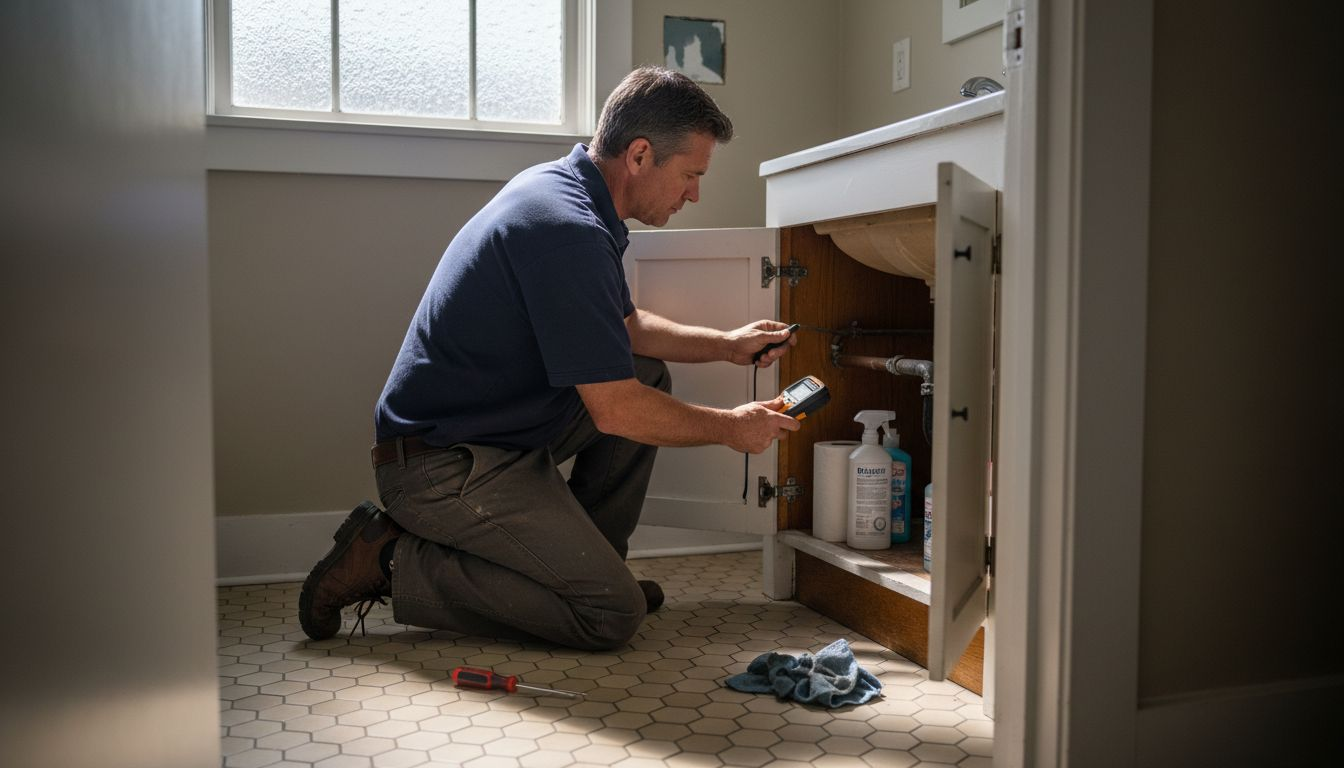
Plumbing leaks can quickly turn a Northeast Sacramento home into a source of stress and costly repairs. Responding quickly matters when small drips threaten your home’s structure and lead to hidden damage. With leak detection systems that can sense irregular water flow or moisture before you spot a problem, you gain the power to protect your investment and reduce water waste at the same time. Discover how these technologies offer real-time alerts, fast response, and lasting peace of mind.
Table of Contents
- What Is Leak Detection in Water Systems
- Key Types and Technologies Used Today
- How Leak Detection Works in Homes
- Risks of Undetected Leaks and Damage
- Choosing Professional Leak Detection Services
Key Takeaways
| Point | Details |
|---|---|
| Importance of Early Detection | Identifying leaks early can prevent substantial damage and costly repairs to your property’s structure. |
| Technology Utilization | Modern leak detection systems use advanced sensors and smart technology to continuously monitor for leaks. |
| Holistic Monitoring Approach | Comprehensive systems not only alert homeowners of leaks but can also shut off water flow automatically to minimize damage. |
| Professional Services | Engaging certified professionals ensures thorough assessments, employing multiple technologies to accurately pinpoint leaks. |
What Is Leak Detection in Water Systems
Leak detection is the process of identifying and locating water leaks within your home’s plumbing infrastructure before they cause significant damage. These systems use advanced technology to spot irregularities in water flow, moisture presence, or pressure changes that signal a problem.
For homeowners in Sacramento, understanding what leak detection involves is the first step toward protecting your property from costly water damage and wasted water. The sooner you detect a leak, the sooner you can address it and prevent structural deterioration.
How Leak Detection Works
Leak detection systems operate by continuously monitoring your water lines for signs of trouble. They can identify leaks ranging from pinhole-sized holes in underground pipes to slow drips from appliances that most homeowners would never notice on their own.
These systems work through several mechanisms:
- Acoustic sensors that listen for the sound of water escaping from pipes
- Flow rate monitors that track how much water moves through your system
- Moisture sensors that detect humidity or wetness in walls, crawl spaces, or foundations
- Pressure monitors that alert you when pressure drops unexpectedly
When a system detects an anomaly, it sends an alert to your phone, tablet, or control panel so you can take immediate action.
Why This Matters for Your Home
Devices designed for flow monitoring systems help reduce water loss throughout your distribution infrastructure, protecting both your wallet and local water resources. In the United States, treated water loss from leaks is estimated in the trillions of gallons annually.
For your Northeast Sacramento home, the benefits are direct:
- Early detection prevents expensive repairs—A small leak caught quickly costs far less than water damage restoration
- Protects your foundation and structure—Underground leaks can compromise soil stability and weaken foundations
- Reduces water waste—You pay for every gallon, whether it flows through your fixture or escapes through a crack
- Prevents mold growth—Water damage creates the perfect environment for mold in walls and crawl spaces
Early detection of leaks can prevent thousands of dollars in water damage restoration costs and protect your home’s structural integrity.
Types of Leaks You Can Detect
Leak detection systems excel at finding hidden problems. Understanding how to locate water leaks underground helps you recognize which leaks pose the greatest risk to your home.
Common leak scenarios include:
- Slab leaks (leaks beneath concrete foundations)
- Burst or cracked water supply lines
- Leaking fixtures like toilets, faucets, or water heaters
- Pinhole leaks in copper piping
- Appliance failures from washing machines or refrigerators
Integration With Your Home Systems
Modern leak detection systems can integrate directly with your plumbing. Some advanced options include automatic shutoff valves that stop water flow immediately when a leak is detected, minimizing damage and water waste.
This means your system doesn’t just alert you—it can actually prevent the leak from becoming catastrophic while you arrange for professional repairs.
Pro tip: Have a professional inspect your home’s plumbing before installing leak detection; they can identify existing vulnerabilities and recommend the best system placement for comprehensive monitoring.
Key Types and Technologies Used Today
Sacramento homeowners have access to several proven leak detection technologies, each with different strengths depending on your home’s age, layout, and plumbing configuration. Understanding what’s available helps you choose the right solution for your specific situation.
Modern leak detection has evolved significantly. What started as simple visual inspections has transformed into sophisticated systems that catch problems invisible to the naked eye.
Acoustic and Ultrasonic Detection
Acoustic sensors listen for the distinctive sound of water escaping from pipes. Water under pressure creates a specific frequency when it leaks, and these devices filter out background noise to isolate that telltale sound.
Ultrasonic flow meters complement this approach by monitoring how much water moves through your system at any given time. Ultrasonic flow meters can detect anomalies in distribution systems, allowing professionals to pinpoint problem areas quickly.
These technologies work best for:
- Main water lines and supply pipes
- Active leaks that are currently flowing
- Accessible plumbing in walls or crawl spaces
Moisture and Thermal Imaging
Moisture sensors detect humidity or visible wetness in walls, foundations, and crawl spaces. When water from a hidden leak accumulates, these sensors trigger an alert before significant damage occurs.
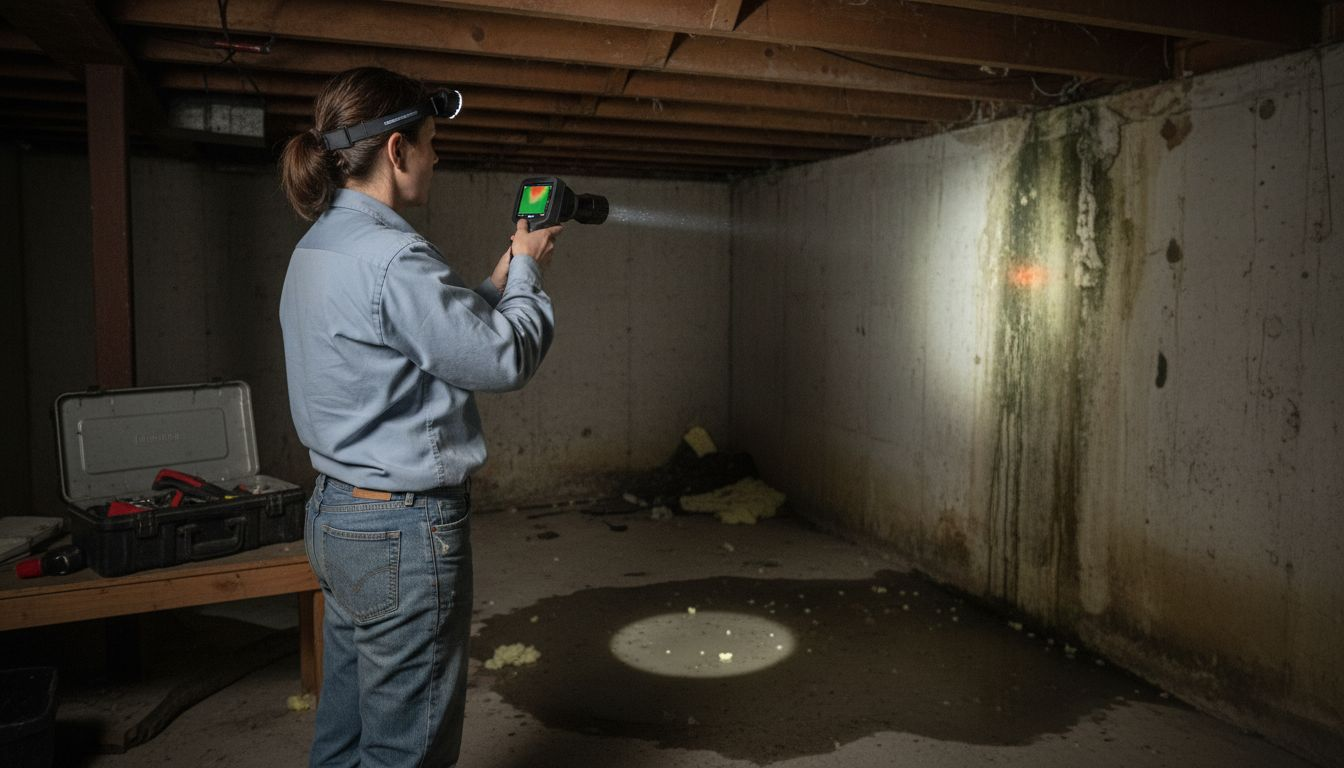
Thermal imaging uses infrared cameras to visualize temperature differences in walls and pipes. Water escaping from a line creates a cooler spot that shows up clearly on thermal imaging equipment.
These methods excel at revealing:
- Slab leaks beneath concrete foundations
- Leaks hidden within walls
- Slow drips from fixtures
- Early-stage water damage before visible staining appears
Smart Monitoring Systems
Advanced monitoring systems combine multiple technologies in one integrated platform. Available leak detection technologies now include smart sensor applications that enhance detection precision and cost-effectiveness through machine learning.
These systems continuously track water pressure, flow rates, and moisture levels. They send real-time alerts to your phone when they detect irregularities, and some integrate with automatic shutoff valves for immediate response.
Key features of smart systems:
- Real-time monitoring from anywhere
- Historical data to track usage patterns
- Automatic shutoff capability to prevent catastrophic damage
- Integration with your home’s water and drainage infrastructure
Smart monitoring systems provide 24/7 protection, catching leaks whether you’re home or away, day or night.
Choosing the Right Technology
The best choice depends on your home’s specific characteristics. Older homes with galvanized pipes need different monitoring than newer homes with PEX tubing. Underground slab leaks require different detection methods than visible appliance leaks.
A professional evaluation helps you understand which combination of technologies protects your Northeast Sacramento home most effectively and cost-efficiently.
Here’s a quick comparison of leading leak detection technologies and where they are most effective:
| Technology | Best Location | Detection Method | Strength |
|---|---|---|---|
| Acoustic Sensors | Main water lines | Sound/vibration analysis | Pinpointing active leaks |
| Ultrasonic Flow Meters | Whole-house plumbing | Flow rate irregularities | Catching concealed line leaks |
| Moisture Sensors | Walls/foundations | Humidity/wetness triggers | Spotting hidden moisture |
| Thermal Imaging | Slabs, behind walls | Infrared temperature scan | Finding cool leak spots |
| Smart Monitors | Throughout home | Data + alerts integration | Real-time remote alerts |
Pro tip: Ask your leak detection specialist which technologies will work best for your home’s age and layout—not every home needs every technology, but combining acoustic sensors with moisture detection typically provides the most comprehensive coverage.
How Leak Detection Works in Homes
Leak detection in your home operates on a straightforward principle: monitor water flow and identify when moisture appears where it shouldn’t. Modern systems combine sensors, smart technology, and continuous monitoring to catch problems before they become disasters.
Think of it as a security system for your water. Just as security cameras watch your home 24/7, leak detection watches your plumbing constantly.
The Core Monitoring Process
Flow monitoring is the foundation of how leak detection works. Sensors track how much water moves through your pipes at different times. When you’re sleeping and no one is using water, your pipes should be completely dry.
If water continues flowing during these silent periods, that’s a red flag. Monitoring water meter readings helps detect unaccounted water use that signals hidden leaks draining your home.
Sensors detect leaks by identifying:
- Continuous water flow when all fixtures are off
- Pressure drops in your plumbing lines
- Flow rates that don’t match your usage patterns
- Water movement in pipes that should be inactive
Moisture Detection at Critical Points
Moisture sensors are placed near high-risk locations where leaks commonly develop. These aren’t just placed randomly—professionals install them strategically around your home.
Common sensor placement includes:
- Under sinks and behind toilets
- Near water heaters and HVAC systems
- In crawl spaces and basements
- Around washing machine connections
- Under refrigerator ice makers
When these sensors detect moisture, they immediately alert you through your phone or control panel. You get notification before water damage spreads through walls or foundations.
Real-Time Alerts and Response
Modern systems send instant notifications the moment a leak is detected. No waiting, no guessing—you know immediately that something’s wrong.
Many systems go a step further with automatic shutoff valves. When a leak is detected, these valves close automatically to stop water flow, minimizing damage while you arrange for professional repairs.
Smart leak detection systems can stop water flow within seconds, potentially preventing thousands of dollars in restoration costs.
How Your Water Meter Tells the Story
Your water meter is a powerful leak detection tool many homeowners overlook. Slow leaks like dripping faucets or running toilets cause continuous meter movement even when no water is intentionally used.
Check your meter when all fixtures are off. If the needle moves or the digital display changes, water is escaping somewhere. This simple DIY check complements professional leak detection.
Why This Matters for Northeast Sacramento Homes
Sacramento’s summer heat and variable winter weather create ideal conditions for pipe stress. Older homes with aging plumbing are especially vulnerable to slow leaks that go undetected for months.
Early detection through professional monitoring systems prevents catastrophic damage and protects your home’s structural integrity.
Pro tip: Check your water meter every month during off-peak hours—if it shows movement with all fixtures closed, call a professional to locate the leak before it causes hidden damage in walls or foundations.
Risks of Undetected Leaks and Damage
Undetected leaks don’t just waste water—they trigger a cascade of problems that damage your home’s structure, inflate your bills, and create health hazards. What starts as a small drip can become a financial and structural nightmare if ignored.
The longer a leak persists, the worse the damage becomes. Most homeowners don’t realize how quickly hidden water can compromise their entire home.
Structural Damage That Spreads Fast
Water flowing where it shouldn’t be weakens foundations, rots wooden support beams, and compromises drywall integrity. Once water penetrates your home’s structure, the damage multiplies exponentially over time.
Small water leaks lead to major damage if ignored, potentially requiring expensive foundation repairs or complete structural restoration. What would have cost $500 to fix early can become a $15,000 nightmare within months.
Common structural problems from leaks:
- Foundation settling and cracking
- Rotted floor joists and support beams
- Warped or buckled flooring
- Weakened load-bearing walls
- Compromised roof decking
Mold Growth and Health Risks
Moisture creates the perfect breeding ground for mold. Mold doesn’t just cause odors—it triggers respiratory problems, allergies, and asthma attacks, especially in children and elderly family members.
Signs of hidden water damage include mold growth that spreads silently behind walls where you can’t see it. By the time you notice the smell or visible spores, the infestation is already extensive.
Mold remediation costs escalate rapidly:
- Professional mold testing and assessment
- Containment and cleanup procedures
- Air quality restoration
- Material replacement in affected areas
- Ongoing monitoring to prevent recurrence
Financial Impact on Your Home’s Value
Water damage is a major red flag for home inspectors and potential buyers. A history of water damage or active moisture issues can slash your home’s resale value by 20-30% or more.
Undetected leaks also inflate your water bills month after month. Small pinhole leaks waste thousands of gallons annually, and you’re paying for every drop. A dripping toilet alone wastes 200+ gallons per day.
Pressure on Aging Infrastructure
Leaks increase pressure on aging infrastructure and worsen system reliability over time. In older Sacramento homes with compromised plumbing, one leak often leads to others as pipe degradation accelerates.
Risks multiply exponentially:
- Multiple simultaneous leaks in weakened pipes
- Burst pipes following initial leak damage
- Secondary leaks in connecting lines
- Complete plumbing system failure
Why Early Detection Saves Everything
Detecting leaks within the first few weeks prevents 90% of the damage costs associated with undetected leaks. The difference between catching a leak immediately and discovering it after months is often tens of thousands of dollars.
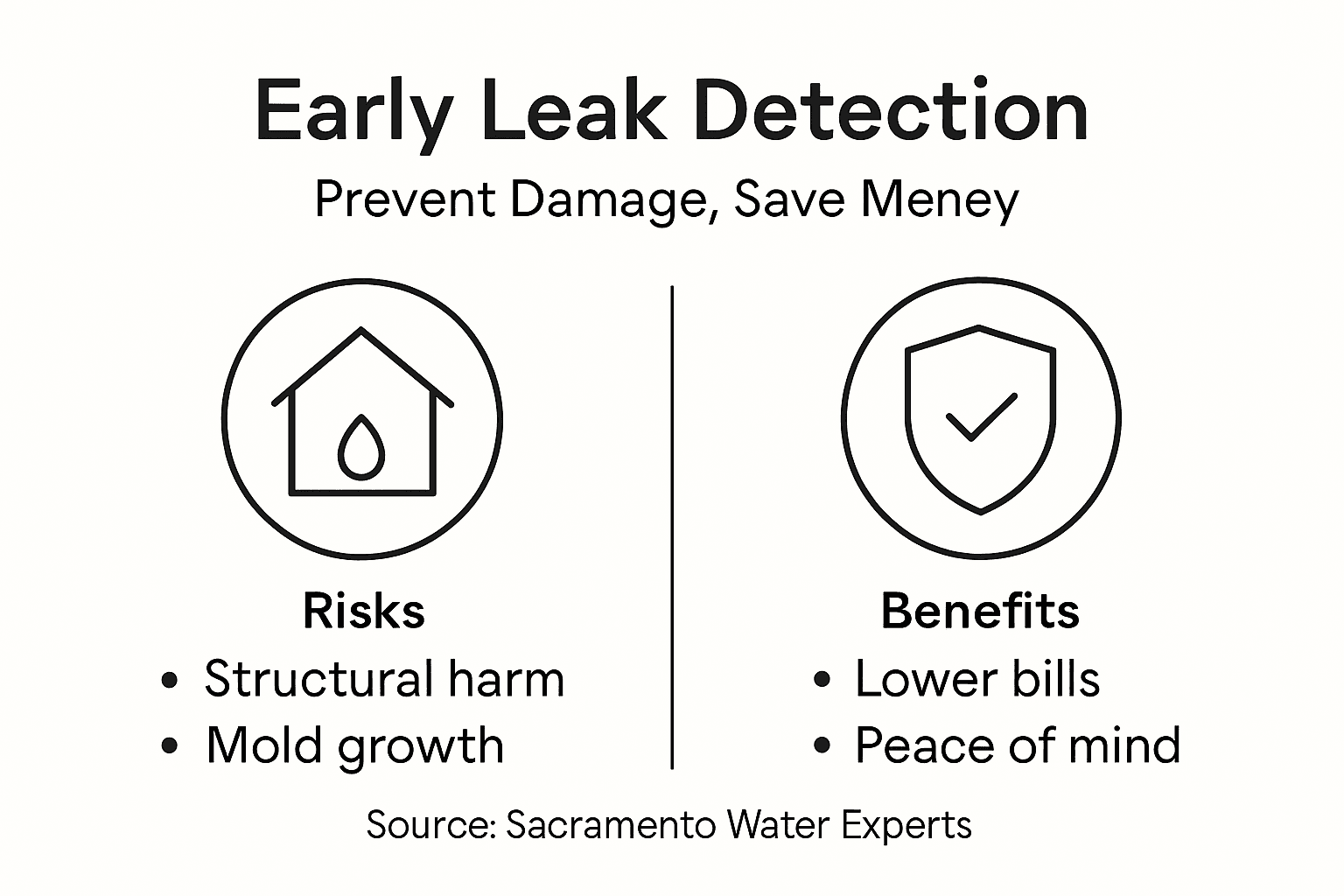
Understand the impact of early vs. late leak detection on your home’s well-being:
| Detection Timing | Typical Cost Range | Damage Risk | Other Consequences |
|---|---|---|---|
| Early Detection | $200–$500 (inspection) | Minimal | Minor repairs, lower bills |
| Late Detection | $10,000–$40,000+ | Foundation, mold | Major repair, lost value |
Undetected leaks can cause $40,000 or more in water damage, but professional leak detection costs just a few hundred dollars to protect against this risk.
Pro tip: Don’t wait for visible damage—schedule professional leak detection at the first sign of unexplained moisture, musty odors, or unusual water bill spikes, as early intervention prevents structural and mold damage.
Choosing Professional Leak Detection Services
Not all leak detection services are created equal. The difference between a thorough professional assessment and a quick DIY attempt can mean the difference between catching a leak early and discovering catastrophic damage months later.
Choosing the right service provider protects your home and saves thousands in potential repairs.
What to Look For in a Professional
Certification and licensing matter more than you might think. Professional leak detection technicians should hold certifications from recognized organizations and be fully licensed to operate in California. Verify their credentials before hiring.
Look for providers who invest in quality technology. Professional leak detection services use advanced acoustic and ultrasonic technologies to pinpoint leaks quickly and accurately, minimizing disruption to your home.
Key qualifications to verify:
- California state licensing and bonding
- Industry certifications (IICRC, ASSE, or equivalent)
- Insurance coverage for their work
- References from local homeowners
- Transparent pricing with no hidden fees
Technology and Equipment Assessment
Acoustic sensors are the foundation of quality leak detection. These devices listen for water escaping from pipes, and professionals who use them well can pinpoint leaks within inches.
Beyond acoustic detection, comprehensive services combine multiple technologies. Professional assessments include comprehensive water audits that enable targeted repairs maximizing water savings and system integrity.
A quality service provider uses:
- Acoustic leak detection equipment
- Thermal imaging cameras
- Moisture sensors for walls and foundations
- Flow rate monitoring tools
- Pressure testing equipment
The Professional Inspection Process
A thorough leak detection service doesn’t just scan your pipes—it investigates your entire water system. Professionals should walk through your home, checking all fixtures, appliances, and visible plumbing for signs of trouble.
The inspection should include crawl space evaluation, basement assessment, and attic inspection where plumbing runs. They examine your water meter, listen for sounds, and use specialized equipment to locate hidden leaks.
Expect the process to take 1-3 hours depending on your home’s size and complexity.
Questions to Ask Before Hiring
Don’t hesitate to ask detailed questions. Quality providers welcome them because they demonstrate you’re a thoughtful homeowner.
Critical questions include:
- What specific technologies will you use?
- How long will the inspection take?
- Do you provide written reports with locations?
- Will you coordinate with repair contractors?
- What warranty or guarantee do you offer?
- Are you available for emergency 24/7 calls?
Emergency Response Capability
The best leak detection service responds quickly when you need them most. If you discover a potential leak on a Sunday night or holiday, you need someone who answers the phone and can arrive fast.
Professional leak detection services available 24/7 ensure that burst pipes or active leaks get addressed immediately, preventing catastrophic water damage.
Northeast Sacramento homeowners benefit from local providers who understand the region’s plumbing challenges, water pressure issues, and common leak locations in older homes.
Pro tip: Call multiple leak detection services for quotes and ask about their experience with your home’s age and construction type—a company familiar with 1970s plumbing has different expertise than one specializing in new construction.
Protect Your Sacramento Home with Fast, Professional Leak Detection and Restoration
Undetected water leaks can cause costly damage to your home’s structure and foundation. This article highlights why early leak detection is critical to avoiding expensive repairs, mold growth, and wasted water. If you are dealing with slab leaks, burst pipes, or hidden moisture issues, the challenge is acting quickly before water damage spreads.
At PuroClean of Northeast Sacramento, we understand these urgent risks and provide expert water damage restoration services designed to stop leaks from turning into disasters. Our certified technicians use advanced technology to locate leaks fast and coordinate repairs while expertly handling water extraction and structural drying. We are available 24/7 for emergency response, protecting your home when every minute counts.
If you want to protect your home’s value and prevent thousands in damage costs, act now. Discover how our rapid leak detection and water damage mitigation can save your property from further harm. Learn more about our expert services at PuroClean of Northeast Sacramento and take the first step toward securing your home today.
Don’t wait for visible damage or skyrocketing water bills. Contact PuroClean now for immediate leak detection and water restoration solutions that safeguard your Sacramento home quickly and effectively.
Frequently Asked Questions
What is leak detection in water systems?
Leak detection is the process of identifying and locating water leaks in a home’s plumbing system before they cause significant damage, using advanced technology to monitor water flow and detect irregularities.
How does a leak detection system work?
Leak detection systems continually monitor water lines for signs of leaks through mechanisms like acoustic sensors, flow rate monitors, moisture sensors, and pressure monitors. They send alerts when anomalies are detected.
What are the benefits of early leak detection?
Early leak detection helps prevent expensive repairs, protects the foundation and structure of the home, reduces water waste, and minimizes the risk of mold growth. Addressing leaks early can save homeowners thousands in potential damage.
What types of leaks can be detected?
Leak detection systems can identify a variety of leaks, including slab leaks, burst pipes, leaking fixtures, pinhole leaks in copper piping, and appliance failures from devices like washing machines and refrigerators.
Recommended
Fissures Fondation Rive-Sud | Réparation & Injection Garantie
Expert Water Leak Detection in Sacramento, CA | PuroClean
7 Common Examples of Water Damage and How to Spot Them – PuroClean of Northeast Sacramento
Moisture Mapping in Sacramento, CA | PuroClean Experts
Water Extraction and Dehumidification | PuroClean Sacramento
 PuroClean of Northeast Sacramento