


Restoration and Insurance Claims: What Homeowners Need to Know

Sudden water or fire damage can leave Northeast Sacramento homeowners feeling overwhelmed by the demands of urgent property recovery. The path to restoring your home relies on a clear understanding of both professional restoration techniques and the complex insurance claims process. Whether facing flooded rooms or smoke-stained walls, mastering the relationship between restoration experts and insurance providers empowers you to protect your property and secure fair compensation after disaster strikes.
Table of Contents
- Defining Restoration And Insurance Claims
- Types Of Restoration Affecting Claims
- The Restoration Process And Claim Requirements
- Documentation And Contractor Roles In Claims
- Financial Impact: Coverage, Deductibles, And Payouts
- Common Mistakes That Delay Claims
Key Takeaways
| Point | Details |
|---|---|
| Importance of Documentation | Comprehensive documentation of damage is critical for claim approval. Take photos and maintain a detailed log of expenses. |
| Understanding Restoration Types | Different restoration types (water, fire, mold) have unique challenges and insurance implications. Know the specifics to support your claims. |
| Financial Implications of Coverage | Understand your insurance coverage types and provisions, including deductibles and depreciation, to manage out-of-pocket costs effectively. |
| Avoid Common Mistakes | Timely reporting and thorough documentation are essential to prevent claim delays or denials. Maintain organized records to streamline the process. |
Defining Restoration and Insurance Claims
Home disasters strike unexpectedly, creating complex challenges for homeowners navigating property damage recovery. Insurance restoration processes represent a critical pathway for returning properties to their pre-damage condition, involving strategic collaboration between insurance providers, restoration professionals, and property owners.
At its core, restoration encompasses the professional process of repairing, cleaning, and reconstructing damaged property after events like flooding, fire, or severe weather. Insurance claims serve as the financial mechanism enabling homeowners to fund these extensive recovery efforts. Unlike simple repairs, restoration requires specialized techniques that address structural integrity, potential hidden damage, and comprehensive property rehabilitation.
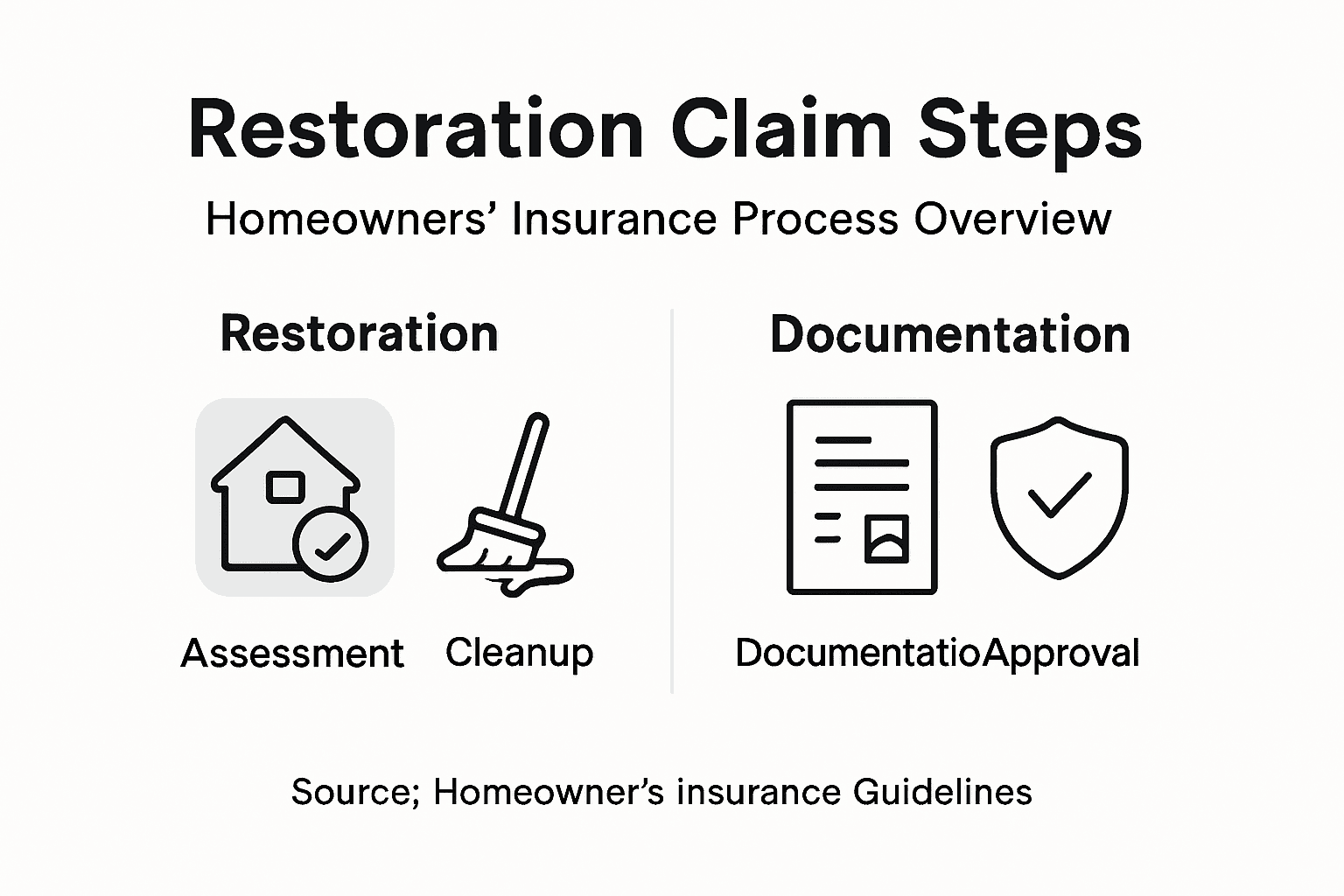
The restoration and insurance claims process typically follows a structured sequence. First, homeowners document damage thoroughly, then contact their insurance provider to initiate a claim. Professional restoration experts assess the property, providing detailed damage reports that support the insurance claim. Insurance claim documentation becomes crucial in determining the scope of repairs and potential compensation.
Pro tip: Take immediate photographs of all damage and keep a detailed log of restoration expenses to support your insurance claim documentation process.
Types of Restoration Affecting Claims
Home damage restoration encompasses multiple specialized categories, each with unique challenges and insurance claim implications. Restoration industry specializations significantly influence how insurance providers assess and process property recovery claims, making understanding these variations crucial for homeowners.
The primary types of restoration include water damage restoration, which addresses issues from flooding, pipe bursts, and moisture intrusion. Fire damage restoration involves complex cleanup processes addressing structural damage, smoke contamination, and potential toxic residues. Mold remediation represents another critical restoration type, focusing on identifying, containing, and eliminating potentially hazardous microbial growth that can compromise building structural integrity and human health.
Water damage restoration standards outline specific protocols for different damage scenarios, including structural drying, content evaluation, and antimicrobial treatments. Each restoration type requires specialized equipment, technical expertise, and methodical approaches to ensure comprehensive property recovery. Insurance claims for these restoration categories differ based on damage extent, potential hidden complications, and the specific restoration techniques required to return properties to pre-loss conditions.
Pro tip: Document all damage comprehensively with time-stamped photographs and maintain detailed records of restoration work to strengthen your insurance claim process.
Here’s a comparison of key restoration types and their insurance claim considerations:
| Restoration Type | Unique Challenges | Claim Documentation Required | Common Insurance Issues |
|---|---|---|---|
| Water Damage | Mold growth, hidden leaks | Moisture reports, drying logs | Coverage for hidden damages |
| Fire Damage | Smoke residue, toxins | Photos, structural assessments | Valuing lost contents |
| Mold Remediation | Health risks, containment | Lab results, remediation plans | Cause of mold dispute |
The Restoration Process and Claim Requirements
Understanding the intricate landscape of property restoration and insurance claims requires navigating a complex series of interconnected steps. Insurance claims payment processes demand precise documentation, timely reporting, and strategic coordination between homeowners, restoration professionals, and insurance providers.
The restoration process typically follows a structured sequence. Initially, homeowners must document damage comprehensively, capturing detailed photographic evidence and maintaining precise records of all losses. Professional restoration experts then conduct thorough damage assessments, generating detailed reports that serve as critical documentation for insurance claims. Water damage restoration standards establish specific protocols for evaluating moisture levels, structural integrity, and potential hidden damages that might impact claim assessments.

Claim requirements involve multiple critical components. Insurance providers typically require original damage documentation, professional damage assessment reports, itemized restoration estimates, and proof of mitigation efforts to prevent further property deterioration. Homeowners must submit claims promptly, often within a specified timeframe following the initial damage event. The complexity of these requirements underscores the importance of working with certified restoration professionals who understand both technical restoration procedures and insurance claim documentation protocols.
Pro tip: Create a dedicated digital and physical file for all damage documentation, including photographs, expert assessments, and communication records to streamline your insurance claim process.
Documentation and Contractor Roles in Claims
Successful property damage recovery hinges on understanding the intricate roles of restoration contractors and comprehensive documentation requirements. Insurance claims documentation serves as the critical foundation that determines claim approval, reimbursement, and overall recovery strategy.
Restoration contractors play a multifaceted role in the insurance claims process. They are responsible for conducting thorough damage assessments, generating detailed reports, and providing precise repair estimates that meet insurance provider standards. Professional documentation includes comprehensive photographic evidence, moisture measurements, structural damage evaluations, and itemized repair recommendations. These professionals act as critical intermediaries, translating technical damage assessments into clear, actionable information that insurance adjusters can review and process.
Restoration industry administrative procedures mandate specific documentation protocols that contractors must follow. These include maintaining detailed project logs, capturing before and after conditions, tracking mitigation efforts, and providing transparent communication with both homeowners and insurance providers. Contractors must also ensure that all repair and restoration work meets industry standards and complies with insurance policy requirements, which often involves coordinating with multiple stakeholders to validate claim legitimacy.
Pro tip: Request and maintain copies of all contractor assessments, estimates, and communication records throughout the restoration process to create a comprehensive documentation trail for your insurance claim.
Financial Impact: Coverage, Deductibles, and Payouts
Homeowners facing property damage must navigate complex financial landscapes involving insurance coverage, deductible structures, and nuanced payout mechanisms. Insurance claims payment processes reveal intricate financial dynamics that significantly impact homeowners’ restoration and recovery expenses.
Insurance policies typically include multiple coverage types with distinct financial implications. Actual cash value policies reimburse homeowners for property value at the time of damage, accounting for depreciation, while replacement cost policies provide funds to replace damaged items at current market prices. Deductibles represent the initial out-of-pocket expense homeowners must cover before insurance compensation begins, which can range from hundreds to thousands of dollars depending on policy specifications.
Depreciation and insurance payouts significantly influence total claim settlements. Insurance providers often issue multiple checks covering different aspects of damage recovery – including structure repairs, personal property replacement, and additional living expenses. Understanding these nuanced financial components helps homeowners accurately predict potential expenses and negotiate more effectively with insurance representatives during the claims process.
Pro tip: Request a detailed breakdown of your insurance policy’s coverage limits and depreciation calculations to fully understand potential out-of-pocket expenses before filing a claim.
The table below summarizes financial factors affecting property restoration claims:
| Financial Aspect | Description | Impact on Homeowner |
|---|---|---|
| Coverage Type | Actual cash value vs replacement cost | Determines claim payout size |
| Deductible | Out-of-pocket expense before insurance pays | Reduces initial settlement |
| Depreciation | Value reduction based on property age | Lowers total reimbursement |
Common Mistakes That Delay Claims
Navigating insurance claims requires strategic precision, as seemingly minor errors can significantly derail the restoration process. Insurance claims payment procedures reveal numerous potential pitfalls that homeowners frequently encounter when seeking property damage compensation.
One of the most critical mistakes involves inadequate documentation. Homeowners often fail to comprehensively record damage through detailed photographs, written descriptions, and professional assessments. Timely reporting is equally crucial – delaying initial claim notification can trigger policy complications or potential claim denials. Insurance providers typically require immediate communication about property damage, with specific windows for filing initial reports and submitting comprehensive documentation.
Depreciation and settlement disputes frequently emerge from homeowners’ misunderstandings about policy terms. Common errors include not understanding actual cash value calculations, failing to challenge depreciation assessments, and submitting incomplete repair estimates. These mistakes can lead to prolonged claim processing, reduced settlements, and unnecessary financial strain. Successful claims demand meticulous attention to detail, proactive communication with insurance adjusters, and a thorough understanding of policy language and restoration requirements.
Pro tip: Create a dedicated digital folder with timestamped photographs, professional damage assessments, and all communication records to streamline your insurance claim documentation process.
Trusted Restoration Experts Ready to Support Your Insurance Claims Journey
Facing sudden water or fire damage can feel overwhelming especially when documentation and insurance claims become part of the recovery process. This article highlights the importance of careful damage documentation, timely reporting, and working with knowledgeable professionals to navigate complex insurance claim requirements. Our team at PuroClean of Northeast Sacramento understands these challenges deeply and specializes in fast, effective water damage restoration, leak detection, and fire and smoke cleanup tailored to help homeowners like you maximize insurance claim success.
Why choose PuroClean?
- 24/7 emergency response to minimize further loss
- Industry-certified experts who handle detailed damage assessments and provide thorough documentation for your claims
- Advanced water extraction and structural drying to ensure complete restoration
Don’t let uncertainty delay your recovery. Visit PuroClean of Northeast Sacramento now for immediate water damage and fire restoration assistance along with expert insurance documentation support. Act quickly to protect your property and strengthen your insurance claim with trusted local professionals ready to guide you every step of the way.
Frequently Asked Questions
What is the restoration process after property damage?
The restoration process involves repairing, cleaning, and reconstructing damaged properties, often beginning with thorough documentation of damage, contacting insurance providers, and engaging professional restoration experts for assessments and repairs.
How do I document damage for my insurance claim?
Document damage by taking detailed photographs, maintaining a log of all losses, and gathering professional damage assessments. Ensure that all documentation is time-stamped and comprehensive to support your claim.
What are the different types of restoration covered by insurance?
The primary types of restoration covered by insurance include water damage restoration, fire damage restoration, and mold remediation. Each type involves specific challenges and documentation requirements that can affect the claims process.
What common mistakes should I avoid when filing an insurance claim?
Common mistakes include inadequate documentation, delays in reporting damage, and misunderstandings about policy terms, such as depreciation. Ensure to submit claims promptly and maintain comprehensive records to prevent complications.
Recommended
Local Gutter Cleaning Service Beckenham – Houses – Blocks of flats
Things To Know: Water Damage and Insurance | PuroClean Restoration Specialists
Insurance Restoration Guide | PuroClean Restoration Specialists