


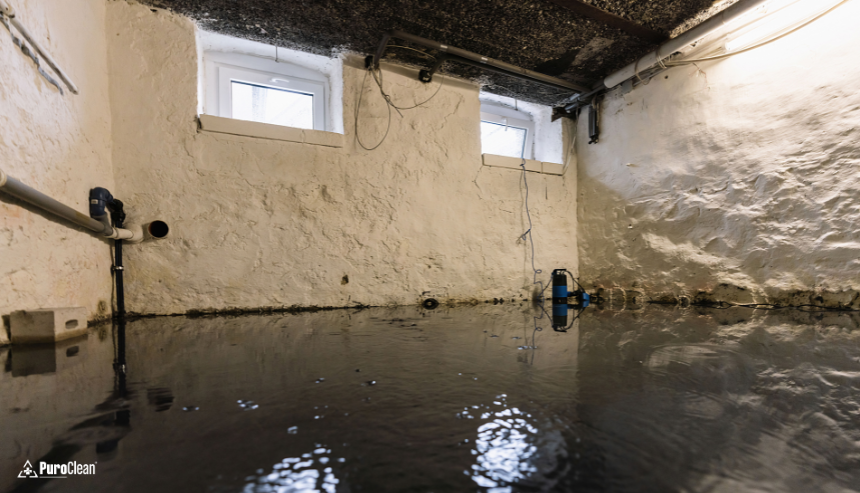
In the Kansas City area, we’re no strangers to weather extremes. One week it’s bone-dry, the next we’re hit with heavy downpours and flash floods. This dramatic shift from drought to deluge can cause a wide range of problems for homeowners—especially those with basements. When the ground becomes saturated after a long dry spell, the sudden influx of water has nowhere to go. It seeps into the soil around your home’s foundation, and if your waterproofing systems aren’t in top shape, you end up with water in the basement.
At PuroClean of Olathe, we see this situation all too often. If you’ve recently found water in your basement after a storm, you’re not alone—and it’s important to act fast. In this post, we’ll walk you through exactly what to do when you find water in the basement, how to limit damage, and when to call the pros.
What To Do When You Find Water In The Basement
Step 1: Stay Safe
Water in the basement can be more than an inconvenience—it can be dangerous.
Watch for Electrical Hazards
If there’s standing water near electrical outlets, appliances, or your breaker panel, do not enter the area. Water conducts electricity, and you could be at risk of electrocution. Turn off the power from the main breaker—only if it’s safe to do so without walking through water.
Avoid Contaminated Water
Basement flooding caused by sewer backups or groundwater may contain harmful bacteria. Wear protective gear: gloves, boots, and a mask if needed. If the water smells bad or looks dirty, leave cleanup to the professionals.
Step 2: Stop the Source (If Possible)
Try to determine where the water is coming from:
- Rainwater or Groundwater: Often seeps through cracks in the foundation or window wells after heavy rain.
- Plumbing Leak: A burst pipe, leaking water heater, or malfunctioning sump pump could be the cause.
- Sewer Backup: Often caused by overwhelmed municipal systems after a downpour.
If you can identify and stop the source, do so safely. Shut off water valves if the source is internal plumbing. If it’s weather-related, wait until the rain has passed before fully assessing the damage.
Step 3: Call a Water Damage Restoration Company
Time is critical when it comes to water in the basement. The longer water sits, the worse the damage becomes. That’s why calling a professional water damage restoration company like PuroClean of Olathe should be your next step.
We’re equipped with:
- High-powered pumps and vacuums to extract water quickly
- Industrial-grade dehumidifiers to dry out the space
- Moisture meters and thermal cameras to detect hidden water
- Mold remediation tools to prevent future problems
Our trained technicians also understand the unique challenges of the Kansas City climate and soil—so we know what to look for when it comes to foundation cracks, hydrostatic pressure, and seasonal drainage issues.
Step 4: Document the Damage
Before cleanup begins, take clear photos and videos of the damage:
- Water lines on walls or furniture
- Soaked carpet or flooring
- Damaged drywall or insulation
- Personal belongings affected
These records will be important when filing an insurance claim. Be as thorough as possible, and don’t discard anything before it’s been documented.
Step 5: Begin Water Removal and Drying
If you’re waiting for professionals to arrive—or tackling a small job yourself—start the drying process:
- Remove standing water with a wet/dry vacuum or sump pump.
- Move items off the floor, especially electronics and furniture.
- Set up fans and dehumidifiers to promote airflow.
- Open windows, if weather allows, to help reduce humidity.
Remember: even if the surface looks dry, moisture can remain hidden in walls, subfloors, and insulation. That’s where our moisture detection tools come in handy—we’ll make sure your basement is completely dry.
Step 6: Prevent Mold Growth
Mold can start to grow in as little as 24 hours after water intrusion. Here’s how to minimize the risk:
- Remove all wet materials like carpeting, drywall, and insulation if they can’t be dried completely.
- Clean non-porous surfaces (tile, metal, plastic) with antimicrobial solutions.
- Keep the area well-ventilated and continue dehumidification for several days.
If mold is already visible or you smell a musty odor, PuroClean offers professional mold remediation services to ensure your home is safe.
Step 7: Identify and Fix the Cause
If your basement flooded due to a foundation issue or drainage problem, it’s essential to address the root cause. Some common solutions in the Kansas City area include:
- Installing or repairing sump pumps
- Sealing foundation cracks
- Extending downspouts away from the house
- Grading the yard to improve runoff
- Adding or upgrading basement waterproofing systems
PuroClean of Olathe can work with your contractor or help connect you with trusted local professionals who specialize in foundation repair and waterproofing.
Will Homeowners Insurance Cover Damage From Water In The Basement?
It depends on the cause.
Typically Covered:
- Burst pipes
- Appliance malfunctions
- Some types of accidental water damage
Typically Not Covered (unless you have specific add-ons):
- Groundwater seepage
- Flooding from rain
- Sewer backups (unless you have a sewer backup rider)
Talk to your insurance provider and ask about adding flood or backup coverage if you live in a flood-prone area or have a finished basement.
Why This Is Happening More in Kansas City
Over the past several years, Kansas City has seen more long droughts followed by sudden storms. This pattern stresses our aging infrastructure and makes foundation problems more common:
- Soil shifts and shrinks during dry periods, creating cracks and gaps.
- When the rain finally comes, water rushes in through those weakened areas.
- Clay-heavy soil, common in our area, holds water and expands, adding pressure to your foundation walls.
It’s a perfect storm for more homeowners finding water in the basement.
Long-Term Prevention Tips
Preventing future water issues starts with proactive maintenance:
✅ Clean gutters and downspouts regularly
✅ Extend downspouts at least 6 feet from the house
✅ Inspect your sump pump yearly (and test it before storms)
✅ Seal foundation cracks
✅ Install a battery backup for your sump pump
✅ Keep basement windows well-sealed and elevated
✅ Consider interior or exterior waterproofing
If you’ve had the unfortunate fate to find water in the basement once, you’re more likely to have it again. Let us help you protect your home for the long haul.
When to Call PuroClean of Olathe
Any time you find water in the basement—big or small—it’s worth getting professional eyes on it. At PuroClean of Olathe, we offer:
- 24/7 emergency service
- Fast response times—especially critical during storm season
- IICRC-certified technicians
- Insurance coordination and billing assistance
- Full-service water removal, drying, and mold prevention
Whether you’re dealing with inches of water or just want peace of mind after a heavy storm, we’re here to help.
Final Thoughts: Act Fast, Protect Your Home
Finding water in your basement can be stressful, but with the right steps—and the right team—you can minimize damage, avoid long-term issues, and restore your home safely.
If you’re in Olathe, Overland Park, Lenexa, Gardner, or anywhere in the Kansas City metro, contact PuroClean of Olathe as soon as you spot signs of basement water intrusion. We’re here to respond quickly, restore properly, and help you recover completely.
📞 Need Help Now?
Call PuroClean of Olathe at (913) 353-8300
We’re available 24/7 for emergency water damage services in the Kansas City area.