


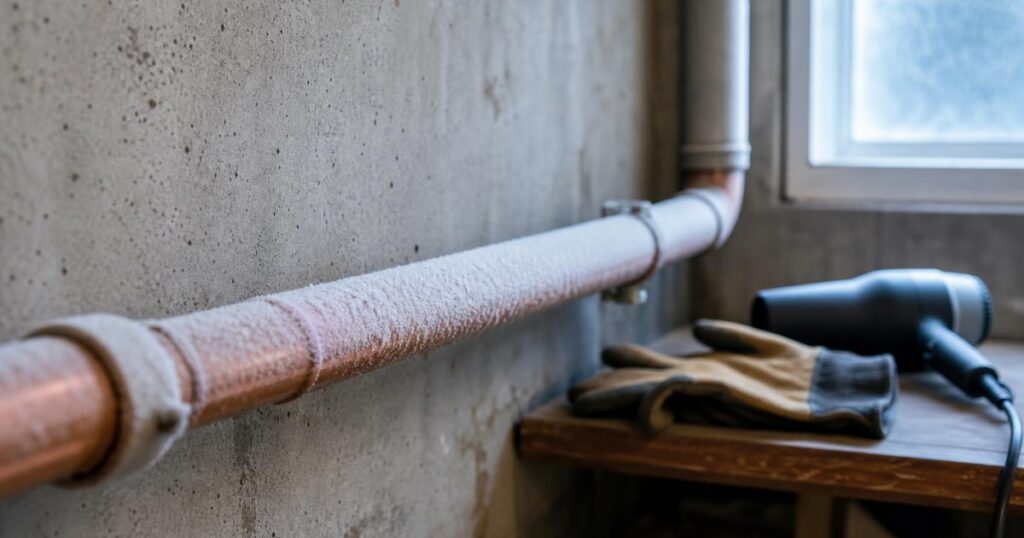
You turn on the kitchen faucet on a bitter Western New York morning and get a trickle, or nothing at all. That moment usually means ice has formed somewhere in the line. This post shows you how to tell if pipes are frozen, how to confirm it with a few quick checks, and what to do while the ice is still in place. It also covers the signs that a pipe has already split and water is spreading through your home. A few calm minutes of checking can keep a cold-weather nuisance from turning into a water damage emergency.
Signs Your Pipes Are Frozen
If you are wondering how you know your pipes are frozen, five signs tell most of the story. Any one of them during a hard freeze deserves a closer look.
Little or No Water From a Faucet
A faucet that runs weak or goes dry is the sign most people notice first. Ice inside the line narrows the path the water travels, so the flow slows to a trickle or stops. When only one fixture is affected, the ice sits somewhere along that fixture's supply line.
Frost, Condensation, or a Bulge on an Exposed Pipe
Pipes in a basement, garage, or crawl space can show a white layer of frost when ice has formed inside. Beads of condensation on a pipe that is normally dry point to the same deep cold. A pipe that looks slightly swollen is under strain from the ice, so handle that spot with care.
Whistling, Banging, or Gurgling When a Tap Opens
Water squeezing past a partial blockage can whistle or hiss as it moves. Banging or gurgling often follows as water and trapped air push against the ice. A new noise during cold weather is worth tracing back to its source.
Odors or Slow Drainage From Sinks and Tubs
Ice can block a drain or vent line, and then the gases that normally leave the house stay inside. You may notice a sewer-like odor near a sink or tub, or water that drains slowly and gurgles on its way down. A drain that suddenly slows during a deep freeze deserves the same attention as a dry faucet.
Frosty or Damp Patches on an Exterior Wall
A pipe hidden behind drywall can chill the wall surface until frost or dampness shows. Look at the wall near the dry fixture, especially on the cold side of the house. Dampness that appears as the pipe begins to thaw means water is escaping, and the shutoff steps later in this post apply right away.
Where Pipes Freeze in a Western New York Home
Ice forms first where cold air can reach a pipe and warm air cannot. Check unheated basements and crawl spaces, attached garages, attics, and any pipes running along exterior walls. Sink cabinets on outside walls are common trouble spots, along with outdoor hose bibs and the point where the water service enters through the foundation. A water meter that sits in a cold or drafty corner belongs on the list too.
Three conditions lead to freezing: a long stretch below freezing, cold air or wind that finds a pipe through gaps in the wall, and a thermostat turned down overnight or while the house is empty. In University of Illinois field tests, uninsulated pipes in an unconditioned attic began to freeze once the outdoor temperature reached 20°F or below. Pipes exposed to flowing cold air through cracks or gaps can freeze at warmer temperatures, and wind speeds up the process.
Buffalo's normal January low is 19.0°F, which puts uninsulated pipes close to that range through the heart of winter. A drafty rim joist or an unheated garage wall in Orchard Park, Hamburg, or West Seneca can turn an ordinary cold snap into a frozen line overnight.
How to Confirm It Is a Frozen Pipe
Four quick checks tell you what you are dealing with before you decide what to do.
Start by opening every faucet in the house, hot and cold. When one fixture is affected, the ice sits in that fixture's line. When every faucet is dry, the main service line may be frozen, which typically takes temperatures below 20°F.
Next, ask a neighbor whether their water is running. A dry house on a street where others have water points to a frozen pipe on your property. A street-wide outage points to a supply problem, and your water provider can tell you more.
Then trace the line back from the dry fixture toward the spot where it enters the house. Run your hand along the pipe and feel for a section that is ice cold or frosted. The place where the pipe turns from cool to icy is your likely blockage.
Finally, read the water meter with every fixture off. A steady meter fits a simple freeze. A meter that keeps moving means water is escaping somewhere, which suggests a pipe has already cracked.
What to Do When a Pipe Is Frozen
While the pipe is still frozen, these steps keep the situation under control:
- Keep the faucet open, so water and pressure have a way out as the ice melts.
- Find the main water shutoff and be ready to close it if water starts to leak.
- Warm the frozen section gently, starting at the faucet end and working back toward the blockage. A hair dryer, an electric heating pad, or towels soaked in hot water are safe heat sources for a frozen pipe.
- Keep every open flame, torch, and fuel-burning heater out of the job.
- Keep heat sources away from standing water, and never leave them unattended.
- Keep warming until full pressure returns.
- Check the other faucets, since one frozen pipe often means others are close behind.
Some jobs belong to a licensed plumber. Call one when the frozen section is inside a wall or out of reach, when you cannot find it, or when flow does not come back after steady warming.
Once water flows again, protect that same spot. Open the sink cabinet doors on exterior walls so warm air reaches the pipes, insulate the exposed run, and seal drafts near the pipe. In deep cold, let a vulnerable faucet drip, and keep the heat at 55°F or higher whenever you are away.
Will Frozen Pipes Thaw on Their Own, and Do They Always Burst?
Both questions share one cause, so the answers fit together. Pipes do begin to thaw as temperatures rise above freezing, and you may hear gurgling, clanging, or banging while the ice moves. Waiting carries risk, because a frozen line can sit inside a wall or a cold corner with nobody watching it.
A frozen pipe does not always burst. University of Illinois research found that the common idea of ice simply pushing outward on the pipe wall is not correct. Pipes burst because ice keeps growing after it forms a blockage, and that growth puts high pressure on the water trapped between the ice and a closed faucet. The pipe usually splits at a spot where little or no ice has formed.
Upstream of the blockage, water can retreat toward its source, so pressure does not build there. Without excess water pressure there is no burst, even when the water inside the pipe freezes. An open faucet matters for this reason: it gives the pressure somewhere to go.
A pipe that thaws and flows again can still carry a small crack. The crack may release only a little water at first, so a leak can appear hours or days after the faucet runs normally. After any freeze, look over the pipe, the wall around it, and the ceiling below for damp spots over the next few days.
Signs a Frozen Pipe Has Already Burst
Once a pipe splits, the problem shifts from too little water to too much water in the wrong place. Water stains or bubbling paint on walls and ceilings show that moisture is working its way through the drywall. Puddles with no obvious source, or the sound of running or hissing water behind a wall, point to a pressurized line that is open. A sudden drop in water pressure and a musty smell round out the list. A water meter that keeps moving with every fixture off confirms that water is leaving the system.
Three first steps protect your home and your claim file. Shut off the main water supply to stop the flow. Stay clear of wet areas near outlets and cords, since water and electricity share no safe ground. Then take photos of the damage as you find it, from a safe distance, so a record exists of what the water reached.
Getting Help With Water Damage From a Burst Pipe
A plumber repairs the pipe. The water that pipe released is a separate job, and that is where PuroClean Property Damage Restoration comes in. The water damage it handles includes damage from frozen or burst pipes, and its team responds 24/7 to emergencies in Orchard Park, Buffalo, and across Western New York.
Technicians start with emergency water extraction and structural drying to remove standing water and the moisture left in building materials, then dehumidify with the PuroClean QuickDry System™. Water leak detection with moisture meters and thermal imaging finds moisture hidden in walls and floors. Speed matters because mold can begin developing within 24–48 hours if moisture is not addressed, and the U.S. Environmental Protection Agency (EPA) advises drying water-damaged areas and items within that same window. The team also works with insurance providers to document damage.
If a pipe has burst, the Request Immediate Help page puts you in touch with the team.


