


Table of Contents
This guide to water damaged drywall explains what to look for, how to protect access to affected areas, and what to discuss with a restoration professional.
Residents of Palos Hills, IL and surrounding communities often experience water damage. In this article, we’re focusing on drywall water damage repair. If you’ve suffered drywall water damage in Palos Hills, IL, it’s essential to quickly remove the water and dry your walls. That way, you will reduce further damage to your home’s structure and contents, such as flooring, furniture, ceiling, and drywall (gypsum board). Depending on the type of flood and where water has intruded, the drywall should be either entirely or partially replaced. Read below to learn how to repair water damaged drywall.
Things to know before learning how to repair water damaged drywall
If wet drywall is caused by overhead flooding, the ceiling may collapse. Thus, when dealing with drywall ceiling water damage, your personal safety may be at risk. In this case, have your property’s structure assessed by a professional restoration company.
In addition, if the drywall water damage was caused by sewage backup, consult certified professionals for repairs. This kind of job involves safety issues and biohazard cleanup services that are often beyond the capacity of typical homeowners.
Before fixing the water damaged drywall, locate and resolve the water source. Extract the standing water and dry the area. The longer the water sits, the greater the damage to your drywall will be.
How to repair drywall water damage in Palos Hills
First, clear the area. Remove water-soaked furniture and building materials. Also, remove wet carpet and padding, or at least pull it back to allow the floor to air out.
Take safety precautions
Before any demolition, have potentially hazardous materials assessed. Older joint compound or coatings may require specialist testing and handling. Keep away from wet electrical equipment and have a qualified electrician assess affected circuits, outlets and appliances. Do not remove electrical components yourself. Protective equipment must be selected for the hazards identified; a basic dust mask is not a substitute for a professional assessment.
Assessing Removal of Damaged Drywall
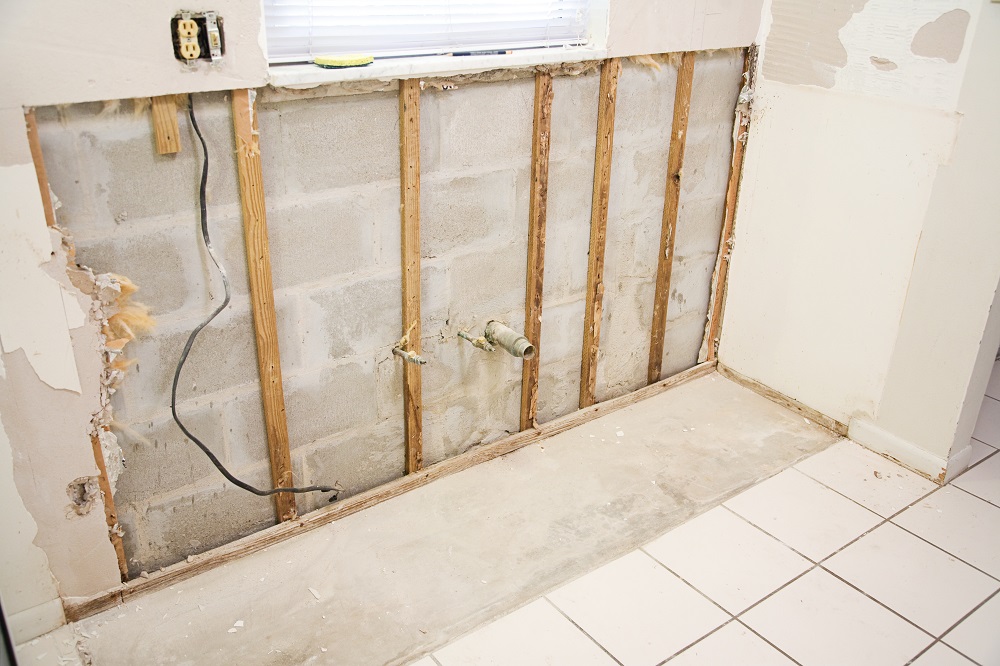
Start by deciding how much drywall to cut out. If the water level was less than two-and-a-half feet, remove the wall material to a height of four feet. That helps when reinstalling full sheets of drywall. If the water level was greater than two-and-a-half feet, remove the wall material to a height of eight feet or the ceiling junction, whichever is higher.
If you don’t know the water level, inspect the drywall. Remove any cracked, crumbling or sagging drywall. But if it’s just damp and the water source was clean (e.g.,. a burst pipe in your home), you can likely dry it. Depending on the extent of the water damage, you may also need to remove damaged wall studs, flooring, cabinets, and ceilings. Next, it’s time to cut the damaged portions of the drywall.
How to cut drywall
- Mark a straight line along the wall — above the point where water stopped wicking — using a chalk line.
- Cut along the chalk line one half or three-quarters of the way through the thickness of the drywall. Use a utility knife.
- Loosen and remove the damaged portion carefully. To make that easier, knock a small hole in the damaged drywall using a hammer. Use the hole as a handle to gently pull back the drywall.
- Once you cut out and remove the drywall, take out all the insulation (fiberglass, mineral wool, cellulose, wood fiberboard, etc.). Even if it doesn’t seem wet, it likely is. If it’s foam plastic insulation, you can leave it in place and allow it to dry.
Drying Behind Damaged Drywall
Once the damaged drywall is removed, start drying the area around and inside the wall. Use high-efficiency blowers and dehumidifiers and open the windows and doors. Use fans to increase airflow behind walls and monitor the materials until moisture readings support the next stage of repair.
Note: avoid punching holes in walls. This practice doesn’t help the wall dry faster. Plus, it makes it harder to repair your drywall.
Sanitize and deodorize
Cleaning and odor treatment depend on the contamination, materials and cause of the loss. A restoration professional should select appropriate methods and follow product labels. Do not use an ozone generator as a household air cleaner or follow a fixed treatment duration from a general article. Specialist odor treatment requires controls for exposure, ventilation and re-entry. Never mix cleaning products.
How to replace water damaged drywall
Now it’s time to hang new drywall. First, measure the size of the hole to help you know how much to cut out from a new sheet of drywall. Put four drywall clips around the hole and secure each one with a drywall screw.
Then, insert the drywall pieces and secure them to drywall clips. Don’t over-tighten the drywall screws. Use drywall tape and joint compound to blend it in with the existing drywall. Finally, sand the area several times for a smooth wall surface.
Finishing Repairs After Damaged Drywall Removal
This is the final step in restoring water damaged drywall. First, make sure that the joint compound is completely dry as it would contain a lot of moisture. Then, paint the wall with a primer to help seal the area. After that, paint the entire wall to ensure the color is uniform throughout.
For professional drywall water damage repair in Palos Hills, call PuroClean!
As you’ve noticed, the procedures of how to repair water damaged drywall are complicated and time-consuming. Everything needs to be done fast using the right techniques and tools.
Don’t risk further damage by taking on the task of drywall water damage repair yourself. For professional drywall water damage restoration and reconstruction in Palos Hills, IL and all Chicagoland area, call your local PuroClean office. We use professional equipment, such as heavy-duty air movers, commercial dehumidifiers, moisture meters, and high-volume water extractors, to quickly and efficiently dry and repair your drywall and the surrounding damp areas.
To recap, this is how to repair drywall water damage in Palos Hills (how we do it):
- Locate and fix the water source that caused the damage.
- Arrange appropriate hazard assessment, protective measures and qualified electrical evaluation before work.
- Remove the damaged portions of the drywall. Cut them with a utility knife.
- Further dry the water damaged walls using fans and dehumidifiers.
- Sanitize and deodorize the area to eliminate musty smells and bacteria.
- Replace the cut-out portions of the drywall.
- Finish the repaired wall with products selected for the materials and conditions.
- Call a restoration company to do all these tasks for you quickly and efficiently.
For additional background on moisture and cleanup decisions, see the EPA guide to mold, moisture and your home.
For help with your property, contact PuroClean Disaster Mitigation at (708) 708-7876 to discuss the next assessment step.