


Table of Contents
This guide to water damage cleanup explains what to look for, how to protect access to affected areas, and what to discuss with a restoration professional.
In the restoration industry, a poorly-done job can be more harmful than the initial disaster itself. Believing they solved their problem at first, clients may find out later that it is worse than before. Recently, a Chicago-area first-responder, a nurse, called us for what seemed like a routine water damage job at her home. But, as our team quickly discovered, it was a much larger problem that should have been preventable.
Cleaning up water… and the mess of another company
The tenant called PuroClean Disaster Mitigation to handle a water leak. The leak was coming from the A/C unit in the apartment above. Cleaning up the water would be a straight-forward task, however, we learned something that changed everything. It turns out the property suffered similar damage a year prior. Of course, whenever a problem is reoccurring it raises red flags.
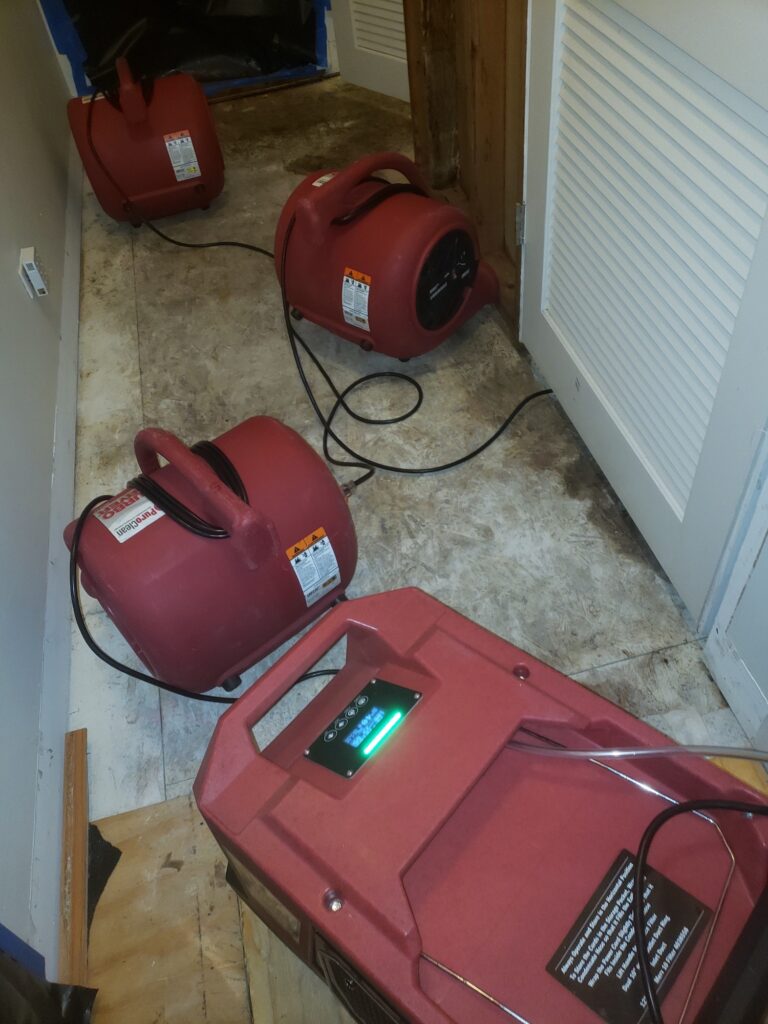
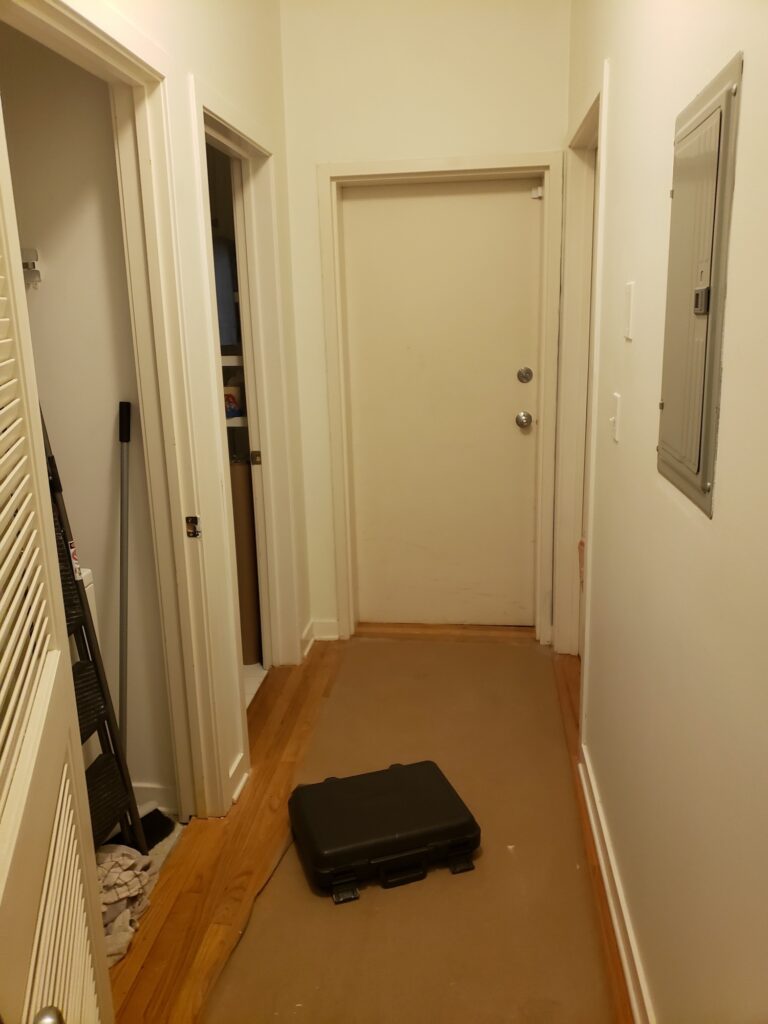
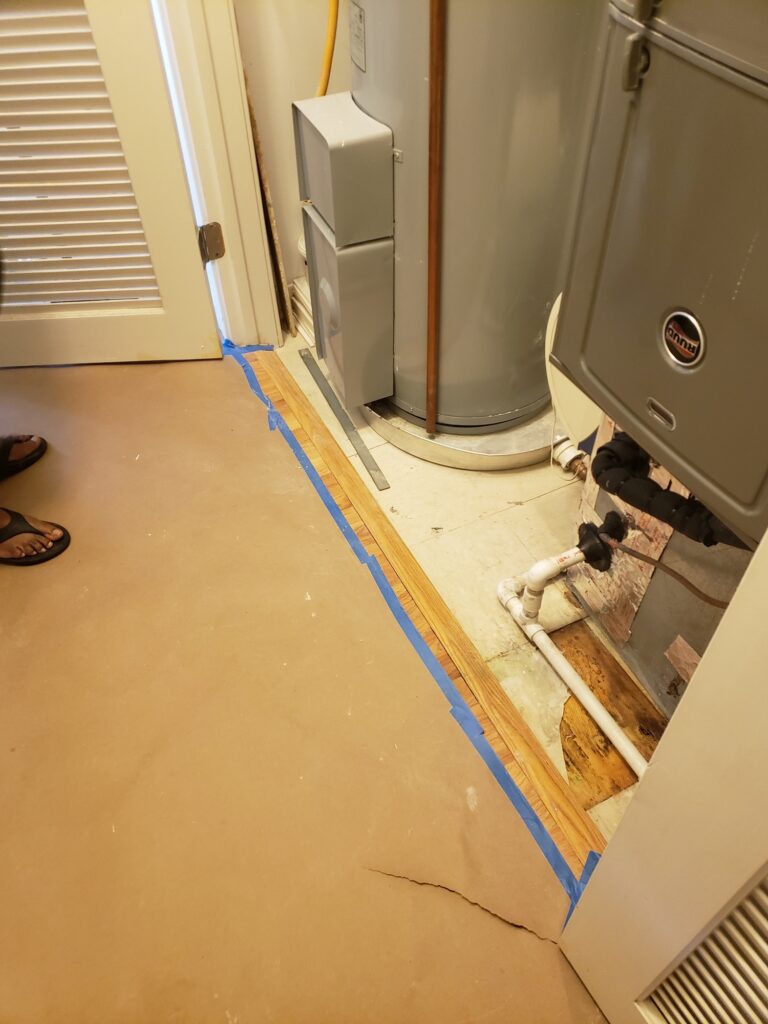
The tenant informed us that they used a different restoration company previously. The water traveled under the hardwood flooring in the hallway. So, our team began removing the hardwood floors, then two more layers of floating plywood, and a layer of soundproof insulation. Once the team removed the layers, mold damage, most likely caused by improper mitigation last year, became apparent.
An attempt had been made to dry the floors, but because of the number of layers underneath the hardwood, they were not able to dry all the moisture from beneath the subfloor. This would explain the mold that had been festering for a year.
We were able to successfully clean the area and to dry all the affected flooring. Our crews fixed the original problem, as well as the newly discovered one, thrilling the tenant.

For professional water damage mitigation, call PuroClean
Mitigating water damage correctly is important for any home or business that experiences leaks or floods. We are proud to deliver professional restoration services to the Palos Hills-area. Call our team at PuroClean Disaster Mitigation at (708) 708-7876 for water damage mitigation services.
Practical next steps for water damage cleanup
When discussing water damage cleanup, describe when the problem began, the rooms and materials involved, and whether the source has been addressed. Photos taken from a safe location and a record of changes can help the team plan an assessment.
Planning water damage cleanup
For the property described in this article, the next steps depend on the current condition and the agreed repair scope. Before authorizing work, explain when the incident occurred, what changed afterward and whether anyone has already attempted cleanup. Tell the team about nearby electrical equipment, suspected contamination, damaged ceilings and any restrictions on entering the room.
Keep a record of the affected rooms and items without putting yourself at risk to obtain photographs. If access is unsafe, wait for appropriate assistance. Note the source of any water, smoke or other damage if it is known, and explain whether that source is still active. The cause and the extent of damage may need separate investigations.
Ask for a written explanation of the proposed scope. It should distinguish initial mitigation, cleaning, drying or other treatment from subsequent repairs. Discuss what may be salvageable, what needs further evaluation and what conditions could change the estimate. Material replacement should follow the assessment rather than a blanket assumption that every affected item can be saved.
Communication, documentation and next steps
When discussing water damage cleanup, ask who will coordinate access and provide progress updates. Agree how questions about personal belongings, work hours, temporary restrictions and unexpected findings will be handled. If additional damage is discovered, request an explanation of the revised scope before further work is authorized.
If you intend to submit an insurance claim, ask your insurer about the policy terms, documentation and reporting requirements. Restoration records can support the description of a loss, but they do not determine coverage. Keep photographs, estimates, receipts and communications together so the adjuster can review the information relevant to the claim.
Completion should be explained in terms appropriate to the work performed. For a moisture-related loss, ask how materials were evaluated before repairs or finishes were installed. For cleaning or odor concerns, ask what was treated and what limitations remain. Follow the project-specific instructions for access, ventilation, routine care and any follow-up assessment.
Contact PuroClean Disaster Mitigation to discuss your property, its location and the current concern. Describe the situation before entering or disturbing damaged areas. The team can help explain the next step and the information needed for an assessment; response and work schedules depend on the circumstances.
For general moisture-control information, see the EPA guide to mold and moisture. Follow product instructions and seek an assessment appropriate to the materials and contamination involved.