

What does water damage look like? Water damage can show up in many ways—stains, peeling paint, warped floors, mold, musty smells, and even sagging ceilings. Some signs are obvious; others are subtle but equally dangerous. The key is catching the problem early and responding fast. This guide explains what water damage looks like, how to find hidden warning signs, and what to do next.
Table of Contents
Why Recognizing Water Damage Early Matters
Water damage isn’t just an ugly mark on your wall—it’s a silent destroyer. It can weaken your home’s structure, ruin electronics and furniture, and promote harmful mold growth. According to FEMA, just one inch of water can cause up to $25,000 in damage to your home.
And the longer it sits, the worse it gets.
Whether from a broken pipe, flooding, a roof leak, or high humidity, knowing the visual signs could save you thousands in repairs.
1. Brown or Yellow Ceiling and Wall Stains
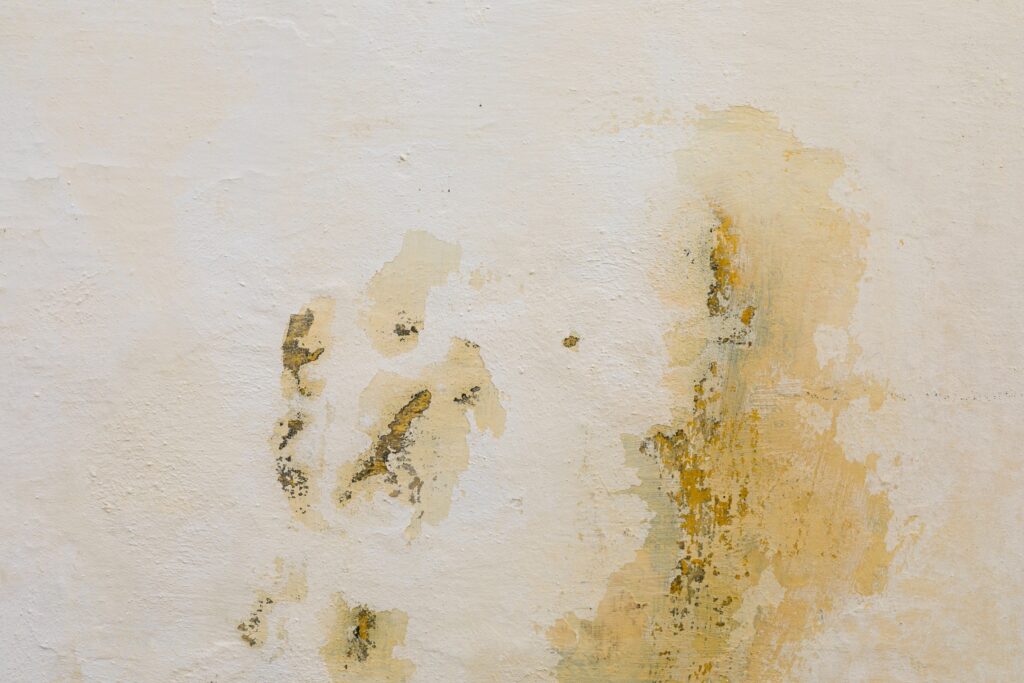
One of the most common signs of water damage is a discolored stain—often yellow, brown, or rust-colored—appearing on ceilings or walls.
- These stains may be circular or irregular in shape.
- Common above bathrooms or under rooflines.
- May grow over time as leaks worsen.
Pro Tip: If the stain feels damp or changes shape, the leak is likely still active.
2. Warped or Buckling Flooring
Water under floors can cause swelling, lifting, and shifting. With hardwood or laminate, you might notice:
- Floorboards cupping or bowing
- Spongy or uneven feeling underfoot
- Tiles cracking or grout loosening
The damage under vinyl, carpet, or laminate flooring is often invisible until it’s too late.
3. Peeling, Bubbling, or Flaking Paint
When water gets behind paint or wallpaper, the moisture pushes outward—causing:
- Paint bubbles or “blisters”
- Wallpaper separating at the seams
- Paint cracking or chipping off
This is a common early indicator in bathrooms and near windows with poor sealing.
4. Musty or Damp Odors
Sometimes, your nose knows first.
A musty smell, similar to wet paper, soil, or mildew, may indicate hidden water damage. This is especially true in:
- Crawl spaces
- Basements
- Behind furniture
- Under sinks
Mold thrives in damp environments, and its odor is one of the earliest warning signs.
5. Mold or Mildew Growth
Visible mold patches are a strong sign of damage, often in black, green, or white colors.
- Found on walls, ceilings, furniture, HVAC vents
- Mold from water damage may spread quickly
- Mold can be toxic (e.g., black mold) and should be handled professionally
6. Sagging Ceilings or Walls
Water adds weight to ceiling panels and drywall. As saturation continues, the material begins to:
- Sag or bulge downward
- Crack or separate from joists
- Eventually collapse (a dangerous risk!)
If you notice ceiling deformation—especially after a rainstorm—contact a restoration expert immediately.
7. Soft, Crumbling, or Bubbling Drywall
When water soaks into drywall:
- It may feel spongy or soft
- Paint or surface may bubble
- You might even poke through it accidentally
This can affect walls near windows, under rooflines, and behind plumbing-heavy areas like bathrooms or kitchens.
Common Sources of Water Damage
To understand what water damage looks like, it helps to know where it comes from:
- Burst or leaking pipes
- Overflowing sinks, tubs, or toilets
- Roof leaks
- Window seal failure
- Appliance breakdowns (washing machines, water heaters, AC units)
- Flooding or storm damage
- Clogged gutters or poor exterior drainage
These sources aren’t always visible—until the damage surfaces later.
What Hidden Water Damage Looks Like
Not all damage is visible to the naked eye. Hidden damage may exist:
- Behind baseboards or cabinets
- Inside walls
- Under carpet padding
- Inside insulation
- Behind large appliances
Using moisture meters or thermal imaging is the best way to detect hidden problems—services offered by PuroClean of Bellflower.
How to Test for Hidden Water Damage
Try this DIY test:
- Press gently on walls near plumbing lines
- Listen for creaking or squishiness under floors
- Use a flashlight to inspect corners for shine or watermarks
- Use a moisture meter (available online)
But DIY tests have limits. If in doubt, trust a pro.
What Happens If You Ignore Water Damage?
Failing to address even minor damage can lead to:
- Mold infestation
- Structural weakening of wood and drywall
- Electrical hazards
- Foundation shifting
- Decreased property value
- Insurance claim denial (due to delayed action)
Waiting isn’t saving—it’s silently costing you more.
What to Do If You Suspect Water Damage
Here’s a fast checklist:
- Turn off the water source (if you know it)
- Shut off electricity in affected areas
- Take photos for documentation
- Contact a certified restoration expert (like PuroClean)
- Avoid disturbing mold or affected materials yourself
- Don’t use fans—this can spread spores
- File an insurance claim if applicable
Frequently Asked Questions (FAQs)
Can the damage go away on its own?
No. Even if it dries out visually, the internal damage, especially mold can linger and worsen.
Does homeowners insurance cover water damage?
Sometimes. It usually covers sudden, accidental damage (like a burst pipe), not gradual leaks or neglect. Quick response is key.
How long does it take to dry out water?
It depends on the severity, usually 3–5 days with proper professional drying equipment.
Is water damage always visible?
No. Many cases stay hidden behind walls or under flooring until major signs appear.
Final Thoughts: What Does Water Damage Look Like?
Water damage is sneaky. It may start with a stain or musty smell—but left untreated, it can destroy walls, warp floors, and create toxic mold. Early detection and professional response save you money, stress, and future headaches.
Get Help Now – PuroClean of Bellflower
We’re local, certified, and fast. PuroClean of Bellflower provides:
- 24/7 emergency response
- Moisture detection and leak source identification
- Complete structural drying
- Mold prevention and remediation
- Damage repair and insurance assistance
Call (562) 356-8500 now to schedule your inspection. Let us restore your home—so you can breathe easy.