


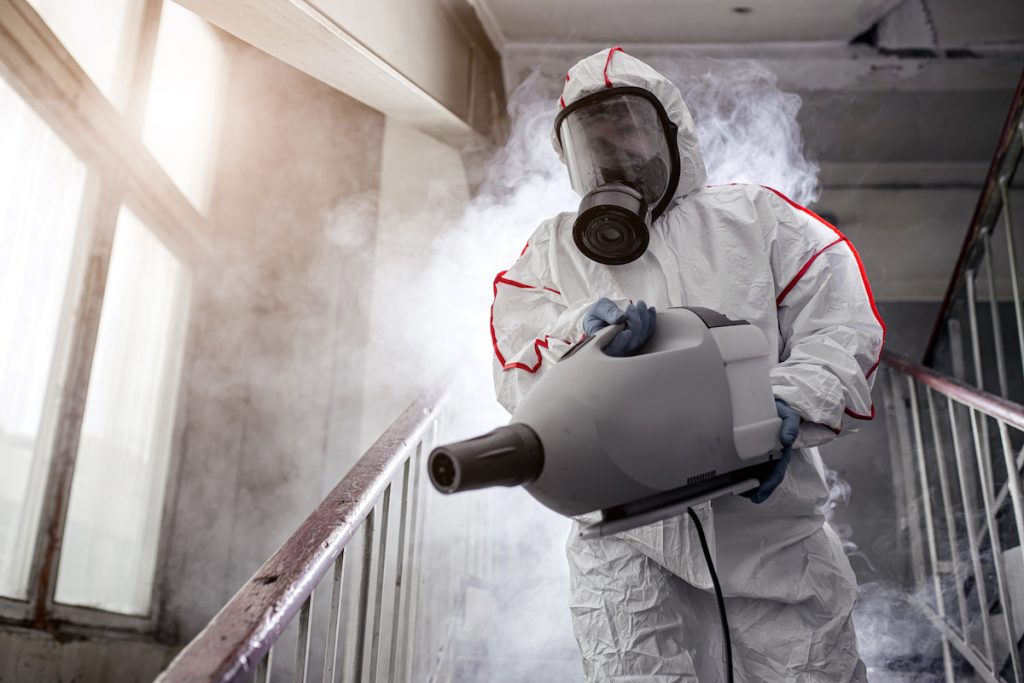
When dealing with water damage or mold, many property owners assume there’s a quick chemical fix—a product that can eliminate all harmful microorganisms instantly. The reality is very different.
At PuroClean of Morristown, we see this misconception often. Antimicrobials play a role in restoration, but they are not a universal solution. Understanding how they actually work—and when they should be used—can make the difference between proper remediation and ongoing problems.
What Are Antimicrobials and How Are They Regulated?
Antimicrobials are substances designed to destroy or suppress the growth of microorganisms such as bacteria, viruses, and fungi. These products are not casual cleaning agents—they are regulated under strict federal guidelines.
In the United States, antimicrobials fall under the Federal Insecticide, Fungicide, and Rodenticide Act (FIFRA), which means:
- They must be registered with the Environmental Protection Agency (EPA)
- Their usage must follow exact label instructions
- In some states, applicators must hold pesticide licenses
This matters because improper use is not just ineffective—it can be unsafe.
Professional restoration companies like PuroClean of Morristown follow these regulations closely, ensuring compliance, safety, and proper documentation throughout the process.
The Biggest Misconception: Antimicrobials Are Not a “Magic Bullet”
Here’s the truth most people don’t hear:
Antimicrobials alone do not fix water damage or mold problems.
Effective restoration is built on:
- Rapid drying techniques
- Removal of contaminated materials
- Deep cleaning and proper disposal
If moisture remains, microbial growth will return—no matter how strong the chemical used.
In many standard water damage situations, especially with clean water, a detergent-based cleaning process can be just as effective as antimicrobial application. The key is removing the source of the problem, not masking it.
When Antimicrobials Are Actually Necessary
There are specific scenarios where antimicrobials become important.
One of the most critical is black water contamination—water that may contain sewage, bacteria, or other hazardous materials. In these cases, there is a legitimate health risk, and antimicrobial application helps reduce and control microbial levels to safer standards.
Additionally, some antimicrobial products are designed to target specific organisms, including:
- Legionella pneumophila
- Mycobacterium tuberculosis
- Aspergillus fumigatus
However, professionals must only make claims based on what the product label allows—nothing more, nothing less.
At PuroClean of Morristown, every situation is evaluated individually. We don’t apply products out of habit—we apply them when they are necessary and appropriate.
Safety Comes First—Always
Antimicrobials are classified as biocides, meaning they are designed to kill living organisms. That includes harmful microbes—but also introduces potential risks.
A professional restoration company must consider:
- Occupant health conditions (children, elderly, immunocompromised individuals)
- Exposure risks during and after application
- Ventilation and containment requirements
In some cases, occupants may need to temporarily vacate the property during application.
Before any antimicrobial is used, proper communication is critical. At PuroClean of Morristown, we ensure:
- Clear explanation of risks and benefits
- Access to Safety Data Sheets (SDS)
- Written informed consent from the property owner
No shortcuts. No surprises.
Proper Use Requires Training, Not Guesswork
Using antimicrobials correctly requires more than just spraying a surface.
Professional technicians must:
- Follow label instructions exactly
- Apply products only to approved surfaces
- Allow proper dwell time for effectiveness
- Document all application details
This level of precision ensures both effectiveness and compliance with safety standards.
Untrained or improper use can lead to:
- Ineffective treatment
- Health risks
- Regulatory violations
That’s why working with a certified restoration company is non-negotiable.
Why Professional Evaluation Matters
The most important takeaway is this:
Antimicrobials are a tool—not the solution.
A qualified restoration professional understands:
- When antimicrobials add value
- When they are unnecessary
- How to balance effectiveness with safety
At PuroClean of Morristown, our approach is built on science, regulation, and real-world experience. We don’t rely on one-size-fits-all solutions—we assess, plan, and execute based on what your property actually needs.
The Bottom Line
If you’re dealing with water damage or mold, don’t fall for the idea that a single product can solve everything.
Real restoration requires:
- Identifying the source
- Removing contamination
- Drying thoroughly
- Applying treatments only when appropriate
That’s how you protect your property—and the people inside it.
If you want clarity, not confusion, work with a team that understands the difference.