 PuroClean of Ft. Lauderdale South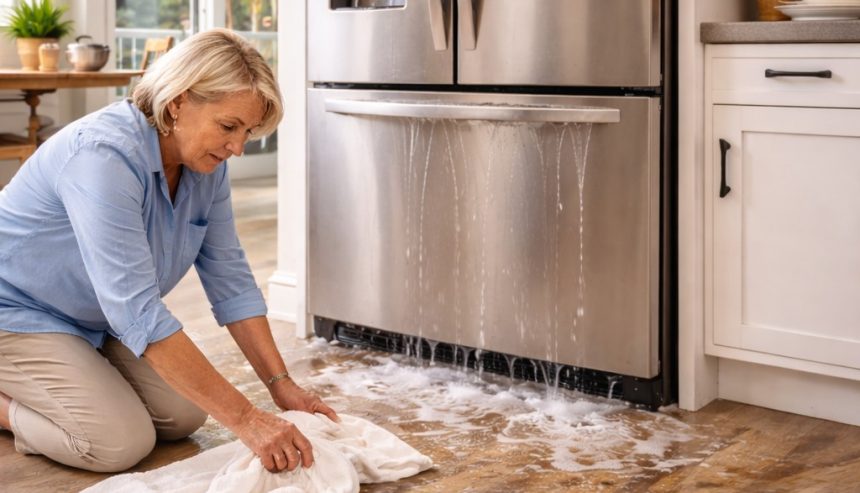
Appliance water damage in Fort Lauderdale is one of the most frequent causes of residential water loss we respond to across Broward County. From washing machines overflowing to refrigerator supply line leaks, modern homes rely on appliances that quietly move water every day. When something fails, the damage can spread quickly through floors, walls, and even neighboring units.
Because South Florida’s humidity accelerates moisture absorption, appliance leaks often cause hidden water damage that worsens if not addressed immediately. That’s why early detection and professional water damage restoration in Fort Lauderdale is critical.
Table of Contents
Common Appliances That Cause Water Damage in Fort Lauderdale
Washing Machine Water Damage in Fort Lauderdale
Water damage from washing machines is one of the top emergency calls we receive. Common causes include:
- Burst or loose supply hoses
- Clogged standpipes or drains
- Overloaded machines causing overflow
A washing machine leak can release dozens of gallons in minutes, soaking subfloors and seeping into adjacent rooms or units—especially in condos and townhomes common in Fort Lauderdale.
Refrigerator Water Line Leaks
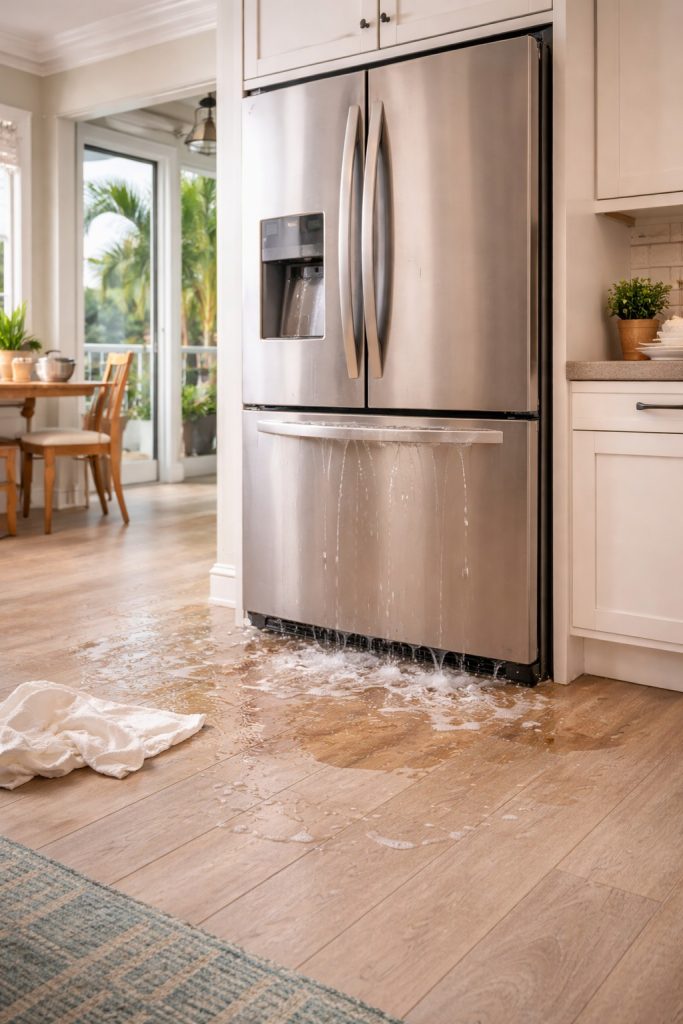
Refrigerator water line leaks in Fort Lauderdale homes are often unnoticed until flooring buckles or mold appears. These leaks usually come from:
- Cracked plastic supply lines
- Loose fittings behind the refrigerator
- Aging filters or valves
Because these leaks occur behind the appliance, damage can continue for weeks before detection.
Water Heater Leaks in Broward County
Water heater leaks are especially damaging because of the volume of water involved. In Broward County, corrosion caused by humidity and age is a major factor. Warning signs include:
- Rust-colored water
- Pooling water near the unit
- Rumbling or popping noises
When a water heater fails, immediate emergency water damage service in Fort Lauderdale is often required.
Dishwasher and Garbage Disposal Leaks
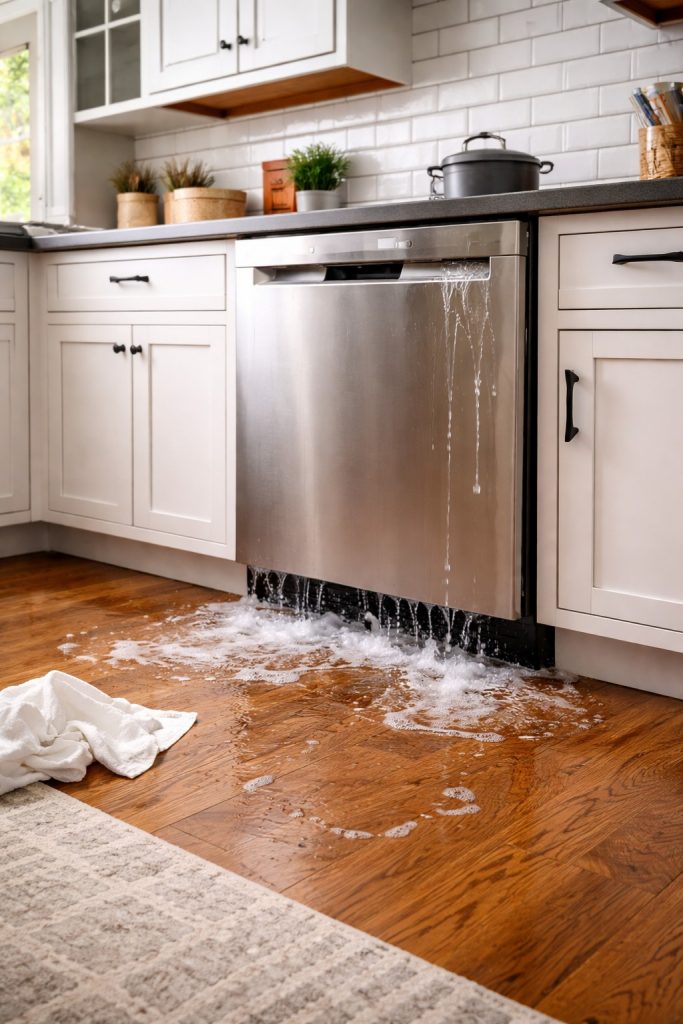
Dishwashers and garbage disposals can cause cabinet-level water damage that spreads under kitchen floors. Common issues include:
- Failed door seals
- Cracked drain hoses
- Loose plumbing connections
Left untreated, these leaks often result in mold growth and cabinet replacement.
Air Conditioner Water Damage in Fort Lauderdale Homes

Air conditioner water damage in Fort Lauderdale is one of the most common and overlooked causes of residential water damage. Central AC systems produce condensation that must drain properly, but in South Florida, clogged condensate lines are extremely common due to algae, dust, and high humidity.
Common AC-related water damage issues include:
- Clogged condensate drain lines
- Cracked or disconnected drain pans
- Frozen evaporator coils that later thaw and overflow
- Improperly installed secondary drain lines
When an AC drain backs up, water can overflow into ceilings, walls, and floors, often causing damage far from the unit itself. In condos and multi-story homes, this frequently results in ceiling collapse or water spreading room to room.
Because air conditioning systems run almost year-round in Fort Lauderdale, AC water damage is a leading cause of emergency water damage calls during the summer months.
Toilet and Sink Leaks Causing Water Damage in Fort Lauderdale
Toilet and sink leaks are another frequent source of water damage in Fort Lauderdale homes, especially because they often go unnoticed for long periods. While these fixtures are not appliances in the traditional sense, they are a major cause of slow, hidden water damage that leads to mold and structural deterioration.
Common toilet-related water damage issues include:
- Failed wax rings allowing water to leak at the base
- Loose or deteriorated supply lines
- Hairline cracks in toilet tanks or bowls
- Constant running that overflows intermittently
Sink leaks frequently occur due to:
- Loose P-traps and drain connections
- Corroded shut-off valves
- Cabinet supply line failures
- Improper DIY plumbing repairs
In Fort Lauderdale and Broward County homes, these leaks often damage vanity cabinets, subfloors, and shared walls before homeowners realize there is a problem. In condos, toilet and sink leaks are a common cause of water damage claims affecting lower units.
Because these leaks are usually slow, insurance coverage often depends on how quickly the damage is discovered and mitigated.
Why Appliance Water Damage Is Worse in Fort Lauderdale
Fort Lauderdale’s climate creates unique risks:
- High humidity slows drying
- Concrete slabs trap moisture
- Multi-unit buildings allow water migration
Even small appliance leaks can lead to structural damage and microbial growth if professional drying and dehumidification are delayed.
How to Prevent Appliance Water Damage in Fort Lauderdale Homes
- Inspect appliance hoses annually
- Replace rubber hoses with braided stainless steel
- Install water leak detection sensors
- Avoid running appliances when away
- Schedule routine maintenance
Prevention reduces risk, but it cannot eliminate failures entirely—especially in older homes.
Does Insurance Cover Appliance Water Damage in Florida?
Many homeowners ask: does insurance cover appliance water damage in Florida?
In most cases, sudden and accidental appliance leaks are covered, while long-term neglected leaks may not be. Proper documentation and fast mitigation are critical to protecting your claim.
Our team regularly works with insurance adjusters to document appliance water damage in Fort Lauderdale homes.
Appliance Water Damage Repair Cost in Fort Lauderdale
The cost of appliance water damage repair in Fort Lauderdale varies depending on:
- Size of affected area
- Duration of the leak
- Materials impacted (wood, drywall, tile)
Minor incidents may cost a few thousand dollars, while extensive damage involving multiple rooms or units can be significantly higher. A professional inspection is the only accurate way to determine scope and cost.
Professional Appliance Leak Repair and Water Damage Restoration in Fort Lauderdale
When appliance leaks occur, immediate action limits damage and reduces restoration costs. Our Fort Lauderdale water damage restoration team responds quickly with:
- Moisture detection
- Water extraction
- Structural drying
- Mold prevention
We serve Fort Lauderdale, Hollywood, Dania Beach, Davie, and all of Broward County.
Emergency Appliance Water Damage? Call Now
If you’re dealing with appliance water damage in Fort Lauderdale, don’t wait. Fast response can prevent mold, structural issues, and insurance complications.
Call now (754) 732-8383 for emergency water damage service in Fort Lauderdale and Broward County.
FAQ
Are appliance leaks like from a fridge or washer covered by homeowners insurance in South Florida?

Usually yes, for sudden and accidental damage—think a burst hose or failed valve. But gradual leaks (like corrosion over time) often aren’t, and Florida’s policies can be picky with mold add-ons. In Broward County, especially post-storm surges, we’ve seen adjusters approve full restoration if you document the source right away. Pro tip: Review your policy yearly; ours at PuroClean helps file claims smoothly to maximize coverage.
How much does it cost to repair water damage from an appliance leak in Fort Lauderdale?

It really depends on the extent— a small drip under a fridge might run $1,500 to $3,000 for drying and minor repairs, while a full washing machine flood in a Pembroke Pines home could hit $5,000+ if it hits subfloors and leads to mold. In our humid climate, factoring in mold remediation pushes it up. We’ve handled claims here where insurance covered most after a quick assessment, but always get a pro estimate same-day to avoid surprises. Call us for a free walkthrough; costs are lower when you catch it early.
What are the early signs of a hidden water leak from appliances in my Hollywood or Fort Lauderdale home?

Look for musty smells in the laundry room, warped baseboards near the kitchen, higher-than-usual water bills, or soft spots in floors. In our salty air, you might spot rust stains or even ants swarming damp areas. I’ve inspected dozens where a fridge line leak hid behind cabinets for weeks—don’t ignore that high utility spike; it’s often the first clue.
How can I prevent mold after an appliance water leak in Florida’s humid weather?
Act fast: Shut off water, extract standing water, and run dehumidifiers within 24 hours. Our South Florida summers speed up mold growth, so professional drying with air movers is key—DIY fans alone won’t cut it. We’ve turned around cases in South Broward where quick response stopped black mold in its tracks; follow with antimicrobial treatments if humidity’s over 60%.
What should I do right after finding a leak from my dishwasher or water heater in Fort Lauderdale?

First, turn off the appliance and main water valve to stop the flow. Mop up what you can, but don’t use heat dryers—they spread moisture. Document everything with photos for insurance, then call a restoration team like us for 24/7 extraction. In storm-prone areas, we’ve seen delays turn minor issues into full remodels; quick pros save you thousands and headaches.
For more on our water damage services, check our water damage restoration page. And for mold tips, see the EPA’s guide on mold and moisture.
Technical Clarification: What Is Considered an Appliance?
For clarity, the term appliance water damage in this article refers specifically to damage caused by household appliances, including washing machines, dishwashers, refrigerators with water supply lines, water heaters, and garbage disposals.
Air conditioning systems (HVAC) and plumbing fixtures such as toilets and sinks are not technically classified as appliances. However, they are included in this article as related sources of residential water damage because they frequently cause leaks that require professional water damage restoration in Fort Lauderdale and throughout Broward County.
More from our Blog:
Mold Remediation in Fort Lauderdale: Handling High Humidity Risks in Homes and Businesses
Water Damage Restoration Hollywood FL: Proven Solutions for Hidden and Visible Damage
Hidden Water Leaks in Fort Lauderdale Homes: Signs, Detection, and Professional Restoration in Broward County

 PuroClean of Ft. Lauderdale South