


You walked into your mom’s house in Fort Lauderdale for the first time in a while and it stopped you cold. Stacks of newspapers. Rooms you can’t walk through. A smell you can’t place. Maybe a neighbor called, or the condo association sent a letter, or you’re reading this from out of state after a phone call that didn’t sound right.

If that’s you, this guide is written for you. The hoarding parent Fort Lauderdale families call us about is almost always someone who knows something is wrong and is ashamed of it. At PuroClean of Ft. Lauderdale South we handle hoarding cleanups across Fort Lauderdale, Hollywood, Dania Beach and Pembroke Pines, and most of those calls come from adult children in your position. Here is what we’ve learned about what to do first, what not to do, and how to get through it without damaging your relationship with your parent.
Step 1: Understand what you’re actually dealing with
Hoarding is not laziness and it is not a housekeeping problem. It is a recognized mental health condition, often tied to anxiety, grief, depression or the early stages of cognitive decline. In Fort Lauderdale we see it most often in older adults living alone, frequently after the loss of a spouse or a health event that made it impossible to keep up with the home.
That matters because it changes the approach. A parent who is hoarding usually knows something is wrong and feels deep shame about it. Showing up with trash bags and a rented dumpster almost always makes things worse: it confirms their fear of being judged, and it often leads to the home filling back up within months.
Step 2: Don’t clean it yourself, at least not yet
This is the advice most families don’t want to hear, but it is the most important. Three reasons:
First, safety. Heavily hoarded homes in South Florida commonly hide things you don’t want to handle without protection: mold behind stacked contents, rodent and insect activity, pet waste that has soaked into flooring, and sometimes needles or expired medication. Our technicians wear respirators and protective suits for a reason.
Second, structural damage. In our experience most hoarded homes have something underneath the contents: a slow plumbing leak, a failing subfloor, water intrusion from a window nobody has opened in years. If you clear the room and don’t know what you’re looking at, you can miss damage that insurance would have covered if it had been documented properly.
Third, the relationship. If you throw away something your parent considered important, even if it looked like trash to you, that trust is very hard to rebuild. Families that involve the parent in sorting, at a pace they can handle, get far better long-term results.
Step 3: Start with a conversation, not a plan
Before anything else, talk to your parent. Not about the house, about them. How are they feeling? Are they sleeping? Have they been to the doctor? The state of the home is usually a symptom of something else, and your parent needs to feel that you’re on their side before they’ll let anyone touch their belongings.
Some things that tend to work: focusing on safety rather than appearance (“I’m worried you could fall”), asking what they’d like help with rather than telling them what has to go, and being honest that you’re not going to do anything without their agreement.
Some things that don’t: ultimatums, surprise cleanouts while they’re at an appointment, and involving too many family members at once.
Step 4: Know when it has become urgent
Some situations can’t wait for a slow conversation. Call for help right away if you see any of these: the parent is sleeping in a chair because the bed is unreachable, there is no clear path to the bathroom or the exit, the stove or heater is blocked by combustible material, there are signs of animal waste or a strong ammonia smell, or the home has already received a code enforcement notice or a letter from the HOA.
In Fort Lauderdale, condo associations and property managers in neighborhoods like Victoria Park, Coral Ridge, Las Olas and the Galt Ocean Mile are increasingly proactive about this, and a letter from the association usually means there is a deadline attached. We work with associations regularly and can help you meet it.
Step 5: What a professional hoarding cleanup Fort Lauderdale assessment should include
A proper hoarding cleanup company will walk the home with you, at no cost, and give you a written scope before any work starts. That walkthrough should tell you three things: how many days the job will take, what it will cost, and what they expect to find underneath, based on what they can see and smell.
Be cautious of anyone who quotes a price over the phone without seeing the home, or who talks only about hauling and not about disinfection. The contents are the easy part. The reason a “cleaned” hoarded home still smells six months later is that pet urine and organic waste have soaked through the carpet, into the padding, into the subfloor and into the base of the walls. Removing the clutter without addressing that just uncovers the problem.
You can read more about how we approach this on our hoarding cleanup page for Fort Lauderdale families.
Step 6: Understand what insurance may and may not cover
This surprises many families: hoarding cleanup itself is usually not covered by homeowners insurance. But the damage it hides often is. A burst pipe under a pile of boxes, mold from a long-standing leak, a sewage backup: these are the kinds of events most Florida policies cover, and a restoration company that documents the damage properly can make the difference between an out-of-pocket job and a covered claim.
That’s another reason to use a company that does both hoarding cleanup and property restoration. If we find water damage or mold under the contents, we handle it under the same job, and we document it for your adjuster.
Step 7: Plan for what happens after
A cleanout is a reset, not a cure. The families that avoid a repeat usually put something in place afterward: a regular visit from a family member or aide, a therapist who specializes in hoarding disorder, or in some cases a move to a smaller home or assisted living. The Broward County Aging and Disability Resource Center is a good starting point for local support if your parent is over 60.
Whatever you decide, don’t do it alone. This is one of the hardest things an adult child can face, and there is no shame in asking for help.
If you need hoarding cleanup Fort Lauderdale families have trusted since 2021, we’re one call away.
Frequently asked questions
How much does hoarding cleanup cost in Fort Lauderdale?

It depends on the size of the home, the level of contamination and whether there is hidden damage underneath. We give a free, written assessment before any work starts so there are no surprises.
Will the neighbors know?

Not from us. We coordinate timing and equipment placement in advance, use discreet vehicles on request, and never photograph a home for marketing without written permission.
Can you start quickly?

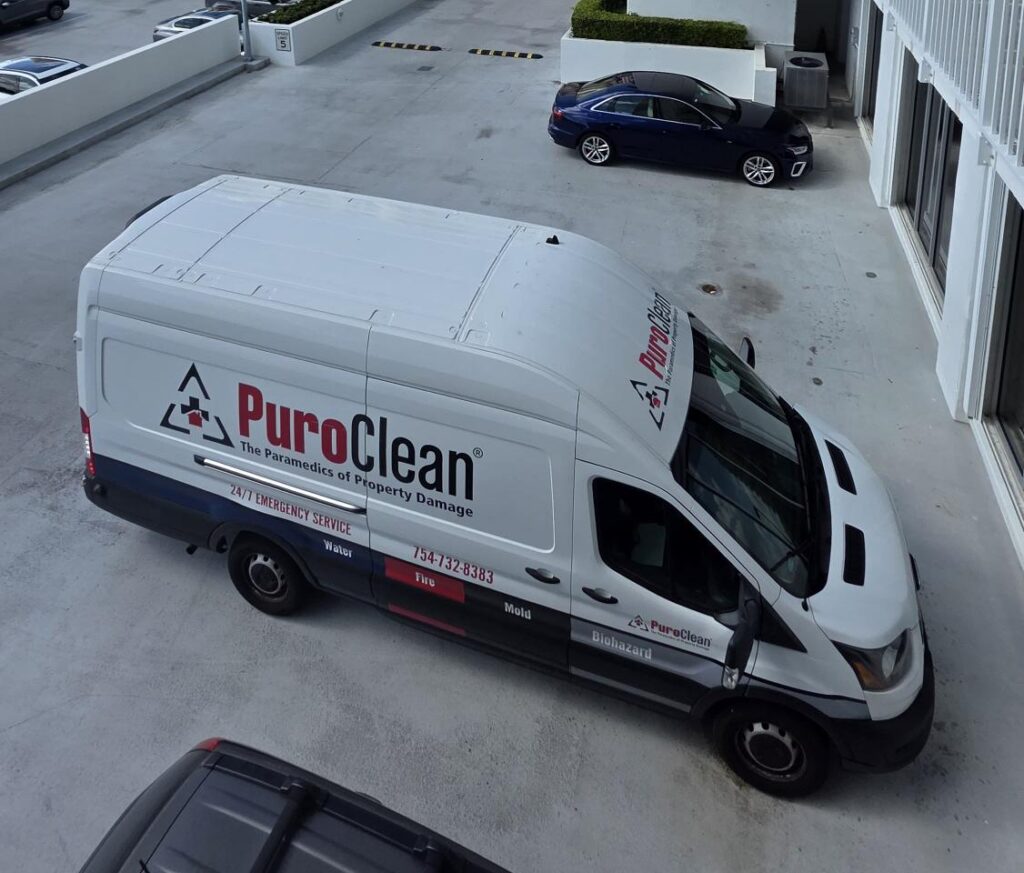
Yes. PuroClean of Ft. Lauderdale South is available 24/7 and can usually assess a home in Fort Lauderdale or South Broward within 24 hours. Call (754) 732-8383 to start with a conversation.