


Table of Contents
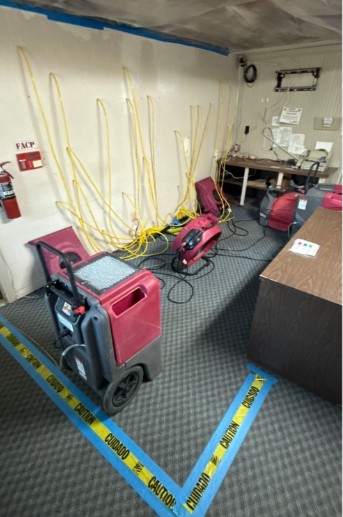
Fort Lauderdale property managers and HOA boards have 24 hours. That’s the window before a water intrusion becomes a mold problem — and a mold problem becomes a liability. A slow leak behind a vanity on the 14th floor of a Las Olas high-rise, a roof penetration unreported for two weeks, a drain pan backup in a mechanical room — water finds its way in, and in South Florida’s climate, mold follows within 24 hours. What happens next is where property managers and HOA boards either protect themselves or expose themselves.
Mold doesn’t wait for a convenient time to show up. And in Florida, neither do tenants’ attorneys.
This isn’t a scare piece. It’s a practical breakdown of what the law actually says, what the numbers look like, and what the difference is between a response that protects your building and one that ends up in front of a judge.
Mold Remediation Fort Lauderdale Property Managers Must Prioritize: What the Law Says
There’s a version of this conversation where everyone points fingers at everyone else. A unit owner blames the association. The association blames the upstairs neighbor. The property manager says it was the plumber’s fault. Florida courts have seen this script enough times to have a clear position on it.
Under Florida Statute 718.111(11)(f), condominium associations are responsible for maintaining and repairing common elements — defined as all property outside of individual units, including structural components, shared plumbing, roofing, and the space between ceilings and floors. That responsibility doesn’t transfer to a contractor, and it doesn’t disappear because damage originated from a neighboring unit.
In McLlenan v. Cypress Chase North Condominium No. 4 Ass’n, Inc. (2024), a Florida District Court of Appeal made this explicit: an association’s duty to repair common elements is not excused by the fact that the damage originated from an upstairs unit owner’s negligence. The association had argued it wasn’t responsible because the water intrusion came from another unit. The court disagreed. The association was still on the hook for the common elements — and for the mold that followed.
For property managers overseeing HOA communities rather than condominiums, the framework is similar. Florida courts consistently hold that landlords and management entities cannot avoid repair obligations simply because the issue originated from aging systems, neighboring units, or deferred maintenance.
The practical consequence: if your building has a mold problem and you knew about it — or should have known — you carry legal exposure. Response time matters. Documentation matters even more.
The 24-Hour Problem Nobody Talks About
Here’s the number property managers in South Florida need to have memorized: 24 hours.
That’s how long it takes for mold to begin colonizing on a wet surface in a climate like Fort Lauderdale’s. The city averages over 60 inches of rainfall annually. Summer relative humidity routinely sits above 75%. When water gets into a wall cavity, a ceiling void, or under flooring in a building that’s not getting immediately dried, the clock starts immediately.
At 48 hours, affected drywall has likely absorbed enough moisture that it will need to be removed rather than dried. The scope of the job just doubled.
At 72 hours, what was a drying and antimicrobial treatment job has become a full remediation — containment, negative air pressure, HEPA filtration, demolition of affected materials, post-remediation testing, and documentation for insurance. The cost difference between a 24-hour response and a 72-hour response can easily be $10,000 to $30,000 on a mid-size commercial job.
And that’s before tenant displacement, board meetings, or attorney involvement.
This is why mold remediation for Fort Lauderdale property managers is never just a maintenance call — it’s a liability decision.
What Remediation Actually Costs in South Florida

Property managers dealing with mold in Fort Lauderdale shouldn’t rely on national averages — local costs in Broward County run significantly higher. Florida’s humidity-driven demand keeps remediation crews busy year-round, and the complexity of multi-unit buildings adds containment and coordination costs that single-family jobs don’t carry.
A realistic breakdown for a mid-size commercial or multi-unit remediation in Broward County:
- Inspection and air sampling: $300–$600
- Containment setup: $300–$1,000 depending on the area isolated
- HEPA air filtration and negative pressure: $500–$1,500 per area
- Mold removal and antimicrobial treatment: $1,500–$6,000+
- Structural repairs and rebuild: $5,000–$25,000 in larger commercial jobs
- Post-remediation verification testing: $300–$600
For a whole-floor or multi-unit scenario, total costs can run $15,000 to $42,000 or higher. Insurance coverage for mold in Florida is notoriously limited — most policies cap mold remediation payouts between $1,000 and $10,000 unless the damage is directly tied to a sudden, covered peril like a burst pipe. Gradual leaks, deferred maintenance, and continuous water seepage are typically excluded.
That gap between what remediation costs and what insurance covers? That falls on the association — or on whoever failed to respond in time.
Water or mold emergency? Call PuroClean of Ft. Lauderdale South now: (754) 732-8383 — 24/7 response.
The Licensing Detail That Can Void Your Insurance Claim
This is the part of the conversation that catches people off guard.
Florida Chapter 468 requires anyone performing a mold assessment on an area larger than 10 square feet to hold a DBPR-licensed mold assessor credential. Anyone performing mold remediation on that same area needs a separate DBPR mold remediator license. The law specifically prohibits the same company from performing both the assessment and the remediation on the same property — it’s a built-in conflict-of-interest protection.
Additionally, any contractor brought in to assess or remediate must carry a minimum of $1 million in liability coverage.
Why does this matter for property managers and HOAs? Because insurance carriers scrutinizing a large mold claim will check the credentials of everyone involved. If your remediation was performed by an unlicensed contractor — or by a company that also wrote the mold protocol — you may have grounds for a claim denial regardless of how good the physical work was. Documentation integrity is part of what makes a claim defensible.
PuroClean of Ft. Lauderdale South carries all required licensure and holds IICRC certifications in Water Damage Restoration (WRT), Applied Structural Drying (ASD), Applied Microbial Remediation (MRSR), and Mold Remediation (MRSA), among others. Every job produces timestamped documentation, drying logs, and post-remediation verification reports — the paper trail your insurance adjuster and your board need to see.
What “Preferred Vendor” Actually Means for Your Building
Property managers at luxury buildings in Harbor Beach, Las Olas Isles, Coral Ridge, and Downtown Fort Lauderdale deal with a different set of expectations than managers at older residential stock. Tenants and owners in these buildings notice everything — noise, odor, disruption, and how fast problems get solved.
A preferred vendor agreement means Fort Lauderdale property managers have mold remediation on speed dial — one call instead of thirty minutes of Googling at 4 PM. The crew is in the building within 60-120 minutes, bringing commercial-grade drying equipment, thermal cameras to detect hidden moisture, and the documentation workflow that comes with IICRC-certified professionals.
The difference isn’t just speed. It’s the ability to stand in front of a board or an owner and say: we had a certified team on-site within the hour, here is the moisture map, here are the readings at 6 hours, 12 hours, and 24 hours, here is the clearance certificate. That’s a completely different conversation than explaining why you waited.
The Documentation That Protects You
The documentation you can actually defend in front of a board or an insurance adjuster is the kind that a certified restoration company generates automatically.
If you manage properties long enough, you’ll eventually deal with a tenant who claims their health was affected by mold. Or a unit owner who argues the association failed its maintenance duty. Or an insurance adjuster who wants to know exactly when you knew about the water intrusion and what you did next.
In every one of those scenarios, what protects you is documentation — and specifically, the kind that a certified restoration company generates automatically:
- Moisture readings taken at the time of response, not hours later
- Thermal imaging showing the extent of hidden moisture behind walls and under floors
- Drying logs showing equipment readings at regular intervals, proving active drying was in progress
- Chain of custody for all materials removed from the site
- Post-remediation air sampling results from a licensed assessor confirming the area is clear
- Timestamped job notes creating a clear record of when the problem was discovered, when response began, and what was done
This documentation does two things. It demonstrates that you acted promptly and professionally — the standard Florida courts and insurance carriers hold property managers to. And it creates a paper trail that’s very difficult for a claimant’s attorney to argue against.
A Note on Proactive Inspections
The buildings in Fort Lauderdale that handle water damage and mold the best aren’t the ones with the fastest emergency response. They’re the ones that find problems before they become emergencies.
For high-rises and older buildings along the Intracoastal and barrier island, this means periodic inspections of mechanical rooms, rooftop membranes, elevator shafts, common-area bathrooms, and any unit where a humidity complaint has been reported. It means having a written protocol for what happens when a tenant notices a musty smell — not a wait-and-see policy, but an actual documented response procedure.
Buildings that include mold prevention in their regular maintenance plan significantly reduce their exposure to the large, expensive remediation jobs that come from problems that sat for weeks unaddressed. The cost of a periodic walkthrough with a restoration specialist is a fraction of what one missed leak can produce.
Proactive inspections are the single best investment Fort Lauderdale property managers can make against mold remediation costs down the road.
If You’re Dealing with Mold Right Now

Every mold remediation job in Fort Lauderdale tells the same story: the response time determined the outcome.
PuroClean of Ft. Lauderdale South responds 24/7 across Fort Lauderdale, Las Olas Isles, Harbor Beach, Coral Ridge, Seven Isles, Victoria Park, Pembroke Pines, Hollywood, Davie, and all of Broward County. As part of PuroClean’s national network — a brand with roots going back to 1986, more than 500 locations across North America, and ranked #91 on Entrepreneur Magazine’s Franchise 500 — our local operation carries the training standards and insurance carrier relationships of a nationally recognized system. Our technicians train at the PuroClean Academy in Tamarac, one of only 27 IICRC-approved Applied Structural Drying facilities in the world. That training shows up on your job.
Every job includes full documentation for insurance and legal purposes. We work directly with insurance carriers and provide the written reports your board and adjusters need.
Call (754) 732-8383 — 24 hours a day, 7 days a week.
For property managers interested in establishing a preferred vendor agreement for their building, contact us directly or call the number above.
Frequently Asked Questions About Mold Remediation Fort Lauderdale
Q: Who is responsible for mold remediation in a Florida condominium?
Under Florida Statute 718.111, the condominium association is responsible for maintaining common elements. If mold originates from a common element or an upstairs unit, the association typically carries responsibility — regardless of who caused the original water intrusion.
Q: How quickly does mold grow after water damage in Fort Lauderdale?
In South Florida’s climate, mold can begin colonizing within 24 hours. After 48–72 hours, affected drywall may require demolition rather than drying — which is why mold remediation for Fort Lauderdale property managers requires immediate action and certified documentation.
Q: Does HOA insurance cover mold remediation in Florida?
Most Florida policies cap mold remediation payouts between $1,000 and $10,000, and only when damage comes from a sudden covered peril like a burst pipe. Gradual leaks are typically excluded.
Q: What certifications should a mold remediation company have in Florida?
Florida law requires a DBPR mold remediator license and $1 million in liability insurance. Fort Lauderdale property managers should also look for IICRC certification in Applied Microbial Remediation (AMRT/MRSA).
Q: How do Fort Lauderdale property managers set up a preferred vendor agreement with PuroClean?
Call (754) 732-8383 or visit our contact page. We work with property managers and HOA boards across Broward County to establish 24/7 response protocols tailored to your building.
Carlos Niemes is the owner and president of PuroClean of Ft. Lauderdale South, serving property managers, HOA boards, and building owners across Broward County for more than 5 years as part of PuroClean’s national network — a brand with roots going back to 1986 and more than 500 locations across North America. PuroClean of Ft. Lauderdale South holds IICRC certifications in WRT, ASD, AMRT, MRSA, and MRSR.