You filed a claim after a water disaster, and now your insurance company is pushing back. Whether it’s a burst pipe, a flooded basement, or a slow leak behind your walls, the question every Peoria homeowner eventually asks is: does home insurance cover water damage? At PuroClean of Peoria, we work alongside homeowners through the restoration process every day, and we see firsthand how much confusion surrounds insurance coverage. This guide breaks down exactly what your policy likely covers, what it excludes, and when to call a professional before the damage gets worse.
Table of Contents
1. Understanding How Home Insurance Defines Water Damage

Home insurance policies treat water damage very differently depending on where the water came from and how fast it happened. The distinction between a “sudden and accidental” event versus a “gradual” one is the most important factor in whether your claim gets approved.
- Sudden events, like a pipe that bursts overnight or a washing machine hose that fails, are typically covered under a standard homeowners policy.
- Gradual damage, like a slow drip under a sink that has been leaking for months, is usually denied because insurers classify it as a maintenance issue.
- The source of the water matters as much as the damage itself, so always document the origin point thoroughly before starting any cleanup.
Understanding this distinction upfront helps you frame your claim correctly and avoid the most common reasons insurers deny water damage payouts.
2. What Types of Water Damage Does Home Insurance Typically Cover?
The most straightforward answer to does home insurance cover water damage is: sometimes yes, and the details matter. Most standard HO-3 homeowners policies cover several common water damage scenarios.
- A burst pipe caused by freezing temperatures or sudden pressure failure is generally covered, including damage to walls, flooring, and personal property.
- An appliance leak, such as a dishwasher, water heater, or washing machine that suddenly fails, is typically covered if the failure was accidental and not due to lack of maintenance.
- Water damage from roof leaks caused by a covered peril, like wind or hail damage to the roof, is usually covered as part of the same claim.
- Accidental overflow, such as a bathtub or sink that overflows and damages flooring below, is generally included under standard dwelling coverage.
These scenarios all share one common thread: the damage happened suddenly, and the homeowner could not have reasonably prevented it.
3. What Some Home Insurance Does NOT Cover
Knowing what your policy excludes is just as important as knowing what it covers. Most Peoria homeowners are surprised to discover how many water-related scenarios fall outside standard coverage.
- Flooding from outside the home, including storm surge, overflowing rivers, and heavy rain runoff, is excluded from every standard homeowners policy without exception.
- Gradual leaks and seepage, including slow pipe leaks, foundation seepage, and moisture buildup over time, are classified as maintenance failures and denied.
- Sewer and drain backups are not covered unless you have specifically added a sewer backup endorsement to your policy.
- Neglect-related damage, where an obvious problem was left unaddressed, gives insurers grounds to deny claims even for sudden failures.
Reviewing your policy’s exclusions before a loss happens is the best way to make sure you’re not caught off guard when you need coverage most.
4. Does Home Insurance Cover Flood Damage from Outside the Home?
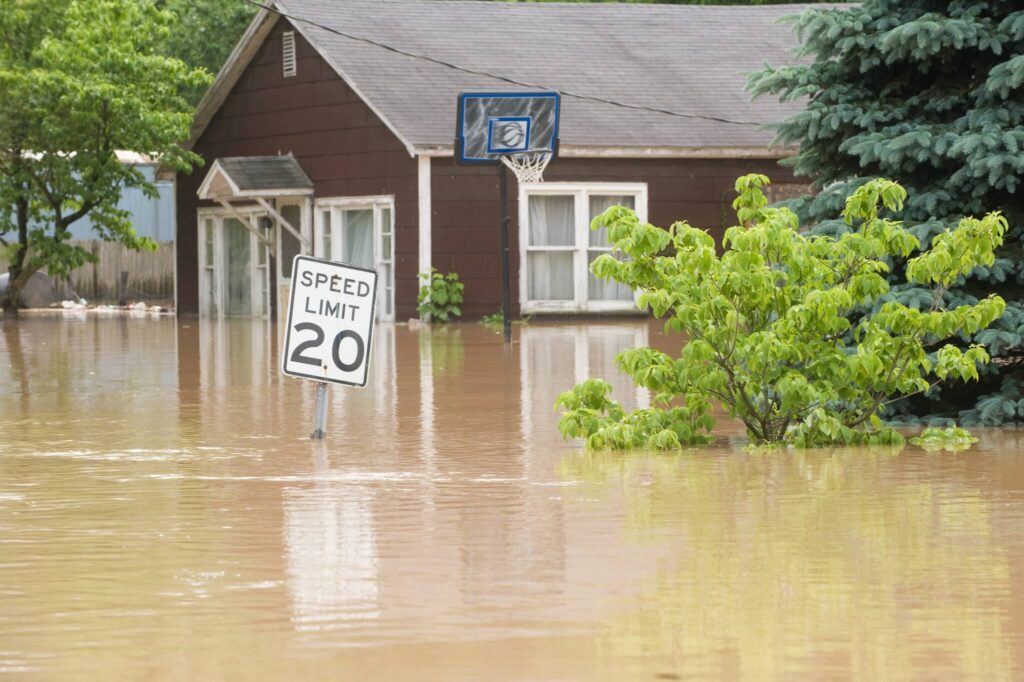
This is the single most misunderstood point when homeowners ask does home insurance cover water damage from flooding. The answer is no, and it surprises many people.
- Standard homeowners insurance never covers flooding caused by natural events, including hurricanes, heavy rainfall, overflowing waterways, and storm surge.
- Flood insurance must be purchased separately, most commonly through the National Flood Insurance Program (NFIP), which is managed by FEMA.
- Peoria, IL sits near the Illinois River, and parts of the region carry an elevated flood risk, making flood insurance a serious consideration for local homeowners.
If your home flooded due to an outdoor water event and you don’t have flood insurance, you may face the full cost of restoration without any reimbursement.
People also read Water Damage After Flood: 9 Critical Steps to Protect Your Home
5. Does Home Insurance Cover Water Damage from Sewer Backup?
Sewer backups are among the messiest and most expensive water damage events a homeowner can face, and the coverage situation adds frustration to an already difficult situation. Most standard policies exclude sewer and drain backup entirely.
- A standard homeowners policy typically does not cover water or waste that backs up through a floor drain, toilet, or basement drain.
- A sewer backup endorsement can be added to most policies for a relatively low annual premium and dramatically improves your coverage in this scenario.
- Sewer backup water is classified as Category 3 contaminated water, meaning the cleanup requires professional disinfection, not just drying.
If you’re already dealing with a sewer backup situation, call PuroClean of Peoria at (309) 431-4003 for immediate, safe remediation from our certified team.
6. How to File a Water Damage Insurance Claim Successfully

Knowing does home insurance cover water damage is only half the equation. The way you document and report the claim directly affects whether it gets approved and how much you receive.
- Report the loss to your insurer as soon as possible, since most policies require prompt notification and delays can be used to reduce or deny a claim.
- Photograph and video every affected area, the source of the water, and any damaged belongings before you move or discard anything.
- Keep receipts for any emergency expenses you incur, such as water extraction services or temporary housing, as these may be reimbursable.
- Avoid making permanent repairs before the adjuster visits, but do take reasonable steps to prevent additional damage, such as shutting off the water supply.
A well-documented claim filed promptly is far more likely to result in a fair payout than one submitted days later with limited evidence.
7. The Role of Mold in Water Damage Insurance Claims
Mold coverage is one of the most contested areas of home insurance, and its connection to water damage makes it directly relevant to your claim. Whether mold is covered depends heavily on whether the underlying water damage was covered.
- If a covered water event, like a burst pipe, leads to mold growth, most policies include at least limited mold remediation coverage as part of the claim.
- Mold that results from long-term moisture problems, neglected leaks, or high humidity is typically excluded as a maintenance issue.
- Some insurers cap mold remediation coverage at a dollar amount even when the mold is covered, so review your policy limits carefully.
Addressing water damage quickly and thoroughly is the most effective way to prevent a mold claim from becoming a costly out-of-pocket expense.
8. When to Call a Professional Restoration Company Before Filing Your Claim
Working with a certified restoration company early in the process can actually strengthen your insurance claim, not complicate it. Professional documentation and prompt mitigation show your insurer that you acted responsibly to prevent further loss.
- A restoration company like PuroClean of Peoria can provide a detailed written scope of damage that supports your claim with technical evidence.
- Professional water extraction and drying prevent secondary damage, which some insurers will argue should have been prevented to avoid reducing your payout.
- Certified technicians can identify hidden moisture behind walls and under flooring that a homeowner or adjuster might miss, ensuring the full scope of damage is captured.
At PuroClean of Peoria, we work with all major insurance carriers and can help guide you through the documentation process from the first phone call. Reach us at (309) 431-4003 and let us help you protect both your home and your claim.
9. Extra Coverage Options Worth Adding to Your Policy
If your review of this article has revealed gaps in your current coverage, the good news is that most can be filled with affordable policy endorsements. Talking to your insurance agent about these additions is a smart next step for any Peoria homeowner.
- A water backup and sump overflow endorsement covers sewer backups and sump pump failures, which are among the most common causes of basement flooding.
- Service line coverage protects against damage from broken underground pipes connecting your home to utility lines, which standard policies exclude.
- A separate flood insurance policy through the NFIP provides protection for any water event originating outside your home.
Filling these coverage gaps before a loss happens costs a fraction of what it would cost to pay for water damage restoration out of pocket.
FAQs About Does Home Insurance Cover Water Damage
Does home insurance cover water damage from a leaking roof?
It depends on the cause. If your roof leaked because of sudden storm damage, like wind or hail, the resulting water damage is typically covered. If the leak developed gradually from aging or lack of maintenance, your insurer is likely to deny the claim.
Does home insurance cover water damage from a burst pipe?
Yes, in most cases. A burst pipe is considered a sudden and accidental event, which is the standard insurers use to approve coverage. The damage to walls, flooring, and belongings is generally included, though your deductible applies.
Does home insurance cover water damage in a basement?
Coverage for basement water damage depends entirely on the source. A burst pipe in the basement is usually covered. Water seeping in through the foundation or entering through a floor drain backup is typically excluded under a standard policy.
How long do I have to file a water damage insurance claim?
Most policies require you to report a claim promptly, and many include language about notifying your insurer within a reasonable time or within a specific number of days. Filing quickly protects your right to full coverage and gives you more leverage throughout the claims process.
Will my insurance rates go up if I file a water damage claim?
It is possible. Filing any claim can affect your premium at renewal, and some insurers track claims history. However, large, well-documented claims are often worth filing even with potential rate impacts. Talk to your agent about your specific situation before deciding.
Final Thoughts: Know Your Coverage Before Water Damage Hits
Does home insurance cover water damage? The honest answer is: it depends on where the water came from, how fast it happened, and whether you maintained your home reasonably well. Sudden, internal water events are usually covered; gradual leaks, flooding, and sewer backups generally are not without added endorsements. Reviewing your policy now, adding the right coverage riders, and acting quickly after any water event are the three most important steps you can take to protect yourself financially.
When water damage does strike, having a trusted local restoration team in your corner makes the entire process easier.
📞 Call PuroClean of Peoria for water damage restoration and insurance claim support today at (309) 431-4003 or visit our website.
Don’t let water damage drain your savings — get trusted professional help today.