


Miami’s heat and humidity make post-storm mold one of the fastest-growing threats to homes and condos. Learn 8 Signs of Hidden Mold After a Storm in Miami and what to do right now. 24/7 mold experts. Call PuroClean (954) 477-7007.
Signs of Hidden Mold After a Storm in Miami and What to Do
Miami and mold have a complicated relationship.
The city’s world-famous warmth and humidity that draw millions of residents and visitors are the exact same conditions that make it one of the fastest environments in the country for mold to establish and spread after a storm.
When a tropical storm or hurricane passes through Miami, the visible aftermath captures most of the attention: debris, flooding, downed trees, power outages.
But the invisible aftermath, the mold that begins growing inside walls and floors within 24 to 48 hours of water exposure, can cause lasting damage that rivals anything you can see from the street.
This guide is written for Miami homeowners, condo residents, and property managers who want to know exactly what hidden mold looks like after a storm, where it hides, and what to do about it before it becomes a far larger and more expensive problem.
Why Miami Is One of the Most Mold-Prone Cities in the United States
Miami sits at the southern tip of Florida, surrounded by water on three sides and positioned at the intersection of tropical and subtropical climate zones.
Its average annual temperature of 76 degrees Fahrenheit and humidity that regularly exceeds 80 percent during summer months create a near-perfect incubation environment for mold.
Consider what happens when a storm delivers 8 to 12 inches of rainfall over 24 hours in this environment. Water enters homes and buildings through dozens of pathways: roof penetrations, window frames, sliding door tracks, foundation cracks, and storm drains that cannot keep pace with rainfall volume.
That water soaks into drywall, insulation, subfloors, and wood framing. And then it sits, in 80-degree ambient air with 80-plus percent humidity, with nowhere to dry.
Miami-Specific Risk: Miami’s combination of high-rise density, flat terrain, and limited natural drainage makes it one of the cities most likely to see both external flooding and internal building moisture events during the same storm.
8 Signs of Hidden Mold After a Storm in Miami
1. A Musty Smell That Returns Despite Cleaning
After a storm, many Miami residents clean surfaces, run fans, and assume the problem is resolved when things look dry. But if a musty, damp, or earthy odor reappears within days of cleaning, particularly in specific rooms or near specific walls, mold is growing somewhere beyond the reach of surface cleaning.
In Miami, this odor is most noticeable in condominiums and apartments because the building’s shared ventilation systems can carry mold odors from one unit’s contaminated HVAC into adjacent spaces. If your neighbor also smells something, it may not be coming from your unit at all.
2. Dark Spots or Discoloration That Were Not There Before
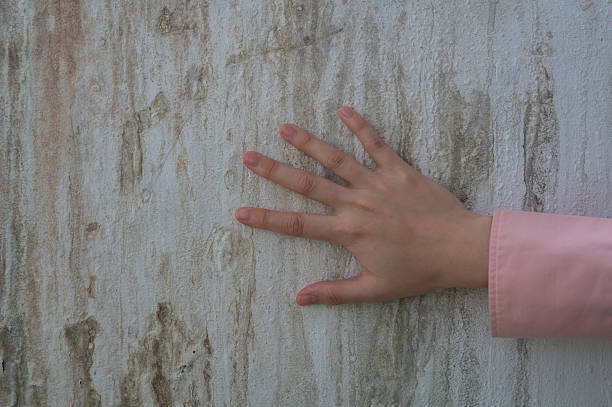
Any new dark spotting, streaking, or discoloration on walls, ceilings, grout lines, or behind furniture after a storm deserves serious attention. Mold in Miami homes commonly appears in shades of black, dark green, gray, and even orange, depending on the species.
In Miami Beach and Brickell high-rises, look at the concrete block interior of exterior walls where the drywall or plaster has been removed or damaged. The block itself can support mold colonies that feed on the mineral salts deposited by repeated moisture infiltration over years.
3. Bubbling or Peeling Paint and Wall Finishes
When moisture is trapped behind a wall, it pushes outward. The result is paint that bubbles, blisters, or separates from the wall surface. In Miami’s condo market, this symptom appears most frequently on the interior face of exterior walls and on ceilings below the floor above.
In Miami’s historic Coral Gables and Coconut Grove properties with textured or Venetian plaster finishes, moisture damage often appears as surface discoloration or soft spots that feel different to the touch before peeling becomes visible. Do not wait for peeling to investigate.

4. Floors That Have Changed Since the Storm
Any post-storm change in your floors deserves attention. Hardwood that has developed ridges, laminate with visible swelling at seams, tile that sounds hollow when tapped in areas that previously sounded solid, or carpet that still smells damp two weeks after the storm are all indicators of moisture trapped below the surface.
Miami high-rises with concrete slab construction often have tile set directly on the slab. When water infiltrates the slab or the adhesive layer beneath the tile, mold grows in the thin organic layer between. Grout cracks and hollow-sounding tiles are the surface symptoms of this process.
5. Health Symptoms That Correlate With Time at Home
Miami’s large population of people with respiratory conditions including asthma, which affects a significant percentage of urban residents makes them particularly sensitive to mold exposure.
If household members experience increased wheezing, shortness of breath, persistent nasal congestion, or itchy eyes that improve when they leave the property, indoor mold is a primary suspect.
For Miami’s many seasonal residents and snowbirds who close properties between seasons and return to find health symptoms starting immediately upon their return, mold that developed over the storm season is a very common cause.
Seasonal Miami property owners: if you are returning to a property that has been closed during storm season, have it inspected before you spend your first night there.
Mold that developed over months in a sealed, humid space can reach concerning concentrations.
6. Condensation and Humidity Control Problems
Miami’s AC systems work extremely hard. A post-storm surge in indoor humidity that your HVAC cannot seem to control is often a sign that the system is now pulling air through spaces that were compromised by water intrusion.
The AC coils, drain pan, and ductwork are environments where mold thrives.
If your electricity bill spikes after a storm and the property still feels humid, the system may be working against itself attempting to dehumidify air that is being continuously re-humidified by evaporation from water-damaged materials inside the building envelope.
7. Staining Around Windows, Doors, and Sliding Glass
Miami’s condominium buildings are designed to handle significant rainfall, but storm-force winds can compromise the seals around windows and sliding glass doors in ways that normal rain does not.
Water that enters along these perimeters gets into the wall cavity and door frame assembly, two locations where moisture detection is very difficult without tools.
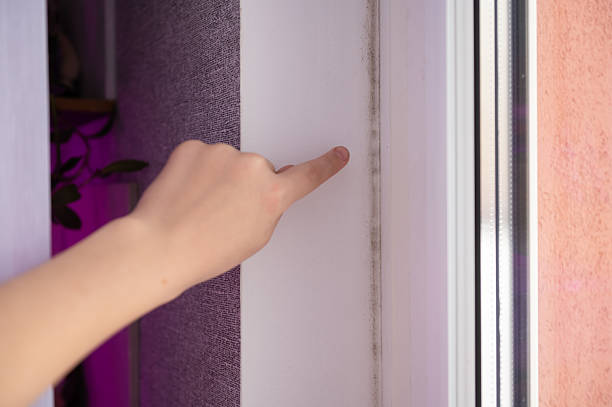
Staining, discoloration, or soft drywall at the corners of window and door frames are signs that water traveled through these assembly points during the storm. Mold in these areas tends to grow vertically inside the wall cavity, meaning the affected area is often much taller than the visible stain suggests.
8. Visible Mold Near Baseboards or in Corners
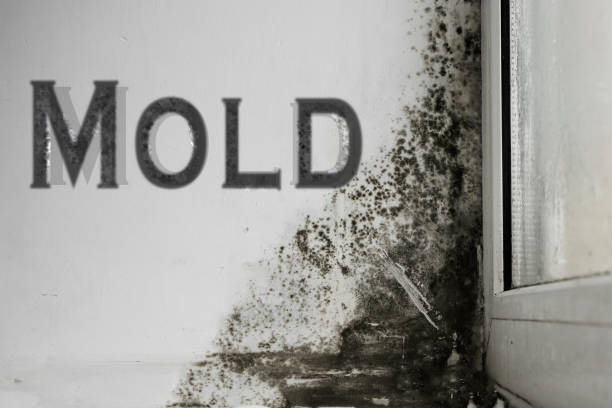
When hidden mold growth has progressed far enough, it eventually becomes visible at the surfaces where walls meet floors or where two walls meet. Mold that appears at baseboards or in room corners after a storm is not a localized problem
it indicates that the moisture driving its growth is distributed throughout the wall or floor assembly behind it.
In Miami’s lower floors and garden-level units, mold at baseboards after a storm is particularly common because these areas received the most direct flood water contact and are the last to dry naturally.

Highest-Risk Areas to Inspect for Signs of Hidden Mold After a Storm in Miami Properties
- The interior perimeter of all exterior walls, particularly those facing the storm’s direction
- Ceiling areas in any room below a rooftop or upper-floor mechanical space
- All accessible HVAC components including the air handler, coil, drain pan, and return air ducts
- Behind all cabinetry in kitchens and bathrooms, particularly base cabinets against exterior walls
- Under-sink areas in all bathrooms and kitchens
- Closets and storage rooms on exterior walls
- Laundry rooms, especially if the washer drain or supply line was affected by flooding
- In multi-family buildings, common areas, stairwells, and parking garages that flooded during the storm
Common Mistakes Miami Property Owners Make After a Storm
- Waiting to see how things look after a few weeks. Mold in Miami can expand from a small affected area to a large remediation project in two to three weeks.
- Running AC fans without knowing if ductwork is clear. Contaminated ducts spread spores to every room.
- Cleaning visible mold with bleach and assuming the job is done. Bleach addresses the surface. The mold colony root structure inside porous materials continues to grow.
- Hiring non-certified contractors for mold remediation. Improper remediation in Miami can result in cross-contamination that spreads the problem and voids insurance coverage.
What Property Owners Should Do Right Now for Signs of Hidden Mold After a Storm in Miami
- If you know water entered your property during the storm, do not wait for visible Signs of Hidden Mold After a Storm in Miami. Call for a moisture assessment within 48 hours.
- Document all water damage with photographs and video before any cleanup begins.
- Notify your insurer immediately. Miami storm-related mold claims have time limits, and insurers require prompt notification.
- Request thermal imaging as part of any professional assessment. This is the only non-invasive way to identify all affected areas in a Miami property.
- Confirm that post-remediation clearance testing is included in any professional scope of work.

PuroClean of Plantation serves Miami properties with 24/7 emergency response.
Our IICRC-certified team uses thermal imaging and moisture meters to identify every affected zone before remediation begins. We handle insurance communications directly.
Miami Property Owners: The Timeline Matters More Than You Think
In most parts of the country, a property owner has a reasonable window of several days to respond to water damage before mold becomes a serious concern.
In Miami, that window is significantly narrower.
The combination of year-round warmth, consistently high humidity, and the density of materials inside modern residential construction means mold can establish a viable colony in less than 24 hours in the right conditions.
Waiting until symptoms become undeniable or until the damage is visible from across the room is rarely a cost-effective approach.
The most successful outcomes for Miami homeowners and property managers after storm events follow a simple pattern: act early, use certified professionals, and confirm the work with clearance testing.
That sequence protects health, protects the property value, and protects the insurance relationship.
Need mold assessment in Miami?
PuroClean of Plantation is available 24/7 with IICRC-certified technicians and thermal imaging equipment.
Call PuroClean of Plantation 24/7: (954) 477-7007