


Did Storm hit your home? Learn the 8 warning signs of hidden mold after a storm in plantation, where to check first, and what to do before it spreads. Expert mold removal by PuroClean. Call (954) 477-7007.
Signs of Hidden Mold After a Storm in Plantation and What to Do
Plantation, Florida sees its fair share of storms from afternoon downpours to full-scale hurricanes between June and November. After the wind dies down and the water recedes, most homeowners do a quick walkthrough, patch up what they can see, and move on.
That is exactly when mold gets the upper hand.
Mold does not wait for an invitation. In South Florida’s heat and humidity, it can begin growing within 24 to 48 hours of water exposure. The tricky part is that the most dangerous growth often happens in places you cannot easily see inside walls, under floors, in attics, and behind cabinets.
This guide walks you through the eight most telling Signs of Hidden Mold After a Storm in Plantation homes after a storm, where to look first, what to avoid doing, and how to get professional help before a manageable problem becomes a major one.
Why Plantation Homes Are Especially Vulnerable to Various Signs of Hidden Mold After a Storm in Plantation
Plantation sits in Broward County, a region built largely on flat land with limited natural drainage. During heavy storms, water intrudes through roofs, windows, sliding doors, and foundations. Even homes that appear undamaged on the surface frequently trap moisture in their structural cavities.
Several factors make Plantation properties particularly prone to hidden mold growth:
- Average humidity regularly exceeds 70%, giving mold spores ideal conditions to activate
- Many Plantation homes were built in the 1960s through 1980s with building materials that absorb moisture quickly
- CBS (concrete block and stucco) construction, common in the area, can hold moisture in wall cavities for weeks
- Air conditioning systems frequently spread mold spores once a colony establishes inside ductwork
South Florida Fact: The Florida Department of Health recognizes mold as one of the most common indoor air quality concerns in the state, especially after tropical weather events.
The 8 Warning Signs of Hidden Mold After a Storm in Plantation
1. A Musty Smell That Lingers
This is the clearest early signal. If your home smells like a damp basement, old books, or wet earth after a storm and the smell does not go away after airing the house out mold is almost certainly present somewhere.
The smell comes from microbial volatile organic compounds (MVOCs) that mold colonies release as they grow. You may smell it most strongly near walls, closets, or beneath flooring that got wet. Trust your nose. In Plantation homes, this odor often shows up first in bedrooms and living rooms with exterior walls that faced the storm.
2. Visible Discoloration on Walls or Ceilings
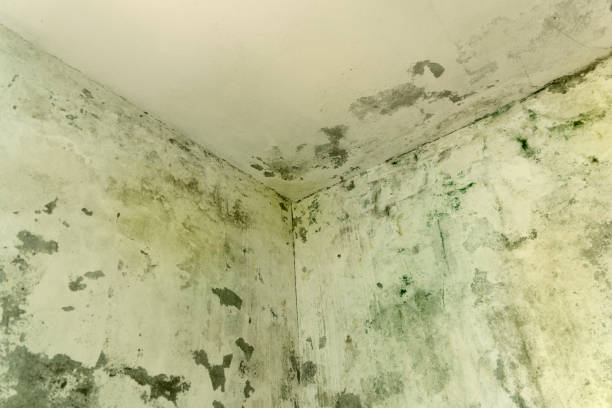
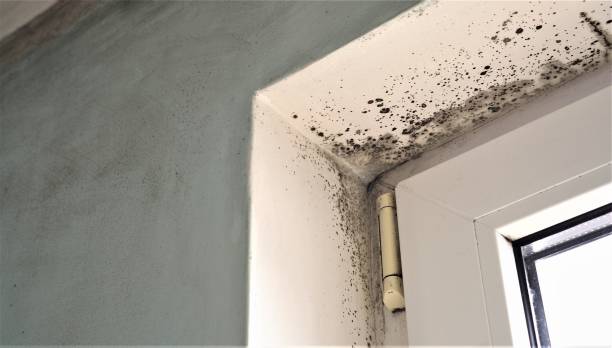
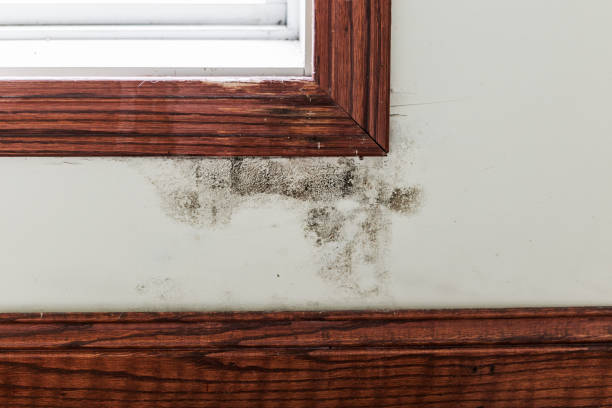
Mold colonies are not always black. In their early stages they often appear as small gray, green, white, or yellowish patches. You might notice faint staining on drywall that looks like a watermark but has a slightly fuzzy or uneven edge.
Check the ceiling in the room directly below your roof line, around window frames where rain entered, and along the base of exterior walls. Discoloration that reappears after you paint over it is a reliable sign that active mold growth is feeding from moisture trapped behind the surface.
3. Peeling Paint or Wallpaper
When moisture builds up inside a wall cavity, it pushes against whatever is on the outer surface. Paint bubbles and peels. Wallpaper lifts at the edges or develops soft, damp patches underneath.
This happens because the wall has absorbed so much moisture that the adhesion between the surface layer and the drywall is breaking down. By the time you see it peeling, the material behind it has likely been wet long enough for mold to begin forming.
Check These Spots: In Plantation homes, check the walls adjacent to sliding glass doors, garage entries, and the master bath exterior wall, all common water entry points during storms.
4. Warping or Buckling Floors
Hardwood and laminate floors swell when they absorb water. If sections of your floor feel spongy, are lifting at the edges, or have visible gaps or ridges that were not there before the storm, moisture has gotten underneath.
The subfloor beneath the visible surface is often made of wood or particleboard, both of which are highly absorbent. Once wet, these materials become a breeding ground for mold that spreads laterally beneath your flooring long before you see anything on the surface.
5. Unexplained Allergy or Respiratory Symptoms
If household members are experiencing more sneezing, coughing, watery eyes, skin irritation, or headaches than usual after a storm and these symptoms ease when they leave home mold in the indoor air is a serious possibility.
Mold releases spores that can trigger respiratory reactions, especially in children, elderly individuals, and anyone with asthma or existing allergies. In Plantation, where residents spend significant time indoors due to heat, prolonged exposure can significantly impact health.
If multiple people in your home are experiencing unexplained health symptoms after a storm, treat it as urgent. Call a professional mold inspector before symptoms worsen.
6. Condensation or Moisture on Windows and Walls
Persistent condensation on interior walls or windows after a storm is a sign that moisture levels inside your home are elevated. This excess humidity is the fuel mold needs to establish and spread.
In Plantation, HVAC systems work overtime year-round. If your air conditioner is struggling to control indoor humidity after a storm, it may already be circulating air past a mold colony inside the ductwork or air handler.
7. Water Stains You Cannot Explain
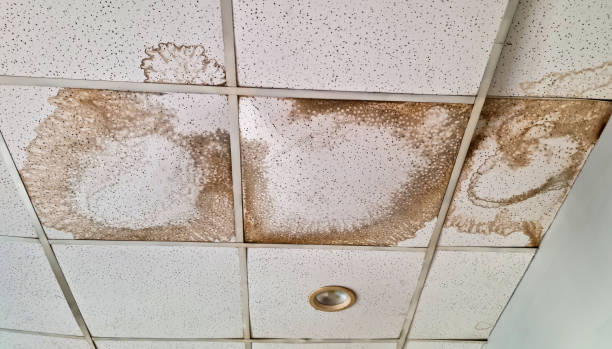
Yellow or brown ring-shaped stains on ceilings and walls indicate water traveled somewhere it was not supposed to go. Even if the stain feels dry now, the path that water took through the roof deck, insulation, and drywall may still contain active mold growth.
Look specifically at the ceiling directly below roofline edges and soffits, around light fixtures, and near the tops of exterior walls. These are the paths rainwater most commonly takes when it enters during a storm.
8. Rust or Corrosion on Pipes and Fixtures
Mold and moisture go hand in hand. If you notice rust or corrosion appearing on pipes under sinks, around water heater connections, or near appliance hookups faster than normal after the storm, it reflects elevated ambient moisture. In many cases, mold has begun colonizing the surrounding walls and cabinetry before the rust became visible.
Where to Check First for Signs of Hidden Mold After a Storm in Plantation Home
Not all areas of your home are equally at risk. After a storm, prioritize checking these locations:
- Attic: inspect insulation and roof deck boards for staining or soft spots
- Exterior walls: press lightly on drywall. Soft or spongy texture indicates moisture behind it
- Under sinks: particularly in kitchens and bathrooms where plumbing lines meet exterior walls
- Around the air handler and air return vents
- Garage walls adjacent to the home’s living space
- Behind and beneath the refrigerator, dishwasher, and washing machine
- Inside closets that share an exterior wall
- Crawl spaces, if applicable
What You Should Not Do – Signs of Hidden Mold After a Storm in Plantation
Once you suspect hidden mold in your Plantation home, the instinct is to tackle it yourself. Before you do, understand what can make things significantly worse:
- Do not run fans or HVAC without knowing where the mold is. Fans spread spores through your home, seeding new colonies in clean areas.
- Do not paint over stained walls. Paint seals the surface but does not stop growth. The colony continues feeding beneath.
- Do not tear into walls without containment. Disturbing mold releases thousands of spores into the air in seconds.
- Do not use bleach on porous surfaces. Bleach kills surface mold on non-porous materials but does not penetrate drywall, wood, or insulation.
The Right Steps to avoid Signs of Hidden Mold After a Storm in Plantation
Here is the sequence that professionals recommend for Plantation homeowners who suspect post-storm mold:
- Document everything first. Take photos and video of all water damage and suspected mold areas before touching anything. This is critical for insurance claims.
- Reduce humidity if you can do so safely. If your HVAC is working and the air handler is not near any suspect areas, running it helps. A dehumidifier in affected rooms is a solid first step.
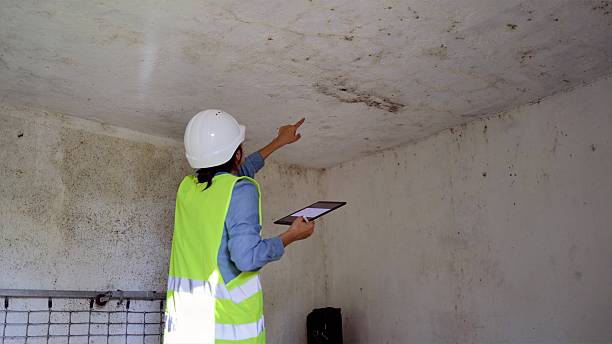
- Call a certified mold professional. IICRC-certified technicians have thermal imaging cameras and moisture meters that can detect hidden moisture without opening walls unnecessarily.
- Contact your insurance provider. Document the storm event date and notify your insurer promptly. Many water and mold damage claims are time-sensitive.
- Do not delay. Every 24 hours of untreated moisture in a Plantation home accelerates mold growth. What costs a few hundred dollars to remediate today can cost thousands next month.
PuroClean of Plantation is IICRC certified and available 24/7. We use thermal imaging and moisture meters to locate hidden mold without unnecessary demolition. We also work directly with your insurance company.
The Professional Process to clear Signs of Hidden Mold After a Storm in Plantation
When PuroClean technicians arrive at a Plantation home after a storm, here is what the process looks like:
- Full property inspection using infrared cameras and calibrated moisture meters to map all wet areas
- Containment setup to prevent spores from spreading to unaffected rooms
- HEPA air filtration units placed to capture airborne spores during remediation
- Controlled removal of affected materials following IICRC S520 standards
- Treatment of all affected surfaces with EPA-registered antimicrobial solutions
- Drying phase using industrial dehumidifiers and air movers until all materials reach dry standard
- Post-remediation clearance testing to confirm the space is clean
Plantation homeowners can typically return to normal occupancy within days, not weeks, when remediation starts promptly.
In Conclusion, Here are what to know about Signs of Hidden Mold After a Storm in Plantation
Storms are unavoidable in South Florida. Hidden mold after a storm is not. The difference is how quickly and correctly you respond in the hours and days that follow.
If your home took on any water during a storm and you are noticing any of the eight warning Signs of Hidden Mold After a Storm in Plantation above, do not wait to see if things improve on their own. Mold does not resolve itself, and in Plantation’s climate, it only grows faster with time.
Get a professional assessment. Know what you are dealing with. And let certified experts handle the remediation so your home is genuinely safe not just surface-clean.
Need mold assessment in Plantation? PuroClean of Plantation is available 24/7 with IICRC-certified technicians and thermal imaging equipment.
Call PuroClean of Plantation 24/7: (954) 477-7007