

Table of Contents
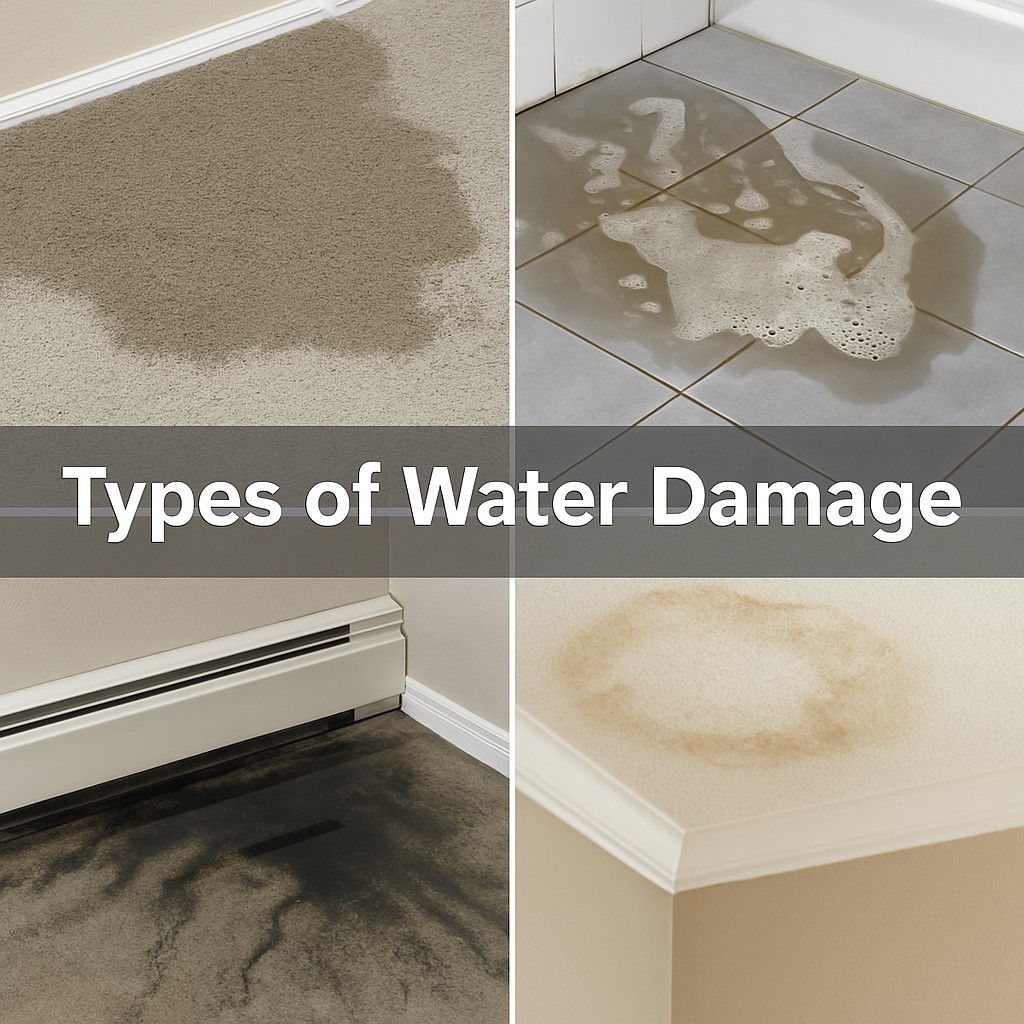
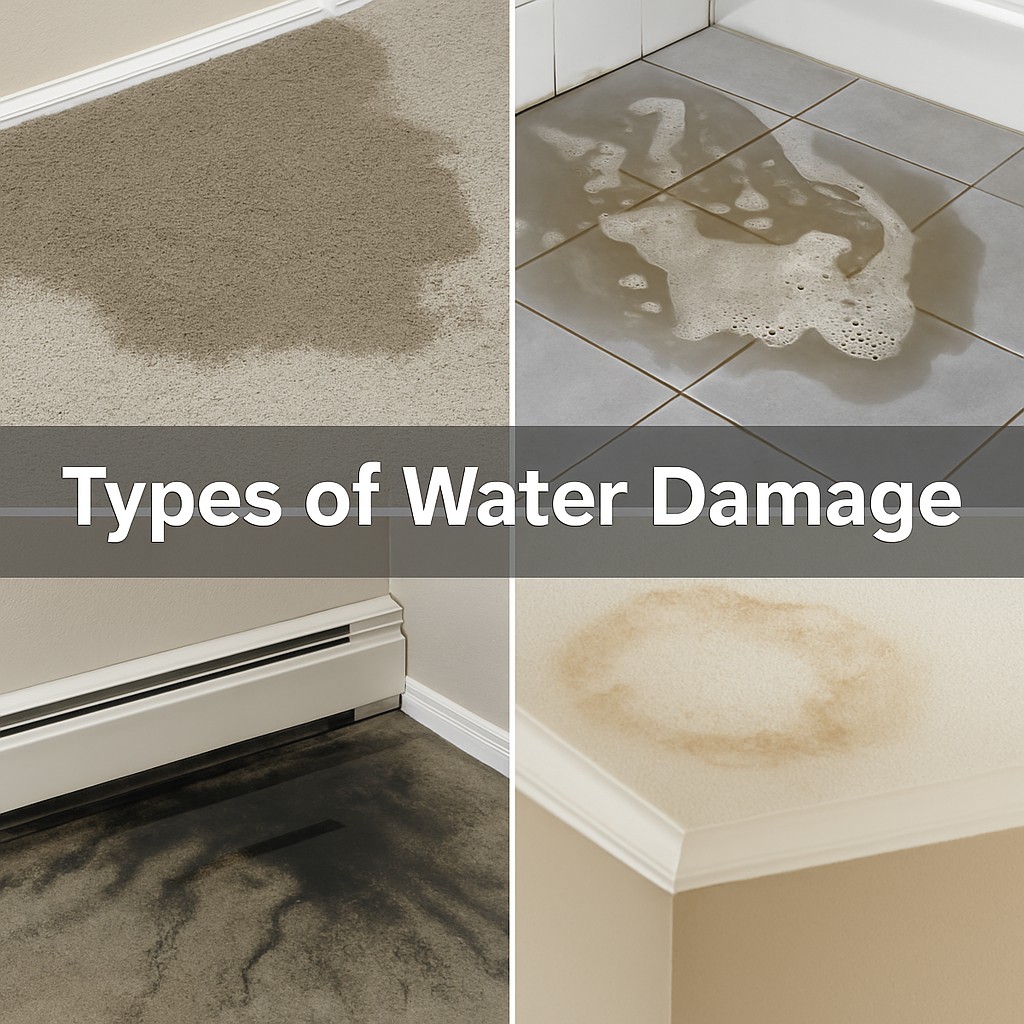
Understanding the Different Types of Water Damage
Water damage doesn’t always come as a dramatic flood—it often starts as a small drip behind a wall or beneath your floors. It creeps in quietly, ruining walls, weakening foundations, and inviting mold. If you’re a homeowner in a humid or storm-prone area, understanding the types of water damage is more than helpful—it’s critical.
In this comprehensive guide, we’ll explore the most common and damaging types of water damage, their causes, warning signs, and how to prevent them. By the end of this post, you’ll have the knowledge to protect your home, health, and finances from unseen threats.
What Is Water Damage?
Water damage refers to the destruction caused by excess moisture or water entering your home’s structure, furnishings, or systems. It can be slow and sneaky—like a hidden pipe leak—or immediate and overwhelming, such as a flash flood.
Not all water damage is the same, and different types of water damage require different responses. That’s why understanding the nature and source of the problem is the first step to solving it effectively.
Why Identifying the Types of Water Damage Matters
Understanding the possible types of water damage you’re dealing with can lead to:
- Inadequate restoration
- Mold infestations
- Structural decay
- Health hazards
- Insurance claim issues
Knowing what you’re up against means acting faster and smarter—and possibly saving thousands in repair costs.

1. Clean Water Damage (Category 1)
Among the many types of water damage, clean water damage is the least severe. This type occurs when water from a sanitary source leaks or spills into your home. Common sources include:
- Broken supply lines
- Overflowing sinks (without contaminants)
- Leaking faucets or water heaters
While this may seem harmless at first, don’t let the word “clean” fool you. If not properly addressed within 24 to 48 hours, even clean water can degrade into gray water due to microbial growth. This type of water damage can silently weaken drywall, flooring, and insulation over time.
Warning Signs:
- Damp or soggy carpets
- Water stains on ceilings or baseboards
- Reduced water pressure in sinks or showers
Prevention Tips:
- Inspect plumbing systems regularly
- Replace aging hoses and corroded fittings
- Address leaks the moment they appear
If caught early, this type of water damage can usually be handled without major reconstruction—but the key is acting fast.
2. Gray Water Damage (Category 2)
Gray water damage represents one of the more dangerous types of water damage because it contains a moderate level of contamination. This water might not be immediately hazardous, but it has the potential to cause illness with prolonged exposure. Sources often include:
- Washing machines and dishwashers
- Toilet overflows without fecal matter
- Sump pump failures or overworked drainage systems
Gray water can contain soap residues, skin cells, oils, or minor chemical agents. If not dried and sanitized within 48 hours, it can quickly become black water, which poses far more serious health risks.
Warning Signs:
- Musty or chemical-like odors
- Cloudy, greasy, or soapy-looking water
- Moisture buildup around appliances or under flooring
Prevention Tips:
- Service appliances routinely and check for leaks
- Clean out drain traps and sump basins
- Act quickly when gray water is detected to prevent escalation
Among all types of water damage, gray water requires more caution than clean water and often demands professional attention for thorough drying and decontamination.
3. Black Water Damage (Category 3)
Black water damage is the most hazardous of all types of water damage. It involves water that is grossly contaminated and poses serious health threats due to the presence of sewage, bacteria, or harmful chemicals. Common sources include:
- Raw sewage backups
- Rising floodwaters from storms or hurricanes
- Toilet overflows containing fecal matter
- Contaminated water from rivers, streams, or storm drains
This type of water damage can impact everything it touches—drywall, furniture, carpeting, and even your home’s air quality. Handling black water requires special protective equipment and professional remediation to prevent long-term damage and illness.
Warning Signs:
- Strong, foul, or sewage-like odors
- Visibly dark, murky, or oily water
- Immediate mold growth or slimy surfaces
Prevention Tips:
- Install backflow prevention valves in your plumbing
- Get your septic system inspected annually
- Avoid all contact with unknown floodwaters, especially during storms
If you’re ever unsure which of the types of water damage you’re dealing with, black water should always be treated as a serious emergency. Never attempt to clean it up on your own—this is a job for certified water damage restoration professionals.
4. Flood Damage
Flood damage is usually a combination of black water and physical damage. It’s caused by:
- Storm surges
- Flash floods
- Hurricanes or tropical storms
Floodwaters can infiltrate your basement, ruin electrical systems, and compromise your home’s foundation. This type of water damage is often not covered under standard homeowners’ insurance policies.
Warning Signs:
- Standing water inside your home
- Water lines on walls
- Electrical malfunctions
Prevention Tips:
- Elevate electrical systems in flood-prone zones
- Use sandbags or flood barriers
- Consider a flood insurance policy
5. Rainwater Intrusion
Rainwater may seem harmless, but over time it can cause severe structural damage. Common causes include:
- Damaged roofing
- Poorly sealed windows or doors
- Clogged gutters and downspouts
This type of water damage often goes unnoticed until signs of rot or mold appear. Unlike flooding, it happens over time and often starts small.
Warning Signs:
- Water stains near windows or ceiling
- Peeling paint or wallpaper
- Dripping from light fixtures
Prevention Tips:
- Maintain roof and flashing
- Clean gutters and downspouts
- Reseal windows annually
6. Basement Water Damage
Basements are extremely vulnerable to all types of water damage, especially because of:
- Groundwater seepage
- Cracked foundations
- Failed sump pumps
Basement water can lead to mold infestations, pest problems, and loss of personal belongings.
Warning Signs:
- Damp or musty odor
- Water pooling near foundation
- Cracks in walls or floors
Prevention Tips:
- Install a sump pump with backup battery
- Seal basement walls and floors
- Grade landscaping away from the house
7. Roof and Ceiling Water Damage
Leaking roofs or burst pipes in the ceiling often result in dangerous ceiling damage. Left untreated, they can collapse and endanger anyone below.
Common causes:
- Ice dams
- Missing shingles
- Clogged vents or roof valleys
This is one of the more visible types of water damage, often showing up as sagging ceilings or brown rings.
Warning Signs:
- Discolored patches on ceiling
- Soft or bubbling drywall
- Visible mold colonies
Prevention Tips:
- Inspect roofs annually
- Check attic insulation and ventilation
- Address leaks the moment they appear
The Dangers of Delayed Action
Delaying your response to any of the types of water damage can lead to severe and costly consequences. Whether it’s clean water from a leaking pipe or black water from a sewer backup, all forms of damage escalate quickly if left untreated.
Within just 24 to 48 hours of exposure, you may face:
- Rapid mold growth that threatens indoor air quality
- Structural materials like drywall, wood, and insulation beginning to rot
- Electrical systems corroding or short-circuiting
- Skyrocketing costs for repairs and restoration
The longer you wait, the worse the damage becomes. No matter the type of water damage, fast action is the key to preventing further deterioration and saving your property from long-term issues.
When Should You Call a Professional?
Even if the damage seems minimal, not all types of water damage are visible to the naked eye. Hidden moisture behind walls or beneath floors can continue to spread and cause extensive harm. You should call a professional restoration team if:
- You’re unsure about the source of the water
- Mold or unpleasant odors are present
- The affected area is large or spans multiple rooms
- The water may be contaminated or unsafe
Certified experts have the tools and knowledge to identify the specific type of water damage you’re facing and apply the correct drying, sanitizing, and repair methods. Acting early can be the difference between a quick cleanup and a major restoration project.
Insurance and Water Damage: Know Your Policy
Not all types of water damage are treated equally by insurance providers.
- Sudden incidents (like burst pipes) are usually covered.
- Gradual damage (like slow leaks) often is not.
- Flood damage requires a separate policy.
Take time to read your policy and ask your agent specific questions about what’s covered. Document damage with photos and keep receipts for all repairs or inspections.
Final Thoughts: Knowledge Is Your First Line of Defense
Understanding the types of water damage is one of the most effective ways to protect your property. Whether you’re dealing with a leaky pipe or a devastating flood, knowing what you’re up against allows you to act faster, safer, and smarter.
Be proactive. Perform routine maintenance. Don’t ignore small signs. Water damage can escalate quickly—but with the right information and the right team, you can minimize its impact.
Don’t Let Water Damage Take Control — Call the Experts Now
If you’re dealing with any form of water damage in your home—whether it’s a slow leak or a full-blown flood—PuroClean of Plantation is here to help. Our team of trained and certified professionals is available 24/7 to respond to emergencies and help you recover fast.
We use advanced drying equipment, proven techniques, and a customer-first approach to restore your home to its original condition. Call us today at (954) 477-7007 to schedule your inspection or emergency service.
Don’t wait for the damage to worsen. Get help now. Your home—and peace of mind—depend on it.
Instagram | Facebook | Twitter(X) | Linkedin