


What Unit Owners and Property Managers Need to Know When Water Crosses Shared Walls
Water damage in a single-family home is stressful. Water damage in a condo or townhome in an HOA-managed community is all of that, plus a layer of shared responsibility, competing insurance policies, and neighbor relationships that make even a straightforward water event significantly more complicated.
Rancho Cucamonga has a substantial inventory of condo and townhome developments built throughout the 1980s, 1990s, and 2000s. Many of these complexes are now at the age where original plumbing infrastructure is approaching or past its expected service life, HOA reserve funds are being tested by deferred maintenance, and water events are occurring with increasing frequency across shared building systems.
When water restoration services are needed in one of these properties, the response has to account for more than just the wet building materials. It has to account for the people, the policies, and the politics involved.
Why Condo Water Damage Is Different From a Standard Residential Job
In a single-family home, water restoration services follow a clear path. Identify the source, stop the flow, extract, dry, document, restore. The scope is contained within one property with one owner and one insurance policy.
In a condo or townhome, that clarity disappears quickly. A supply line failure in the unit above saturates your ceiling. A drain line shared between two units backs up and floods both bathrooms simultaneously. The HOA’s master policy covers the building structure but not your interior finishes. Your unit owner’s policy covers your contents but disputes coverage for the shared wall cavity that is still wet.
Meanwhile, the water that started in unit 204 has now been confirmed in units 104, 203, and 205, and nobody has agreed yet on who is calling which restoration company or who is paying for what.
This is not a hypothetical. It is a Tuesday afternoon in a Rancho Cucamonga condo complex, and it happens regularly.
The Shared Plumbing Problem in Older Inland Empire Complexes
Many of Rancho Cucamonga’s older condo and townhome complexes were built with galvanized steel supply lines and cast iron drain stacks serving multiple units through a shared riser system. These materials have a finite service life, and in the Inland Empire’s hard water environment, that life is shortened by mineral buildup that accelerates interior corrosion.
When a shared riser or drain stack fails in one of these buildings, the water event is rarely contained to a single unit. The vertical pathway through the building means water follows gravity through every floor penetration, wall cavity, and ceiling assembly it encounters on the way down. By the time a unit owner on the ground floor notices water coming through their ceiling, the damage may already span three floors and affect five or six individual units.
Effective water restoration services in this scenario require a single coordinated response across all affected units rather than separate contractors working independently in each space. Fragmented restoration across a multi-unit water event produces fragmented results, including walls dried to clearance on one side of a shared assembly while the other side remains saturated, and drying equipment in adjacent units working against each other rather than in coordination.

Navigating the HOA and Insurance Landscape
One of the most valuable things professional water restoration services provide in a condo water event is documentation that clearly supports every party’s insurance claim simultaneously. In a multi-unit loss, the documentation requirements multiply:
- The individual unit owner’s policy needs evidence of the water source, the affected materials within the unit, and the restoration scope covering their interior finishes and contents
- The HOA master policy needs documentation of damage to common elements, shared building systems, and structural components within the HOA’s maintenance responsibility
- The at-fault unit owner’s policy, where negligence contributed to the event, needs a clear record of causation that the carrier can evaluate
Our water restoration services file for condo and HOA jobs includes source identification with photographic evidence, a clear delineation of individual unit damage versus common element damage, moisture mapping that shows the full migration path across unit boundaries, and separate scope documentation for each affected party’s claim.
This documentation does not eliminate insurance disputes in multi-unit losses. It significantly reduces them, and it gives every party a factual foundation for their claim that an incomplete or fragmented restoration file cannot provide.
What Water Restoration Services Cover in a Multi-Unit Event
Getting water restoration right across multiple condo units requires coordination that goes beyond standard residential protocols:
- Single-point assessment covering all affected units simultaneously before any restoration work begins, establishing the full scope of the event before individual unit boundaries create artificial limitations on the investigation
- Shared wall and floor assembly mapping using thermal imaging to identify moisture in the building elements that cross unit boundaries and fall under HOA responsibility
- Coordinated drying equipment placement across adjacent units to ensure equipment in each space works with rather than against the drying process in neighboring units
- Category identification for water from shared drain systems, which frequently involves gray or black water contamination requiring decontamination protocols in addition to standard drying
- Daily monitoring with unit-specific logs providing each affected party with their own documentation record while maintaining a master file that shows the full event timeline
- HOA board communication throughout the restoration process, providing regular written updates that keep property management informed and reduce the coordination burden on individual unit owners
A Practical Note for HOA Property Managers
If you manage an HOA in Rancho Cucamonga and have not yet established a preferred water restoration services provider for your community, a multi-unit water event is not the ideal moment to make that decision under pressure. Having a relationship with a certified local restoration team before an event occurs means faster response, a team already familiar with your building’s infrastructure, and a smoother claims process because the documentation standard has already been established.
We work with HOA boards and property management companies across the Inland Empire to establish response protocols and preferred vendor relationships that protect the community and its residents when water events occur. If that conversation is worth having before your next water event rather than during it, we are ready to have it.
For further reading on related topics, these existing resources on our blog may be helpful:
- Signs of Water Damage Behind Your Walls — understanding where hidden moisture travels in wall assemblies
- The Role of Residential Moisture Mapping in Water Damage Restoration — how thermal imaging and moisture meters establish the true scope of a water event
- Costs of Delayed Water Damage Repairs — why response time directly affects total restoration cost in any property type
One Call Handles the Whole Building
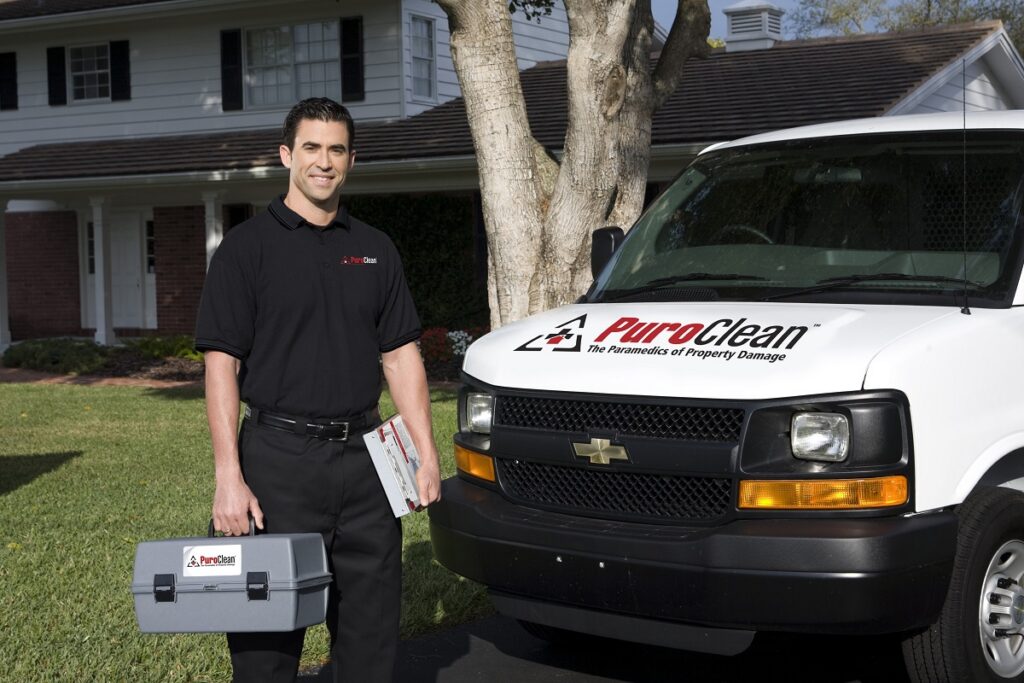
When water crosses unit boundaries in a Rancho Cucamonga condo or townhome complex, the last thing anyone needs is a coordination problem on top of a water problem. PuroClean of Rancho Cucamonga provides water restoration services across the entire affected scope of a multi-unit event, working with unit owners, HOA boards, and property managers simultaneously to get the building dry, the documentation complete, and every claim supported.
Call (909) 481-4399 the moment a shared water event is confirmed. We serve Rancho Cucamonga, Ontario, Fontana, Upland, Claremont, and throughout San Bernardino and western Riverside counties, any hour, any day. One call, one coordinated response, one complete restoration file for everyone who needs it.