 PuroClean of San Clemente
The biggest mistake people make when cleaning mold isn’t ignoring it; it’s cleaning it wrong. Scrubbing too hard, using the wrong products, or skipping protective steps can send thousands of invisible spores floating through the air, spreading mold to every corner of your home. What starts as a small dark patch in the bathroom or basement can quickly become a full-blown problem across walls, furniture, and air ducts.
Mold isn’t just unpleasant; it can affect indoor air quality and trigger allergies, respiratory irritation, and lingering odors. The key is knowing how to clean it without making it worse. These safe mold cleaning tips will help you eliminate growth the right way while keeping spores contained and your home healthy.
Understanding Mold and Why It Spreads So Easily
Mold thrives in damp, humid spaces, feeding on materials like drywall, wood, and fabric. Once it starts growing, it releases microscopic spores into the air, tiny particles that travel effortlessly through vents, clothing, and even the slightest draft.
That’s why a simple cleaning mistake, like sweeping or wiping without proper precautions, can scatter spores and restart growth elsewhere. To truly prevent mold spore spread, you need to manage moisture, limit air movement, and follow careful cleanup methods that stop spores before they drift into new areas.
Safe Mold Cleaning Tips You Can Trust
Cleaning mold the right way also means knowing when to stop. If you notice the affected area growing rapidly or the odor getting stronger, pause and reassess before continuing. Always keep windows slightly open for ventilation, and start from the edges of the mold patch instead of the center to limit how far spores travel during cleaning.
According to the U.S. Environmental Protection Agency, improper cleaning can cause spores to spread through the air, making it important to follow containment and safety steps during the process.
Wear Proper Protective Gear
Before touching the affected area, protect yourself first. Wear gloves, safety goggles, and an N95 mask to prevent inhalation or skin contact. Mold spores are lightweight and easily disturbed, so protective gear keeps you from breathing them in or carrying them elsewhere. This is one of the most overlooked yet essential safe mold cleaning tips for homeowners.
Isolate the Affected Area
Mold spores move fast when the air moves. Close doors and windows, seal vents, and use plastic sheeting if possible to isolate the cleanup zone. This containment step helps prevent mold spore spread through your home’s ventilation or adjacent rooms. Even simple airflow from an open window can push spores beyond the original area.
Use the Right Cleaning Solutions
For small, non-porous surfaces like tiles or glass, a mix of mild detergent and warm water often works best. Bleach might seem like a quick fix, but it can’t penetrate porous materials like drywall and wood, and may even make things worse by adding moisture. Stick to safer methods and proper ventilation during cleaning. Following safe mold cleaning tips ensures you target growth without worsening contamination.
Avoid Dry Brushing or Vacuuming Regular Mold
Never try to dry-brush, sweep, or vacuum visible mold with a standard vacuum. These actions blast spores into the air, making them nearly impossible to contain. If you need to remove dust after cleaning, only use a HEPA-filter vacuum designed for mold remediation. It’s a small but crucial step to keep the cleanup safe and effective.
Dispose of Contaminated Materials Carefully
Anything that touches mold, like sponges, rags, or disposable gloves, should be sealed in a plastic bag before you move it out of the area. Avoid shaking out or reusing any cleaning tools used on mold. Proper disposal not only maintains cleanliness but also helps prevent mold spore spread to other parts of your home.
When to Call a Professional
Some mold problems go beyond what DIY methods can handle. If the contamination is extensive or keeps coming back, professional remediation ensures complete and safe removal. Experts have the tools, training, and containment systems to handle mold without spreading it further.
Call a professional when:
- The affected area is larger than 10 square feet.
- Mold returns repeatedly after cleaning.
- There’s a strong, persistent musty odor you can’t locate.
- Mold is visible on HVAC vents, ceilings, or behind walls.
- You notice mold in areas affected by water damage or leaks.
Bringing in professionals early helps prevent further contamination and costly repairs, restoring not just cleanliness, but safety and long-term peace of mind.
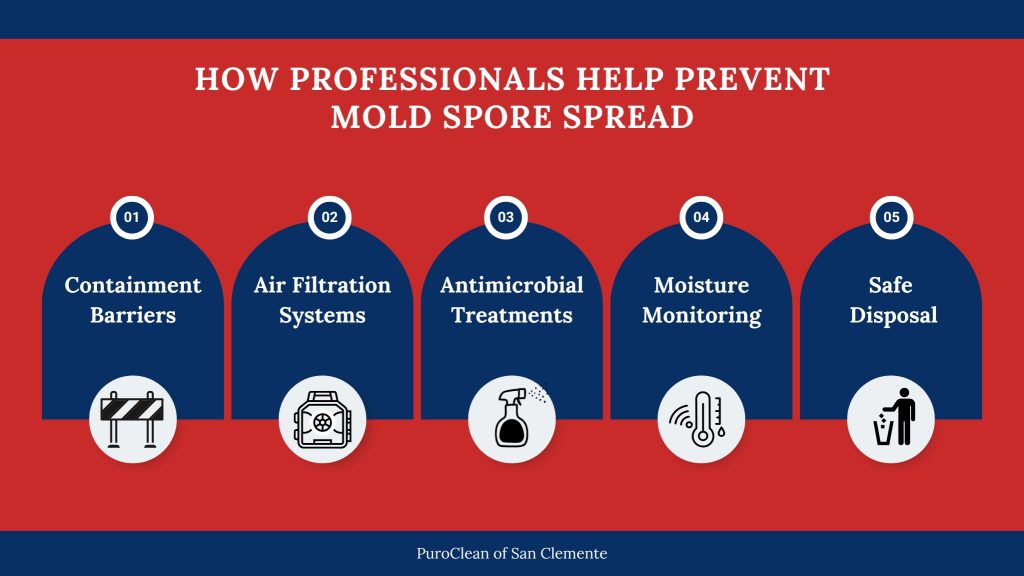
How Professionals Help Prevent Mold Spore Spread
Professional remediation isn’t just about removing visible mold; it’s about controlling the environment so it can’t come back. Certified specialists use advanced methods to contain, clean, and neutralize mold safely and completely.
Here’s how experts keep spores from spreading:
- Containment Barriers: Seal off affected areas to stop spores from drifting into clean spaces.
- Air Filtration Systems: Use HEPA air scrubbers to trap airborne spores during and after cleanup.
- Antimicrobial Treatments: Apply solutions that eliminate existing mold and prevent regrowth.
- Moisture Monitoring: Check humidity and damp spots to address the root cause of contamination.
- Safe Disposal: Remove and seal contaminated materials to prevent re-exposure.
Proper air control is also key during remediation. If mold keeps returning through vents or ducts, your HVAC system could be circulating spores throughout the home. You can learn more about this connection in our related post on the link between HVAC systems and mold growth in coastal homes.
By combining technology with strict safety protocols, professionals ensure your home stays mold-free and the air you breathe remains clean long after the cleanup is done.
Conclusion
Cleaning mold is more than a chore; it’s a careful process that protects your health and home. Rushing in with harsh chemicals or skipping precautions can do more harm than good, scattering spores you can’t see. By following these safe mold cleaning tips, you can control the problem at its source and keep your space truly clean.
If mold keeps reappearing or affects larger areas, reach out to a certified mold remediation specialist. They’ll ensure every spore is contained, every surface is treated, and your home is safe to breathe in again.
FAQs
Q1. What’s the safest way to remove mold from walls?
A: Use a mild detergent and warm water, scrub gently, and ensure proper ventilation. Avoid bleach or harsh scrubbing to prevent spreading spores.
Q2. Can I clean black mold myself?
A: Yes, only if it’s a small, contained area. For larger or recurring spots, professional cleaning is safer and more effective.
Q3. How do I stop mold from coming back after cleaning?
A: Keep humidity below 50%, fix leaks quickly, and improve ventilation in damp areas. Consistent, safe mold cleaning tips help prevent regrowth and maintain a healthy environment.

 PuroClean of San Clemente