


Table of Contents
Finding fuzzy growth in your Santa Maria basement or spotting dark spots under your kitchen sink can trigger immediate anxiety. As a homeowner in the Central Coast, you already deal with coastal humidity; the last thing you need is the stress of a fungal infestation. When comparing White Mold vs Black Mold, the uncertainty often feels worse than the cleanup itself. You want to know if your family is safe and whether your property is at risk. This guide breaks down the visual, structural, and health differences to help you take the right next steps toward a healthy home.
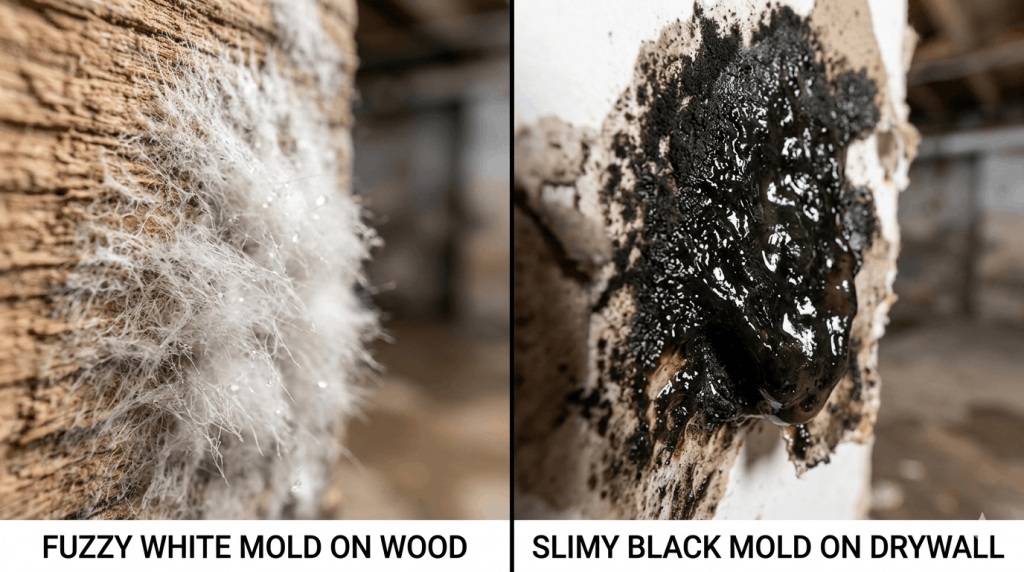
The primary difference between white mold and black mold lies in their species and growth stages. White mold (often Sclerotinia sclerotiorum or early-stage Aspergillus) typically appears fuzzy or powdery and grows on organic materials like wood or drywall. Black mold (notably Stachybotrys chartarum) is often slimy and dark green or black, requiring high moisture levels. Both types can impact indoor air quality and structural integrity, requiring professional remediation regardless of color.
What is the Difference Between White Mold vs Black Mold?
The difference between white mold and black mold is primarily defined by the specific species of fungi and the environment they inhabit. White mold is often a precursor to deeper issues, sometimes appearing as a powdery substance called efflorescence (though efflorescence is actually salt mineral deposits). True white mold is alive, fuzzy, and thrives in damp, temperate climates. Black mold, conversely, is frequently associated with long-term water damage and saturated materials. While black mold is often more infamous in headlines, white mold can be just as destructive to your home’s wood framing.
Is White Mold Worse Than Black Mold?
One of the most common questions we hear in Santa Barbara County is, “is white mold worse than black mold?” The answer isn’t a simple yes or no. While “Toxic Black Mold” (Stachybotrys chartarum) is known for producing mycotoxins that can cause respiratory issues, white mold can be equally dangerous because it is often overlooked. Because it blends in with white PVC pipes or light-colored drywall, it can spread undetected for months, compromising your home’s structure. All mold should be treated with the same level of urgency.
How Do You Identify White Mold in Your Home?
White mold often appears as a delicate, thread-like growth or a powdery film. It is commonly found on leather, wood furniture, and joists in crawlspaces. In the early stages, it may look like a dusting of flour.
How Do You Identify Black Mold in Your Home?
Black mold usually presents as dark, circular clusters that look “sooty” or slimy. It requires a significant water source, such as a leaking pipe or a roof leak, to thrive. It often has a very distinct, musty, or earthy odor.

Common Myths About Mold Colors
Many people believe that color indicates the level of toxicity. This is a misconception. You cannot determine if a mold produces mycotoxins simply by looking at its pigment. Whether you are dealing with white mold vs black mold, the IICRC (Institute of Inspection, Cleaning and Restoration Certification) standards dictate that the removal process remains focused on containment and source moisture control.
If you are concerned about how these spores affect your household, you might find our detailed breakdown on is white mold dangerous to humans helpful for understanding the specific health risks.
Can White Mold Turn into Black Mold?
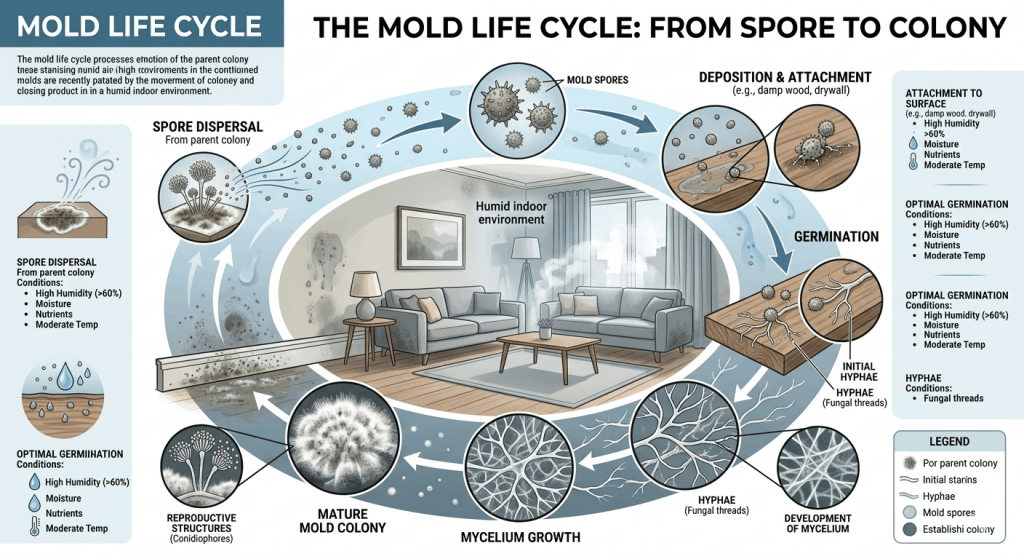
White mold does not evolve into black mold, they are different species. However, a surface can host multiple types of fungi simultaneously. If a leak persists, the environment may become hospitable for black mold to move in alongside existing white mold colonies.
Should You Test Mold Before Removing It?
While DIY kits exist, they are often unreliable. Professional testing is recommended if health symptoms are present without a visible source. However, the EPA suggests that if mold is visible, you should proceed directly to mold removal and remediation regardless of the species.
Our Proven Remediation Process
When PuroClean of Santa Maria arrives at a property in Santa Barbara County, we follow a rigorous scientific process to address the difference between white mold and black mold effectively:
- Comprehensive Assessment: We identify the underlying water source to ensure the mold doesn’t return.
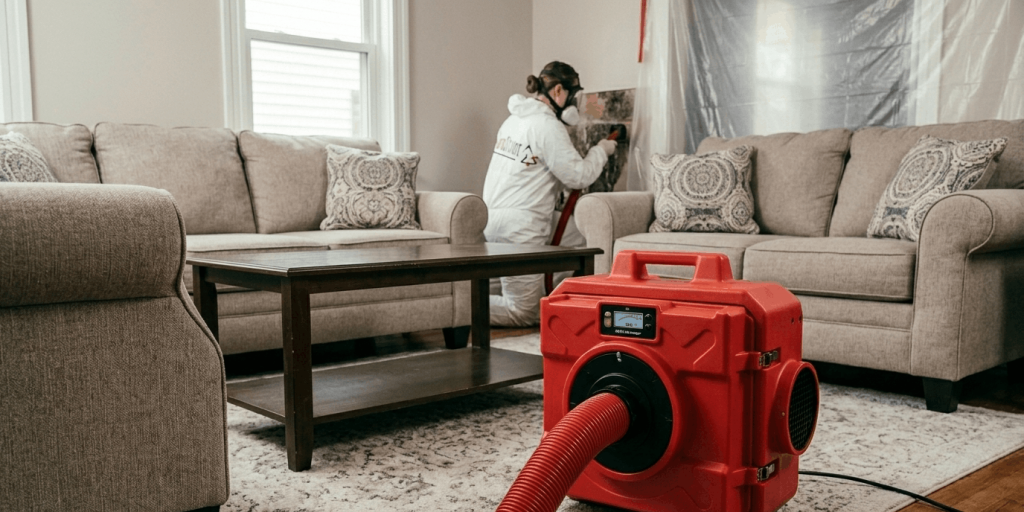
- Strategic Containment: We use HEPA filtration and negative air pressure to prevent spores from spreading to unaffected rooms.
- Professional Removal: Our team discards contaminated porous materials and treats non-porous surfaces with industrial-grade antimicrobial agents.
- Advanced Drying: We use high-capacity dehumidifiers to ensure the area remains below the moisture threshold required for future fungal growth.
Expert Mold Remediation in Santa Maria
Don’t let the debate of white mold vs black mold delay your home’s recovery. Whether it is a powdery white film or a stubborn black stain, any fungal growth indicates a moisture problem that needs professional attention.
PuroClean of Santa Maria provides expert restoration services throughout Santa Maria and the surrounding communities of Santa Barbara County. Our technicians are IICRC certified, ensuring that your property is handled with the highest industry standards. We are available for 24/7 emergency service to tackle property damage the moment it happens.
Stop the spread today. Call PuroClean of Santa Maria at (805) 975-0800 for a professional assessment and let us restore your peace of mind.
Available 24/7/365 | IICRC Certified | (805) 975-0800 | Contact Us Online | Google Business Profile