


Walking into your closet or guest room in Santa Maria after a heavy rain or a plumbing leak only to find a fuzzy, pale film over your favorite leather jacket or heirloom dresser is heartbreaking. As a homeowner, your first instinct is to scrub it away, but a nagging question remains: Is white mold dangerous on furniture and clothing? At PuroClean of Santa Maria, we understand the stress of seeing your hard-earned belongings threatened by fungal growth. Whether you are in Orcutt, Nipomo, or Lompoc, the coastal humidity can turn a small damp spot into a major restoration project overnight. This guide will help you navigate the difficult decisions between salvaging your property and accepting a total loss.
Is White Mold Dangerous to Your Health?
While “black mold” often gets the most frightening headlines, white mold (often species of Aspergillus or Penicillium) poses significant health risks. When these spores are disturbed—such as when you move a moldy chair or shake out a dusty coat—they become airborne. Inhaling these particles can lead to “Toxic” symptoms like sneezing, skin rashes, and heightened asthma attacks. For those with compromised immune systems, the presence of mold in living spaces is a serious concern that should be addressed following IICRC commercial standards.
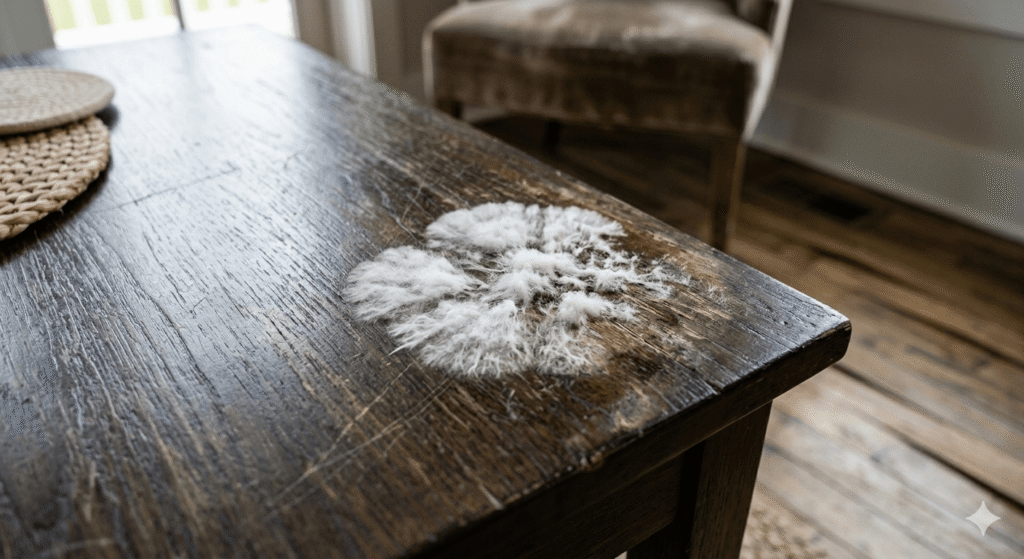
What is the Difference Between White Mold and Efflorescence?
Answer: Efflorescence is a salt deposit caused by water seeping through concrete or masonry, which is harmless and crumbles when touched. White mold is a living, fuzzy organism that grows on organic materials like wood and fabric; it will not dissolve in water and often has a musty odor.
Identifying Growth on Furniture
If you see a white, powdery substance on your Santa Maria commercial real estate property or home furniture, check the material. If it is on wood, it is likely mold feeding on the finish or the wood itself. Because wood is porous, the mold “roots” (hyphae) can grow deep inside, making it difficult to clean with household sprays.
Can White Mold on Clothing Be Permanently Removed?
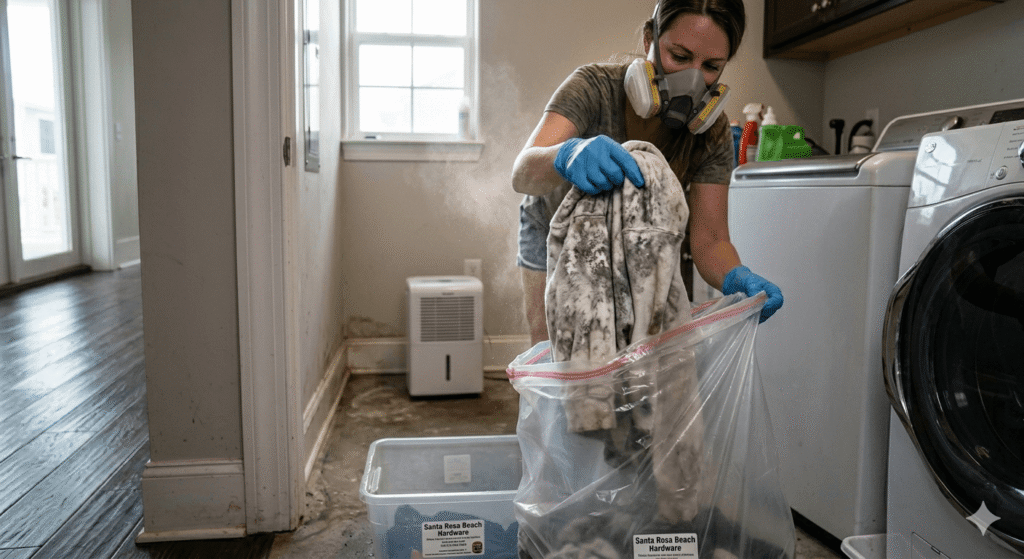
Answer: Yes, white mold can often be removed from clothing if the item is “washable” and the growth is caught early. Non-porous or semi-porous fabrics can be treated with high-heat laundering or specialized antimicrobial cleaners, though delicate items like silk or leather may require professional dry cleaning to avoid permanent staining.
The Risk of Cross-Contamination
One of the biggest mistakes homeowners make is moving moldy clothing through the house to the laundry room. This spreads spores into the air and onto unaffected surfaces. We recommend bagging contaminated items in the affected room before transport to maintain OSHA post-flood workplace safety protocols within the home.
When is Furniture Considered a Total Loss?
Answer: Furniture is considered a total loss when the mold has penetrated the inner foam of upholstery, the structural joints of particle board, or when the cost of professional deep-cleaning exceeds the replacement value. If the item is deeply “Totaled” by mold, it becomes a health hazard to keep it.
Salvaging Sentimental Items
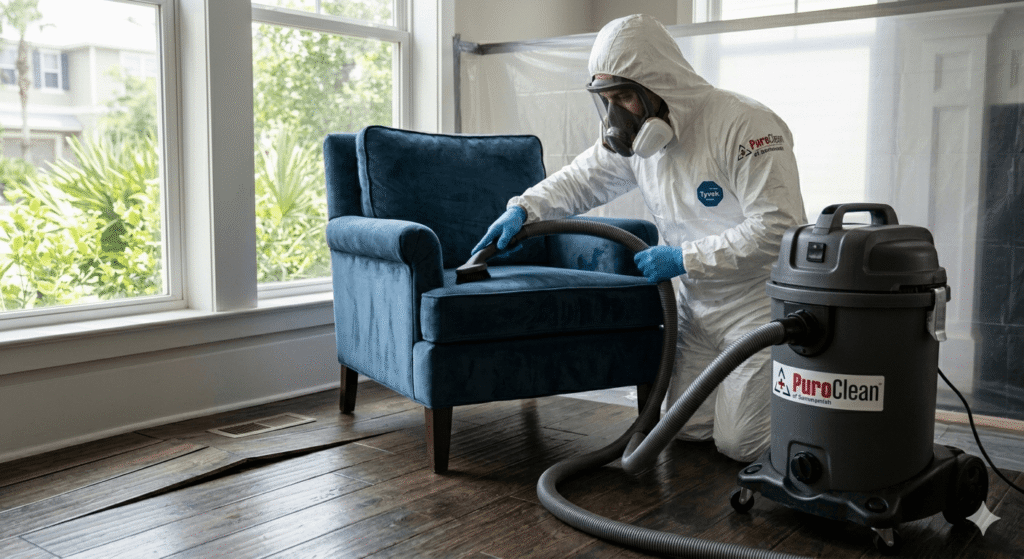
We know that a desk passed down through generations isn’t just “furniture.” If an item has high sentimental value, specialized restoration techniques—including HEPA vacuuming and antimicrobial fogging—can sometimes save it. However, for mass-produced particle board furniture, the moisture often causes the material to swell and lose integrity, making replacement the safer, more cost-effective choice.
How Does White Mold Spread Through Santa Maria Homes?
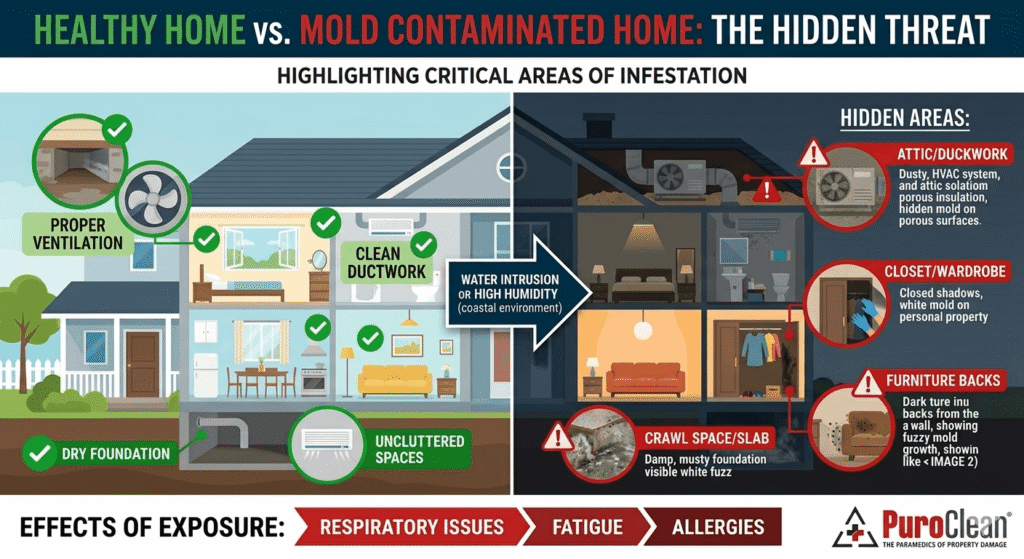
Answer: White mold spreads via microscopic spores that travel through HVAC systems and natural airflow, settling on organic “food” sources like dust, fabric, and wood. In the Santa Maria Valley, high humidity levels often provide the necessary moisture for these settled spores to colonize and grow.
Marina Stepura
The Role of Humidity and Airflow
Our Mediterranean climate in the Central Coast can be deceptive. Even if you haven’t had a flood, stagnant air in a closet can trap moisture. Without proper ventilation, the “Is white mold dangerous on furniture and clothing?” question becomes a reality for many local residents.
FAQ: Frequently Asked Questions
Is white mold as bad as black mold?
Both can cause health issues and property damage. The color of mold does not necessarily dictate its toxicity; any mold growing indoors should be treated as a potential health hazard and removed promptly.
Can I just spray bleach on white mold?
Bleach is often ineffective on porous surfaces like wood and drywall. It may kill the surface mold but leaves the moisture and roots behind, often leading to faster regrowth. Professional-grade antimicrobials are required for a “Complete” fix.
Does insurance cover mold on furniture?
Coverage depends on the source of the moisture. If the mold resulted from a sudden pipe burst covered by your policy, the contents might be covered. If it resulted from long-term humidity or neglect, coverage may be limited.
Professional Mold Remediation in Santa Maria, CA
Dealing with property damage is overwhelming, but you don’t have to choose between your health and your belongings alone. PuroClean of Santa Maria is your local expert in Mold Damage Restoration. We serve the entire region, including Santa Maria, Nipomo, Orcutt, Lompoc, and Guadalupe.
As a proud member of the Santa Maria Chamber of Commerce, we are committed to restoring our community one home at a time. Our technicians are IICRC certified, ensuring that every item we treat is handled with the highest industry standards. We offer 24/7 emergency services because mold doesn’t wait for business hours.
Take Action Today
Don’t let “Lingering” mold odors and “Toxic” spores ruin your home.
- 24/7 Emergency Response
- Certified Mold Inspections
- Contents Cleaning and Pack-Out Services
Call PuroClean of Santa Maria now at (805) 975-0800 or contact us online for a professional assessment.
Available 24/7/365 | IICRC Certified | (805) 975-0800 | Contact Us Online | Google Business Profile