 PuroClean of Schererville
Table of Contents
Water damage doesn’t just impact flooring. Walls also attract and can retain moisture long after a water-related event. That’s why it’s crucial to know how to dry out walls or contact a restoration company as soon as possible. Fast drying helps prevent structural damage and limits the risk of costly repairs and mold growth.
Understanding how water saturates drywall
Before learning how to dry out walls after water damage, it’s important to understand how moisture can spread through your drywall. When water enters a room at ground level, it first saturates the floor and floor coverings. From there, it begins to travel upward into the walls through a process known as capillary action, where porous materials pull moisture vertically. How far the water rises depends on the wall’s construction, the volume of water, and how high the water reaches along the wall surface.
Drywall is highly absorbent, as it is made of gypsum encased in a paper backing on both sides. In some cases, drywall can carry moisture up to 30 inches above the water source. This moisture is present on both sides of the wall, though it is often higher on the interior side. While water damage may sometimes be visible, moisture can also remain hidden within the wall, making a professional who knows how to dry out walls essential.
How to dry a wall after water damage
To begin with, decide whether to handle the problem yourself or call a professional company. Even if you wish to try DIY first, we recommend a professional who knows how to dry out walls and detect moisture as a preventative measure. Sometimes, the water damage is obvious, but most times, it’s hidden, and those not trained how to dry out walls may miss it.
If you want to DIY, here’s how to dry out walls:
If a burst pipe led to the water intrusion, turn off the water source. Hire a plumber to fix the broken pipe before any drying can take place.
Accelerate drying by opening windows and doors. Use fans to move air around the damp walls. Dehumidifiers can help remove moisture from the air, which indirectly removes it from the walls, too.
To speed up evaporation, remove and molding and baseboards to prevent moisture from entering behind them. Store the molding in a dry, safe place to avoid damaging it. Additionally, remove objects hanging on the wall.
Remove wallpaper if you have it. This isn’t ideal, but it’s important as the wallpaper forms a “seal” that holds moisture in the wall. Wallpaper removal solutions, which dissolve the adhesive, are available at your hardware store. You will also need 3”-6” broad knives to scrape the wallpaper once released.
Note that fully drying out walls takes time, so don’t rush the refinishing until the walls are dry. A moisture meter can help you be sure. Once completely dry, you can reverse the process and refinish your room. Inspect the removed items for any moisture or mold growth before reinstalling.
Drying wet walls quickly and correctly is crucial. If you can’t dry your walls immediately, don’t let the problem get worse by waiting. Call a water damage remediation specialist and leverage their expertise, experience, and equipment.
How to dry out walls after water damage as a professional
First, our technicians determine the extent of the water using a range of water damage restoration tools. One choice is a non-invasive moisture meter. This meter uses radio waves to test for water without putting holes in the wall.
Another professional instrument is an infrared imaging (IR) camera. Since the evaporation from wet walls makes them cooler than dry walls, the IR camera can find water in walls. It does so with no holes or other invasions of the wall material.
Once our professionals identify wet walls, they tailor a place on how to dry out walls in your home or property. Most times, they will need to use specialized drying equipment to dry them.
If the walls aren’t insulated:
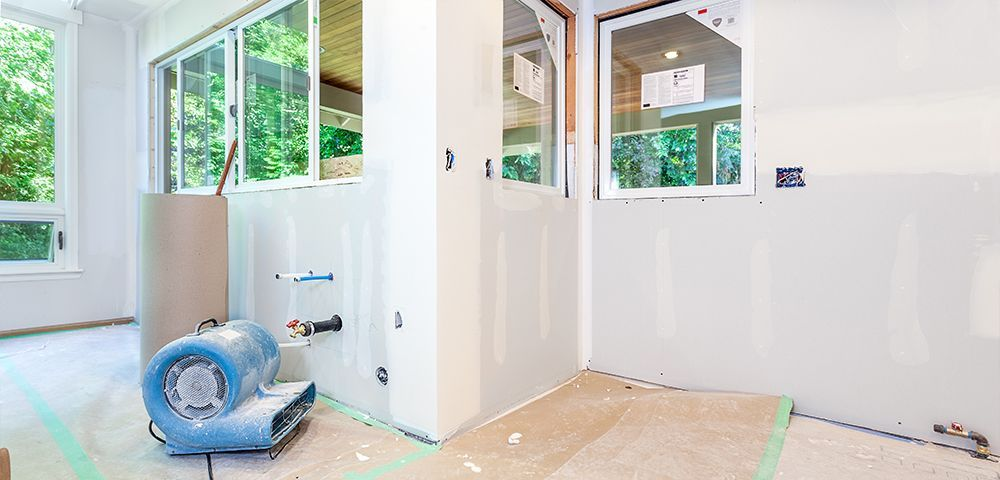
Restoration professional can dry wet walls out without holes or removing the baseboard. Our technicians place high capacity air movers along the wall every 10 to 14 feet. These air movers remove moisture from wall’s surface, evaporating it quickly. As the moisture evaporates, more moisture goes to the surface where it evaporates.
Our restoration expert will also install a low grain refrigerant dehumidifier in the damp wall. Depending on the moisture levels, one or more will be needed. This advanced drying equipment reduces the humidity levels to help with drying and prevent mold growth.
When needed, our restoration professionals will install an inner-wall drying system by putting small holes above the sill plate and forcing air into the wall cavity. Studies have shown that this solution is the best and fastest way to dry walls with water damage.
If there is a moisture barrier on the outside or inside the wall, the drying plan changes. Moisture barriers are coatings or materials that inhibit the movement of moisture from the wall material.
Most latex paints are permeable and don’t make up a barrier. But, glossy paints may create a barrier and enamel paint or vinyl wall coverings create a complete barrier. Technicians will need to perforate or remove them to allow moisture to escape and the walls to dry. If there’s plastic or foil on the inside of the wall, then technicians will need to remove the wall. That’s because drying will not occur properly and mold can develop.
If the walls are insulated:
If there is fiberglass insulation with paper backing, then an inner-wall drying system can be used, as described above. But, if the insulation is foil-backed fiberglass, blown-in cellulose, or a Styrofoam material, then it can’t be dried successfully.
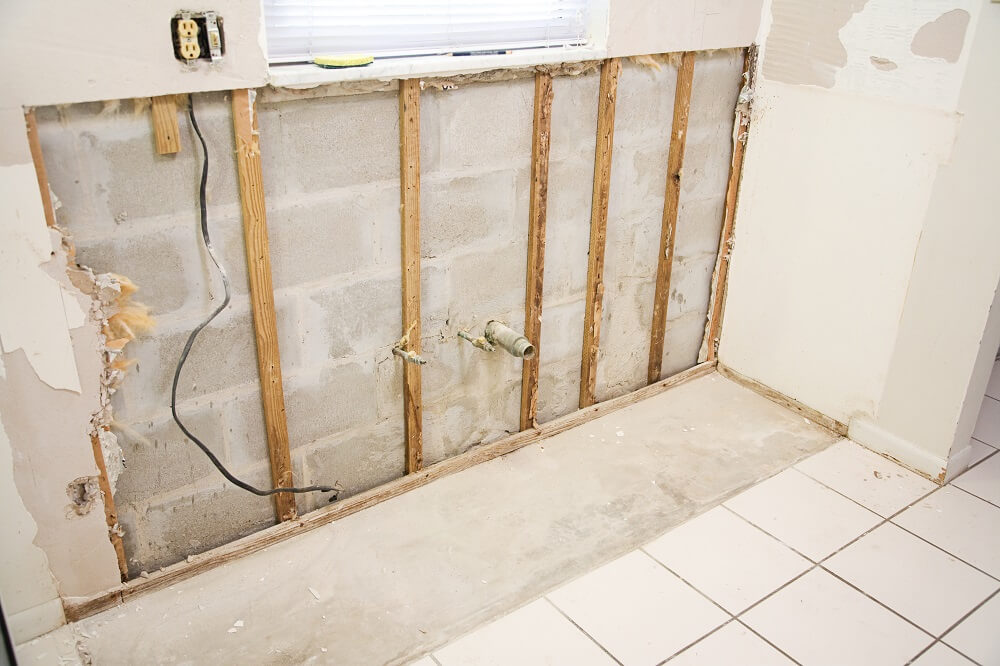
In those cases, removing the damaged portion of the wall along with the insulation is necessary to allow rapid drying and to prevent mold growth.
Monitoring the drying system
Regardless of the procedures used by the restoration professional, homeowners should know roughly how to dry out walls. This will help solidify the idea that the equipment must operate, without stopping, throughout the drying process.
Finally, restoration professionals will monitor the drying system at least once a day. That ensures the equipment is operating correctly during the drying process. Monitoring includes moisture measurements to determine when the materials will successfully dry. Material dryness is measured against similar unaffected contents in that structure. When dryness levels are equal, the drying is finished, and the equipment removed.
To recap, this is how to dry out walls
- After addressing the water source, remove paintings and other objects from the wall.
- Follow up by removing moldings, baseboards, and wallpaper.
- Open windows and doors to help speed up the drying process.
- Use fans to move air around the damp walls. Also use dehumidifiers, which can help remove moisture from the air and walls.
- Professionals use tools like moisture meters, infrared imaging devices, dehumidifiers and heavy-duty fans. That ensures the walls are truly dry before further repair, painting or refinishing.
For drywall water damage drying and repair, call the pros!
At PuroClean, we understand and use the principles and procedures of how to dry out walls. For efficient drywall water damage repair, call us at 219-800-7876. Our trained and certified technicians know how to dry out walls and other items quickly and thoroughly. They will also prevent further damage and mold growth.

 PuroClean of Schererville