


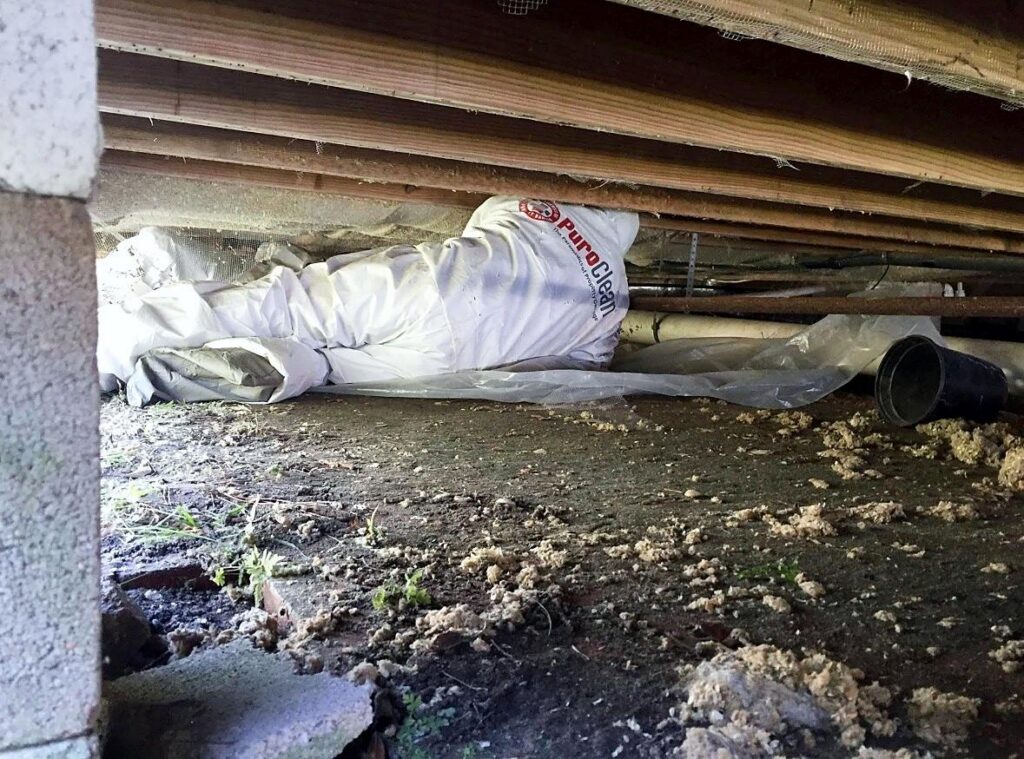
You notice it first in the hallway: a damp, earthy smell that wasn’t there in the summer. Then a floorboard near the bathroom feels a little soft, or the cabinet doors in the kitchen start to stick. After a stretch of late-fall rain, crawl space moisture in Abington homes can build quietly under your feet until it shows up as odor, warped floors, or mold.
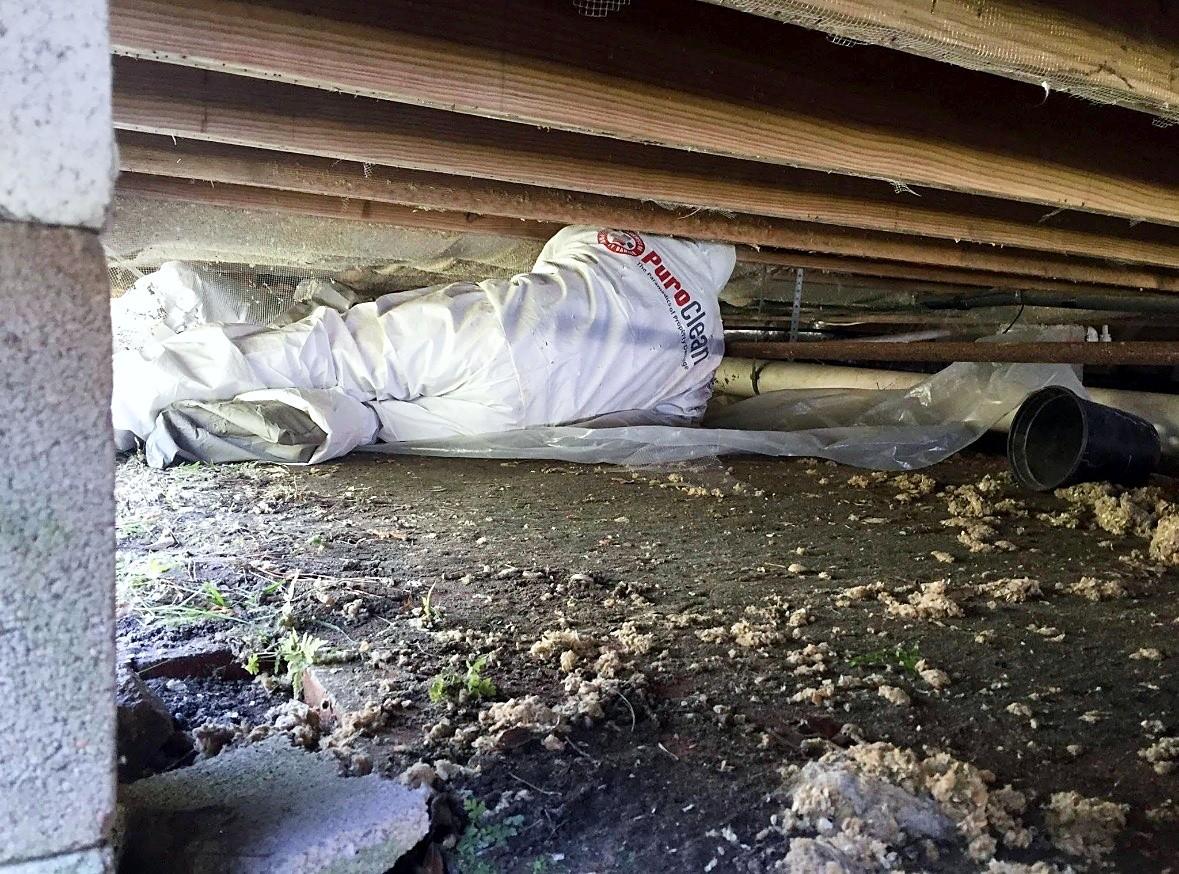
Most people rarely look in their crawl space, and that’s exactly why trouble can grow there. This guide explains why fall rain matters, which signs to watch for, what you can safely do first, and how professionals dry the space and handle mold.
Why Does Late-Fall Rain Lead to Crawl Space Moisture?
Fall rain soaks the soil around your foundation, and that water looks for the easiest path inward. A crawl space with bare soil, clogged gutters, or poor grading can stay damp for weeks after the storms pass.
NOAA’s 1991–2020 climate normals for the nearby Philadelphia Northeast Airport station show about 45 inches of precipitation in a normal year. September through November averages about 11.3 inches combined, and the station averages about 12 days a year with an inch or more of rain.
Late fall adds another twist. Leaves fill gutters and downspouts, so roof water spills straight down beside the foundation. Cooler air also slows drying, which means damp soil and wood stay wet longer than they would in July.
What Signs Point to a Damp Crawl Space?
The earliest clues usually show up in the rooms above, not in the crawl space itself. A musty smell, sticky floors, or higher humidity indoors are common first hints.
| What you might notice | What may be happening below |
|---|---|
| Musty or earthy odor, strongest near floor vents | Damp soil, wood, or insulation is releasing moisture and odor |
| Cupped or soft wood flooring | Moisture is moving up into the subfloor |
| Sagging or fallen insulation between joists | Insulation has absorbed water and lost its grip |
| Condensation or rust on ductwork or pipes | Air in the crawl space is humid enough to reach its dew point |
| White, chalky crust on foundation walls | Water has moved through masonry and left minerals behind |
| Puddles or wet soil after rain | Surface water or groundwater is getting in |
None of these signs proves there’s mold. They do tell you the space is wetter than it should be and needs a closer look.
What Should You Do First?
Start with safety, then reduce the water coming in. You don’t have to crawl under the house to make progress.
- If you see standing water near wiring, outlets, or a furnace, stay out and keep power off to that area only if you can do so safely.
- Clear gutters and make sure downspouts carry water several feet away from the foundation.
- Close any crawl space doors or vents that are broken open, and keep pets out.
- Note when the smell or dampness started and take photos of what you can see from the access door.
- Avoid stirring up visible mold or pulling insulation yourself.
If someone in your household has allergies, asthma, or breathing symptoms that seem worse, talk to a doctor. We handle the building; health questions are for a medical professional.
How Do Professionals Handle Crawl Space Moisture in Abington?
A professional response to crawl space moisture in Abington finds the source, dries the space to a measured goal, and treats any mold growth by removing it, not covering it up. Our mold removal and remediation service works to the ANSI/IICRC S520 mold remediation standard.
Inspection and Moisture Mapping
Technicians check the soil, framing, insulation, and ductwork with moisture meters and, often, thermal imaging. They compare readings with dry materials in the same house. That comparison sets the drying goal.
Water Removal and Drying
If water is standing, it comes out first. Dehumidifiers and air movers sized to the space then pull moisture from the wood and air. Our water damage restoration service handles extraction and drying, and crews monitor readings each day until materials reach the goal. Drying time depends on the materials and conditions, so we don’t promise a fixed number of days.
Mold Remediation Under S520
S520 describes three conditions. Condition 1 is normal background mold, Condition 2 is settled spores without visible growth, and Condition 3 is actual growth. Remediation aims to return the area to Condition 1.
The core method is removal. Crews set up containment, use negative air pressure with HEPA filtration, physically remove growth from wood, and HEPA-vacuum and clean surfaces. Wet insulation that grew mold is usually bagged and removed. Some homeowners hire an independent indoor environmental professional (IEP) to verify the results afterward. That step is common, but not required everywhere.
Fixing the Moisture Source
Mold returns if the water problem stays. Depending on what’s causing the moisture, you may need gutter work, grading, drainage, or a vapor retarder over the soil. We can point out what we find and coordinate with the right contractor for those repairs.
Why Does the Age of Abington Homes Matter Here?
Older homes often have older materials in the crawl space, and those materials need care before anyone disturbs them. Abington Township, which borders Northeast Philadelphia, has a lot of older homes.
Census figures back that up. The American Community Survey 2020–2024 5-year estimates (tables B25034 and B25035) count about 23,232 housing units (±577) in Abington Township. The median year built is 1956 (±1). About 86.6 percent of units were built in 1979 or earlier, and about 61.3 percent in 1959 or earlier. The Census doesn’t track how many homes have crawl spaces, so your foundation type depends on your own house.
Pipe wrap, duct insulation, and some older flooring can contain asbestos, and paint from before 1978 may contain lead. We have suspect materials tested before removal rather than guessing.
Can You Handle Crawl Space Mold Yourself?
Small spots on hard surfaces can sometimes be a homeowner job, but crawl spaces are rarely small or easy. Tight access, poor lighting, and contact with soil and insulation make them hard to clean safely.
The EPA’s guide to mold and moisture says that if the moldy area is less than about 10 square feet, you can usually handle it yourself. It advises professional help when there has been a lot of water damage or growth covers more than about 10 square feet. The same guide says to dry water-damaged areas and items within 24 to 48 hours to help prevent mold growth.
Skip bleach on wood framing, and never mix bleach with ammonia. Bleach doesn’t reach growth inside porous wood, and the fumes are harsh in a tight space.
What Drives the Cost and the Insurance Answer?
Cost varies by job. The main factors are the size of the crawl space, how long it stayed wet, whether insulation and vapor barriers need replacing, and how much mold growth there is.
Insurance is often the hardest part. Many policies cover sudden water damage, like a pipe that bursts. They often exclude long-term seepage, groundwater, and maintenance issues, and mold coverage is often limited or capped. Coverage depends on your policy, so ask your agent or adjuster before work begins. We document readings and conditions to support your conversation with them.
How Can You Keep Your Crawl Space Dry?
Most crawl space problems come back to water getting in or humid air staying put. A few habits help before the next rainy stretch:
- Clean gutters after the leaves drop and again before winter.
- Extend downspouts so water lands several feet from the foundation.
- Make sure soil slopes away from the house.
- Keep a vapor retarder over bare soil and repair torn sections.
- Use a dehumidifier if readings stay high, aiming for indoor humidity below 60 percent, and ideally 30 to 50 percent, as the EPA suggests.
- Check the crawl space after heavy storms, or have someone check it for you.
Example: A homeowner smells mustiness each November and assumes it’s just the season. A look below the floor finds wet insulation under a clogged downspout. It’s a made-up scenario to show the pattern, not a client story.
Frequently Asked Questions
Is a Musty Smell Always a Sign of Mold?
No. A musty smell means something is damp, and damp materials can support mold. An inspection shows whether there is actual growth or just moisture that needs drying.
Should My Crawl Space Vents Be Open or Closed?
It depends on your home’s design and local conditions. Some crawl spaces are built to be vented, while others are sealed and conditioned. A professional can look at your setup before you change anything.
Will a Dehumidifier Fix Crawl Space Moisture in Abington?
A dehumidifier helps control humid air, but it won’t stop water that’s flowing in from outside. You usually need to fix gutters, grading, or drainage first, then manage humidity.
How Long Does Crawl Space Drying Take?
It depends on how wet the soil, wood, and insulation are and on the weather. Many jobs take several days. We monitor readings daily and stop when materials reach the drying goal.
Does PuroClean of Lansdale Work in Abington?
Yes. Our crews cover Abington and neighboring communities like Roslyn, Willow Grove, and Maple Glen. Learn more on our Abington service area page.
Worried About Crawl Space Moisture in Abington?
If late-fall rain left your crawl space damp or musty, PuroClean of Lansdale can take a look. Our team is available 24/7, and our credentials include IICRC Certified and EPA Lead-Safe Certified. Reach us at (267) 834-5900, or find our office at 2033 Lucon Rd, Bldg. Rear, Schwenksville, PA 19473. We serve Abington, Roslyn, Willow Grove, Horsham, and nearby Montgomery County towns.