


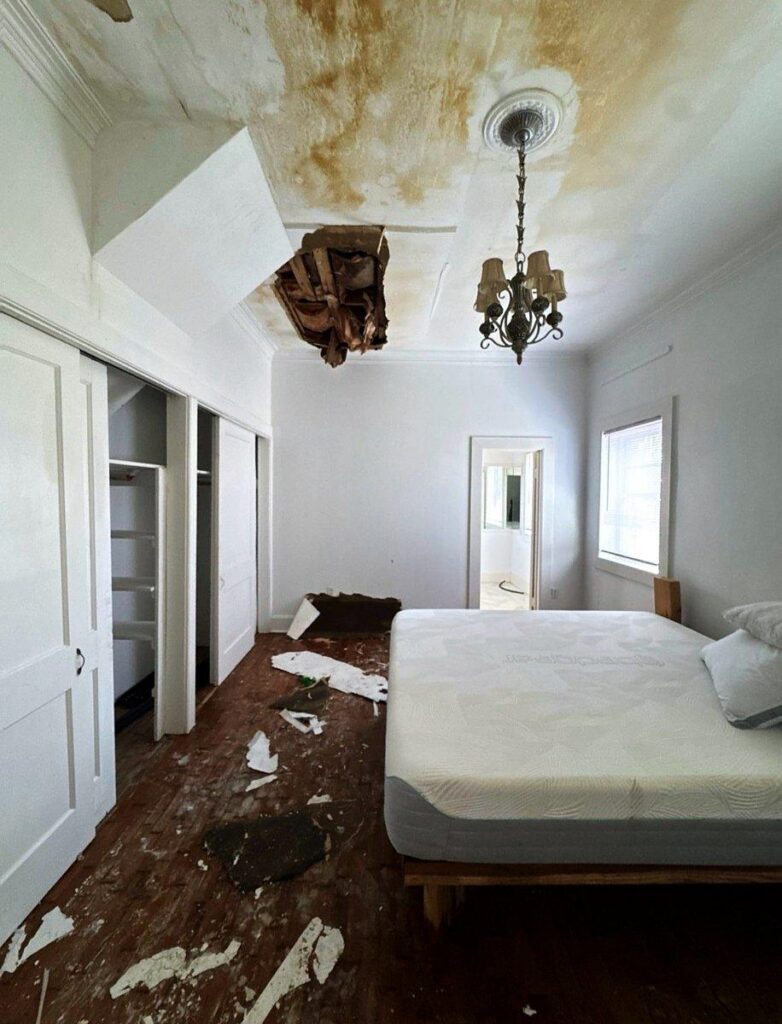
It’s the first real cold snap of the season. You’re making coffee when you spot a tan ring on the bedroom ceiling that wasn’t there last week. Outside, the snow on the roof looks fine, but there’s a ridge of ice along the gutter. Ice dam leaks in Horsham often start like this: quietly, in the attic, before anyone notices a drip.
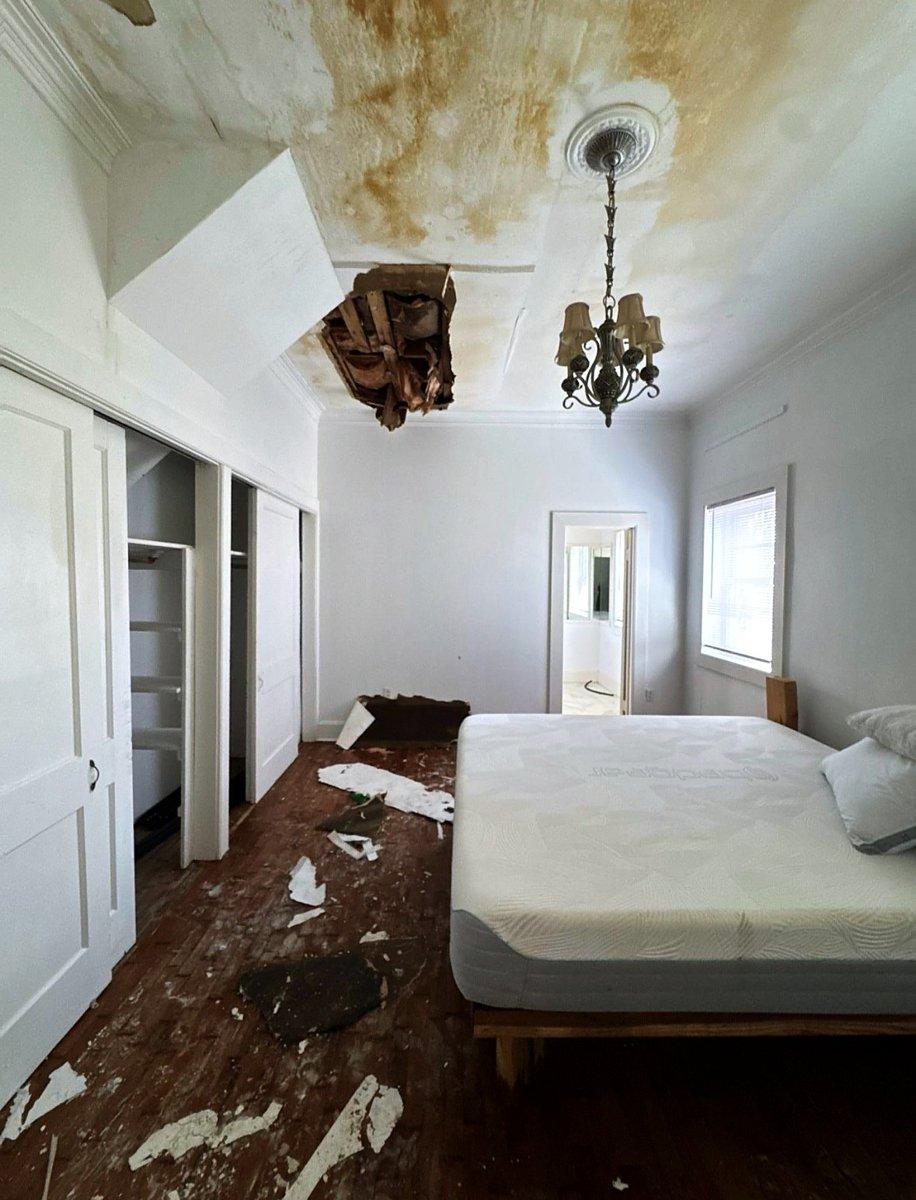
Early winter brings two related attic problems. One is melting snow that refreezes at the roof edge and backs water under the shingles. The other is warm, humid air from your living space that leaks into a cold attic and turns into frost or condensation. Either one can soak insulation and stain ceilings. This guide explains both, what to do first, and how a wet attic and ceiling get dried out.
What Causes an Ice Dam?
An ice dam forms when snow on a warm part of the roof melts, runs down, and refreezes at the colder edge. The ridge of ice then traps more meltwater behind it.
The National Weather Service explains this on its roof ice dam prevention page. Snow melts during the day and refreezes overnight. After several of those cycles, water and ice can work up under the shingles until water enters the attic and damages ceilings, walls, and contents.
Heat escaping from the house is usually what warms the roof. Thin or patchy attic insulation, air leaks around light fixtures and attic hatches, and poor attic ventilation all let warm air reach the underside of the roof deck.
How Do Freeze-Thaw Cycles in Horsham Play a Role?
Horsham gets plenty of nights below freezing, which sets up the melt-and-refreeze pattern behind ice dams. Those cycles can begin well before the coldest part of winter.
NOAA’s 1991–2020 climate normals for the Willow Grove NAS station, near Horsham, show about 92 days a year when the low drops to 32 degrees or colder. December averages about 19 of those nights, January about 24, and February about 21. The same station averages about 16 days a year when the high stays at or below freezing.
That mix matters. Many days climb above freezing in the afternoon and drop below freezing overnight, which is exactly when snow on a warm roof melts and refreezes.
Is It an Ice Dam or Attic Condensation?
Both can wet your attic, but they come from different places. An ice dam leak is water from outside working in at the roof edge. Condensation is moisture from inside the house freezing or dripping on cold surfaces.
| Clue | More likely ice dam | More likely condensation |
|---|---|---|
| Where the stain shows | Near exterior walls and along the roof edge | Spread across the ceiling, or near bathroom and kitchen fans |
| When it shows | During or after snow on the roof | On cold, clear mornings, even with no snow |
| What you see in the attic | Wet insulation and decking near the eaves | Frost on nail tips and the underside of the roof deck |
| What you see outside | A ridge of ice and icicles at the gutter line | Often nothing unusual on the roof |
Some homes have both. A bath fan that vents into the attic, for example, can add moisture while heat loss also feeds an ice dam.
What Should You Do When You See a Ceiling Stain?
Act early, because a small stain can hide a much wetter area above it. Your first goal is to keep water away from people, electrical fixtures, and belongings.
- If water is dripping near a light fixture or ceiling fan, turn off that circuit at the breaker if you can do it safely.
- Move furniture and electronics out from under the stain and put down towels or a bucket.
- If the ceiling is sagging or bulging, stay out from under it. Wet drywall can fall.
- Don’t climb on an icy roof or chip at the ice. Leave roof work to a qualified roofer.
- Take photos of the stain, the ice at the roof edge, and any damaged items.
- Call your insurance agent to report the damage and ask what they need.
How Does Drying Work After Ice Dam Leaks in Horsham?
Drying after ice dam leaks in Horsham starts with finding how far water traveled, then removing what can’t be saved, then drying the rest to a measured goal. Our water damage restoration service follows industry standards such as ANSI/IICRC S500.
Finding Hidden Moisture
Water from an ice dam can run along rafters and top plates before it shows on a ceiling. Technicians use moisture meters and, often, thermal imaging to trace wet drywall, insulation, and framing. Readings from dry areas of the same house set the drying goal.
Removing What Can’t Be Saved
Soaked insulation usually loses its value and needs to come out. Ceiling drywall that is sagging or badly saturated is often removed. If your home is older, materials get tested for asbestos or lead before they’re disturbed.
Drying the Attic and Ceiling
Dehumidifiers and air movers sized to the space pull moisture out of wood and drywall. Crews check temperature, humidity, and material readings each day. Most residential drying takes several days, but the actual time depends on the materials and conditions.
Watching for Mold
Wet insulation and framing that stay damp can grow mold. The EPA advises drying water-damaged materials within 24 to 48 hours to help prevent growth. If mold is already present, our mold removal and remediation service removes it under containment.
Why Does Home Age Matter in Horsham?
Older homes may have less attic insulation or air sealing than newer ones, though every house is different. Older materials also need testing before removal. Horsham has a mix of older and newer houses.
U.S. Census Bureau American Community Survey 2020–2024 5-year estimates (tables B25034 and B25035) list about 10,079 housing units (±418) in Horsham Township. The median year built is 1980 (±2), and about half of the units were built in 1979 or earlier. The Census doesn’t measure attic insulation, so your home’s own condition is what counts.
What Affects Cost and Insurance?
Cost depends on how much insulation, drywall, and framing got wet, how long it stayed wet, and whether mold or contents cleaning is involved. A small stain caught early is a much smaller job than a collapsed ceiling.
Many homeowners policies cover sudden water damage from ice dams, but some limit or exclude certain causes. Roof repair and the restoration work inside are often handled separately. Coverage depends on your policy, so check with your agent or adjuster. We document moisture readings and damage to support your claim.
How Can You Prevent Ice Dams and Attic Moisture?
The best prevention keeps the attic cold and dry and keeps snow and water moving off the roof. The National Weather Service page above lists several of these steps.
- Clean leaves out of gutters and downspouts before the first snow.
- Use a roof rake from the ground to pull snow off the lower roof after storms.
- Have a qualified contractor check attic insulation and ventilation. The NWS notes that most experts suggest at least R-30 attic insulation, with good airflow from the soffits to roof vents.
- Seal air leaks around attic hatches, light fixtures, and plumbing stacks.
- Make sure bathroom and kitchen fans vent outdoors, not into the attic.
- Peek into the attic on a cold morning and look for frost on nail tips.
Example: A Horsham homeowner sees icicles every winter and thinks nothing of it, until a closet ceiling near an outside wall starts to stain. This is a sample scenario, not a real job.
Frequently Asked Questions
Can Ice Dam Leaks Happen Without Much Snow?
They’re most likely after a decent snowfall, but even a few inches can melt and refreeze at the roof edge on a cold night. Condensation, on the other hand, can wet an attic with no snow at all.
Should I Remove Ice From My Roof Myself?
No. Climbing on an icy roof is risky, and chipping at ice can damage shingles. Pulling snow off the lower roof with a roof rake from the ground is safer. For ice removal, call a qualified roofer.
Will Wet Attic Insulation Dry on Its Own?
Lightly damp insulation sometimes dries if the source stops, but soaked insulation usually loses its insulating value and can hold moisture against wood. It’s often replaced after the area is dried.
How Fast Should I Act on Ice Dam Leaks in Horsham?
As soon as you can. Water that keeps entering spreads through insulation and drywall, and damp materials can start to grow mold. The EPA’s 24 to 48 hour drying window is a useful guide.
Does PuroClean of Lansdale Serve Horsham?
Yes. Our crews work in Horsham and nearby towns like Maple Glen, Prospectville, and Willow Grove.
Dealing With Ice Dam Leaks in Horsham?
If an ice dam or attic moisture left a stain or a soggy ceiling, PuroClean of Lansdale can help you dry it out the right way. We’re available 24/7, and our listed credentials include IICRC Certified and EPA Lead-Safe Certified. Call (267) 834-5900 or stop by 2033 Lucon Rd, Bldg. Rear, Schwenksville, PA 19473. We serve Horsham, Maple Glen, Willow Grove, Ambler, and nearby Montgomery County communities.