


The forecast says the first hard freeze is coming this weekend. You think of the hose bib on the side of the garage and the laundry sink against the outside wall. Did those pipes make it through last winter by luck? Pipe leaks in Skippack and Schwenksville homes often start in exactly those places. A little attention before deep winter can save a lot of cleanup later.
Our office is on Lucon Road in Schwenksville, so these towns are close to home for us. Below, you’ll see where pipes are most exposed and how to protect them. You’ll also learn what to do if one fails and how the water damage gets dried.
Why Do Exterior Walls and Garages Freeze First?
Pipes in exterior walls, attached garages, crawl spaces, and unheated rooms sit closest to outdoor air. Thin insulation, air leaks, and drafts can let those spots drop below freezing while the rest of the house stays warm.
When water freezes, it expands. That pressure can split a pipe or loosen a fitting. Often the leak doesn’t show until the ice thaws and water flows again. Sometimes that happens inside a wall or ceiling where you can’t see it.
Common trouble spots include:
- Hose bibs and the pipe that feeds them through the wall
- Pipes to a laundry sink or washer on an outside wall
- Water lines that run through an attached garage
- Kitchen sink lines in a cabinet on an exterior wall
- Pipes near rim joists, sill plates, and basement windows
How Cold Does It Get Around Skippack?
Freezing nights are common here from late fall through winter. That’s why it’s worth preparing before the coldest stretch arrives.
The NOAA 1991–2020 normals for the Graterford 1 E station, near Skippack, show about 137 nights a year at 32 degrees or colder. November averages about 18 of those nights, December about 26, and January about 28. The station also averages about 17 days a year when the high stays at or below freezing.
Long-term normals don’t predict any single winter. They do show that a freeze in November isn’t unusual, so “before deep winter” really means now.
Does Home Age Change the Picture?
Home age doesn’t decide whether a pipe freezes, but it can affect insulation, plumbing materials, and what needs testing during repairs. Skippack and Schwenksville are quite different on this point.
Census Bureau figures from the 2020–2024 American Community Survey (5-year estimates, tables B25034 and B25035) show:
| Place | Median year built | Built 1979 or earlier |
|---|---|---|
| Skippack CDP | 1994 (±3) | about 26 percent |
| Skippack Township | 1996 (±2) | about 28 percent |
| Schwenksville borough | 1969 (±5) | about 77 percent |
Schwenksville has about 670 housing units (±67). In homes built before about 1980, drywall, plaster, and flooring may need asbestos testing, and paint may need lead testing, before damaged materials come out. Newer homes can still have pipes in exterior walls or garages, so age isn’t the only factor.
What Are the Signs of a Frozen or Leaking Pipe?
A frozen pipe often gives clues before it leaks. Catching them early gives you time to call a plumber.
| What you notice | What it may mean |
|---|---|
| Little or no water from one faucet on a cold morning | Ice may be blocking that line |
| Frost on an exposed pipe in the garage or basement | The pipe is at or near freezing |
| Water stains or bubbling paint on an outside wall | A leak inside the wall cavity |
| A damp baseboard or warped flooring near an exterior wall | Water running down from above |
| A higher water bill with no change in use | A slow, hidden leak somewhere |
If one faucet stops flowing on a frigid morning, leave it open and call a plumber. Keep an eye on nearby walls and ceilings as the day warms up.
How Can You Protect These Pipes Before Deep Winter?
Simple steps help most. The Insurance Information Institute’s cold weather tips suggest several of them.
- Disconnect garden hoses from outside spigots, and shut off and drain interior valves to hose bibs if you have them.
- Keep an attached garage door closed during cold snaps.
- Keep the heat on. The III suggests a minimum of 65 degrees, since the space inside walls is colder than the room.
- On the coldest nights, let hot and cold faucets on exterior walls drip slowly to keep water moving.
- Open sink cabinet doors on outside walls so warm room air reaches the pipes.
- Find your main water shutoff now and make sure it turns.
- Ask a plumber about insulating or rerouting pipes in garages and exterior walls.
- If you’ll be away, have someone check the house, or ask a professional about draining the system.
What Should You Do If a Pipe Leaks?
Stop the water first, then protect people and belongings. Fast action can keep a small leak from turning into wet walls and ceilings.
- Shut off the main water valve.
- If water is near outlets, lights, or the electrical panel, stay out of the water. Shut off power at the breaker only if you can do it from a dry spot.
- Open faucets to drain the lines and relieve pressure.
- Move belongings out of the wet area and lift furniture off wet floors.
- Take photos and video before cleanup.
- Call a licensed plumber to repair the pipe.
- Contact your insurance agent to report the damage.
If you find a frozen pipe that hasn’t burst yet, call a plumber. Don’t use an open flame to thaw it.
How Is Water Damage From Pipe Leaks in Skippack Dried?
Drying after pipe leaks in Skippack and Schwenksville starts with finding all the wet material. Next comes removing what can’t be dried. Then the structure is dried to a measured goal. Our water damage restoration service follows ANSI/IICRC S500.
Mapping the Moisture
A leak in an exterior wall can run down inside the cavity and into the floor below. Technicians use moisture meters and thermal imaging to trace it, then compare readings with dry parts of the home.
Opening Walls and Ceilings When Needed
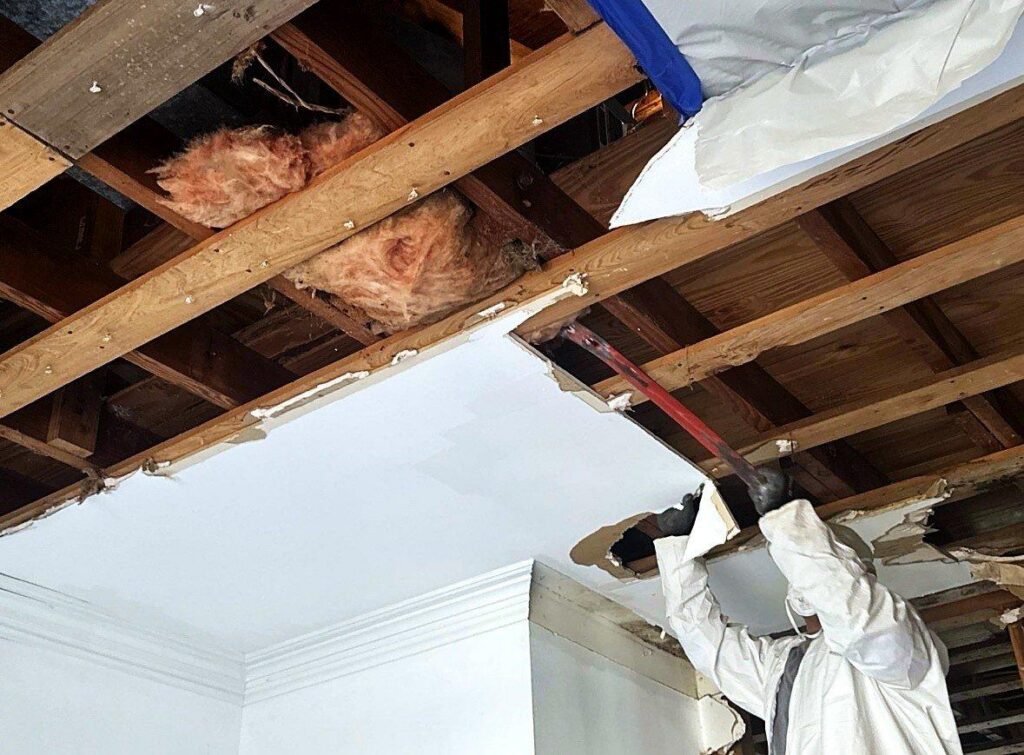
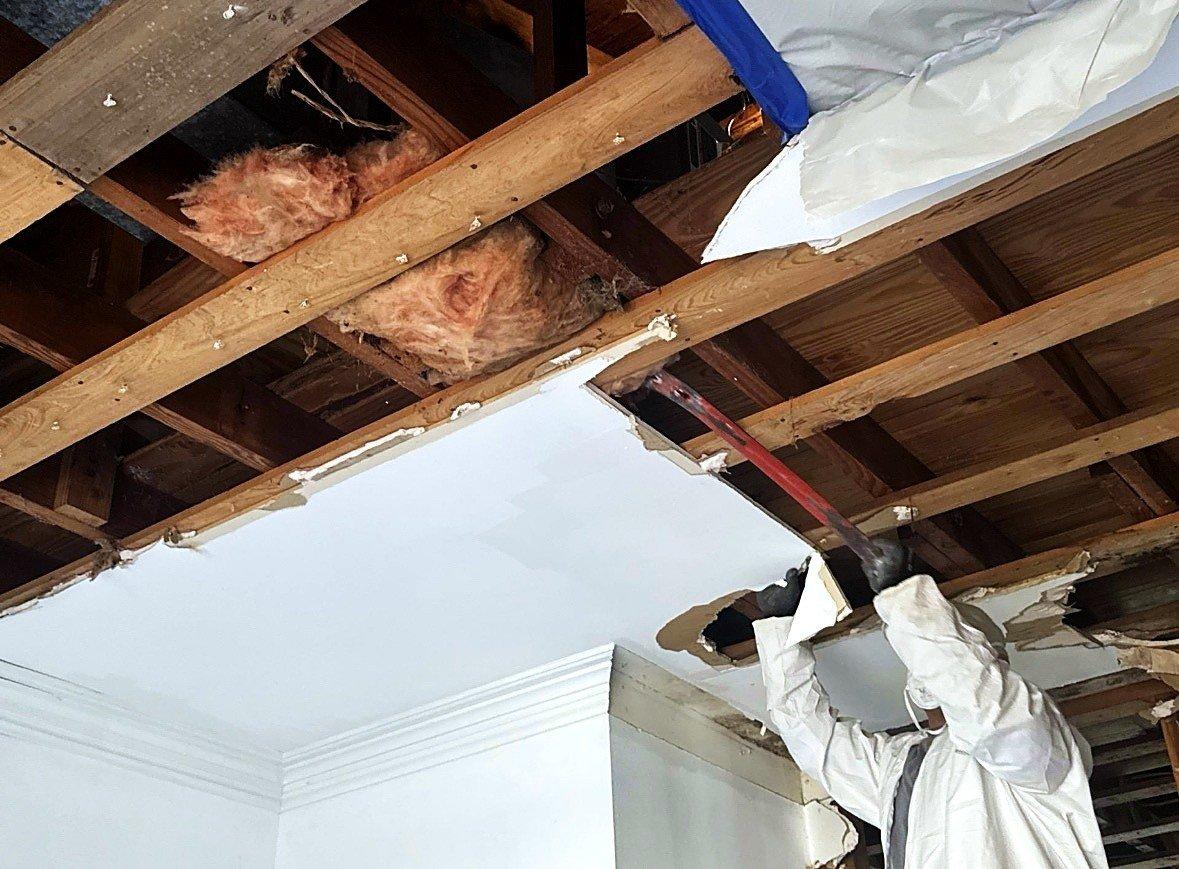
Wet insulation inside an exterior wall usually has to come out. Drywall may be cut at the bottom of the wall or removed from a ceiling so air can reach the framing. We explain what needs to go and why before we cut.
Drying and Monitoring
Dehumidifiers and air movers run until materials reach the drying goal. Crews check readings daily. A typical job takes several days, depending on materials and conditions.
Preventing Mold Growth
Framing and insulation that stay wet can grow mold. The EPA recommends drying water-damaged areas within 24 to 48 hours. If growth has already started, our mold removal service handles it under containment.
What Affects Cost and Insurance?
Cost depends on how long water ran, how far it spread, which materials got wet, and what has to be removed and rebuilt. A leak caught in minutes is a far smaller job than one that ran for hours inside a wall.
Many homeowners policies cover sudden water damage from a burst pipe. Still, coverage depends on your policy, and some limit damage tied to a home left unheated. Your agent or adjuster can tell you what applies. We document readings, photos, and removed materials to support your claim.
Example: A Skippack homeowner leaves the garage door open on a windy, frigid afternoon. That night, the line to a utility sink in the garage freezes, and it leaks into the finished room next to it once it thaws. This is a composite scenario, not a real job.
Frequently Asked Questions
What Temperature Makes Pipes Freeze?
There isn’t one exact number. Pipes in exterior walls, garages, and crawl spaces are most exposed when outdoor temperatures drop well below freezing, especially with wind. The colder and longer the cold snap, the higher the chance.
Can a Pipe Leak Inside a Wall Without Showing?
Yes. Water can run inside a wall cavity for a while before a stain, bubbling paint, or a damp baseboard shows up. A musty smell or a sudden jump in your water bill can also be a clue.
Should I Turn Off My Water if I Travel This Winter?
It’s worth considering. Shutting off the main valve limits how much water can escape if a pipe fails. Keep the heat on, and have someone check the house while you’re gone.
How Soon Should I Call About Pipe Leaks in Skippack?
Right after you stop the water. Wet materials dry faster and with less removal when drying starts early, and quick action lowers the chance of mold.
Do You Serve Skippack and Schwenksville?
Yes. Our office is in Schwenksville, and we serve Skippack, Harleysville, Lansdale, and nearby towns. See our Skippack service area page and Schwenksville page.
Need Help With Pipe Leaks in Skippack?
If a frozen or leaking pipe soaked a wall, ceiling, or floor, PuroClean of Lansdale can help dry it out. We’re available 24/7. Call (267) 834-5900, or find us at 2033 Lucon Rd, Bldg. Rear, Schwenksville, PA 19473. We serve Skippack, Schwenksville, Harleysville, Kulpsville, and communities across Montgomery County.