


Table of Contents
Hidden Mold, The Call That Changed Everything
Sarah Mitchell thought the musty smell in her Philadelphia basement was just typical for older homes built in the 1970s. Like many homeowners in neighborhoods from Fishtown to Mount Airy, she’d grown accustomed to that faint odor near the utility room and had chalked it up to normal basement dampness. But when a small water leak revealed dark staining behind her bathroom wall, everything changed.
Within 48 hours of calling PuroClean, a certified mold inspector arrived at her Roxborough home. What started as a minor concern in one bathroom evolved into a comprehensive mold inspection that uncovered hidden growth in multiple areas under the stairs, behind shower tiles, and along the laundry room ceiling. Sarah’s story isn’t unique. It’s a scenario that plays out in homes across Philadelphia County every week, especially in properties built before modern moisture barriers became standard.
If you’ve noticed suspicious staining, persistent musty odors, or recent water damage in your home, this article will walk you through what professional mold remediation actually involves, why DIY approaches often make problems worse, and how to protect both your property value and your family’s wellbeing.
Understanding Mold Growth in Older Philadelphia Homes: More Than Surface Deep
Why Homes Built in the 1970s Face Unique Challenges
Properties constructed before 1980 present distinct vulnerabilities when it comes to mold development. Sarah’s home, like thousands across Philadelphia’s diverse neighborhoods from Chestnut Hill’s historic properties to the rowhomes of South Philadelphia was built during an era when building codes prioritized different concerns than moisture management and indoor air quality.
Key factors that make older Philadelphia homes susceptible:
- Limited vapor barriers: Many 1970s-era homes lack the polyethylene sheeting and proper insulation that modern construction requires
- Outdated HVAC systems: Poor ventilation allows humidity to accumulate in basements, crawlspaces, and bathrooms—particularly problematic in Philadelphia’s humid summers
- Original plumbing: Decades-old pipes develop slow leaks that go unnoticed for months or years
- Cinder block and stone foundations: Porous materials common in Philadelphia construction absorb groundwater and create perpetually damp conditions
- Asbestos considerations: Homes from this era often contain asbestos in drywall, floor tiles, and insulation requiring special testing before any demolition work
When PuroClean’s technician conducted Sarah’s inspection, he immediately flagged the home for asbestos testing. This isn’t just regulatory compliance it’s about preventing a mold remediation project from becoming a hazardous materials disaster. Any disturbance of asbestos-containing materials without proper protocols can release dangerous fibers into the air your family breathes.
The Hidden Mold Discovery Process
Professional mold inspections go far beyond what homeowners can see. During Sarah’s evaluation, the PuroClean team employed multiple assessment tools:
Thermal imaging cameras detected temperature variations behind walls that indicated moisture accumulation. The under-stairs closet showed cooler spots consistent with water infiltration a red flag invisible to the naked eye.
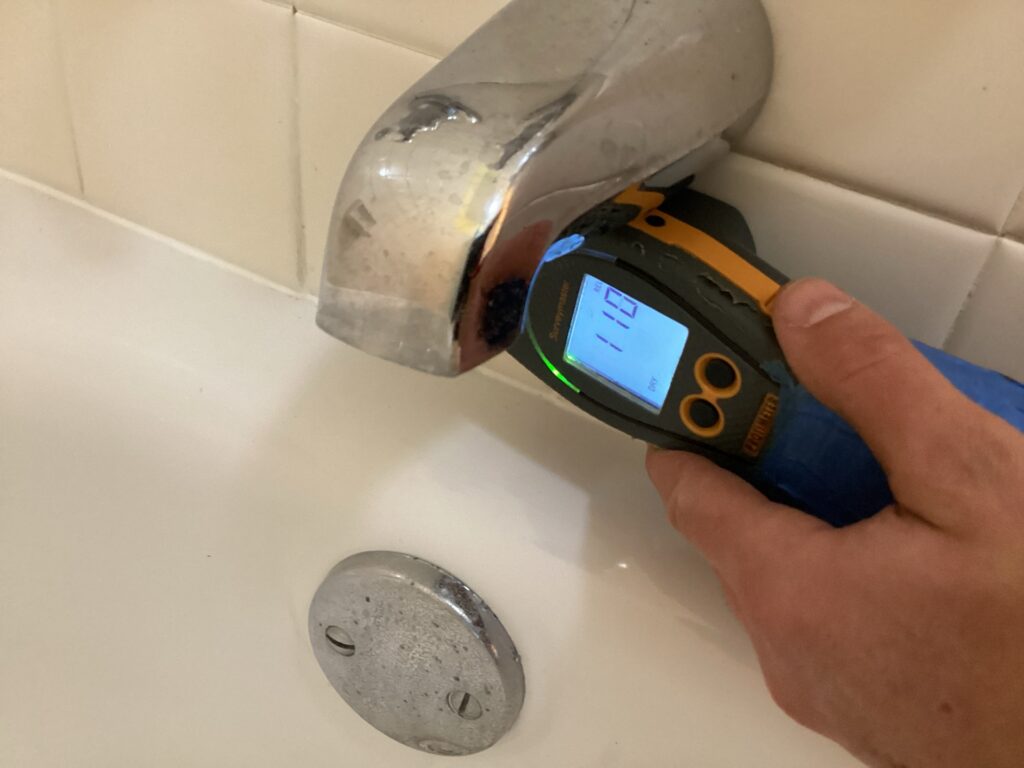
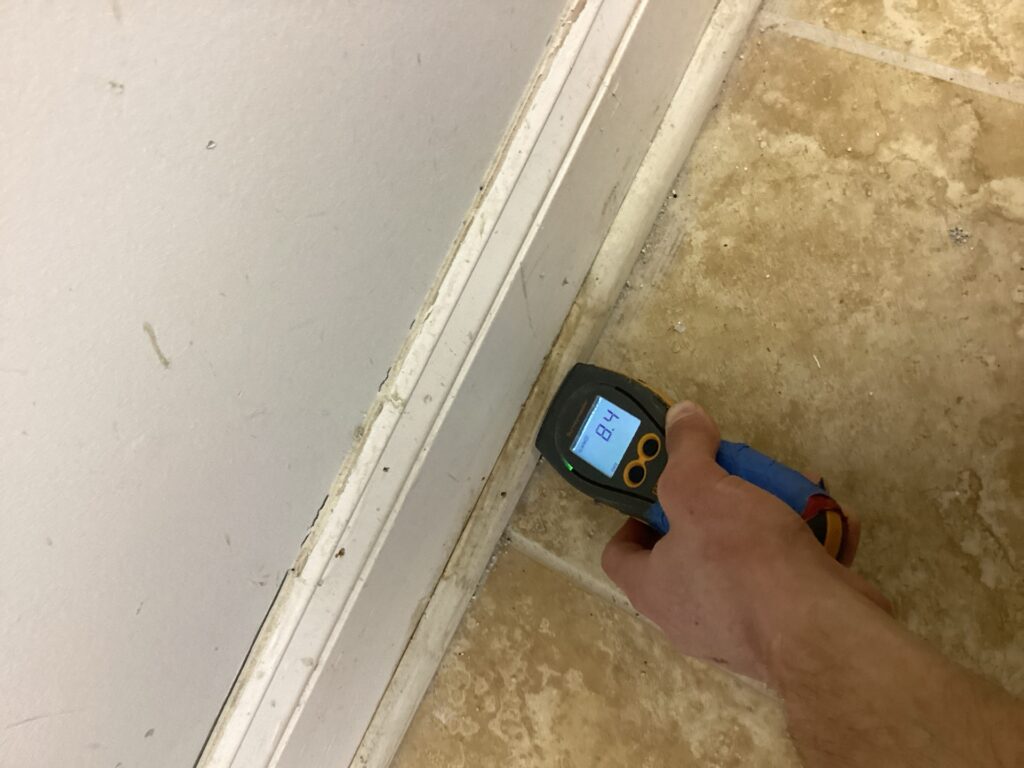
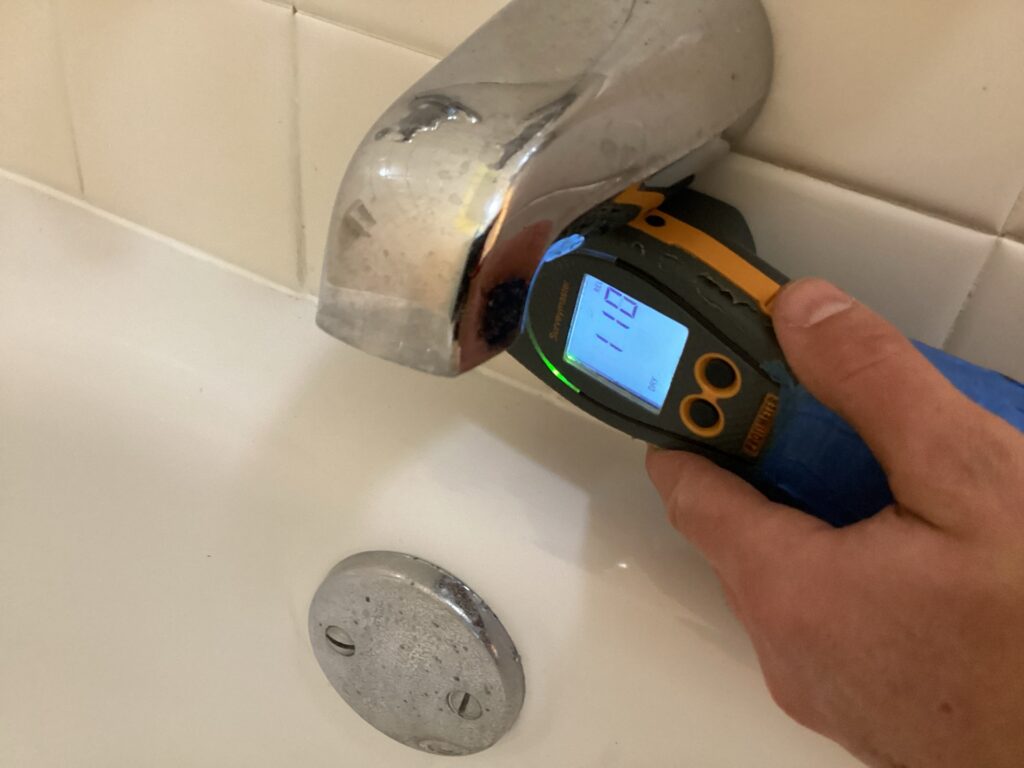
Moisture meters measured exact water content in building materials. Sarah’s bathroom drywall registered readings well above the 16% threshold where mold growth becomes inevitable.
Air quality sampling established baseline spore counts throughout the home, helping prioritize remediation zones and verify cleanup effectiveness later.
Comprehensive documentation included video footage, photographs, digital sketches, and precise measurements. This wasn’t just thoroughness it created the detailed scope of work that insurance adjusters need to process claims fairly.
The Real Scope of Mold Remediation: What Happened in Sarah’s Philadelphia Home
Basement Level Remediation
The inspection revealed three distinct problem areas in Sarah’s basement, each requiring specialized treatment:
Under-stairs closet area: A 2’4″ x 1′ section of sheetrock showed active mold colonization. The remediation protocol required complete removal of affected drywall, HEPA vacuuming of all surfaces including the wall cavity, and antimicrobial treatment of remaining structural elements. Simply cleaning visible mold would have left spores embedded in paper backing and insulation.
Bathroom moisture damage: Six feet of baseboard and a 1’9″ x 1′ drywall section needed removal where chronic humidity from shower use had created perfect growth conditions. This bathroom lacked an exhaust fan a common oversight in 1970s construction that concentrates moisture in enclosed spaces, especially problematic during Philadelphia’s muggy summer months.
Utility room cinder block treatment: Six square feet of foundation wall required specialized attention. Unlike drywall that gets removed and replaced, porous cinder block must be thoroughly HEPA vacuumed to extract mold particles from countless tiny cavities, then treated with antimicrobial solutions that penetrate the material. A mold stain remover was specified to address discoloration that would otherwise remain visible and cause ongoing concern.
Laundry room ceiling contamination: Perhaps the most extensive single area, 32 square feet of ceiling sheetrock showed water staining and mold growth likely from an undetected plumbing leak above or condensation from poor ventilation. This area alone required 80 square feet of 4-mil polyethylene containment barriers and dedicated air filtration equipment to prevent cross-contamination during demolition.

Main Level Bathroom: The Shower Discovery
Mold behind shower tiles represents one of the most common and most overlooked problem areas in Philadelphia homes. In Sarah’s main-floor bathroom, a 1’1″ x 2’6″ section of tile and backing material showed signs of water intrusion.
Here’s what many homeowners don’t realize: that small visible patch of mold behind a shower tile typically indicates much more extensive hidden damage. Water has usually been wicking behind the tile for months or years before visible signs appear. The grout acts like a sponge, channeling moisture into the wall cavity where it saturates drywall, insulation, and framing.
Professional remediation requires removing all compromised materials, not just scraping away surface mold. The PuroClean team specified complete removal of damaged tile and drywall, followed by proper containment (80 square feet of 4-mil poly barriers) and continuous air filtration during the work.
Why Professional Mold Remediation Isn’t Optional
The DIY Disaster Scenario
Every restoration professional has stories of Philadelphia homeowners who tried tackling mold themselves, only to make the situation dramatically worse. Here’s what typically happens:
Incomplete removal: Bleach and store-bought sprays kill surface mold but don’t address roots (hyphae) penetrating porous materials. Within weeks, growth returns often more aggressively.
Spore dispersal: Disturbing mold colonies without proper containment sends millions of spores airborne. These settle throughout your home, establishing new colonies in previously unaffected areas. What started as a bathroom problem becomes a whole-house contamination event.
Health exposure: Working around mold without respiratory protection exposes you to mycotoxins and allergens at dangerous concentrations. Even non-toxic mold species trigger respiratory distress, allergic reactions, and immune system responses.
Structural damage progression: Delay allows moisture to continue degrading building materials. What would have been a straightforward drywall replacement becomes a major structural repair involving framing, insulation, and potentially load-bearing elements.
Insurance complications: Many homeowners policies exclude mold damage that results from neglected maintenance or improper DIY remediation attempts. Professional documentation protects your claim.
The Professional Approach: Containment and Control
When the PuroClean team began Sarah’s remediation, their first priority was containment preventing mold spores from spreading beyond work zones.
Physical barriers: 4-mil polyethylene sheeting creates sealed work areas with controlled entry/exit points. These aren’t casual tarps they’re properly taped and sealed to create negative air pressure zones.
Air filtration devices: Commercial-grade HEPA air scrubbers process thousands of cubic feet per minute, capturing 99.97% of particles 0.3 microns or larger. These machines run continuously during demolition, treatment, and reconstruction phases.
Negative air pressure: By exhausting filtered air outside, containment zones maintain lower air pressure than surrounding spaces. This prevents contaminated air from escaping through gaps or when technicians enter/exit.
Personal protective equipment: Technicians wear respirators, protective suits, and gloves—not because they’re overly cautious, but because mold exposure at remediation-level concentrations poses genuine health risks.
Proper disposal: Contaminated materials are double-bagged, sealed, and disposed of according to EPA guidelines. Mold-affected debris doesn’t go in your regular trash where it can release spores.
The Asbestos Factor: Why Testing Matters in Older Philadelphia Homes
The immediate call for asbestos testing in Sarah’s home wasn’t bureaucratic red tape it was essential safety protocol. Homes built before 1980 across Philadelphia from Queen Village to Germantown commonly contain asbestos in:
- Drywall joint compound and texture coatings
- Vinyl floor tiles and backing
- Pipe insulation
- Ceiling tiles
- Popcorn ceiling texture
Disturbing these materials releases microscopic asbestos fibers that cause mesothelioma, lung cancer, and asbestosis often decades after exposure. There’s no safe level of asbestos exposure, and there’s no way to visually identify asbestos-containing materials.
The testing process involves collecting small samples from each potentially affected material type and sending them to an accredited laboratory for polarized light microscopy analysis. Results typically return within 3-5 business days.
If asbestos is present, remediation follows strict EPA and OSHA protocols requiring licensed abatement professionals, specialized containment, air monitoring, and disposal at approved facilities. This adds cost and timeline to projects, but it’s non-negotiable for safety and legal compliance.
The Insurance Claims Process: Documentation That Protects Your Investment
Why Comprehensive Documentation Matters
Sarah’s case illustrates how proper documentation streamlines insurance claims. The PuroClean team provided:
Detailed photographic evidence: Before, during, and after images document the extent of damage and quality of restoration work.
Video documentation: Walkthrough videos provide context that still images can’t capture, showing how different affected areas relate spatially.
Professional measurements: Advanced software creates accurate floor plans and measurements that adjusters use to verify claimed square footage.
Written scope of work: Line-item descriptions of every required procedure, from sheetrock removal square footage to antimicrobial treatment specifications.
Moisture readings: Data from moisture meters establishes baseline conditions and tracks drying progress, proving that underlying moisture problems are resolved.
Many Philadelphia homeowners underestimate damage severity in initial insurance reports, then struggle to get additional coverage approved when scope expands. Professional documentation from day one prevents these disputes and ensures fair claim settlement.
What Insurance Typically Covers
Coverage for mold remediation depends on the cause of moisture:
Usually covered: Mold resulting from sudden, accidental water events like burst pipes, appliance failures, or storm damage falls under most standard homeowners policies.
Often excluded: Mold from gradual leaks, poor maintenance, flooding, or groundwater seepage typically isn’t covered unless you have specific endorsements.
Documentation requirements: Insurers want proof that water intrusion was sudden and accidental, and that you took reasonable steps to mitigate damage promptly.
Working with a restoration company experienced in insurance claims helps navigate these requirements. PuroClean teams communicate directly with adjusters, providing documentation they need and advocating for comprehensive coverage.
Antimicrobial Treatment: The Science Behind Mold Prevention
Beyond Surface Cleaning
After removing contaminated materials from Sarah’s home, the remediation team applied antimicrobial treatments to all affected surfaces. This isn’t optional it’s critical to preventing recolonization.
HEPA vacuuming comes first, removing loose spores and debris from all surfaces including exposed framing, subfloors, and concrete. Standard shop vacuums simply blow spores back into the air through their exhaust. True HEPA filters trap particles at 99.97% efficiency.
Antimicrobial application follows, using EPA-registered products designed specifically for mold remediation. These solutions don’t just kill existing growth they leave protective residues that inhibit future colonization while materials are exposed during reconstruction.
Mold stain treatment addresses aesthetic concerns on surfaces that can’t be replaced, like cinder block foundations. While staining doesn’t indicate active growth after proper cleaning, it affects homeowner peace of mind and property appearance.
Addressing the Moisture Source
Here’s the uncomfortable truth many restoration companies won’t emphasize: professional mold remediation fails if underlying moisture problems aren’t corrected. In Sarah’s case, several issues needed addressing:
- Installing bathroom exhaust fans with proper exterior venting
- Repairing plumbing leaks that caused laundry room ceiling damage
- Improving basement drainage and grading to reduce foundation moisture
- Potentially installing a dehumidifier to maintain basement humidity below 50% especially important during Philadelphia’s humid summers
The best antimicrobial treatments in the world won’t prevent mold if water continues entering the structure. Reputable restoration companies identify moisture sources during inspection and recommend corrective measures.
Philadelphia’s Climate: Why Mold Prevention Requires Extra Vigilance
The Humidity Challenge
Philadelphia’s climate creates perfect conditions for mold growth. With hot, humid summers where outdoor humidity regularly exceeds 70% and temperature swings throughout the year, homes face constant moisture challenges.
Summer concerns: Air conditioning creates temperature differentials that cause condensation on cold surfaces. Humid air infiltrating from outside overwhelms ventilation systems in older homes.
Winter issues: Heating systems create dry indoor air that pulls moisture from walls and foundations, while temperature variations cause condensation in wall cavities.
Spring flooding: The Schuylkill and Delaware River watersheds experience periodic flooding. Even homes not directly flooded face elevated groundwater that seeps through foundations.
Aging infrastructure: Many Philadelphia neighborhoods have combined sewer systems that back up during heavy rains, introducing contaminated water into basements.
Philadelphia homeowners must be especially vigilant about moisture control, making professional mold remediation even more critical when problems develop.
Timeline and Living Arrangements: What Philadelphia Homeowners Can Expect
How Long Does Remediation Take?
Sarah’s project timeline offers realistic expectations for Philadelphia-area homeowners:
Day 1 – Inspection: Initial site visit, documentation, moisture readings, and asbestos testing
Days 2-5 – Testing: Awaiting asbestos laboratory results before proceeding with demolition
Day 6 – Estimate Approval: Detailed scope reviewed with homeowner and insurance adjuster
Days 7-8 – Containment and Demolition: Setting up work zones, removing contaminated materials
Days 9-10 – Treatment and Drying: HEPA vacuuming, antimicrobial application, verifying moisture levels are acceptable for reconstruction
Days 11-15 – Reconstruction: Installing new drywall, tile, and finishes; final cleaning
Day 16 – Final Inspection: Post-remediation verification, including potential air quality testing
Total timeline: Approximately 2-3 weeks from inspection to completion, assuming no complications with asbestos abatement or insurance approvals.
Do You Need to Relocate?
For contained projects like Sarah’s, most families remain in the home. Containment barriers and negative air pressure keep work zones isolated from living spaces. However, consider temporary relocation if:
- More than 30% of the home requires remediation
- HVAC systems are contaminated and need cleaning
- Young children, elderly residents, or immunocompromised individuals live in the home
- Asbestos abatement requires whole-house containment
Your restoration company should provide honest guidance about whether staying is safe and practical for your specific situation.
Protecting Your Philadelphia Home’s Value and Your Family’s Health
The Long-Term Cost of Delayed Action
Every day mold remains active in your Philadelphia home:
- Structural damage worsens, increasing eventual repair costs
- Spore counts rise, elevating health risks
- Property value declines as contamination spreads critical in Philadelphia’s competitive real estate market
- Insurance claim complications increase if damage appears gradual rather than sudden
The cost difference between addressing Sarah’s mold problem promptly versus waiting another six months could easily have doubled. Early intervention always costs less than delayed action.
Health Implications Beyond Allergies
While most people associate mold with allergies and respiratory irritation, exposure can trigger more serious health concerns:
Respiratory issues: Chronic cough, wheezing, shortness of breath, and sinus infections often persist months after leaving moldy environments.
Immune system effects: Constant exposure challenges immune function, potentially increasing susceptibility to other illnesses.
Cognitive symptoms: Some individuals report difficulty concentrating, memory problems, and mood changes with prolonged mold exposure.
Mycotoxin concerns: Certain mold species produce mycotoxins—chemical compounds that can cause more severe health effects with significant exposure.
Children, elderly individuals, and people with existing respiratory conditions, allergies, or compromised immune systems face heightened risks. Protecting your family’s health justifies the investment in professional remediation.
Choosing the Right Restoration Company: What Sarah’s Experience Teaches Us
Red Flags to Avoid
Not all restoration companies serving Philadelphia operate with the same standards. Warning signs include:
Pressure to skip testing: Any company discouraging asbestos or mold testing prioritizes speed over safety.
Vague estimates: Professional scopes specify exact square footage, materials, and procedures—not rough ballpark figures.
Lack of documentation: Thorough photo/video documentation protects both company and homeowner. Its absence suggests corner-cutting.
No containment discussion: Companies that minimize containment importance will create cross-contamination problems.
Unrealistic timelines: Proper mold remediation can’t be rushed. Beware promises of 24-hour turnarounds.
What Professional Service Looks Like
PuroClean’s approach to Sarah’s project exemplifies industry best practices:
Immediate response: Initial contact to site inspection within 24-48 hours
Comprehensive assessment: Multi-tool evaluation including thermal imaging, moisture meters, and visual inspection
Clear communication: Regular updates throughout the process, including detailed scope-of-work documentation
Proper licensing and certification: Mold remediation requires specific training and credentials—verify these upfront
Insurance expertise: Direct adjuster communication and documentation formatted for claims processing
Warranty coverage: Reputable companies stand behind their work with warranties on both labor and materials
Neighborhood-Specific Considerations Across Philadelphia
Rowhome Challenges
Philadelphia’s iconic rowhomes present unique mold challenges. Shared walls mean moisture from neighboring properties can migrate into your home. Limited exterior wall access restricts ventilation options. Party walls often lack proper vapor barriers.
Historic Properties
Homes in neighborhoods like Society Hill, Old City, and Chestnut Hill may have historical preservation requirements affecting remediation approaches. Work with restoration companies experienced in maintaining architectural integrity while addressing modern moisture and mold issues.
Basement Apartments
Many Philadelphia homes have converted basement apartments generating rental income. Mold in these spaces creates both health risks for tenants and potential legal liability for landlords. Professional remediation protects both parties.
Conclusion: When Mold Threatens Your Philadelphia Home, Professional Help Protects Everything You’ve Built
Sarah Mitchell’s mold discovery transformed from a worrying suspicion into a professionally managed remediation project that protected her family’s health, preserved her home’s structural integrity, and maintained her property value. Her story illustrates why professional intervention matters when mold enters your Philadelphia home.
The musty smell you’ve been ignoring, the suspicious staining behind that bathroom fixture, or the dampness you’ve accepted as normal in your basement these aren’t minor inconveniences to live with. They’re warning signs of active problems that worsen with every passing day.
Professional mold remediation isn’t an expense it’s an investment in your family’s wellbeing and your property’s future. The comprehensive approach PuroClean brought to Sarah’s Roxborough home from asbestos testing to contained demolition, antimicrobial treatment to reconstruction represents the standard of care your home deserves.
Take Action Today
If you’ve noticed signs of mold in your Philadelphia home whether you’re in Center City, Northeast Philadelphia, West Philadelphia, or anywhere throughout the greater Philadelphia area don’t wait for the problem to worsen. PuroClean’s certified restoration professionals provide:
- 24/7 emergency response for urgent water damage that could lead to mold
- Free inspection and detailed estimates with no obligation
- Direct insurance company coordination to streamline claims
- Certified technicians with specialized mold remediation training
- Complete documentation protecting your claim and investment
Your home is likely your largest financial investment. Your family’s health is priceless. Both deserve the protection that professional mold remediation provides.
Contact PuroClean today for a comprehensive mold inspection and discover the peace of mind that comes from knowing your Philadelphia home is safe, healthy, and protected.
Frequently Asked Questions About Mold Remediation in Philadelphia
Q: How do I know if I have a mold problem that requires professional remediation?
Professional remediation becomes necessary when mold growth exceeds 10 square feet (roughly a 3′ x 3′ area), affects HVAC systems, contaminates porous materials like drywall or insulation, or results from contaminated water sources. Visible growth, persistent musty odors, water staining, or recent water damage all warrant professional inspection.
Small surface mold on non-porous materials like tile may be cleanable, but hidden mold behind walls or under flooring always requires professional assessment. Philadelphia’s humid climate makes professional evaluation especially important, as hidden moisture problems are common.
Q: Will my homeowners insurance cover mold remediation costs?
Coverage depends on the moisture source causing mold growth. Most policies cover mold resulting from sudden, accidental events like burst pipes, appliance malfunctions, or storm damage.
Gradual problems from poor maintenance, long-term leaks, flooding, or groundwater typically aren’t covered without specific endorsements. Document everything from the moment you discover problems, take immediate mitigation steps, and work with restoration professionals experienced in insurance claims to maximize your coverage.
Philadelphia homeowners should review their policies carefully, as flooding from the Schuylkill or Delaware rivers typically requires separate flood insurance.
Q: How long does professional mold remediation take, and can I stay in my home?
Most residential mold projects in Philadelphia take 1-3 weeks from inspection through final reconstruction. Timeline factors include asbestos testing requirements (3-5 days for results), extent of contamination, drying time, and reconstruction complexity.
Many homeowners remain in their homes during contained remediation projects, as proper containment barriers isolate work zones. Consider temporary relocation if remediation affects more than 30% of your home, involves HVAC contamination, or if young children, elderly individuals, or immunocompromised people reside there.
Philadelphia’s rowhome configuration sometimes makes containment more challenging due to shared walls and limited space.
Q: Why does my 1970s Philadelphia home need asbestos testing before mold remediation?
Homes built before 1980 throughout Philadelphia from Port Richmond to Southwest Philadelphia commonly contain asbestos in drywall compound, floor tiles, pipe insulation, and ceiling materials. Disturbing these materials during mold remediation releases dangerous asbestos fibers causing mesothelioma and lung cancer.
Asbestos can’t be identified visually only laboratory testing confirms presence. EPA regulations require testing before demolition in older homes, and any identified asbestos must be removed by licensed abatement professionals using specialized protocols. This protects your family, workers, and ensures legal compliance.
Q: What’s the difference between mold cleaning and professional remediation?
Cleaning addresses surface mold on non-porous materials and can be a DIY project for small areas. Professional remediation involves removing contaminated porous materials (drywall, insulation, carpeting), containing work areas to prevent spore spread, using HEPA filtration, applying antimicrobial treatments, addressing moisture sources, and reconstructing removed materials.
Remediation also includes comprehensive documentation for insurance purposes and post-remediation verification. Once mold penetrates porous materials or exceeds 10 square feet, professional remediation becomes necessary for complete eradication.
Q: How can I prevent mold from returning after remediation in Philadelphia’s humid climate?
Mold prevention requires controlling moisturethe only factor you can influence, since mold spores exist everywhere.
Maintain indoor humidity below 50% using dehumidifiers in basements and crawlspaces especially critical during Philadelphia’s humid summers. Install and use bathroom exhaust fans vented to the exterior. Fix plumbing leaks immediately.
Ensure proper drainage away from foundations, particularly important given Philadelphia’s clay soil and periodic flooding. Clean gutters regularly. Address any roof leaks promptly. Increase ventilation in problem areas.
After professional remediation, follow recommendations for moisture control systems, and address any identified water intrusion sources. Even the best remediation fails if moisture problems aren’t corrected.
Don’t let water damage and potential mold growth overwhelm you. Contact PuroClean of Lansdale today at (267) 834-5900 for a free consultation. We’ll be there to guide you through the restoration process and ensure your property is restored quickly, safely, and efficiently.