


You step back into the kitchen the morning after a busy holiday meal, and something is off. The pan that scorched last night is long gone, the counters look clean, and yet the whole house smells like burned food. If that sounds familiar, you may be dealing with protein smoke. Protein smoke cleanup in Blue Bell takes more than an open window and a scented candle.
Kitchen fires are common. The National Fire Protection Association’s cooking safety page calls cooking a leading cause of reported home fires and home fire injuries. A kitchen fire doesn’t have to be large to leave a mess. A pot boils dry, a roast burns, or grease flares on the stovetop. The flames may be out in seconds, but the residue they leave can linger for weeks.
This guide walks you through what protein smoke is, what to do first, where residue hides, and how a professional cleanup works.
What Is Protein Smoke, and Why Is It So Hard to See?
Protein smoke is the residue left when meat, poultry, beans, or other protein-rich food burns. It is often nearly invisible, but it carries a strong, sticky odor that clings to walls, cabinets, fabrics, and ductwork.
Other fires leave obvious black soot. Paper or wood burning hot and fast leaves dry, powdery residue. Plastics that smolder leave wet, oily smears. Protein residue is different. It can look like a faint yellow or amber film, or like nothing at all. That is why many homeowners clean the stove, see a spotless kitchen, and still smell smoke days later.
The film also tends to travel. Warm smoke rises, spreads across the ceiling, and drifts into nearby rooms through doorways and air returns. So the odor you notice in an upstairs hallway can come from a kitchen fire that never left the pan.
What Should You Do First After a Kitchen Fire?
Make sure everyone is safe and the fire is fully out before you think about cleanup. If the fire department came, follow their guidance on when it’s safe to go back in.
Once you are cleared to return, a few simple steps help limit the damage:
- Open windows and run the range hood, if it works, to move smoky air outside.
- Turn off the furnace or air conditioner fan until someone checks the system, so it doesn’t spread residue.
- Throw away food that was out, open, or near the heat and smoke.
- Hold off on wiping with a wet rag. Water and the wrong cleaner can smear protein film and set the stain.
- Take photos of every affected room, the stove area, and any damaged items.
- Call your insurance agent to report the loss and ask what your policy requires.
If anyone in your home has trouble breathing or feels unwell after smoke exposure, talk to a doctor. We clean buildings and belongings; health questions belong with a medical professional.
Where Does Protein Smoke Residue Hide in a Kitchen?
Residue usually collects on cooler surfaces above and around the stove, then on anything soft that absorbs odor. A quick look under good light shows where to start.
| Where to check | What you might notice |
|---|---|
| Ceiling above the range | A faint yellow or tan tint, or a tacky feel |
| Upper cabinet doors and the space above them | A greasy film, often heaviest on the top edges |
| Range hood, filters, and the duct behind it | Strong odor and sticky buildup |
| Light fixtures and ceiling fans | Discolored glass and blades that smell like smoke |
| Curtains, upholstery, and dish towels | Odor that returns after a normal wash |
| Air returns and nearby rooms | Smoke smell spreading beyond the kitchen |
If the smell is strongest in rooms far from the kitchen, residue may be in the duct system. That is a sign the cleanup needs more than surface wiping.
How Does Protein Smoke Cleanup in Blue Bell Work?
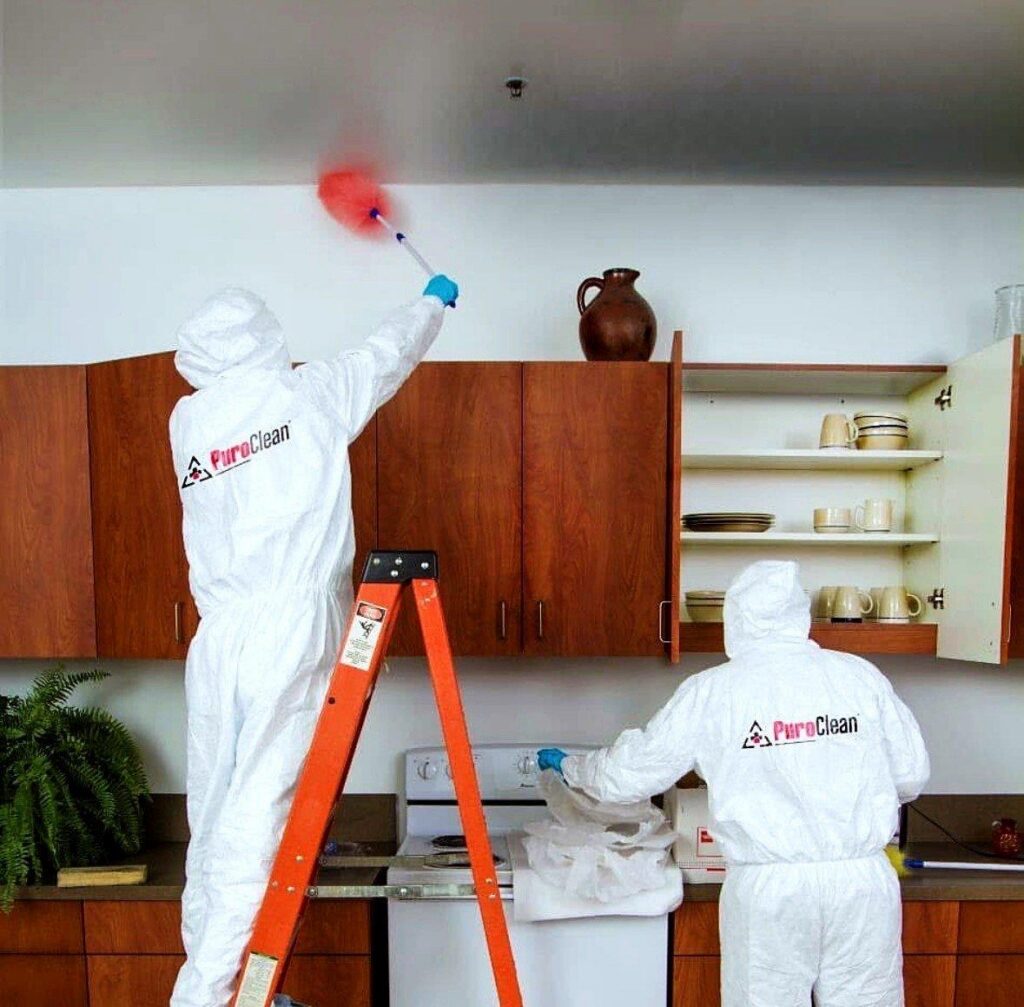
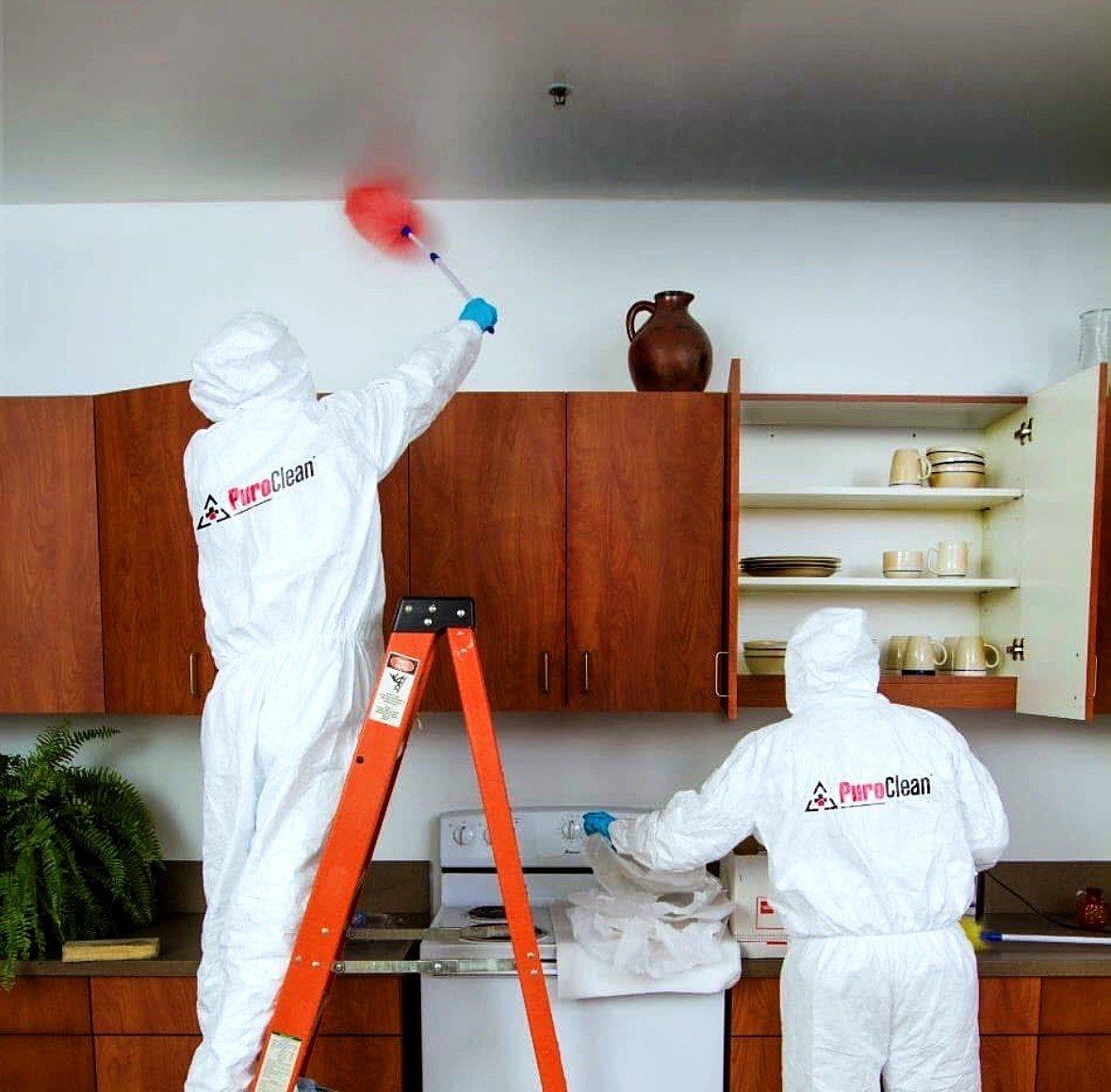
Professional protein smoke cleanup in Blue Bell starts with an inspection and matches the cleaning method to each surface. It finishes by removing the odor at its source. Our fire and smoke damage restoration service follows industry standards such as ANSI/IICRC S700 for fire and smoke work.
Assessment and Documentation
A technician walks the home, tests surfaces, and notes where residue and odor reached. We photograph conditions and record affected rooms and items. That record helps your adjuster understand the loss.
Cleaning by Surface Type
Protein film doesn’t come off the same way from every material. Painted drywall, finished cabinets, stainless steel, and laminate each need a different cleaner and technique. Using the wrong product can dull a finish or drive the residue deeper. Crews test a small spot first, then clean from the top of the room down so drips don’t spoil cleaned surfaces.
Odor Removal at the Source
Masking sprays only cover a smell for a short time. Lasting odor control means cleaning the residue first, then sealing or deodorizing what remains. Depending on the job, that can include thermal fogging or hydroxyl generators. Ozone, when it’s used, is only run in unoccupied spaces.
Contents and Pack-Out
Dishes, small appliances, linens, and clothing often hold smoke odor. Some items can be cleaned on site. Others may be packed out, which means moved off site for cleaning, storage, and inventory while the kitchen is restored.
Water From Firefighting
If firefighters used water or an extinguisher, you may have two problems at once: smoke residue and wet materials. Wet cabinets and drywall need drying, and our water damage restoration service handles that side of the loss.
Do Older Materials Change the Plan?
Sometimes, yes. If smoke or water damage means cabinets, drywall, or flooring must come out, the age of those materials matters before anyone starts cutting.
U.S. Census Bureau American Community Survey 2020–2024 5-year estimates (tables B25034 and B25035) list about 2,555 housing units (±188) in the Blue Bell census-designated place, which sits in Whitpain Township. The median year built is 1983 (±2), and about 35.5 percent of those units were built in 1979 or earlier.
Homes built before about 1980 can contain asbestos in some materials, and homes built before 1978 may have lead paint. The EPA’s asbestos guidance for homeowners recommends leaving suspect material alone and having a trained, accredited professional check it before remodeling or demolition. If your Blue Bell home falls into that older group, we arrange testing before removal.
What Affects Cost, Timing, and Insurance?
Every kitchen fire is different, so the cost of protein smoke cleanup in Blue Bell varies by job. The biggest factors are how far smoke traveled, how many surfaces and belongings need cleaning, whether duct cleaning is needed, and whether any materials must be replaced.
A light protein film limited to one room is a much smaller job than residue that reached bedrooms and closets. Water from firefighting adds drying time.
Many homeowners policies cover sudden fire and smoke damage, but coverage depends on your policy. Check with your agent or adjuster before work starts. We work with your adjuster and can document the loss in Xactimate, the estimating software widely used by insurers and contractors.
How Can You Lower the Risk of Another Kitchen Fire?
Most kitchen fires start with cooking that gets ahead of you. A few habits make a big difference, especially when you are cooking for a crowd:
- Stay in the kitchen when you fry, broil, or boil, and use a timer for roasts and baked dishes.
- Keep a lid or baking sheet near the stove to cover a small pan fire.
- Keep towels, paper, and packaging away from burners.
- Clean range hood filters so grease doesn’t build up.
- Test smoke alarms near the kitchen and on every level of the home.
Example: A family hosting relatives sets a pot of beans to simmer and steps out to greet guests. An hour later, the pot is scorched and the house smells of smoke for days. This is an illustration, not a real job.
Frequently Asked Questions
Can I Clean Protein Smoke Residue Myself?
You can wipe a small, light film from hard surfaces with a mild degreasing cleaner after testing a hidden spot. If the odor stays after cleaning, spreads to other rooms, or has soaked into fabrics and ductwork, professional cleaning and deodorizing usually work better.
Why Does My House Still Smell Like Smoke After I Cleaned?
Protein residue clings to ceilings, cabinet tops, fabrics, and air ducts that are easy to miss. Odor keeps coming back until the residue itself is removed. Air fresheners only cover it for a while.
Is It Safe to Use My Kitchen After a Small Fire?
Once the fire department clears the home, many families use part of the kitchen right away. Throw out exposed food, have a qualified technician check any appliance that was involved, and wait to cook until the area is cleaned.
How Long Does Protein Smoke Cleanup in Blue Bell Take?
It depends on how far residue spread and whether contents or ducts need cleaning. A light job may take a short visit, while a larger one can take several days or more. We give you a timeline after the inspection.
Does PuroClean of Lansdale Serve Blue Bell?
Yes. Blue Bell is part of our service area, along with nearby towns such as Ambler, Fort Washington, Spring House, and Lansdale.
Need Protein Smoke Cleanup in Blue Bell?
If a holiday cooking mishap left your home smelling like smoke, PuroClean of Lansdale can help. We offer 24/7 emergency service, and our site lists IICRC Certified and EPA Lead-Safe Certified credentials. Call (267) 834-5900 or visit us at 2033 Lucon Rd, Bldg. Rear, Schwenksville, PA 19473. We serve Blue Bell, Lansdale, Horsham, North Wales, and nearby Montgomery County towns.