

Fire Damage Reconstruction
When a fire damages a home or business, the recovery journey has two distinct and very different phases that are often confused with each other. The first phase is fire damage cleanup and restoration – the emergency response work of stabilizing the structure, removing fire and smoke debris, cleaning every affected surface, drying out the water from firefighting operations, remediating mold, and eliminating smoke odor. The second phase is fire damage reconstruction – the building work of replacing what was destroyed and returning the structure to a fully livable, functional, code-compliant condition.
Both phases are essential. Neither can substitute for the other. And understanding how they relate, what each involves, and who does what gives homeowners a clear map through what can otherwise feel like an overwhelming and poorly defined process. PuroClean handles fire damage cleanup and restoration – the critical first phase that makes reconstruction possible. This article explains both phases in full so that homeowners know what to expect at every stage of their recovery, and why getting the cleanup phase right is what determines whether the reconstruction that follows is successful.
Phase 1: Fire Damage Cleanup and Restoration – What PuroClean Does
Fire damage cleanup is not simply a matter of hauling away debris. It is a technically demanding, health-critical process that must be completed thoroughly before any reconstruction can begin. If cleanup is rushed, incomplete, or performed without industry-standard protocols, the reconstruction that follows will cover contamination rather than eliminate it – creating long-term odor, health, and structural problems that surface after the new materials are in place.
Emergency Stabilization and Board-Up
The first action after fire department clearance is securing the property against further damage and unauthorized entry. Windows and doors compromised by fire are boarded, roof areas opened by fire damage receive temporary tarping, and the structure is assessed for immediate safety hazards including unstable walls, compromised floors, and hazardous materials exposure. This emergency stabilization step protects the property while the cleanup scope is being established.
Comprehensive Damage Assessment
A thorough damage assessment documents every affected area of the structure – fire and heat damage, smoke and soot distribution throughout all rooms, water damage from firefighting operations, and any identified hazardous materials such as asbestos in older structures.
This assessment drives the cleanup scope and the reconstruction scope that follows, and it produces the documentation that insurance carriers require to process the claim. PuroClean’s assessment uses moisture meters and thermal imaging alongside visual inspection to capture the full extent of all damage categories simultaneously.
Smoke and Soot Cleaning
Smoke travels well beyond the fire’s origin – through HVAC systems, wall cavities, and ceiling plenums – depositing residue on every surface it reaches. PuroClean’s smoke cleaning process addresses every room with smoke exposure using the appropriate technique for each residue type: dry chemical sponges for dry smoke, solvent-based cleaners for wet/oily smoke from synthetic materials, and specialized approaches for protein residue from kitchen fires.
Proper smoke cleaning is not optional before reconstruction – smoke residue left under new paint or behind new drywall will bleed through, continue to off-gas odor, and corrode metal surfaces for years.
Structural Water Damage Drying
Firefighting operations introduce enormous volumes of water into a structure – potentially tens of thousands of gallons during a significant residential fire event. This water saturates walls, floors, ceilings, and attic insulation and must be professionally extracted and dried using industrial equipment before any reconstruction work begins. Structural materials installed over wet building assemblies trap moisture and create guaranteed mold problems within weeks of reconstruction completion.
PuroClean deploys commercial air movers and dehumidifiers and monitors daily moisture readings until all structural components reach their dry standard.
Mold Remediation
Given the volume of firefighting water introduced into a fire-damaged structure and the warm Arizona conditions that accelerate mold growth, mold remediation is almost always a component of fire damage cleanup rather than an exception to it. Any material that remained wet for more than 24 to 48 hours is assessed for mold, and confirmed mold growth is remediated following IICRC S520 protocols before reconstruction proceeds.
Debris Removal and Selective Demolition
Materials that are beyond restoration – charred structural members, collapsed ceiling assemblies, destroyed flooring, fire-damaged drywall – are removed and disposed of properly. In older structures, this demolition phase may require asbestos testing and abatement before material removal can proceed. The selective demolition scope is guided by the damage assessment and is coordinated with the reconstruction contractor’s scope of work to ensure that what is removed and what is retained is planned coherently rather than decided ad hoc during demolition.
Odor Elimination
Smoke odor embedded in porous building materials – framing, subfloor sheathing, insulation, and any materials being retained rather than replaced – must be eliminated before reconstruction covers those materials. PuroClean uses ozone treatment, hydroxyl radical generation, and thermal fogging to neutralize odor compounds at the molecular level throughout the structure. This step is performed before new drywall, flooring, and finishes are installed – treating smoke odor after the new materials are in place requires reopening the structure, which no homeowner wants.
Phase 2: Fire Damage Reconstruction – What a Reconstruction Contractor Does
Once the cleanup phase is complete – all smoke and soot cleaned, all water damage dried, all mold remediated, all debris removed, and all odor eliminated – the property is ready for reconstruction. Reconstruction is performed by licensed general contractors and building trades professionals, not by restoration companies, and it involves rebuilding the physical structure to its pre-loss condition or better. PuroClean works collaboratively with reconstruction contractors, handing off a properly cleaned and dried structure and providing the documentation they need to begin work immediately.
Structural Repair and Framing
If fire has compromised structural members – roof rafters, wall framing, floor joists, or load-bearing elements – a structural engineer’s assessment determines the repair scope. Damaged structural members are sistered, replaced, or supplemented with engineered lumber products to restore the building’s structural capacity. This is specialized work that requires both the engineer’s specifications and a licensed contractor with experience in post-fire structural repair.
Roofing
Fire-damaged roofing systems are replaced under the reconstruction scope. This includes not just the roofing surface material – tile, shingles, or membrane – but the roof deck sheathing beneath it if the deck has been compromised by fire or the firefighting water that soaked it. Roofing reconstruction must meet current code requirements and is coordinated with any structural framing repairs in the roof assembly.
Electrical System Repair and Upgrade
Fire events frequently compromise electrical systems through direct heat damage, water damage from firefighting, and the voltage and load stress of the fire event itself.
A licensed electrician inspects and certifies all electrical systems before reconstruction covers them with new drywall and finishes. Depending on the scope of fire damage, the electrical scope may range from replacing damaged wiring in specific areas to a full panel upgrade and whole-home rewiring project. Building permits are required for electrical work, and inspections are mandatory before concealment.
Plumbing
Copper and plastic plumbing that passed through fire zones may have been damaged by heat or the stress of firefighting operations. A licensed plumber inspects all plumbing within the reconstruction area and repairs or replaces compromised sections. In Arizona, where copper plumbing is already under corrosion pressure from hard water, a post-fire reconstruction is often an opportunity to repipe affected sections with PEX, eliminating a category of future failure risk.
HVAC System Restoration or Replacement
HVAC equipment that survived the fire but was smoke-contaminated has been cleaned and decontaminated during the PuroClean restoration phase. Equipment that was directly damaged by fire or heat, or that was too contaminated for practical cleaning, is replaced during reconstruction. Ductwork in fire-damaged areas is replaced, and the system is tested and balanced after reconstruction is complete to confirm proper function throughout the restored structure.
Insulation
All insulation in the affected areas – wet from firefighting water, smoke-contaminated, or removed during demolition – is replaced as part of reconstruction. Insulation replacement is an opportunity to upgrade to current energy code specifications, which in Arizona means meeting specific R-value requirements for attic, wall, and floor assemblies. Permits and inspections apply to insulation installation where it is part of a significant reconstruction project.
Drywall and Interior Finishes
New drywall installation, taping, texturing, and priming is typically one of the largest labor scopes in fire damage reconstruction. Walls and ceilings that were removed during cleanup are rebuilt to match the pre-loss finish profile. In rooms where drywall was retained and cleaned, a stain-blocking primer seals the cleaned surface before painting begins. This primer step is non-negotiable – smoke-affected drywall that receives standard primer and paint without a stain blocker will show bleed-through and re-release odor within weeks.
Flooring
Flooring replacement is one of the most visible elements of fire damage reconstruction. Fire-damaged and water-damaged flooring removed during cleanup is replaced with new material that matches the pre-loss specifications or is upgraded at the homeowner’s election. In Arizona, tile is the dominant floor covering in most rooms, but hardwood, laminate, and luxury vinyl tile are all common and each requires specific installation procedures and substrate preparation.
Cabinetry, Fixtures, and Final Finishes
Kitchen and bathroom cabinetry, countertops, fixtures, hardware, doors, and trim represent the final interior finish work of reconstruction. These scopes are often coordinated directly with the homeowner’s preferences and insurance adjuster-approved specifications and are typically among the last items to be completed in a reconstruction sequence.
Building Permits, Inspections, and Code Compliance
Fire damage reconstruction almost always requires building permits and municipal inspections, particularly for structural, electrical, plumbing, and HVAC work. Code compliance requirements that apply to new construction must be met during fire damage reconstruction, which sometimes means that systems or components that predate current code must be upgraded as part of the rebuild.
These code upgrade costs are often reimbursable under the building code upgrade provisions of homeowner’s insurance policies, making it important to review your policy for this coverage before finalizing the reconstruction scope.
How PuroClean and the Reconstruction Contractor Work Together
The cleanup and reconstruction phases are complementary, not redundant, and the handoff between them must be managed carefully to prevent gaps and conflicts. PuroClean’s role is to deliver a structure that is clean, dry, odor-free, and mold-free to the reconstruction contractor’s start date. The reconstruction contractor’s role is to build back the physical structure that the cleanup phase has prepared.
Effective coordination between the restoration and reconstruction teams involves shared documentation – the moisture logs and mold remediation reports that confirm the structure is ready to rebuild, the damage assessment that defines what was removed and what was retained, and the photos and scope documents that the insurance claim requires. PuroClean provides all of this documentation to both the homeowner and the reconstruction contractor as a standard part of the cleanup handoff.
What Homeowners Should Understand About the Two-Phase Process
The most common source of confusion and frustration in post-fire recovery is the assumption that cleanup and reconstruction happen simultaneously or that one company handles both. In most cases, they are handled by different specialists who work sequentially – cleanup first, reconstruction second – with a clear and documented handoff between them. Attempting to begin reconstruction before cleanup is complete creates the hidden contamination problems described above that surface as odor complaints, mold discoveries, and persistent staining after new materials are installed.
Homeowners who understand this sequence, who work with a restoration company that fully completes the cleanup phase before reconstruction begins, and who select a reconstruction contractor with post-fire experience are consistently the ones who achieve the fastest total recovery timeline and the highest-quality final result. The cleanup phase is not preliminary work – it is foundational work that everything else depends on.
Complete Cleanup Comes First. Then You Build Back Right.
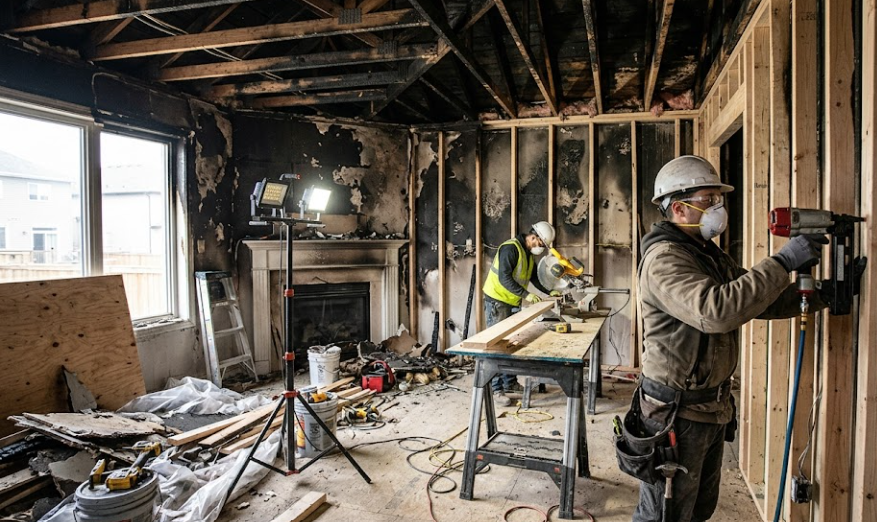
Fire damage reconstruction is a significant undertaking that involves every building trade, building permits and inspections, code compliance, and months of coordinated work. But it can only produce a lasting result when it follows a complete and professionally executed cleanup and restoration phase that eliminates every trace of smoke contamination, water damage, and mold from the structure before the first new drywall panel goes up.
Arizona’s Premier Restoration Specialists at PuroClean deliver that complete cleanup phase – and hand off a structure that is genuinely ready to rebuild. Leaders in recovery. Calm in the Chaos.
Fire Damage? PuroClean Handles the Cleanup That Makes Reconstruction Possible
PuroClean’s IICRC-certified fire damage restoration specialists respond 24/7 throughout the Arizona area and West Valley communities.
We handle emergency stabilization, smoke and soot cleaning, structural drying, mold remediation, odor elimination, and full insurance documentation – delivering a clean, dry, odor-free structure that your reconstruction contractor can build back right. Arizona’s Premier Restoration Specialists. Leaders in recovery. Calm in the Chaos.
Call PuroClean now at (480) 767-5588. Fast response. Proven results. Complete peace of mind.
Recovery starts with the right cleanup. Call PuroClean first.