


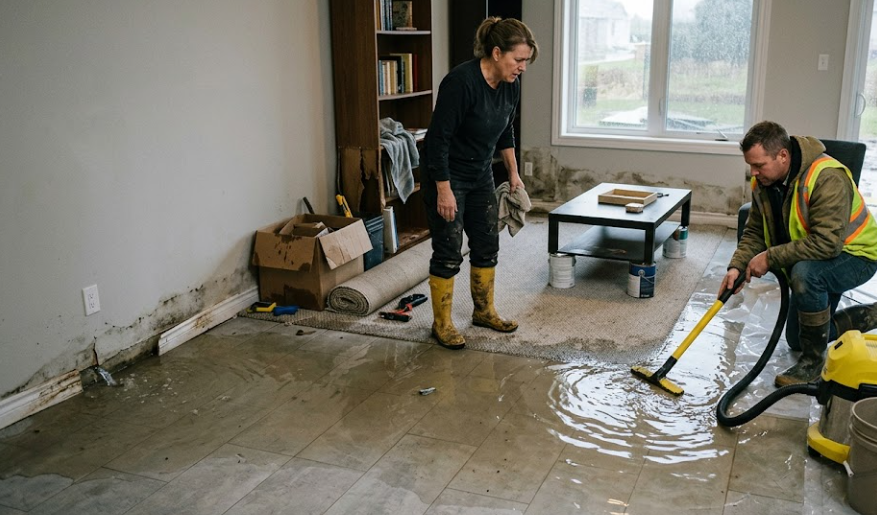
When most Arizonans think about water damage, they picture a burst pipe, a monsoon roof leak, or an overflowing appliance. Groundwater intrusion rarely makes that mental list – and that is exactly why it causes so much damage before it is caught.
Unlike the dramatic, immediate flooding of a burst supply line, groundwater intrusion is a slow, persistent, and largely invisible process in which water migrates through the soil and into a structure through the foundation, crawl space, basement slab, or below-grade walls. By the time any visible evidence appears inside the home, moisture has typically been accumulating in structural materials for weeks or months.
Groundwater intrusion cleanup in Arizona involves a combination of challenges that differ meaningfully from surface water damage. The source is below the structure, the moisture pathway is through concrete and masonry rather than through gaps and openings, and the underlying conditions that drove the intrusion must be corrected outside the structure as well as inside it – otherwise the cleanup is temporary and the damage resumes. Understanding why groundwater intrusion happens in Arizona, what it does to a structure, how professional remediation addresses it, and what long-term solutions exist is essential knowledge for homeowners in affected communities across the Valley.
Why Groundwater Intrusion Happens in Arizona
Arizona’s reputation as a dry desert state can create a false sense of security about groundwater risk. While the state’s arid climate does mean that the water table is generally deep across much of the region, a combination of specific soil conditions, land use changes, irrigation practices, and monsoon hydrology creates very real groundwater intrusion risk for Arizona homeowners.
Expansive Soils and Drainage Failures
Arizona’s expansive clay soils are among the most problematic in the western United States for residential foundations. During dry periods, these soils shrink and crack, creating pathways for water infiltration. During wet periods – monsoon season, winter rains, or over-irrigation – they swell dramatically, creating hydrostatic pressure against foundation walls and slabs. When the expansive soil adjacent to a foundation is saturated, it acts as a reservoir that maintains prolonged moisture contact with the foundation even after the precipitation event has passed.
High Water Table in Specific Communities
While Arizona’s regional water table is generally deep, localized high water table conditions exist in specific areas – particularly along the Salt River corridor, in communities near irrigation districts, and in areas with extensive landscaping and turf irrigation that has been ongoing for decades. In these locations, the water table may be close enough to the surface that even normal seasonal variation can create groundwater at or near foundation level.
Homeowners in Surprise, Goodyear, Chandler, and parts of Scottsdale near the river bottoms face elevated groundwater intrusion risk that residents of hillside communities further from water features do not.
Monsoon Saturation Events
Arizona’s monsoon season produces intense localized rainfall that overwhelms the natural percolation capacity of desert soils and the drainage capacity of developed lots in rapid succession. Monsoon runoff that cannot drain away from the property accumulates against the foundation and creates hydrostatic pressure conditions that drive water through any imperfection in the foundation assembly – construction joints, utility penetrations, cracks from settlement or thermal cycling, and areas where the waterproofing has deteriorated.
A monsoon event that drops two inches of rain in 45 minutes can temporarily create groundwater conditions around a foundation that would not otherwise exist, and the resulting intrusion can be significant.
Irrigation and Landscape Water
Arizona’s commitment to green landscaping in a desert climate means that enormous volumes of water are applied to soil throughout the Valley every day. Residential irrigation systems, HOA common area watering, golf course irrigation, and agricultural fields all contribute to localized soil saturation that can drive groundwater intrusion into adjacent structures.
A home that sits downhill from a heavily irrigated landscape, or that is adjacent to a community lake, golf course fairway, or agricultural field, faces chronic groundwater intrusion risk that is entirely irrigation-driven.
Settlement Cracks and Aging Foundation Waterproofing
Even in the absence of severe external water pressure, an aging foundation that has developed settlement cracks or whose original waterproofing has deteriorated provides pathways for groundwater that would not exist in a newer or better-maintained foundation. Most Arizona residential construction uses slab-on-grade foundations without below-grade waterproofing designed for ongoing groundwater exposure – these foundations were built assuming that surface drainage would keep water away from the slab, not that they would face persistent hydrostatic pressure. When site conditions change and groundwater becomes a factor, the foundation has limited inherent resistance.
How Groundwater Intrusion Damages Arizona Homes
Slab Moisture Migration
In Arizona’s prevalent slab-on-grade construction, groundwater that reaches the underside of the slab migrates upward through the concrete via capillary action. Concrete is porous at a microscopic level, and water under pressure from the soil beneath it moves upward through the slab’s pore structure and appears at the surface as dampness, efflorescence (white mineral deposits), or active moisture seeping through cracks and construction joints. This moisture migration saturates flooring adhesives, causes hardwood and laminate flooring to cup and buckle, allows mold to grow beneath floor coverings, and in severe cases produces visible standing water at specific points in the slab.
Foundation Wall Seepage
For homes with stem wall foundations, partial basements, or below-grade utility rooms – common in some Arizona commercial construction and in certain residential styles – groundwater pressure against the exterior of foundation walls causes water to seep through the wall face at construction joints, through cracks, and around any utility or plumbing penetration through the wall. This seepage saturates interior walls, damages insulation, and creates persistent mold growth conditions in spaces that often have limited ventilation.
Crawl Space Flooding
Arizona homes with crawl spaces – most common in older construction and in some foothills communities where grade conditions require a raised foundation – face particularly severe consequences from groundwater intrusion. Water that enters a crawl space has limited drainage options, accumulates beneath the floor assembly, and creates a chronic high-humidity environment that drives mold growth on floor joists, subfloor sheathing, and insulation, attracts wood-destroying insects, and eventually leads to structural deterioration of the floor assembly above it. Crawl space groundwater intrusion is one of the most damaging and most overlooked structural moisture problems in residential construction.
Mold Growth
Any persistent moisture environment in or below a structure creates conditions for mold growth within 24 to 48 hours. Groundwater intrusion that is chronic rather than event-based provides an ongoing moisture supply that supports sustained mold colonization of structural materials – floor joists, slab-adjacent framing, insulation, and drywall at floor level. Unlike event-based water damage where the moisture source can be stopped, groundwater intrusion continues to supply moisture to mold-affected materials until the underlying drainage conditions are corrected.
Efflorescence and Concrete Deterioration
The white chalky deposits that appear on concrete slabs, stem walls, and masonry surfaces affected by groundwater intrusion are called efflorescence – mineral salts dissolved from the concrete and deposited on the surface as water evaporates. Efflorescence is a reliable indicator of ongoing moisture migration through concrete, and its presence signals that groundwater is in persistent contact with the foundation. Beyond the cosmetic issue, the salt crystallization process that produces efflorescence can contribute to spalling and surface deterioration of the concrete over time.
Recognizing the Warning Signs of Groundwater Intrusion
Because groundwater intrusion develops slowly and begins below the visible surface of the structure, early detection depends on recognizing subtle signs that are easy to attribute to other causes:
- Efflorescence – white chalky deposits on concrete slab surfaces, stem walls, or masonry at grade level
- Damp or musty odors in lower-level rooms, utility spaces, or crawl areas that persist even during dry weather
- Hardwood or laminate flooring that cups, buckles, or shows moisture damage without any identifiable surface water source
- Tile grout that appears consistently damp or shows mold growth at floor level without an obvious plumbing source
- Mold growth at the base of interior walls, particularly on exterior walls or walls adjacent to landscaped areas
- Rust staining at floor level on metal fixtures, furniture legs, or appliances that contact the floor
- Paint bubbling, peeling, or blistering from interior wall surfaces at floor level
- Increased indoor humidity levels that persist despite HVAC operation during dry weather
- Visible seepage or staining at slab cracks, construction joints, or utility penetrations
- Soil pulling away from the foundation perimeter during dry periods, then returning during wet periods – a sign of expansive soil in active seasonal movement
The Professional Groundwater Intrusion Cleanup Process
Groundwater intrusion cleanup in Arizona is a multi-phase process that must address both the immediate moisture damage inside the structure and the external conditions that are driving the intrusion. Cleanup without drainage correction simply creates a temporary improvement that ends with the next rainfall or irrigation event
Comprehensive Moisture Assessment
Professional assessment begins with a full moisture mapping of the affected areas using calibrated moisture meters and thermal imaging cameras. This establishes the extent of moisture in the slab, the subfloor assembly, the lower wall assemblies, and any crawl space or below-grade areas. Air quality testing may be performed to assess mold spore concentrations. The assessment also includes an exterior site evaluation to identify the drainage conditions contributing to the intrusion.
Water Extraction and Initial Drying
Any standing water in crawl spaces, utility rooms, or living areas is extracted using industrial equipment. Commercial air movers and dehumidifiers are deployed throughout the affected zone to begin the drying process. In groundwater intrusion situations, the drying process must address the ongoing moisture supply from below as well as the absorbed moisture in materials above – which requires coordination with the exterior drainage work.
Mold Remediation
Given the chronic nature of groundwater intrusion, mold is almost always present in the affected areas when professional remediation is initiated. IICRC S520-standard mold remediation is conducted concurrently with the drying process: containment is established, contaminated materials are removed, structural surfaces are HEPA-vacuumed and treated with EPA-registered antimicrobials, and post-remediation air clearance testing confirms that spore levels have returned to acceptable levels before new materials are installed.
Structural Repair and Material Replacement
Flooring, drywall, insulation, and framing that have been damaged by groundwater intrusion and mold growth are removed and replaced after the drying and remediation phases are complete. In crawl space situations, floor joists and subfloor sheathing that have sustained decay or mold damage may require structural repair before new flooring can be installed. All replacement is performed after complete drying is verified by moisture meter readings.
Exterior Drainage Correction
This is the step that distinguishes a lasting groundwater intrusion solution from a temporary cleanup. Without correcting the site drainage conditions that are driving water against the foundation, the intrusion will resume regardless of how thorough the interior cleanup was. Exterior drainage correction may involve re-grading the lot to establish positive drainage away from the foundation, installing French drains or surface drainage channels that intercept and redirect surface and shallow groundwater, extending downspout runs to move roof drainage further from the foundation perimeter, repairing or installing foundation waterproofing where the original waterproofing has failed, and modifying irrigation schedules and equipment placement to reduce the volume of water applied near the foundation.
Interior Drainage Systems
In some situations – particularly homes in chronically high water table areas or homes where exterior drainage correction alone is insufficient – interior drainage systems provide an additional layer of protection. These systems include interior perimeter drain tiles installed at the base of the foundation wall that capture and redirect groundwater before it can accumulate in the living space, combined with a sump pump system that removes the collected water from the structure. Interior drainage systems do not stop groundwater from entering the foundation zone but they intercept it before it reaches the interior living space.
Preventing Groundwater Intrusion in Arizona Homes
Proactive measures reduce groundwater intrusion risk and protect the investment a homeowner has made in foundation and interior materials:
- Maintain positive grade – the soil surrounding the foundation should slope away from the structure at a minimum of six inches of drop over the first ten feet from the foundation, and this grade should be re-established after any settling or erosion has reversed it
- Direct all downspout extensions at least four to six feet from the foundation, and extend them further in areas with heavy rainfall or poor natural drainage
- Inspect irrigation systems annually and adjust head placement and run times to avoid saturating soil immediately adjacent to the foundation
- Inspect crawl spaces at least once per year, after monsoon season, for evidence of water entry, elevated humidity, or mold growth
- Seal any visible cracks in slab surfaces or foundation walls with appropriate masonry sealant, and address any utility penetrations where the original sealing has deteriorated
- Consider installing a water monitoring sensor in crawl spaces or lower-level utility rooms that provides smartphone alerts when moisture is detected at floor level
Insurance Coverage for Groundwater Intrusion Cleanup in Arizona
Groundwater intrusion coverage under homeowner’s insurance policies is frequently limited and often misunderstood. Standard homeowner’s policies explicitly exclude damage from surface water flooding, groundwater, and water that enters below grade – which captures most groundwater intrusion scenarios. This exclusion means that Arizona homeowners in groundwater-prone areas may face significant out-of-pocket costs for both the cleanup and the drainage correction unless they carry specific additional coverage.
Flood insurance through the National Flood Insurance Program (NFIP) covers some groundwater intrusion scenarios – particularly those driven by flooding events – but excludes seepage from long-standing high water table conditions. Review your specific policy language carefully and consult with your insurance agent about whether your property’s risk profile warrants a flood insurance endorsement or a sewer and water backup endorsement that may cover some groundwater intrusion events.
Groundwater Intrusion Is a Problem That Gets Worse With Time
Groundwater intrusion cleanup in Arizona is one of the more complex water damage scenarios a homeowner can face – not because the technical remediation is uniquely difficult, but because the permanent solution requires correcting both the interior damage and the exterior drainage conditions that caused it.
Homeowners who address only the symptoms – replacing the damaged flooring, cleaning the mold – without correcting the moisture pathway will find themselves repeating the same cleanup project after every significant rainfall or irrigation event.
Arizona’s Premier Restoration Specialists at PuroClean assess groundwater intrusion situations comprehensively – identifying the full scope of interior moisture damage, providing complete mold remediation and structural drying, and coordinating with drainage contractors to ensure that the interior cleanup is paired with the exterior corrections needed for a lasting solution. Leaders in recovery. Calm in the Chaos.
Groundwater Intrusion Damaging Your Arizona Home? Call PuroClean for Complete Remediation on (480) 767-5588.
PuroClean’s certified water damage restoration specialists respond throughout the Phoenix metro area and West Valley communities with comprehensive groundwater intrusion assessment, structural drying, mold remediation, and complete coordination of the interior cleanup and exterior drainage corrections needed for a lasting solution. Arizona’s Premier Restoration Specialists. Leaders in recovery. Calm in the Chaos.
Call PuroClean now at (480) 767-5588. Fast response. Proven results. Complete peace of mind.
Do not clean up without fixing the cause. PuroClean addresses both – inside and out.