


Kitchen Sink Overflow Cleanup
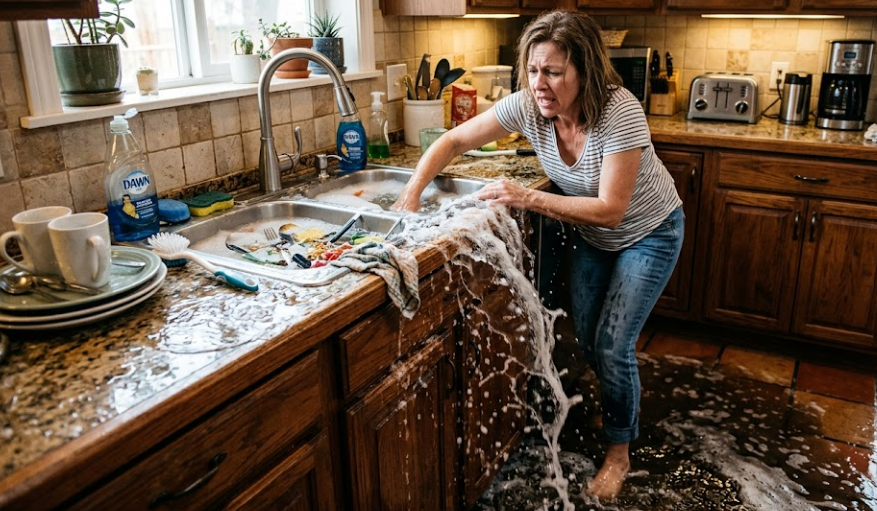
It takes only a few minutes of distraction – a phone call, a knock at the door, or simply forgetting a running tap – for a kitchen sink to overflow and send water across the counter, down cabinet faces, and across the kitchen floor. What looks in the first moments like a straightforward mess to mop up is often the beginning of a water damage situation that extends well beyond what is visible: saturated cabinet bases, soaked subfloor sheathing, wet wall cavities behind the sink, and in two-story homes, water seeping through the floor assembly into the ceiling of the room below.
Kitchen sink overflow cleanup done correctly is not just about removing the water you can see. It is about identifying and drying every surface and cavity that water reached – including the ones you cannot see without professional moisture detection equipment. The majority of mold and structural damage from kitchen sink overflows is hidden damage that develops in the days after the visible water has been cleaned up, in materials that were never visibly wet but were thoroughly saturated through absorption and wicking.
This guide covers what actually happens when a kitchen sink overflows, why the damage is consistently more extensive than it appears, the immediate steps that minimize total damage, the professional cleanup and restoration process, and when the scope of damage crosses the threshold from manageable DIY cleanup to a job that requires professional intervention.
Where Water Goes When a Kitchen Sink Overflows
Understanding water’s pathways from an overflowed kitchen sink helps homeowners appreciate why the visible surface mess is rarely the full story of the damage.
Cabinet Base Saturation
The under-sink cabinet is almost always the first hidden casualty of a kitchen sink overflow. Water that spills over the counter edge runs down the cabinet face and enters the cabinet interior through the door gap at the bottom, soaking the particleboard or MDF cabinet base that most production cabinetry uses for its floor panel. Particleboard and MDF are highly absorbent – they draw water up from the cabinet base into the side panels, the back panel, and the interior floor, swelling and delaminating as they absorb. By the time a homeowner opens the cabinet door during cleanup, this saturation may already be well advanced.
Flooring and Subfloor Penetration
Water that spreads across the kitchen floor seeps through any gap, grout line, or seam in the floor covering and begins saturating the subfloor assembly below. Tile that appears watertight at the surface allows water through grout and into the substrate layer. Vinyl flooring that looks seamless traps water beneath it. Hardwood and laminate flooring soak water from below through the tongue-and-groove connections between planks.
Once in the subfloor, water spreads laterally – potentially across a significantly larger area than the visible surface water footprint – and begins the process of saturating the plywood or OSB sheathing below.
Wall Cavity Behind the Sink
The wall behind the kitchen sink contains the plumbing connections, and it also receives water directly from an overflow event as the water runs down the back of the sink and along the plumbing connections into the wall cavity.
Drywall that wets from behind is almost never visible from the front surface until saturation is significant and the paper backing has begun to fail. Meanwhile, any insulation in that wall cavity absorbs and holds water, and the framing studs accumulate moisture that feeds mold growth within 24 to 48 hours of the overflow event.
Adjacent Flooring and Rooms
Water that reaches the kitchen floor does not stop at the kitchen’s perimeter. It flows under baseboards into adjacent dining rooms, living areas, and hallways. It travels under appliances and behind the refrigerator, potentially reaching the refrigerator’s water line connection and the area beneath it. In open-concept homes, a kitchen sink overflow can spread water across a large combined kitchen and living area before the volume of water is even noticed.
Below-Floor Damage in Multi-Story Homes
In two-story homes and townhomes where the kitchen is on an upper floor, a sink overflow event that saturates the subfloor assembly will eventually penetrate into the ceiling below – appearing first as moisture, then as staining, and eventually as active dripping through ceiling fixtures or drywall seams. The water’s transit time from kitchen floor to ceiling below depends on the floor assembly construction, but even in a relatively tight assembly, significant saturation can reach the ceiling in a matter of hours.
Why Kitchen Sink Overflow Cleanup Looks Easier Than It Is
Homeowners who mop up kitchen overflow water, dry the visible surfaces, and feel the floor has returned to normal are experiencing one of the most common and costly misperceptions in home water damage. The floor surface feels dry. The cabinet interior looks dry after a good wipe-down. The situation appears resolved.
Meanwhile, the particleboard cabinet base is still saturated, the subfloor is holding significant moisture, and the wall cavity behind the sink is wet in a space that has excellent mold conditions and no air circulation whatsoever
Without professional moisture meters to measure actual moisture content in these hidden materials, there is no reliable way to determine whether the affected areas are genuinely dry. A floor that feels dry to the touch may have a subfloor with moisture content well above the mold growth threshold. A cabinet that looks clean may have base panels with moisture content double what they should be. This is why kitchen sink overflow events that appear minor consistently produce mold discoveries under flooring and behind cabinetry in the weeks that follow a homeowner cleanup.
Immediate Steps for Kitchen Sink Overflow Cleanup
- Stop the water source immediately – turn off the faucet, close the supply valves beneath the sink, or shut off the home’s main water supply if the valves cannot be found or are not functioning.
- Remove all items from under the sink cabinet and document the condition of the cabinet interior with photographs before touching anything. The cabinet base panels and back wall are the first areas to check for visible swelling or saturation.
- Photograph the full extent of the overflow – the counter, the cabinet faces, the floor, and any adjacent areas that received water – before any cleanup begins. This documentation matters for insurance purposes and for guiding the restoration professional’s assessment.
- Remove as much standing water as possible from the floor surface using clean towels or a wet vacuum. Work from the perimeter of the wet area toward the sink to avoid pushing water into unaffected areas.
- Remove rugs, mats, and any portable items from the affected area to prevent additional absorption and to allow the full floor area to be inspected and dried.
- Open cabinet doors under the sink and in adjacent lower cabinets to allow air circulation and reduce the rate of moisture accumulation in the cabinet interiors.
- If water has reached an adjacent room or appears to have spread significantly, contact a professional water damage restoration company for a moisture assessment before making any decisions about cleanup scope.
How to Assess Whether Professional Help Is Needed
Not every kitchen sink overflow requires professional restoration. A very small, quickly discovered overflow that was contained to a limited area of hard tile flooring and no cabinet involvement can often be managed with thorough homeowner cleanup if the flooring has a continuous, well-sealed surface and no water reached the subfloor. For any overflow that involved the under-sink cabinet, that spread across multiple feet of flooring, that reached wood or laminate flooring, or that was not discovered immediately, professional assessment is strongly recommended.
The following scenarios should always prompt a professional call:
- The overflow involved the under-sink cabinet and the base panels show any swelling, softening, or discoloration
- The water reached hardwood, laminate, or engineered wood flooring
- The overflow was not discovered immediately and the water had time to spread and absorb
- The kitchen is on an upper floor and there is any sign of moisture in the ceiling below
- The water reached the wall behind the sink or the drywall baseboard area shows any softness or discoloration
- A musty smell develops in the kitchen in the days following the overflow – a reliable early indicator of mold growth in hidden materials
The Professional Kitchen Sink Overflow Cleanup Process
Moisture Assessment
Professional kitchen sink overflow cleanup begins with a comprehensive moisture assessment using thermal imaging cameras and calibrated moisture meters. This assessment measures the moisture content of the subfloor, the cabinet base panels, the wall cavity behind the sink, and any adjacent flooring or wall materials that may have been reached by wicking moisture. The moisture map establishes the true scope of the cleanup project – which is consistently larger than the visible wet area – and guides the placement of drying equipment.
Water Extraction
Any remaining surface water and moisture absorbed into carpet, padding, or soft flooring materials is extracted using commercial wet vacuums and extraction tools. On hard flooring, extraction can remove absorbed surface-layer moisture before it penetrates deeper into the subfloor assembly, reducing total drying time.
Cabinet Assessment and Selective Removal
The under-sink cabinet is assessed for the degree of saturation and structural integrity of the base panels and side walls. Particleboard and MDF base panels that have absorbed significant moisture and show swelling or delamination are removed to allow the subfloor beneath to dry and to prevent the ongoing moisture emission from the saturated panels from hindering the drying of adjacent materials. In cases where the cabinet base saturation is limited, the panels may be dried in place with targeted drying equipment, though this is less reliable than removal given how slowly particleboard releases absorbed moisture.
Structural Drying
Commercial air movers and dehumidifiers are deployed in a configuration that addresses the subfloor, the wall cavity behind the sink, and the cabinet interior simultaneously. In kitchen environments, targeted drying sometimes involves drilling small access holes in cabinet side panels or baseboards to direct airflow into wall cavities that cannot be accessed without demolition. Daily moisture readings track progress until all materials reach their dry standard moisture content.
Mold Assessment and Treatment
Any materials that have been wet for more than 24 to 48 hours are assessed for mold growth. In kitchen sink overflow situations that were not discovered promptly, mold is frequently found in the subfloor beneath the cabinet base and on the drywall paper backing in the wall behind the sink – both areas with the combination of moisture, warmth, and organic material that mold requires. Confirmed mold growth is remediated following IICRC S520 protocols before any new materials are installed.
Reconstruction
Following complete structural drying verification, reconstruction replaces any removed cabinet base panels, damaged drywall sections, and affected flooring materials. A thorough kitchen sink overflow cleanup and restoration from a full-service restoration company returns the kitchen to its pre-loss condition – with the added benefit of knowing that every affected material has been dried to standard and every potential mold site has been addressed.
Preventing Kitchen Sink Overflows
- Never leave a running faucet unattended, even briefly – the most common cause of kitchen sink overflow is a running tap with a closed or slow drain that fills while the homeowner is briefly distracted
- Keep the drain clear – regularly use a drain strainer to prevent food debris from accumulating in the drain, and clear any slow drain promptly before it becomes a blockage
- Install a water leak sensor beneath the kitchen sink that alerts you to any water presence on the cabinet floor – a $20 sensor can detect an overflow before significant damage accumulates
- Check under-sink cabinet plumbing connections quarterly for any dripping or moisture – catching a slow supply line weep before it fails prevents a far larger water event
- Consider a garbage disposal check valve if a backed-up disposal has contributed to past overflow events
Insurance Coverage for Kitchen Sink Overflow Cleanup
Kitchen sink overflow damage is generally covered under the sudden and accidental water damage provisions of a standard homeowner’s insurance policy. An overflow that results from a faucet left running or a slow drain backing up is typically treated as a covered event, with coverage extending to structural damage, cabinet replacement, flooring repair, and professional restoration costs.
Coverage is less clear when the overflow resulted from a drain that the homeowner was aware was slow and had not addressed – some carriers may argue that a known maintenance issue contributed to the loss.
Prompt reporting, thorough documentation of the event, and immediate engagement of professional restoration services demonstrate reasonable mitigation and protect the claim against this type of dispute. Keep records of when the overflow occurred, when it was discovered, and what steps were taken.
Take Kitchen Sink Overflow Cleanup Seriously
A kitchen sink overflow is easy to underestimate because the water is clean, the volume is usually manageable, and the immediate cleanup looks straightforward. The hidden damage that develops in the days following the visible cleanup – mold under the flooring, swollen cabinet bases, saturated wall cavities – is what turns a small spill into a costly restoration project.
Kitchen sink overflow cleanup done correctly means drying every material the water reached, not just the surfaces that were visibly wet
Arizona’s Premier Restoration Specialists at PuroClean respond to kitchen water damage events of every size with the moisture mapping, extraction, and drying expertise that a complete cleanup requires. Whether it is a small overflow or a significant appliance failure, PuroClean makes sure nothing is left wet that should not be. Leaders in recovery. Calm in the Chaos.
Kitchen Sink Overflow? Call PuroClean Before Hidden Damage Sets In
PuroClean’s certified water damage restoration specialists respond 24/7 to kitchen water events throughout the Arizona area and West Valley communities. We find the moisture you cannot see and dry it completely – protecting your cabinets, flooring, and walls from the hidden damage that develops after the water disappears. Arizona’s Premier Restoration Specialists. Leaders in recovery. Calm in the Chaos.
Call PuroClean now at (480) 767-5588. Fast response. Proven results. Complete peace of mind.
Do not let a small kitchen flood turn into a big mold problem. Call PuroClean today.