


You wake up to a wet spot spreading across the ceiling, or you walk into the kitchen and find water pooling around the base of the refrigerator. In that moment, most homeowners freeze on one question: should I call a plumber or water damage restoration for a leak? The answer is not always obvious, and calling the wrong professional first can waste precious hours while water continues to spread.
This guide breaks down exactly when you need a plumber, when you need water damage restoration, and why in many cases you actually need both, in a specific order.
Why This Question Trips Up So Many Homeowners
A leak can look almost identical whether it started five minutes ago or five hours ago, which makes it hard to know who to call first. Plumbers and water damage restoration companies solve two very different problems. A plumber fixes the mechanical failure that is causing water to escape.
A water damage restoration company addresses everything that water has already touched, including flooring, drywall, insulation, and subflooring. Understanding this distinction is the key to answering should I call a plumber or water damage restoration for a leak in your specific situation.
What a Plumber Actually Handles
A plumber is trained to diagnose and repair the source of the leak itself. If you are dealing with an active leak and have not yet identified the cause, a plumber is typically your first call.
Situations That Call for a Plumber First
- A burst or cracked pipe that is actively leaking
- A failed supply line behind a washing machine, dishwasher, or refrigerator
- A dripping faucet, loose fitting, or worn valve
- A toilet that will not stop running or is leaking at the base
- Unknown water sources where the leak has not yet been located
In each of these cases, the priority is stopping the flow of water at its source. Until that happens, any drying or repair work elsewhere in the home is only a temporary fix, since new water will keep entering the space.
When a Plumber Alone Is Enough
Not every leak requires a full restoration response. If you catch the issue early and the water has not spread beyond a small, easily dried area, a plumber may be able to resolve the entire problem. This is common with:
- A minor faucet drip caught within the first hour
- A loose supply line fitting with only minor pooling
- A slow leak discovered before it reached flooring or walls
What Water Damage Restoration Actually Handles
Water damage restoration companies specialize in what happens after water has already made contact with your home’s structure and materials. If water has soaked into flooring, drywall, insulation, or subfloor, restoration professionals bring equipment and expertise that a plumber typically does not carry.
Situations That Call for Water Damage Restoration
- Water has been sitting for more than a few hours
- Flooring is warped, buckled, or spongy underfoot
- Walls or baseboards feel damp or show staining
- You notice a musty or mildew like odor
- The leak came from a storm, roof failure, or flooding rather than a fixture
- Water has reached carpet padding, subfloor, or wall cavities
Restoration professionals use industrial extraction equipment, air movers, and dehumidifiers to remove moisture that towels and box fans cannot reach. They also use moisture meters to confirm materials are fully dry before any repairs or new flooring are installed, which is critical for preventing mold growth.
Why Surface Drying Is Not Enough
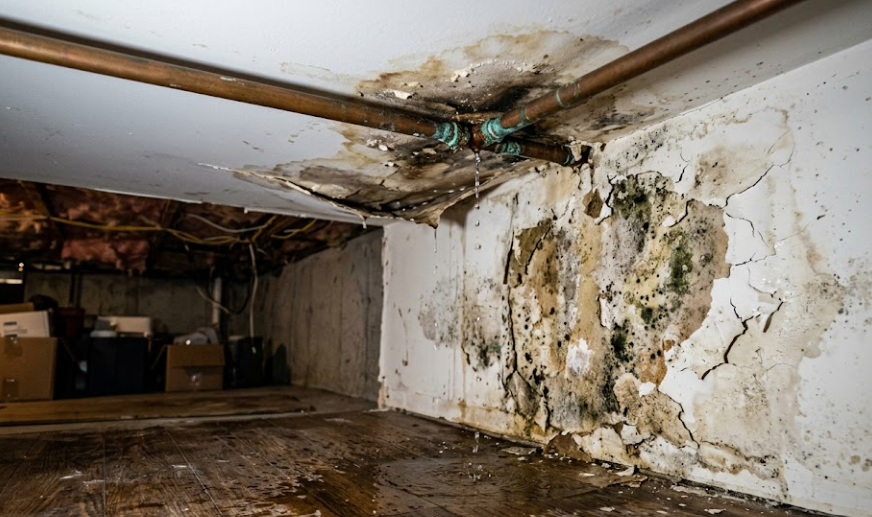
One of the most common mistakes homeowners make is assuming that a floor or wall looks dry means it is dry. Moisture can remain trapped beneath flooring, inside wall cavities, or under baseboards long after the surface appears fine. Left unaddressed, this trapped moisture creates ideal conditions for mold growth, which introduces a second, more serious problem on top of the original leak.
Should I Call a Plumber or Water Damage Restoration for a Leak: A Simple Decision Framework
When you are standing in front of an active leak trying to decide who to call, use this framework to guide your decision.
Step 1: Identify Whether the Leak Is Still Active
If water is still flowing, shut off the water at the source or at the main valve immediately. This stops the situation from getting worse while you make your calls.
Step 2: Determine the Cause
If you know exactly what is causing the leak and it is a mechanical issue such as a pipe, fitting, or appliance connection, call a plumber first.
Step 3: Assess How Long Water Has Been Present
If the leak has been active for more than a couple of hours, or if you are unsure how long it has been leaking, water damage restoration should be contacted regardless of whether you have identified the source yet.
Step 4: Check for Signs of Material Damage
If flooring, drywall, carpet, or subfloor has already absorbed water, restoration needs to begin as quickly as possible, even if a plumber still needs to address the underlying cause separately.
Step 5: When in Doubt, Call Both
Many situations genuinely require both professionals. In these cases, the plumber typically comes first to stop the source, followed immediately by restoration to address the water that has already spread.
Why Order Matters When You Need Both
If you need both a plumber and water damage restoration, sequence matters. Restoration work that begins before the leak source is fixed risks having the same area re-flooded, wasting time, equipment use, and money. On the other hand, waiting too long to begin restoration after the plumbing issue is fixed allows moisture to keep spreading and increases the risk of mold growth, warped flooring, and structural damage.
The ideal sequence looks like this:
- Shut off water at the source or main valve
- Plumber repairs or replaces the failed component
- Restoration company extracts standing water and begins drying
- Restoration company tests moisture levels to confirm full drying
- Repairs or replacement of damaged materials proceed once everything is verified dry
Many Restoration Companies Can Coordinate Both for You
One detail that surprises a lot of homeowners is that many water damage restoration companies work directly with plumbers or have trusted plumbing partners they call in as needed. This means you do not always have to figure out should I call a plumber or water damage restoration for a leak entirely on your own. A single call to a restoration company can often set both processes in motion, saving you time during an already stressful situation.
What Happens if You Wait Too Long
Delaying either call can turn a manageable leak into a much larger, more expensive problem. Within just 24 to 48 hours of standing water, flooring can begin to swell and buckle, drywall can begin to break down, and conditions become favorable for mold growth. Restoration industry data consistently shows that homes where extraction and drying begin within the first day have significantly lower rates of major structural damage and mold related complications compared to homes where the response is delayed by several days.
Signs You Should Call Right Now
If you are still asking yourself should I call a plumber or water damage restoration for a leak, these signs mean you should not wait any longer to make a call:
- Water is actively spreading and has not been stopped
- You see standing water anywhere in the home
- Flooring feels soft, spongy, or uneven underfoot
- You notice a musty odor that was not there before
- Walls, baseboards, or ceilings show staining or feel damp
- The leak has been present for more than a couple of hours
Trust the Right Team for the Job
Understanding whether to call a plumber or water damage restoration for a leak comes down to one simple question: has the water already caused damage, or are you still trying to stop it at the source. A plumber handles the mechanical failure. Water damage restoration handles everything the water has already touched. In many cases, both are necessary, and the sooner each one gets involved, the better your chances of avoiding costly, long term damage to your home.
PuroClean restoration specialists work quickly to extract standing water, dry affected materials completely, and prevent the mold growth and structural damage that come from a delayed response. If your leak has already reached flooring, walls, or subfloor, do not wait to see if it dries out on its own.
Take Action Now
Every hour a leak goes unaddressed increases the risk of permanent damage to your home. Whether you already know the leak needs a plumber, a restoration team, or both, the most important step is making the call before water has a chance to spread further.
Call PuroClean restoration specialists today at (480) 767-5588 for a fast, professional water damage assessment and get the right team working on your home right away.