


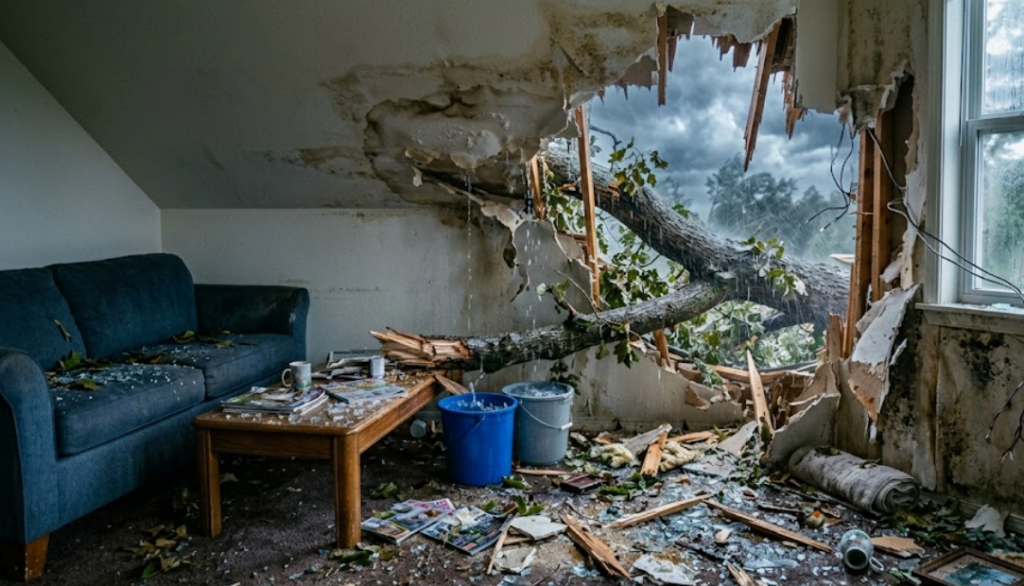
Storm Wind Damage: Protect and Restore Your Arizona Home
Wind is the most unpredictable and indiscriminate force that Arizona’s storm season unleashes on residential and commercial properties. Unlike flood damage that follows predictable low-lying paths or fire damage that requires fuel and ignition, storm wind damage can strike any structure, at any height, from any direction – and it does so with a speed and violence that gives homeowners almost no time to react.
In the Phoenix metropolitan area and across the West Valley communities of Surprise, Peoria, Goodyear, and Buckeye, storm wind damage is a defining feature of the monsoon season and a year-round risk during Santa Ana wind events and spring haboobs.
Understanding storm wind damage – what causes it, how it affects different parts of a home, what to do in the immediate aftermath, and how professional restoration works – is essential knowledge for every Arizona homeowner. Wind damage is not simply about what falls down or blows away.
The secondary consequences of storm wind damage, including water intrusion through compromised roofing and envelope systems, structural displacement, and the mold growth that follows unaddressed water infiltration, often cost far more to repair than the direct physical damage from the wind itself.
This guide covers the complete picture: the nature and severity of Arizona’s wind events, the most common categories of storm wind damage, the critical steps homeowners should take immediately after a wind event, how to navigate the insurance claims process, and how professional restoration returns a damaged property to its pre-loss condition.
The Nature of Arizona’s Storm Wind Events
Arizona experiences several distinct categories of high-wind events, each with its own characteristics and damage profile. Understanding which type of wind event has affected your property helps explain the pattern of storm wind damage you will find during your post-storm inspection.
Monsoon Microbursts and Downbursts
The most destructive wind events in Arizona are the downbursts and microbursts generated by monsoon thunderstorm cells. A downburst occurs when a column of rapidly cooled air descends from a thunderstorm and strikes the ground, spreading outward in all directions at high velocity. Microburst winds can exceed 100 miles per hour in localized areas, and because they spread radially from the point of impact, they can strike multiple faces of a structure simultaneously and topple large trees in any direction. Storm wind damage from microbursts is often severe and highly localized – one block may have significant damage while an adjacent block is completely unaffected.
Haboob Wind Walls
Arizona’s haboobs – massive dust storms driven by the outflow boundary of distant thunderstorms – produce sustained high winds that can reach 60 to 75 miles per hour and extend across a broad front. Unlike the localized violence of a microburst, a haboob produces widespread storm wind damage across entire communities simultaneously. The combination of high wind velocity, fine particulate bombardment, and associated thunderstorm rain that frequently follows a haboob makes this type of event particularly damaging to roofing, windows, doors, and outdoor structures.
Straight-Line Thunderstorm Outflow
As monsoon thunderstorm cells mature and collapse, they generate outflow winds that can travel for tens of miles ahead of the rain. These straight-line winds are distinguished from tornadoes by their non-rotating character, but they can still produce wind speeds sufficient to cause significant storm wind damage. Straight-line outflow events are the most common source of roof damage, fence failures, and downed trees across the Phoenix metro area during monsoon season.
Spring and Fall High-Pressure Gradient Winds
Outside of monsoon season, Arizona experiences periodic high-wind events driven by strong pressure gradients associated with frontal passages and high-pressure systems to the north. These events can produce sustained winds of 40 to 60 miles per hour with gusts reaching 80 miles per hour or more, particularly across elevated terrain and through natural wind corridors. Properties at higher elevations in the East Valley and near mountain passes face elevated storm wind damage risk during these events.
The Most Common Categories of Storm Wind Damage to Residential Properties
Roof System Damage
Roof damage is the most common and most consequential category of storm wind damage to residential properties. The roof is the largest surface exposed to wind loading on most homes, and failures in the roofing system rapidly create pathways for water intrusion that multiply the total cost and scope of the restoration.
Wind acts on a roof in two ways: positive pressure on the windward slope that pushes upward and inward on roofing materials, and negative pressure (suction) on the leeward slope and edges that lifts and pulls roofing materials away from the deck. Roof edges, ridges, hips, and valley flashings experience the highest forces during a high-wind event and are the most common points of initial failure.
Common storm wind damage to roofing systems includes:
- Missing, cracked, or displaced concrete or clay roof tiles – a widespread result of microburst and haboob wind events in Arizona’s tile-roof-dominant housing stock
- Uplift and separation of shingle tabs in asphalt shingle roofing, particularly at rake edges and along the ridge
- Membrane lifting and seam separation in flat and low-slope roofing systems, which are extremely common in Arizona’s contemporary and southwestern architectural styles
- Failure of metal roofing panels or flashing at ridges, hips, parapets, and roof-to-wall connections
- Dislodgement of roof-mounted equipment including HVAC curbs, solar panel arrays, satellite dishes, and swamp cooler units
- Structural damage to the roof deck or framing when uplift forces exceed the capacity of fastening systems
Any roofing damage that creates an opening to the weather requires emergency tarping or temporary repair before the next rain event. Storm wind damage to roofing systems that is left unprotected after the initial wind event almost always leads to significant secondary water damage when subsequent rain occurs.
Structural and Envelope Damage
Beyond the roof, storm wind damage can affect every component of a home’s exterior envelope – the system of walls, windows, doors, and connections that separates the interior from the exterior environment.
- Window failures: Wind-driven debris, pressure differentials, and direct impact can crack, shatter, or displace window glazing and frames. Failed windows are an immediate pathway for water intrusion and present a safety hazard from glass fragments.
- Door failures: Garage doors are particularly vulnerable to storm wind damage because of their large surface area and the relatively light construction of standard residential garage door panels. Garage doors that fail inward allow wind and water direct access to the interior of the home and can cause structural damage to the door track and header.
- Siding and stucco damage: High-velocity wind and wind-driven debris can crack, dent, or detach exterior siding, stucco finishes, and decorative trim. Breaches in exterior wall finishes allow moisture infiltration that leads to wall cavity damage and mold growth over time.
- Soffit and fascia failures: Soffits and fascia boards at roof overhangs are vulnerable to wind uplift and can be torn away, exposing the attic space to direct rain intrusion and the entry of birds, rodents, and insects.
- Foundation and structural connections: In extreme wind events, storm wind damage can extend to structural connections at the foundation level, particularly in older construction where code requirements for uplift resistance were less stringent than current standards.
Tree and Landscape Damage
Trees and large shrubs are significant sources of secondary storm wind damage when they fail during high-wind events. Arizona’s common landscape trees – including eucalyptus, Aleppo pine, and mature block-planted trees in older established neighborhoods – are particularly vulnerable to wind throw and limb failure because of their size, shallow root systems in caliche-rich desert soils, and year-round foliage that provides constant wind resistance.
A tree that falls onto a home during a wind event can cause catastrophic structural damage to roofing, walls, and interior spaces. Even a large limb that falls short of direct structural impact can damage roofing materials, gutters, downspouts, and pool equipment. Post-storm inspection of trees and large shrubs for evidence of root heaving, leaning, or canopy asymmetry is important for identifying trees that are at elevated risk of failure in future wind events.
Fence, Patio, and Outbuilding Damage
Block walls, wood and vinyl fencing, patio covers, pergolas, shade sails, and detached storage structures are frequently damaged or destroyed in Arizona wind events. These elements are often constructed without the wind load engineering that applies to the primary structure, and they fail at wind speeds that the home itself withstands. Failed block walls present a safety hazard and can damage adjacent structures, vehicles, pool equipment, and landscaping when they collapse.
Secondary Water Damage Following Wind Events
The most significant financial consequence of storm wind damage in many cases is not the direct wind damage itself but the water damage that follows when the building envelope is compromised. Secondary water damage from storm wind damage occurs when rain enters through a damaged roof, a broken window, a failed door, or a breached wall system.
This water infiltration saturates ceiling assemblies, wall cavities, flooring systems, and contents. If not professionally dried within 24 to 48 hours, this water creates the conditions for mold growth that requires remediation in addition to structural repair, substantially increasing the total cost of recovery.
Immediate Steps After Discovering Storm Wind Damage
The actions taken in the first hours after a wind event has passed are critical for protecting life safety, limiting further property damage, and preserving your insurance claim.
Step 1: Conduct a Safety Assessment Before Entering
Before re-entering a property after a significant wind event, assess for immediate safety hazards from the outside. Look for downed power lines near or touching the structure – if present, do not enter and contact the utility company immediately. Look for significant structural damage such as collapsed walls, roof sections, or fallen trees resting on the structure. Smell for natural gas, and listen for hissing sounds near gas lines or appliances. If any of these hazards are present, contact emergency services before entering.
Step 2: Document All Visible Damage Before Any Cleanup
Before moving debris, removing broken materials, or making any repairs, photograph and video every area of visible storm wind damage from multiple angles. Document the roof as fully as possible from ground level using a zoom lens or drone if available. Photograph damaged trees, fences, outbuildings, windows, doors, and all exterior surfaces. Document the interior of any rooms where water intrusion has occurred. This documentation is your insurance claim’s evidentiary foundation and must be completed before any materials are disturbed.
Step 3: Prevent Additional Water Intrusion
If the roof or exterior envelope has been breached, temporary weather protection must be installed as quickly as possible to prevent water intrusion from subsequent rain events. Roofing tarps secured over damaged roof sections, plywood panels covering broken windows, and temporary covers over failed doors prevent the storm wind damage from being compounded by water damage. Use appropriate safety precautions on any roof access – do not access a damaged roof in wet or windy conditions. If the roof access is unsafe, contact a professional who has the equipment to tarp safely.
Step 4: Contact Your Insurance Carrier
Report the storm wind damage claim to your homeowner’s insurance carrier promptly. Most policies have notification requirements that must be met to preserve coverage. When you report the claim, request a timeline for the adjuster’s inspection visit and ask whether the carrier has specific requirements for the documentation of damage before cleanup or temporary repairs begin.
Step 5: Contact a Professional Storm Damage Restoration Company
Engage a certified restoration company to conduct a professional assessment of all storm wind damage – including the secondary water damage that may not yet be visible from the interior. A restoration company with both roofing and water damage restoration capabilities can address temporary weatherproofing, moisture mapping of water-infiltrated areas, structural drying, and coordination of the full scope of reconstruction work. This single-point-of-contact approach is particularly valuable in the chaos that follows a significant storm wind damage event when multiple contractors and insurance parties must all be coordinated.
The Professional Storm Wind Damage Restoration Process
Damage Assessment and Scope Development
A professional storm damage assessment goes beyond the visible damage to include a complete moisture survey of all interior spaces that may have been affected by water intrusion through the compromised envelope. Thermal imaging cameras and calibrated moisture meters identify wet materials inside wall cavities, ceiling assemblies, and flooring systems that are not yet visible from the interior. This full-scope assessment prevents the common and costly mistake of completing structural repairs before all water-damaged materials have been identified and dried.
Emergency Stabilization and Weatherproofing
Emergency stabilization secures the structure against additional weather damage while the restoration scope is being finalized and repair crews are being mobilized. This includes professional roof tarping with secured edges that can withstand subsequent wind events, boarding of broken windows and doors, temporary shoring of structurally compromised elements, and tree removal from areas where fallen trees rest against the structure.
Water Extraction and Structural Drying
All areas identified as moisture-affected during the damage assessment are addressed with industrial water extraction equipment and commercial drying systems. As with any water damage event, the timeline between water intrusion and professional drying initiation is critical. Storm wind damage water intrusion that is dried within 24 to 48 hours of the initial event has a high probability of complete structural drying without mold growth. Water intrusion that is not professionally addressed within 72 hours or more has a significantly elevated probability of requiring mold remediation in addition to structural repair.
Structural Repair and Reconstruction
Structural repair following storm wind damage encompasses the full range of building trades involved in the original construction: roofing, framing, drywall, exterior stucco and siding, glazing and window installation, door installation, painting, and finish restoration. A full-service restoration company with the licensed contractor capabilities to manage all of these trades under a single contract significantly reduces the coordination burden on the homeowner and typically produces faster and more cohesive results than managing multiple independent subcontractors.
Final Inspection and Documentation
Following completion of all structural repairs and restoration of all affected building systems, a final inspection documents that the property has been fully restored to its pre-loss condition. This documentation, combined with the moisture logs from the drying phase and the photographic record from the initial damage assessment, provides a complete project record for insurance purposes and for the homeowner’s future reference.
Navigating the Insurance Claim for Storm Wind Damage
Storm wind damage is a covered peril under virtually all standard homeowner’s insurance policies. However, the claims process following a significant wind event – particularly one that affects multiple properties in a community simultaneously – can be slow, complex, and occasionally contentious. These practices protect your interests throughout the claims process:
- Report promptly and in writing: Verbal notification to your carrier should be followed by written confirmation of the claim, the date of the event, and the nature of the damage. Keep copies of all correspondence.
- Do not discard damaged materials before adjuster inspection: Keep all storm wind damage debris, damaged roofing materials, broken window glass, and failed structural components in place or in organized piles where the adjuster can see them. Photographed but discarded materials are far less persuasive in a claim dispute than materials that can be physically inspected.
- Obtain independent repair estimates: Get written estimates from licensed contractors before accepting the insurance carrier’s repair allowance. If the carrier’s estimate is significantly below the contractor estimates, you have grounds to negotiate the settlement or to request a re-inspection with a public adjuster representing your interests.
- Track all out-of-pocket expenses: Emergency tarping costs, hotel stays during emergency displacement, generator rental, and temporary boarding are all potentially reimbursable as mitigation or additional living expenses. Keep all receipts.
- Understand the difference between wind and flood coverage: Standard homeowner’s policies cover storm wind damage and the resulting water intrusion through a compromised roof or wall. However, if water also entered your home through ground-level flooding from storm runoff, that portion of the damage may require a separate flood insurance claim under the National Flood Insurance Program if you carry that coverage.
Preventing and Preparing for Future Storm Wind Damage
While no home can be made completely immune to storm wind damage, systematic preparation reduces both the probability of damage and its severity when wind events do occur.
- Have the roof inspected annually by a licensed roofing contractor, with particular attention to tile or shingle fastening, flashing condition, and membrane seam integrity on flat and low-slope sections
- Trim all trees and large shrubs annually to remove dead wood and reduce wind resistance in the canopy – dead branches are the primary source of wind-thrown debris during storm events
- Secure or store all outdoor furniture, umbrellas, potted plants, and decorative items before any forecasted high-wind event
- Replace or reinforce garage doors that do not meet current wind load requirements – a braced garage door rated for high-wind resistance is significantly less likely to fail inward during a wind event
- Inspect and replace deteriorated window and door weatherstripping and caulking annually to reduce the likelihood of water intrusion through the envelope during wind-driven rain
- Document your property’s pre-storm condition with annual interior and exterior photographs stored in cloud backup – this documentation becomes invaluable if you need to demonstrate the scope of storm wind damage in an insurance claim
- Evaluate the structural condition of all block walls and fencing and repair or replace sections that show cracking, leaning, or deteriorated mortar before monsoon season begins
Fast and Professional Response Is the Key to Storm Wind Damage Recovery
Storm wind damage is an unavoidable reality for Arizona homeowners, and the monsoon season will continue to test every property in the Phoenix metro area with its unique combination of extreme wind, wind-driven rain, hail, and haboob dust.
Homeowners who understand the nature of storm wind damage, who take immediate and documented action in the aftermath of a wind event, and who engage qualified professional restoration companies to assess and remediate the full scope of damage – including the secondary water damage that often follows – consistently achieve faster recovery, lower total repair costs, and stronger insurance claim outcomes than those who attempt to manage the aftermath on their own.
When a wind event strikes your home, do not underestimate what you cannot see. Get a professional assessment of the full damage picture before committing to any scope of repairs, and act on that assessment quickly. The difference between a wind event that costs $5,000 to repair and one that costs $50,000 is frequently a matter of how quickly and how comprehensively the initial response was executed.
Storm Wind Damage to Your Home? Call PuroClean for Fast Professional Restoration
PuroClean’s certified storm damage restoration specialists serve the Phoenix metro area and West Valley communities 24 hours a day, 7 days a week. From emergency weatherproofing and moisture mapping to full structural reconstruction, PuroClean delivers the comprehensive, documented restoration that Arizona homeowners need after a wind event.
Call PuroClean restoration specialists now at (480) 767-5588. Fast response. Proven results. Complete peace of mind.
Do not let storm wind damage compound into a larger crisis. One call to PuroClean starts your recovery immediately.