 PuroClean of Shreveport
When most homeowners think of water damage, they picture dramatic events: a river overflowing its banks, a tree smashing through a roof during a storm, or a completely ruptured main pipe flooding the basement. However, some of the most expensive and extensive destruction happens completely out of sight. A slow, steady drip from a household appliance can rot wood, destroy flooring, and breed toxic mold for months before you ever notice a puddle. Identifying the early signs of hidden water damage Shreveport homes suffer from is crucial to protecting your property and your wallet.
Modern conveniences like dishwashers, washing machines, refrigerators, and water heaters are plumbed directly into our home’s water supply. While they make life easier, their hoses, valves, and seals degrade over time. Because these appliances are often pushed against walls or hidden in utility closets, a slow leak can go undetected until the structural integrity of your home is compromised. This guide reveals the four subtle warning signs that an appliance is actively destroying your home from the inside out.
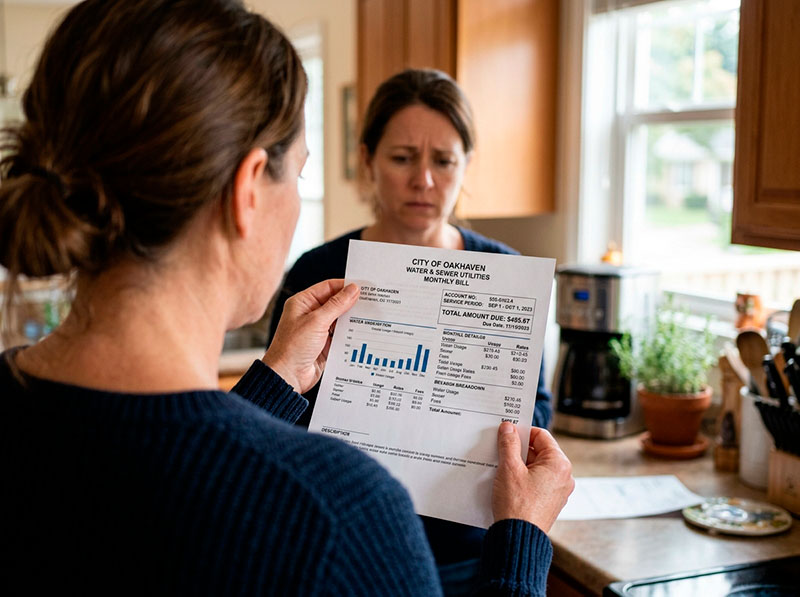
Sign 1: Unexplained Spikes in Your Water Bill
One of the earliest and most reliable indicators that you have a problem doesn’t require you to look at your appliances at all; it requires you to look at your mail. If your municipal water bill suddenly increases significantly, and your family’s water usage habits haven’t changed (like filling a pool or watering a new lawn extensively), you likely have a leak.
A running toilet is a common culprit, but if you’ve ruled that out, the issue might be a slow drip behind your washing machine or a failing valve on your water heater. Even a minor leak that drips once every second can waste thousands of gallons of water over a year. This constant flow of moisture is the primary catalyst for hidden water damage Shreveport restoration teams encounter. Don’t ignore a high bill; investigate it immediately.
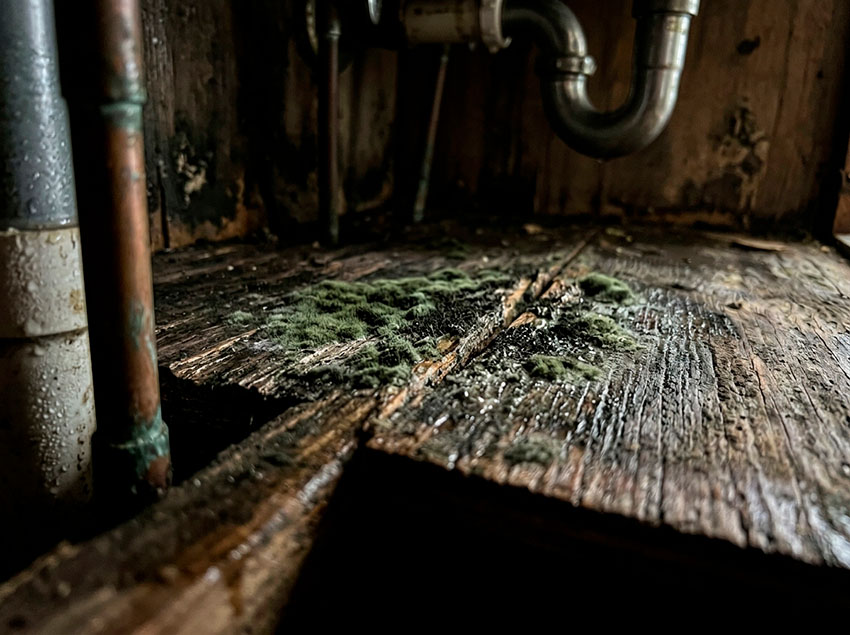
Sign 2: Musty Odors and Unexplained Mold Growth
Water always seeks the lowest point, and it quickly soaks into porous materials like drywall, baseboards, subflooring, and insulation. In the humid climate of Louisiana, it takes very little trapped moisture for mold to begin growing—often within 24 to 48 hours. Because appliance leaks usually happen in dark, enclosed spaces (behind the fridge, under the sink, in a laundry closet), mold thrives undetected.
Often, your nose will detect the problem before your eyes do. If you notice a persistent, earthy, or musty smell in your kitchen, laundry room, or near your water heater, do not write it off as just a “stuffy house.” That odor is caused by off-gassing from active mold colonies. By the time you actually see mold creeping out from under a baseboard or spotting the wall behind an appliance, you are already dealing with significant hidden water damage Shreveport professionals need to address. Trying to clean this visible mold with bleach will not solve the source of the leak or the rot happening inside the wall.
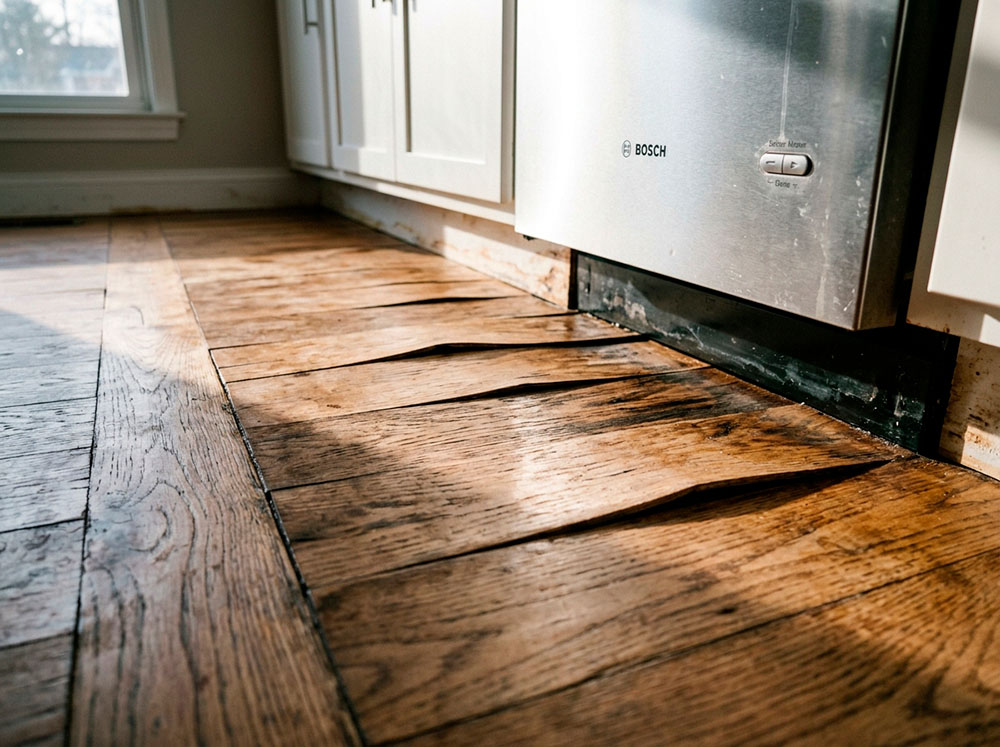
Sign 3: Changes in Your Flooring
Your flooring is highly sensitive to moisture changes, making it an excellent, albeit unfortunate, early warning system. Pay close attention to the floors immediately surrounding and extending away from your major appliances.
- Hardwood and Laminate: When wood or laminate absorbs moisture from a slow leak (like a refrigerator icemaker line), the edges of the planks will begin to swell and push upward, creating a wavy appearance known as “cupping.” You may also notice dark stains or soft spots.
- Tile and Grout: While tile itself is water-resistant, the subfloor beneath it is not. If water seeps under the tile from a dishwasher leak, the wooden subfloor will swell, causing the tiles to lift, crack, or sound hollow when tapped. You might also see unexplained discoloration or persistent dampness in the grout lines.
- Linoleum and Vinyl: Moisture trapped underneath sheet flooring will cause it to bubble, peel away from the edges, or discolor as the adhesive breaks down.
If you notice any of these flooring issues near a water-supplied appliance, you are likely looking at the results of long-term hidden water damage Shreveport homeowners frequently underestimate.
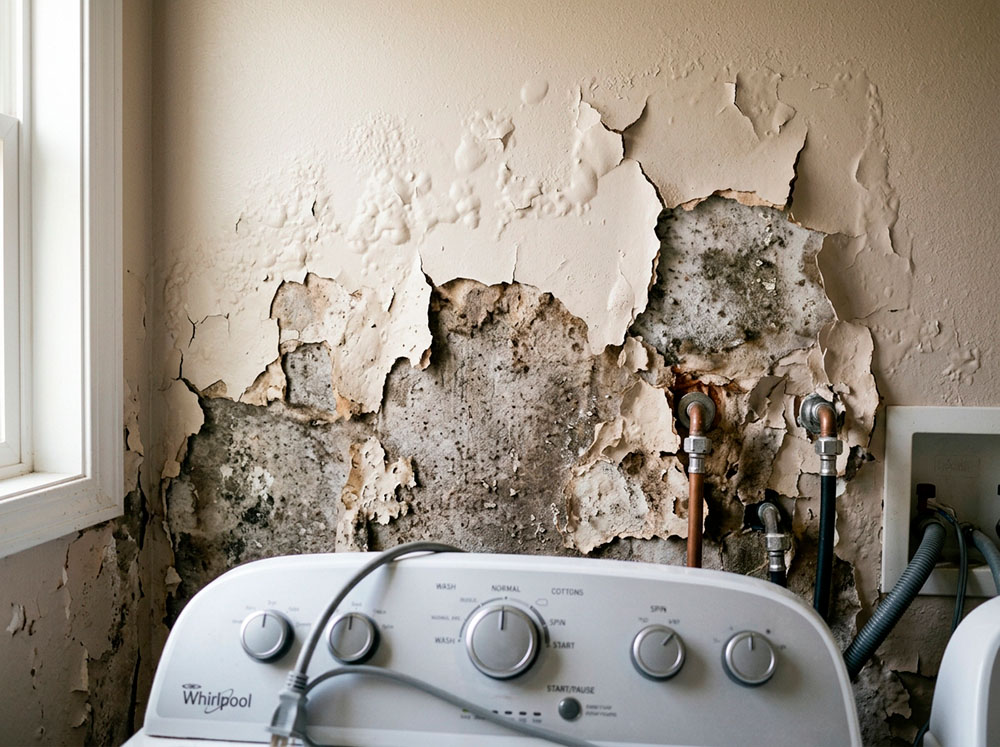
Sign 4: Peeling Paint, Wallpaper, or Warped Cabinets
Water from a leaking appliance doesn’t just flow downward; it can also wick upward into walls and cabinetry through capillary action. This is particularly common with under-sink leaks or dishwasher malfunctions.
Inspect the walls behind and beside your appliances. If the paint is blistering, bubbling, or peeling, it means moisture is trapped inside the drywall, pushing the paint away from the surface. Similarly, if wallpaper is curling at the seams or showing brown water stains, you have a problem. In kitchens and bathrooms, check the particleboard or wood inside the cabinets under the sink. If the base of the cabinet feels soft, looks swollen, or is delaminating, a slow plumbing leak is the likely culprit. These visual cues are classic symptoms of hidden water damage Shreveport properties experience.
What to Do When You Suspect Hidden Water Damage
If you recognize any of these four warning signs, time is of the essence. The longer a slow leak is allowed to continue, the more expensive and invasive the repairs will be. A small puddle under the fridge can quickly evolve into replacing the entire kitchen subfloor and undertaking extensive mold remediation.
Do Not Attempt a DIY Fix
While you might be tempted to pull the appliance away from the wall and point a box fan at the wet spot, this is a dangerous mistake. Surface drying does not remove the moisture trapped inside the wall cavities or under the flooring. Without professional drying equipment and moisture mapping technology, the structural rot and mold growth will continue unabated.
Call the Professional Restoration Experts
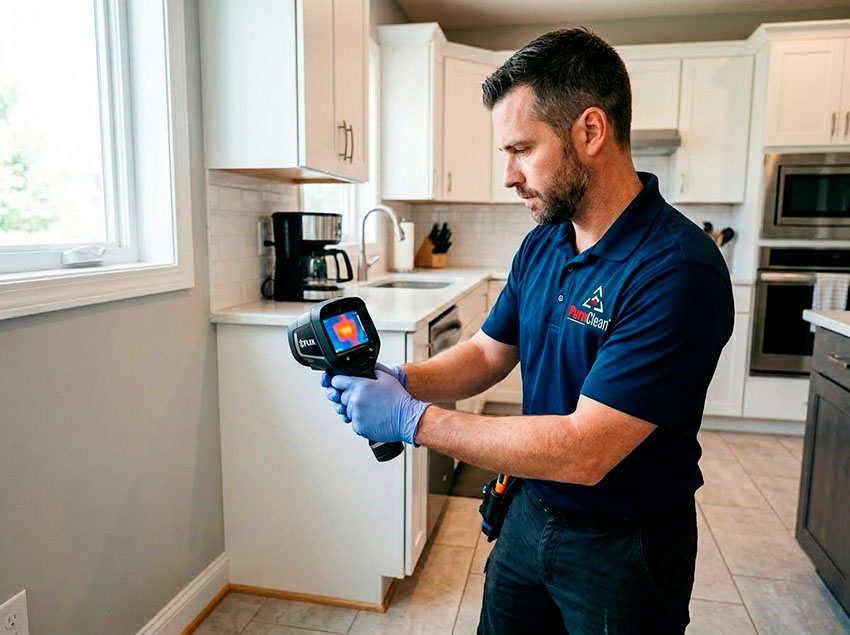
Addressing hidden water damage Shreveport homes suffer from requires certified expertise. At PuroClean Shreveport, our technicians use advanced thermal imaging cameras and penetrating moisture meters to “see” inside your walls and floors, identifying the exact source and full extent of the water migration without unnecessary demolition.
Once we identify the problem, we use industrial-grade extractors, specialized drying mats for hardwood floors, and high-capacity dehumidifiers to dry the structure completely and scientifically. We also handle any necessary mold remediation and can manage the full reconstruction process, restoring your home to its pre-loss condition.
Don’t let a dripping appliance destroy your home from the inside out. If you suspect a leak, Contact PuroClean Shreveport today for a comprehensive assessment and rapid, professional restoration.


 PuroClean of Shreveport