

How to Choose a Water Damage Restoration Company in Shreveport, LA
Water damage never seems to happen at a good time. In Shreveport, heavy rain, plumbing failures, clogged drains, aging pipes, and storm-related flooding can turn a normal day into a stressful cleanup project.
Last winter, many homeowners across Broadmoor, Southern Hills, and areas near Cross Lake dealt with soaked floors, damaged drywall, and that musty smell that seems to appear sooner than expected after water damage. One question came up again and again: how to choose a water damage restoration company when every company promises fast service.
The reality is that not all restoration companies take the same approach, and the quality of service can vary more than people expect.

Why Choosing the Right Restoration Company Matters
When water enters a property, time matters.
Water can move into flooring, insulation, cabinets, and wall cavities within hours. If cleanup is delayed or not done thoroughly, hidden moisture can remain behind and lead to mold growth, structural damage, unpleasant odors, and even pest issues.
A good water damage restoration company does more than remove visible water. They identify the source of the problem, thoroughly dry affected areas, monitor moisture levels throughout the process, and restore the property safely.
If you are searching for how to choose a water damage restoration company, focus on the quality of the process—not just who arrives first.
Here are a few signs you are talking to the right team:
- They help prevent future issues
- They respond quickly
- They explain the restoration process clearly
- They inspect hidden moisture
- They create a cleanup and repair plan
- They communicate throughout the project

Water removal
The first thing any restoration company should do is stop the spread of water. Water removal means extracting standing water before it has more time to soak into materials. Professional teams use pumps, extraction equipment, and moisture detection tools to remove water efficiently.
In Shreveport homes, this step becomes especially important after:
- Summer thunderstorms
- Roof leaks
- Overflowing appliances
- Burst plumbing lines
- Water heater failures
- Drain backups
Ask the company:
- How quickly can you begin the extraction?
- Fast action limits damage.
- Do you remove hidden moisture?
- Water often travels under flooring and behind walls.
- What equipment do you use?
Professional extraction equipment usually performs better than household fans and wet vacuums. A company that takes time to inspect thoroughly often delivers better long-term results than one that removes visible water.

Water damage cleanup and repair
After water removal, the next step is cleanup and restoration. Many property owners think drying finishes the job. It does not. Water damage cleanup and repair includes removing damaged materials, drying structures, cleaning affected areas, and rebuilding where necessary.
A complete restoration process may include:
- Cleaning contaminated materials
- Floodwater and dirty water can carry contaminants that require proper sanitation.
- Drying and dehumidification
- Professional drying reduces moisture trapped inside materials.
- Structural repairs
- Damaged drywall, trim, flooring, and ceilings may need restoration or replacement.
- Final inspections
The goal is to return the property to a safe and usable condition. When evaluating how to choose a water damage restoration company, ask whether they manage both cleanup and repair or if multiple contractors are required.
Working with one coordinated team, like PuroClean of Shreveport, often helps projects move more smoothly.

Water damage remediation
Many people hear the term remediation but are not always sure what it means. Simply put, water damage remediation is the process of preventing further damage and restoring the property to a safe, healthy condition.
Remediation goes beyond appearance.
It includes:
- Moisture mapping
- Drying verification
- Removing unsafe materials
- Air quality considerations
- Preventing future issues
This matters in Shreveport because of our humid climate. Even small amounts of trapped moisture can create conditions that support mold growth and material deterioration.
In many cases, remediation is also the stage where building codes and permit requirements come into play, especially when repairs are needed. While drying and mitigation usually do not require permits, any work that involves structural repairs, electrical, plumbing, HVAC, or rebuilding damaged areas may need to follow the Louisiana State Uniform Construction Code (LSUCC) and local permitting rules. A qualified restoration company will either handle this process or coordinate with licensed contractors to ensure everything is completed correctly.
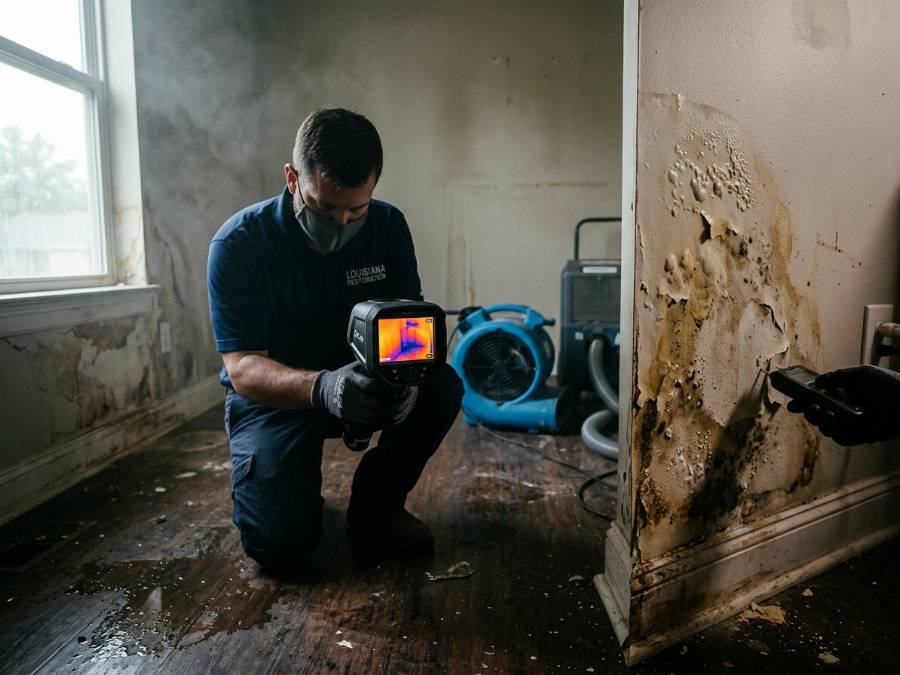
Ask companies if they monitor moisture levels throughout the project rather than relying only on visual inspection.
Good remediation should include documentation and progress checks

Water damage-related mold removal
One of the biggest concerns after water damage is mold. In Louisiana’s humidity, mold can begin developing quickly if moisture remains. That is why water damage-related mold removal should be part of the conversation whenever water has been present for more than a short period.
Warning signs include:
- Musty odors
- Dark spots on the walls
- Peeling paint
- Increased allergy symptoms
- Damp areas that never seem fully dry
A restoration company should inspect for conditions that support mold growth and address moisture at the source.
Questions to ask:
- Do you inspect for hidden moisture?
- What steps do you take to reduce mold risk?
- Do you isolate affected areas if mold is present?
Mold removal should never focus only on cleaning visible surfaces. Moisture control remains the most important step.
Water damage-related pest control
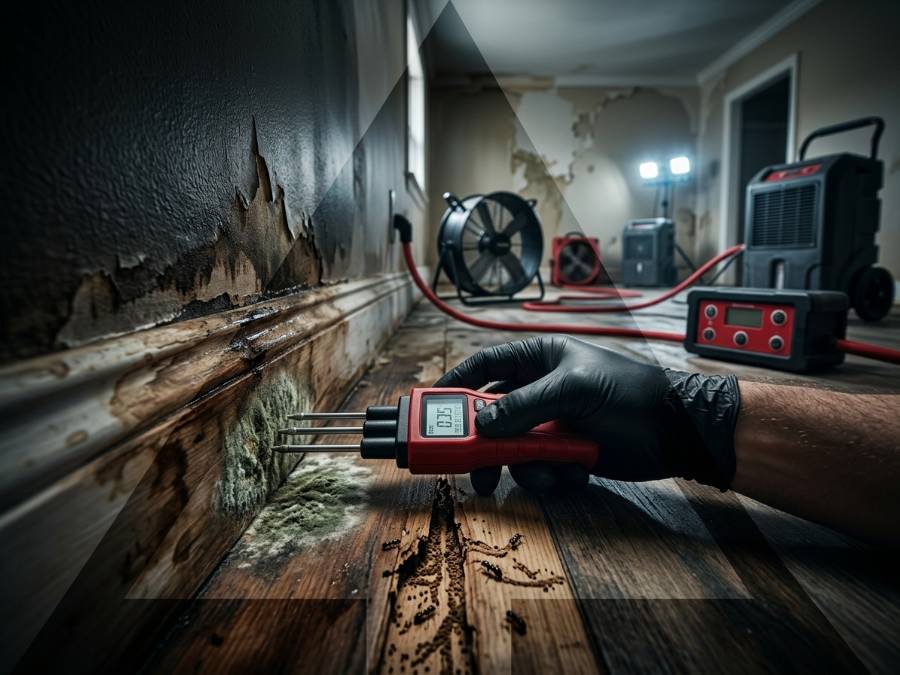
Water damage can attract more than mold. Standing water and damp building materials can encourage insects and other unwanted pests. That is why some restoration projects may include water damage-related pest control as part of a complete recovery plan.
Common concerns after water damage include:
- Mosquitoes
- Ants
- Roaches
- Rodents seeking shelter
- Wood-damaging insects
Homes near wooded areas, drainage paths, and parts of North Shreveport may experience increased pest activity after extended exposure to moisture.
Ask your restoration company:
- Do you identify conditions that attract pests?
- Do you coordinate treatment if needed?
- Do you recommend prevention measures after drying?
A thorough restoration approach addresses both visible damage and the conditions that create future problems.

Questions to Ask Before Hiring
If you still wonder how to choose a water damage restoration company, these questions can help.
1. How long have you worked in the Shreveport area?
Local experience matters because companies understand common regional issues.
2. What is included in your restoration process?
Look for a clear explanation from inspection through final repair.
3. How do you document moisture levels?
Professional tracking improves results.
4. Can you explain your timeline?
Clear communication reduces surprises.
5. What happens if hidden damage is discovered?
Unexpected findings happen. Good companies explain the next steps.
6. Do you provide both emergency and restoration services?
Coordinated service can shorten downtime.
Common Mistakes to Avoid
Property owners often make these mistakes after water damage:
Waiting too long
Even a day or two can increase damage.
Choosing only by price
Low bids may skip important drying or remediation steps.
Assuming surfaces are dry
Moisture can remain hidden.
Ignoring odors
Musty smells often indicate ongoing moisture problems.
Skipping inspections
Hidden damage may become expensive later.
Local Factors That Affect Water Damage in Shreveport
Every city has different challenges.
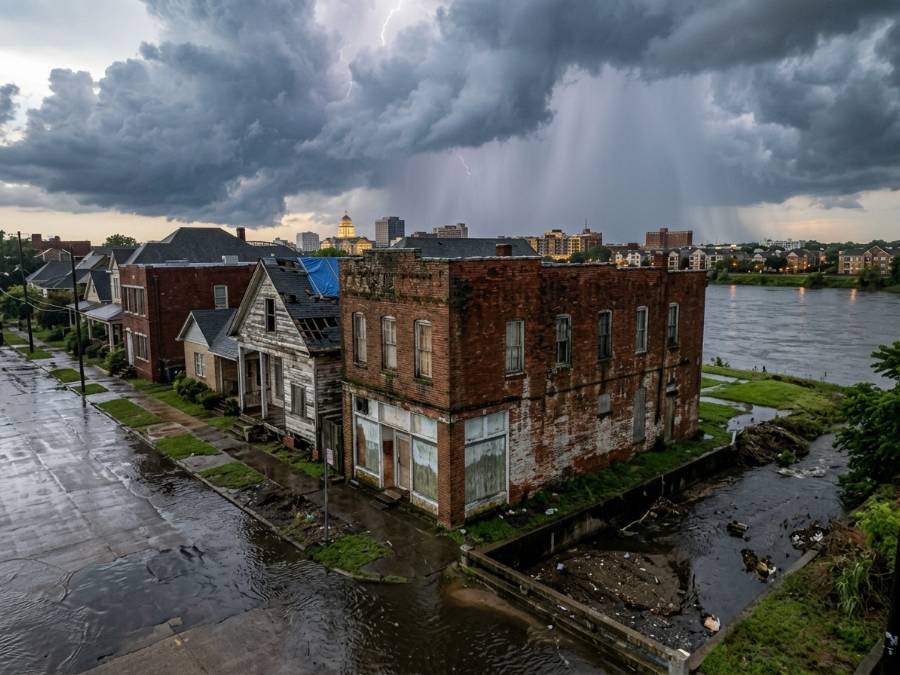
In Shreveport, restoration projects often involve:
- High humidity levels
- Seasonal thunderstorms
- Aging residential plumbing
- Heavy rainfall events
- Roof leaks during storm season
- Moisture buildup near lakes and drainage areas
Neighborhoods from Broadmoor to Southern Hills, along with areas around Cross Lake, can experience different water damage challenges depending on property age, location, and surrounding conditions.
That local knowledge helps restoration teams make better decisions during cleanup.
Choosing the Right Water Damage Restoration Company
If you are dealing with flooding, leaks, or unexpected moisture issues, choosing carefully can save time, money, and frustration.
The best approach when deciding how to choose a water damage restoration company is to look for a team that responds quickly, communicates clearly, conducts thorough inspections, and manages the restoration process from water removal through final repairs.
A strong restoration process should include water removal, water damage cleanup and repair, water damage remediation, water damage-related mold removal, and, when needed, water damage-related pest control.
Water damage can feel overwhelming at first, but the right restoration partner can make the recovery process smoother while helping protect your property for the long term. If you need immediate help or want guidance on next steps, you can reach PuroClean of Shreveport at (318) 661-9180.