


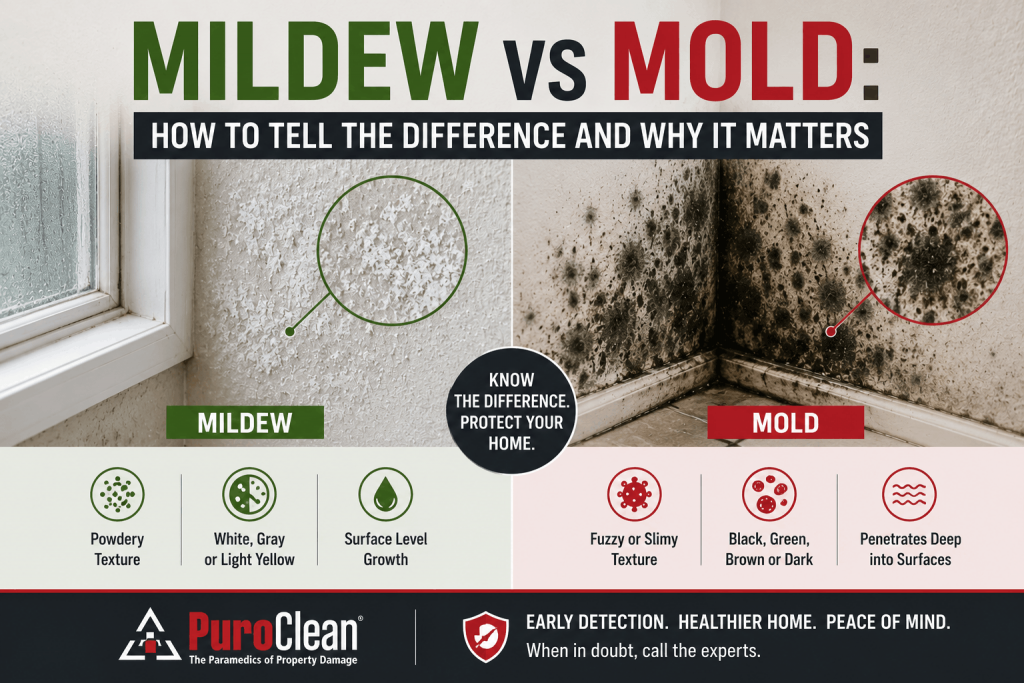
Many homeowners notice dark spots, stains, or musty odors in their homes and immediately assume it’s mold. However, not all growth is the same. Understanding how to tell the difference between mildew and mold is important because each requires a different approach for cleaning and prevention.
While both mildew and mold thrive in damp environments, they vary in appearance, severity, and the risks they pose. Misidentifying the problem can lead to improper treatment, allowing the issue to worsen over time. For homeowners in Southlake and nearby areas like Grapevine, Keller, and Colleyville, knowing the difference can help protect both property and health.
In this guide, we’ll break down the key differences between mildew and mold, how to identify them, and what steps to take if you find either in your home.
What Is Mildew?
Mildew is a type of fungus that grows on damp surfaces, typically in areas with high humidity. It is usually less severe than mold and easier to remove.
Common Characteristics of Mildew
- Appears as flat, powdery patches
- Usually white, gray, or light yellow
- Found on surfaces like walls, ceilings, and bathroom tiles
- Often grows in areas with moisture but limited airflow
Mildew is commonly found in bathrooms, kitchens, and basements where humidity levels are high.
What Is Mold?
Mold is a more serious type of fungus that can penetrate surfaces and cause structural damage. It spreads quickly and may pose health risks if not treated properly.
Common Characteristics of Mold
- Appears fuzzy or slimy
- Colors include black, green, brown, or even orange
- Grows deep into materials like drywall, wood, and carpet
- Produces a strong musty odor
Mold often develops after water damage, especially if moisture is not removed quickly.

How to Tell the Difference Between Mildew and Mold
Understanding how to tell the difference between mildew and mold comes down to observing their appearance, location, and behavior.
Key Differences at a Glance
Appearance
- Mildew: Flat and powdery
- Mold: Fuzzy or slimy texture
Color
- Mildew: White, gray, or yellow
- Mold: Black, green, brown, or multicolored
Growth Pattern
- Mildew: Stays on the surface
- Mold: Penetrates deeper into materials
Damage Level
- Mildew: Minor and easier to clean
- Mold: Can cause structural damage
Odor
- Mildew: Mild musty smell
- Mold: Strong, unpleasant odor
Where Mildew and Mold Commonly Grow
Both mildew and mold thrive in moist environments, but they often appear in slightly different areas.

Common Mildew Locations
- Bathroom walls and ceilings
- Shower curtains and tiles
- Window sills
- Damp fabrics
Common Mold Locations
- Behind drywall after water damage
- Under carpets and flooring
- Inside insulation
- Crawl spaces and attics
- Around plumbing leaks
In homes across Southlake and nearby cities, mold growth is often linked to water damage caused by storms, leaks, or flooding.
Why the Difference Matters
Many homeowners underestimate mildew and overestimate mold, or vice versa. Knowing the difference is important for proper treatment.
Why Mildew Is Less Serious
Mildew typically affects only the surface and can often be cleaned using household products. However, if ignored, it can still indicate excessive moisture problems.
Why Mold Is a Bigger Concern
Mold can spread rapidly and damage building materials. It can also affect indoor air quality and lead to health issues, especially for sensitive individuals.
If mold develops after water damage, professional help may be required to fully remove it and prevent recurrence.
Health Risks of Mold vs Mildew
Both mildew and mold can impact indoor air quality, but mold generally poses greater risks.
Mildew Health Effects
- Mild respiratory irritation
- Allergic reactions in sensitive individuals
Mold Health Effects
- Persistent coughing or sneezing
- Eye and skin irritation
- Breathing difficulties
- Aggravated asthma symptoms
For homeowners in Southlake, Keller, and surrounding areas, addressing mold quickly is essential to maintaining a healthy indoor environment.
How to Remove Mildew Safely
Mildew is usually easier to remove with basic cleaning methods.
Steps to Clean Mildew
- Use a mixture of water and mild detergent
- Apply white vinegar or baking soda solution
- Scrub gently with a brush or sponge
- Dry the area thoroughly
Proper ventilation is important to prevent mildew from returning.
How to Handle Mold Growth
Mold removal is more complex and often requires professional assistance, especially if the growth is extensive.
When to Call Professionals
You should seek professional help if:
- Mold covers a large area
- It has spread into walls or flooring
- There is a strong persistent odor
- The mold developed after water damage
Companies like PuroClean of Southlake specialize in mold remediation and can safely remove mold while addressing the underlying moisture issue.

Preventing Mold and Mildew in Your Home
Prevention is the best way to avoid both mildew and mold problems.
Effective Prevention Tips
- Fix leaks promptly
- Use dehumidifiers in humid areas
- Improve ventilation in bathrooms and kitchens
- Clean and dry wet areas quickly
- Inspect your home regularly for signs of moisture
These steps can help homeowners reduce the risk of fungal growth and maintain a healthy living space.
Conclusion
Understanding how to tell the difference between mildew and mold is essential for protecting your home and health. While mildew is generally easier to clean and less harmful, mold can spread quickly and cause serious damage if not addressed properly.
By identifying the signs early and taking the right action, homeowners can prevent small problems from turning into costly repairs. If mold growth becomes severe or follows water damage, professional restoration services may be necessary.
If you suspect mold growth in your home, don’t wait for the problem to get worse. Quick action can prevent further damage and health risks.
PuroClean of Southlake provides expert mold remediation and water damage restoration services to help homeowners restore their properties safely. Their trained technicians use advanced equipment to detect moisture, remove mold, and prevent future growth.
Contact PuroClean of Southlake today for professional assistance and peace of mind.
FAQs
1. Can mildew turn into mold?
Mildew and mold are different types of fungi, but mildew can indicate moisture conditions that may lead to mold growth if not addressed.
2. Is mold always visible?
No, mold can grow behind walls, under flooring, and in hidden areas where moisture is present.
3. How do I know if mold is dangerous?
Certain types of mold can cause health issues, especially for people with allergies or respiratory conditions. If mold spreads or causes symptoms, it should be professionally removed.