


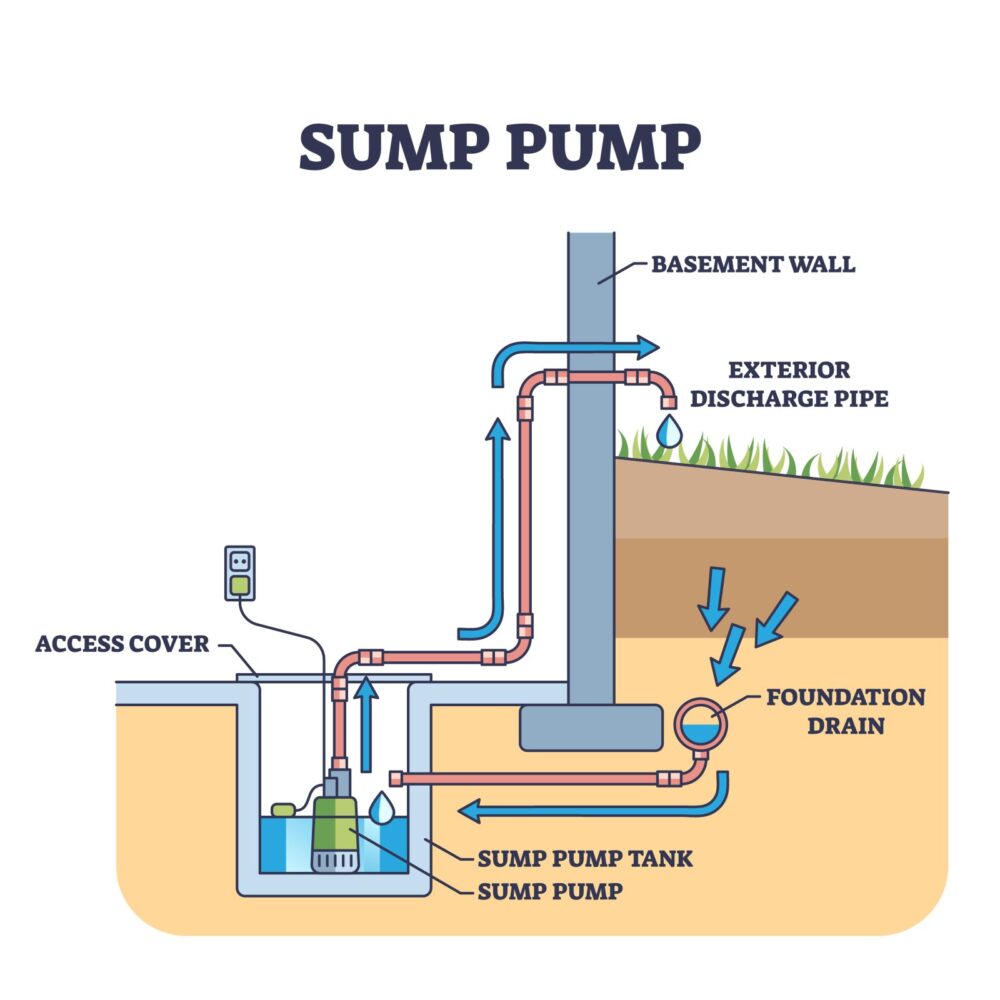
If you live in a home with a basement or a crawl space, you may have a sump pump installed to prevent water from accumulating and causing damage. A sump pump is a device that pumps water out of a pit or basin that collects excess water from rain, melting snow, or groundwater. A sump pump can help protect your home from flooding, mold, mildew, and structural damage.
However, sump pumps are not foolproof and can fail for various reasons. When a sump pump fails, it can result in water damage that can be costly and difficult to repair. In this post, we will discuss some of the common causes of sump pump failures, how to prevent them, and what to do if you experience water damage in your home due to a sump pump failure.
Common Causes of Sump Pump Failures
There are several factors that can cause a sump pump to malfunction or stop working altogether. Some of the most common causes are:
- Power outage: A power outage can render your sump pump useless unless you have a backup battery or generator. Power outages can occur due to storms, accidents, or grid failures. If you live in an area that is prone to power outages, you should consider investing in a backup power source for your sump pump.
- Clogged or frozen discharge pipe: The discharge pipe is the pipe that carries the water from the sump pump to the outside of your home. If the discharge pipe is clogged by debris, dirt, or ice, it can prevent the water from flowing out and cause it to back up into the sump pit. This can overload the sump pump and cause it to burn out or fail. To prevent this, you should regularly inspect and clean the discharge pipe and install a grate or screen to keep out debris. You should also insulate the pipe to prevent it from freezing in cold weather.
- Faulty switch or float: The switch and float are the components that activate the sump pump when the water level in the sump pit reaches a certain point. If the switch or float is faulty, stuck, or misaligned, it can cause the sump pump to run continuously or not at all. This can wear out the motor or leave your basement vulnerable to flooding. To prevent this, you should check and adjust the switch and float regularly and replace them if they are damaged or worn out.
- Old or poor-quality sump pump: Like any other appliance, a sump pump has a limited lifespan and can deteriorate over time. An old or poor-quality sump pump may not be able to handle the volume and pressure of water that enters your basement. It may also have corroded parts, cracked seals, or electrical issues that can affect its performance. To prevent this, you should replace your sump pump every 5 to 10 years or sooner if it shows signs of trouble. You should also choose a high-quality sump pump that is suitable for your home’s size and water conditions.
How to Prevent Sump Pump Failures
The best way to avoid water damage due to sump pump failures is to prevent them from happening in the first place. Here are some tips on how to maintain your sump pump and keep it in good working order:
- Test your sump pump regularly: You should test your sump pump at least once every three months or more often during rainy seasons. To test your sump pump, pour some water into the sump pit until the float rises and triggers the switch. The sump pump should start running and drain the water out of the pit. If it doesn’t, you should troubleshoot the problem and fix it as soon as possible.
- Clean your sump pit and discharge pipe: You should clean your sump pit and discharge pipe at least once a year or more often if they get dirty or clogged. You can use a wet/dry vacuum to remove any debris, sediment, or sludge from the pit and pipe. You should also check for any cracks, leaks, or obstructions in the pipe and repair them if needed.
- Install a backup system: You should install a backup system for your sump pump in case of power outage or primary failure. A backup system can be either battery-powered or water-powered. A battery-powered backup system uses a battery to run a second sump pump when the main one fails. A water-powered backup system uses water pressure from your home’s plumbing system to run a secondary pump when the main one fails. Both types of backup systems can provide extra protection for your basement in case of emergency.
- Hire a professional: If you are not comfortable with testing, cleaning, or installing your sump pump yourself, you should hire a professional plumber or contractor to do it for you. A professional can ensure that your sump pump is installed correctly, functioning properly, and meets the local codes and regulations. A professional like the certified expert of PuroClean of Bulls Head can also advise you on the best type and size of sump pump for your home and provide you with warranty and service.
What to Do If You Experience Water Damage Due to Sump Pump Failure
If your sump pump fails and causes water damage in your basement or crawl space, you should act quickly to minimize the damage and prevent further problems. Here are some steps you should take if you experience water damage due to sump pump failure:
- Turn off the power: If there is water near electrical outlets, wires, or appliances, you should turn off the power to the affected area to avoid electrocution. You can do this by flipping the circuit breaker or unplugging the devices. If you are not sure how to do this safely, you should call an electrician for help.
- Remove the water: You should remove as much water as possible from the flooded area using a wet/dry vacuum, a pump, or buckets. You should also remove any wet items such as furniture, rugs, or boxes from the area and place them in a dry and ventilated place. You should wear protective gear such as gloves, boots, and masks when handling wet items to avoid exposure to contaminants or mold. To do this, you would need to hire a Professional Water Damage Restoration Company like PuroClean of Bulls Head.
- Dry the area: You should dry the affected area as soon as possible to prevent mold growth and structural damage. You can use fans, dehumidifiers, or heaters to speed up the drying process. You should also open windows and doors to improve air circulation and ventilation. You should monitor the moisture level in the area using a moisture meter or a hygrometer and keep it below 50%.
- Clean and disinfect: You should clean and disinfect the affected area and items using a mild detergent and a bleach solution. You should scrub any surfaces that came in contact with water or sewage to remove any dirt, bacteria, or mold. You should also dispose of any items that are damaged beyond repair or pose a health risk such as carpet, drywall, insulation, or mattresses.
- Call your insurance company: You should contact your insurance company as soon as possible to report the water damage and file a claim. You should document the damage with photos and videos and keep receipts of any expenses you incur due to the water damage. You should also follow your insurance company’s instructions and cooperate with their adjuster or agent.
- Call a restoration company: You should call a professional restoration company like PuroClean Emergency Restoration to help you restore your home after water damage. PuroClean of Bulls Head provides expert services such as water extraction, drying, cleaning, disinfecting, deodorizing, mold remediation, and reconstruction. We also work with your insurance company to ensure that your claim is handled properly and efficiently.
Water damage due to sump pump failure can be a stressful and costly experience for any homeowner. However, by following these tips, you can prevent sump pump failures from happening, minimize the damage if they do happen, and restore your home to its pre-loss condition.
Don’t let sump pump failure leading to water damage ruin your home and your peace of mind. Call PuroClean of Bulls Head today at (347) 501-6155 for fast and reliable service.
PuroClean of Bulls Head: The Paramedics of Property Damage™