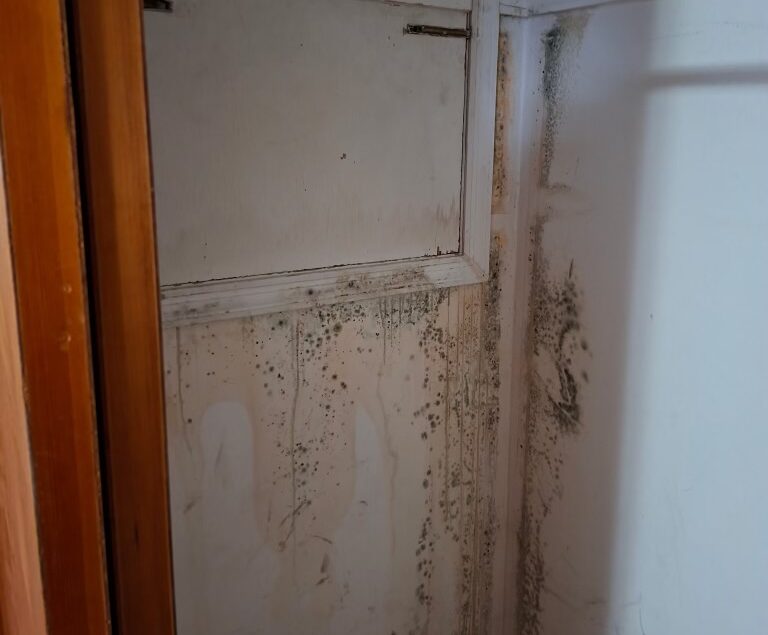
Renting a Home or Apartment with Mold Concerns?
Don’t ignore the signs. Share our contact information with your landlord or property manager so we can help identify moisture issues and determine the appropriate next steps.
PuroClean Restoration Services | (973) 577-6033
What to Do About Mold When You’re a Tenant
Finding mold in your own home is stressful enough. Finding it in an apartment you rent you don’t manage can feel even more frustrating.
You can see the discoloration. Maybe you smell something musty. Maybe you know there was a leak weeks ago. But you aren’t the person who gets to open the wall, hire a remediation company, replace damaged materials, or authorize repairs.
That doesn’t mean you’re powerless.
Whether you’re a tenant knowing what to look for, what information to document, and what questions to ask can help you communicate the problem clearly to the landlord, property manager, or building owner responsible for addressing it.
Why Mold Is Really a Moisture Problem
When people discover mold, their first instinct is often to focus on the mold itself. But visible mold may only be one part of the problem.
Mold needs moisture to grow. That moisture can come from a plumbing leak, roof leak, flooding, condensation, high humidity, an appliance leak, or water trapped inside building materials.
Excess humidity can also create conditions where mold thrives, particularly in poorly ventilated spaces. Learn more about how humidity levels can contribute to mold and moisture problems.
The U.S. Environmental Protection Agency (EPA) emphasizes that moisture control is key to mold control. Cleaning mold without correcting the source of the moisture can allow the problem to return.
That distinction is especially important when you’re talking with a landlord or property manager. Instead of focusing only on “How do we get rid of this mold?” another important question is:
“Where is the moisture coming from, and has that problem been corrected?”
For example, staining around a ceiling may be connected to a roof or plumbing leak. Mold appearing around a window may be associated with condensation or water intrusion. A musty odor after flooding may indicate that building materials haven’t completely dried.
You don’t need to determine the cause yourself. Providing the person responsible for the property with information about moisture, leaks, or previous water damage can help them investigate the underlying issue.
Source: U.S. Environmental Protection Agency, “A Brief Guide to Mold, Moisture and Your Home.”
What to Document When You Suspect Mold
Tip: You want to create a clear record of what you’ve observed.
Take photographs of visible discoloration, water staining, bubbling or peeling paint, damaged ceiling tiles, damp materials, or suspected mold growth. Note when you first noticed the problem and whether it appears to be changing.
Mold isn’t always immediately visible. Musty odors, unusual discoloration, and persistent dampness can also be warning signs. Our guide to recognizing and preventing mold in closets offers additional examples of what to look for.
If there is an active or recent leak, document that too.
Here is a checklist of information you want to document:
- The exact location of the suspected problem
- The date you first noticed it
- Photographs of visible changes
- Any noticeable musty or unusual odors
- Signs of current or previous water damage
- Whether the area feels or appears damp
- Whether the problem changes after rain or certain weather conditions
- Previous leaks or water problems in the same area
Instead of simply reporting:
“There might be mold in my apartment.”
You could provide much more useful information:
“On Monday, I noticed dark spotting and discoloration on the drywall and ceiling of bathroom. The room also has a musty odor, and the wall appears damp even with fan on and window open. I’ve attached photographs from Monday and Thursday showing the affected area.”
For businesses and commercial properties, thorough documentation can also be important throughout the restoration process. Learn more about content documentation in commercial disaster recovery.
Even if you initially speak with someone in person or over the phone, consider following up in writing so there is a clear record of what was reported and when.
What to Do—and Not Do—When You Suspect Mold
If you suspect mold in an apartment or condo, document and report the issue before attempting to clean or disturb affected materials. Avoid removing drywall, flooring, ceiling materials, or other building components yourself. According to the EPA, some moldy porous materials may need to be discarded because mold can be difficult to remove completely.
Instead, give your landlord or property manager useful information and ask a few key questions:
- Has the source of the moisture been identified and repaired?
- Could moisture remain behind walls, ceilings, or flooring?
- Are any damaged materials still wet or in need of removal?
- Would professional mold remediation or restoration be appropriate?
The goal isn’t to tell the property owner how to handle the problem, but to make sure the response goes beyond cleaning what can be seen. Your most useful role is to observe, document, report, and allow the appropriate professionals to investigate.
Sources: U.S. Environmental Protection Agency, “A Brief Guide to Mold, Moisture and Your Home” and PuroClean’s blog “How to Prevent Mold in Closets.”
Why Cleaning, Painting, or Testing Alone May Not Solve the Problem
Cleaning visible mold or painting over discoloration doesn’t necessarily mean the problem is resolved. If a leak, excess humidity, condensation, or hidden moisture remains, mold can return.
That’s why the more important question isn’t simply “Is the mold gone?” but “Has the source of the moisture been identified and corrected?”
Bathrooms are a good example of why the source matters: cleaning visible mold may not prevent it from returning if excess humidity, poor ventilation, or a leak remains. Learn more in our guide to mold on bathroom ceilings.
The same applies to mold testing. According to the EPA, testing is generally unnecessary when mold is already visible. While testing may be useful in certain situations, it doesn’t remove mold or correct the moisture problem causing it.
If you’re a tenant, focus on documenting and reporting what you observe. The property owner or appropriate professional can then determine whether further investigation, testing, or professional remediation is needed.
You May Not Control the Property, But You Can Help Move the Process Forward
Discovering suspected mold in an apartment or rental home can be frustrating precisely because the ultimate decisions about the property may belong to someone else.
Focus on what you can control.
Document what you observe. Report moisture problems promptly. Provide photographs and dates. Ask whether the moisture source has been identified and corrected. And don’t assume that a freshly cleaned or painted surface necessarily means the underlying moisture problem has been resolved.
The more useful information you can provide, the easier it is for your landlord or building owner to make an informed decision about the next step.
When Professional Mold Remediation May Be Appropriate
Not every mold concern automatically requires extensive professional remediation. The size of the affected area, source of the water, materials involved, extent of the moisture, and whether mold may be hidden can all influence the appropriate response.
The EPA uses an affected area of approximately 10 square feet as one consideration in its mold cleanup guidance. However, that guidance shouldn’t be interpreted as a recommendation that a renter or employee personally clean an area simply because it falls below that size.
When you don’t own or control the building, cleanup decisions should generally be coordinated with the landlord or property manager responsible for the property.
Professional evaluation or remediation may be particularly appropriate when:
- Mold continues returning after cleaning
- There has been significant water damage
- The moisture source isn’t obvious
- Mold may be inside walls, ceilings, or flooring
- Porous building materials are affected
- The affected area is extensive
- The HVAC system may be involved
- The building owner needs help determining the extent of water or mold damage
Professional restoration companies can also help investigate something that’s difficult to assess from appearance alone: hidden moisture.
Water can travel underneath flooring, behind drywall, above ceilings, and into other areas that aren’t immediately visible. Moisture-detection tools and a professional assessment can help determine whether the problem extends beyond what can be seen on the surface.
Professional Mold Remediation in Union, NJ and Surrounding Communities
PuroClean Restoration Services provides professional mold remediation and water-damage restoration services throughout Union and surrounding communities in Union, Essex, Middlesex, and Monmouth counties.
Our team works with homeowners, businesses, landlords, property managers, and other property professionals to evaluate mold and moisture problems and determine appropriate next steps.
If you’re a tenant or employee, you can also share our information with the person responsible for the property so they can speak directly with our team about the situation.
Concerned about mold or recurring moisture in a property? Call PuroClean Restoration Services at (908) 577-9120.
Learn more about our mold removal services, including remediation.
Frequently Asked Questions
What should I do if I find mold in my rental property?
Document what you see with photos and report the issue to your landlord or property manager, especially if you also notice a leak, water staining, damp materials, or a musty odor. Avoid opening walls, removing flooring, or disturbing affected building materials yourself.
Should a landlord just clean or paint over mold?
Cleaning or painting the visible area may not solve the underlying problem if moisture is still present. The source of the water or excess moisture should be identified and corrected; otherwise, mold may return.
Does mold in a rental property need to be tested?
Not always. According to the EPA, sampling is generally unnecessary when visible mold growth is already present. Identifying and correcting the moisture problem is often more important than determining exactly what type of mold is growing.
Can mold grow behind walls or under floors?
Yes. Moisture can become trapped behind drywall, underneath flooring, above ceilings, around plumbing, and in other concealed areas. Water stains, musty odors, previous leaks, or recurring mold can be signs that further investigation is needed.
Can I clean mold myself if I rent my home?
Because you don’t own the property, report the problem before removing materials or attempting significant cleanup yourself. Your landlord or property manager may need to investigate the moisture source and determine the appropriate cleanup or remediation process.
Who should I call for mold remediation in New Jersey?
For properties in Union, Essex, Middlesex, and Monmouth counties, PuroClean Restoration Services of Union can help property owners, landlords, property managers, and businesses assess mold and moisture concerns and determine appropriate remediation steps. Call (973) 577-6033 to speak with our team.