


Signs of Attic Mold in Florida Homes
Common signs of attic mold include irregular staining on roof decking, spotting on rafters or trusses, musty odors near the attic opening, damp or compressed insulation, condensation on metal components, and evidence of a roof leak.
Discoloration alone does not prove that a substance is mold. Dirt, soot, roofing residue, old water stains, construction markings, and natural variations in wood can look similar. The condition should be evaluated in the context of moisture, material damage, odor, and the surrounding attic environment.
Florida homes face persistent heat, humidity, heavy rain, tropical storms, roof leaks, and condensation conditions that can introduce moisture into an attic. Finding and correcting the moisture source is just as important as addressing visible growth. Cleaning an affected surface without correcting the roofing, ventilation, HVAC, plumbing, or humidity problem can allow the condition to return.
If you have found suspicious staining or moisture above your living space, learn more about attic mold cleanup in Venice or call PuroClean of Venice at (941) 294-0404.
Quick Answer: What Are the Signs of Attic Mold?
Possible warning signs of attic mold or an underlying moisture problem include:
- Black, gray, brown, green, or white spotting on roof decking.
- Irregular staining on rafters, trusses, or other framing.
- A persistent musty or earthy odor near the attic opening.
- Wet, discolored, compressed, or matted insulation.
- Condensation on roofing nails, pipes, ducts, or other metal components.
- Rust or corrosion on fasteners and HVAC components.
- Water stains near roof vents, chimneys, skylights, or penetrations.
- Recurring stains, bubbling paint, or softened drywall on the ceiling below.
- Bathroom or dryer exhaust ducts terminating inside the attic.
- Evidence of an active or previously repaired roof leak.
One sign by itself does not necessarily confirm mold. For example, a dark area on roof decking could be an old water stain, soot, dirt, adhesive, or natural wood discoloration. Moisture readings, inspection findings, and the condition of surrounding materials help determine the appropriate next step.
Visible Signs of Attic Mold
Attic mold does not always look the same. Its appearance can vary according to the material, moisture conditions, lighting, age of the growth, and other substances present on the surface.
1. Dark or Irregular Staining on Roof Decking
Dark brown, gray, black, green, or white patches on the underside of roof sheathing may indicate a moisture-related condition. Pay particular attention to staining around roof penetrations, valleys, vents, chimneys, skylights, and areas where previous leaks occurred.
The color of a substance does not identify the mold species or establish whether it presents a greater concern than growth of another color. A professional evaluation may be appropriate when the material cannot be identified visually, the affected area appears extensive, or the staining continues returning.
2. Spotting on Rafters or Trusses
Small spots or irregular growth on attic framing can be associated with condensation, a roof leak, elevated humidity, or another moisture source. The location and pattern may provide useful clues.
Widespread spotting across multiple framing members may indicate a broader humidity, air-leakage, or ventilation condition. Staining concentrated beneath one portion of the roof may be associated with a localized leak or roof penetration.
3. Damp, Discolored, or Compressed Insulation
Insulation may become darker, compressed, matted, displaced, or clumped after exposure to water. Wet insulation can conceal affected drywall, framing, or decking beneath it and may lose some of its insulating effectiveness.
A localized section of wet insulation may point toward a roof or plumbing leak. More widespread dampness may indicate condensation, elevated attic humidity, or an HVAC-related problem.
Do not pull apart or disturb suspicious insulation without appropriate precautions. Moving affected materials can release dust and particles into the attic or occupied areas below.
4. Condensation on Nails, Metal Components, or Ductwork
Moisture droplets, rusted fasteners, corroded metal, or repeated condensation on HVAC ducts can indicate excess attic humidity or temperature differences that need attention.
Condensation does not automatically mean mold is present, but it provides moisture that can support growth on nearby roof decking, framing, drywall paper, dust, and insulation.
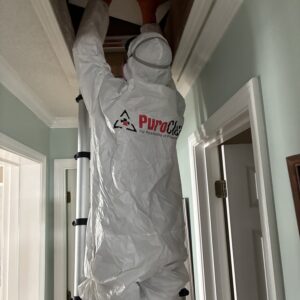
A PuroClean of Venice technician prepares to evaluate attic moisture and suspected mold at a residential property in Venice, Florida.
5. Water Stains Around Roof Openings
Staining around plumbing vents, exhaust vents, skylights, chimneys, flashing, or roof fasteners may indicate an active or previous leak. Water can travel along decking, rafters, trusses, or fasteners before reaching the insulation or ceiling below. The visible stain may not be directly beneath the original entry point.
For damage associated with an active or repaired roofing problem, visit our roof leak water damage cleanup in Venice page.
6. White or Powdery-Looking Growth
Attic growth is not always dark. White, light gray, or powdery-looking material may appear on decking or framing. However, construction dust, mineral deposits, insulation fibers, and other substances may look similar.
A photograph can document the condition but cannot reliably identify the material, determine whether it is active, or establish the extent of concealed moisture.
Signs of a Hidden Attic Moisture Problem
Homeowners sometimes notice changes inside the living space before seeing the attic itself. These warning signs do not confirm mold, but they may indicate that the attic, ceiling cavity, or nearby building materials should be evaluated.
Musty Odors Near the Attic Opening
A persistent musty or earthy odor near the attic access, upper-floor closets, ceiling penetrations, or recessed lights can indicate damp materials or concealed microbial growth.
Odor alone does not identify the source or extent of the condition. Attic materials, HVAC components, ceiling cavities, walls, and other areas may need to be considered.
Recurring Ceiling Stains
A ceiling stain that reappears after painting may indicate that the moisture source was never corrected. Possible causes include a roof leak, plumbing leak, HVAC condensate problem, or condensation above the ceiling.
Painting over the stain may temporarily improve its appearance, but it will not stop continuing water intrusion or dry concealed materials.
Peeling Paint, Soft Drywall, or a Sagging Ceiling
Bubbling paint, softened drywall, peeling finishes, sagging ceiling materials, and discolored trim can indicate that moisture has migrated from the attic or ceiling cavity into the occupied space.
Do not stand beneath or disturb a visibly sagging ceiling. Wet ceiling materials can lose strength and may fall without warning.
Unexplained Attic Humidity
An attic that feels unusually damp or shows recurring condensation may have air leakage from the conditioned space, improperly terminated exhaust ducts, damaged HVAC components, restricted ventilation, or another moisture problem.
The U.S. Environmental Protection Agency identifies moisture control as the key to controlling mold and recommends correcting water problems promptly.[1]
Higher Indoor Humidity or HVAC Changes
Unexpected indoor humidity, condensation around ceiling registers, or moisture near an attic air handler may indicate an HVAC, condensate, or duct-insulation problem. These conditions should be evaluated by an appropriately qualified professional.
What Causes Attic Mold in Florida?
Attic mold is a symptom of available moisture. Determining where that moisture originated is essential when developing a lasting solution.
Roof Leaks and Storm Intrusion
Missing shingles, failed flashing, damaged vents, punctures, wind-driven rain, and other storm-created openings can allow water to reach roof decking, framing, insulation, and ceiling materials.
Even a relatively small roof opening can affect a larger area when water travels along structural components before becoming visible. If severe weather caused the damage, learn more about storm damage restoration in Venice.
Attic Condensation
Warm, humid air can condense when it contacts cooler roof decking, ducts, pipes, fasteners, or other surfaces. Condensation may become more likely when air from the conditioned living space enters the attic through gaps around recessed lights, wiring, plumbing penetrations, duct chases, or the attic access.
The correct response depends on what is contributing to the moisture. Air leakage, insulation, HVAC operation, ventilation, and exterior weather conditions may all need to be considered.
Bathroom or Dryer Exhaust Entering the Attic
Bathroom exhaust fans and clothes dryers should discharge outdoors—not into the attic. Releasing warm, humid air into an enclosed attic can increase moisture around nearby roof decking, framing, fasteners, and insulation.
A disconnected, damaged, or poorly sealed exhaust duct can create a similar condition even when the exterior vent was originally installed correctly.
HVAC Duct or Condensate Problems
Damaged duct insulation, air leakage, clogged condensate drains, overflowing drain pans, or moisture around an attic air handler can create localized wet areas. Condensation may also develop on poorly insulated ductwork when humid attic air contacts a cold surface.
HVAC equipment should be evaluated by a qualified provider when it appears to be contributing to the moisture condition.
Restricted or Altered Attic Ventilation
Blocked soffit vents, displaced insulation, altered roof vents, or an improperly balanced ventilation system may contribute to moisture accumulation in some homes.
Adding ventilation without evaluating the building as a complete system is not always the correct solution. Roof design, insulation, air sealing, HVAC operation, indoor pressure, and Florida’s humid climate should all be considered.
Plumbing Leaks
Water supply lines, drain lines, vent stacks, HVAC drains, and other plumbing components may pass through or near an attic. A slow leak can dampen insulation and ceiling materials before water becomes visible inside the living space.
Previous Water Damage That Never Fully Dried
Roof decking, framing, insulation, or ceiling materials may remain damp after a storm or leak even when visible water is gone. Moisture meters and other inspection tools can help identify elevated moisture that cannot be confirmed from the occupied space.
Is Every Dark Attic Stain Mold?
No. Several common attic conditions can resemble mold, including:
- Old or inactive water stains.
- Roofing adhesive or asphalt residue.
- Dirt deposited by air leakage.
- Soot or combustion residue.
- Natural wood grain and discoloration.
- Rust or corrosion marks.
- Construction markings.
- Dust and insulation fibers.
- Previous coatings or treatments.
The appearance or color of a stain cannot establish the species, activity, moisture content, extent of concealed damage, or appropriate remediation scope. When the condition is widespread, recurring, or uncertain, a professional evaluation may be appropriate.
Signs of Attic Mold in Florida Homes
Common signs of attic mold include irregular staining on roof decking, spotting on rafters or trusses, musty odors near the attic opening, damp or compressed insulation, condensation on metal components, and evidence of a roof leak.
Discoloration alone does not prove that a substance is mold. Dirt, soot, roofing residue, old water stains, construction markings, and natural variations in wood can look similar. The condition should be evaluated in the context of moisture, material damage, odor, and the surrounding attic environment.
Florida homes face persistent heat, humidity, heavy rain, tropical storms, roof leaks, and condensation conditions that can introduce moisture into an attic. Finding and correcting the moisture source is just as important as addressing visible growth. Cleaning an affected surface without correcting the roofing, ventilation, HVAC, plumbing, or humidity problem can allow the condition to return.
If you have found suspicious staining or moisture above your living space, learn more about attic mold cleanup in Venice or call PuroClean of Venice at (941) 294-0404.
Quick Answer: What Are the Signs of Attic Mold?
Possible warning signs of attic mold or an underlying moisture problem include:
- Black, gray, brown, green, or white spotting on roof decking.
- Irregular staining on rafters, trusses, or other framing.
- A persistent musty or earthy odor near the attic opening.
- Wet, discolored, compressed, or matted insulation.
- Condensation on roofing nails, pipes, ducts, or other metal components.
- Rust or corrosion on fasteners and HVAC components.
- Water stains near roof vents, chimneys, skylights, or penetrations.
- Recurring stains, bubbling paint, or softened drywall on the ceiling below.
- Bathroom or dryer exhaust ducts terminating inside the attic.
- Evidence of an active or previously repaired roof leak.
One sign by itself does not necessarily confirm mold. For example, a dark area on roof decking could be an old water stain, soot, dirt, adhesive, or natural wood discoloration. Moisture readings, inspection findings, and the condition of surrounding materials help determine the appropriate next step.
Visible Signs of Attic Mold
Attic mold does not always look the same. Its appearance can vary according to the material, moisture conditions, lighting, age of the growth, and other substances present on the surface.
1. Dark or Irregular Staining on Roof Decking
Dark brown, gray, black, green, or white patches on the underside of roof sheathing may indicate a moisture-related condition. Pay particular attention to staining around roof penetrations, valleys, vents, chimneys, skylights, and areas where previous leaks occurred.
The color of a substance does not identify the mold species or establish whether it presents a greater concern than growth of another color. A professional evaluation may be appropriate when the material cannot be identified visually, the affected area appears extensive, or the staining continues returning.
2. Spotting on Rafters or Trusses
Small spots or irregular growth on attic framing can be associated with condensation, a roof leak, elevated humidity, or another moisture source. The location and pattern may provide useful clues.
Widespread spotting across multiple framing members may indicate a broader humidity, air-leakage, or ventilation condition. Staining concentrated beneath one portion of the roof may be associated with a localized leak or roof penetration.
3. Damp, Discolored, or Compressed Insulation
Insulation may become darker, compressed, matted, displaced, or clumped after exposure to water. Wet insulation can conceal affected drywall, framing, or decking beneath it and may lose some of its insulating effectiveness.
A localized section of wet insulation may point toward a roof or plumbing leak. More widespread dampness may indicate condensation, elevated attic humidity, or an HVAC-related problem.
Do not pull apart or disturb suspicious insulation without appropriate precautions. Moving affected materials can release dust and particles into the attic or occupied areas below.
4. Condensation on Nails, Metal Components, or Ductwork
Moisture droplets, rusted fasteners, corroded metal, or repeated condensation on HVAC ducts can indicate excess attic humidity or temperature differences that need attention.
Condensation does not automatically mean mold is present, but it provides moisture that can support growth on nearby roof decking, framing, drywall paper, dust, and insulation.
A PuroClean of Venice technician prepares to evaluate attic moisture and suspected mold at a residential property in Venice, Florida.
5. Water Stains Around Roof Openings
Staining around plumbing vents, exhaust vents, skylights, chimneys, flashing, or roof fasteners may indicate an active or previous leak. Water can travel along decking, rafters, trusses, or fasteners before reaching the insulation or ceiling below. The visible stain may not be directly beneath the original entry point.
For damage associated with an active or repaired roofing problem, visit our roof leak water damage cleanup in Venice page.
6. White or Powdery-Looking Growth
Attic growth is not always dark. White, light gray, or powdery-looking material may appear on decking or framing. However, construction dust, mineral deposits, insulation fibers, and other substances may look similar.
A photograph can document the condition but cannot reliably identify the material, determine whether it is active, or establish the extent of concealed moisture.
Signs of a Hidden Attic Moisture Problem
Homeowners sometimes notice changes inside the living space before seeing the attic itself. These warning signs do not confirm mold, but they may indicate that the attic, ceiling cavity, or nearby building materials should be evaluated.
Musty Odors Near the Attic Opening
A persistent musty or earthy odor near the attic access, upper-floor closets, ceiling penetrations, or recessed lights can indicate damp materials or concealed microbial growth.
Odor alone does not identify the source or extent of the condition. Attic materials, HVAC components, ceiling cavities, walls, and other areas may need to be considered.
Recurring Ceiling Stains
A ceiling stain that reappears after painting may indicate that the moisture source was never corrected. Possible causes include a roof leak, plumbing leak, HVAC condensate problem, or condensation above the ceiling.
Painting over the stain may temporarily improve its appearance, but it will not stop continuing water intrusion or dry concealed materials.
Peeling Paint, Soft Drywall, or a Sagging Ceiling
Bubbling paint, softened drywall, peeling finishes, sagging ceiling materials, and discolored trim can indicate that moisture has migrated from the attic or ceiling cavity into the occupied space.
Do not stand beneath or disturb a visibly sagging ceiling. Wet ceiling materials can lose strength and may fall without warning.
Unexplained Attic Humidity
An attic that feels unusually damp or shows recurring condensation may have air leakage from the conditioned space, improperly terminated exhaust ducts, damaged HVAC components, restricted ventilation, or another moisture problem.
The U.S. Environmental Protection Agency identifies moisture control as the key to controlling mold and recommends correcting water problems promptly.[1]
Higher Indoor Humidity or HVAC Changes
Unexpected indoor humidity, condensation around ceiling registers, or moisture near an attic air handler may indicate an HVAC, condensate, or duct-insulation problem. These conditions should be evaluated by an appropriately qualified professional.
What Causes Attic Mold in Florida?
Attic mold is a symptom of available moisture. Determining where that moisture originated is essential when developing a lasting solution.
Roof Leaks and Storm Intrusion
Missing shingles, failed flashing, damaged vents, punctures, wind-driven rain, and other storm-created openings can allow water to reach roof decking, framing, insulation, and ceiling materials.
Even a relatively small roof opening can affect a larger area when water travels along structural components before becoming visible. If severe weather caused the damage, learn more about storm damage restoration in Venice.
Attic Condensation
Warm, humid air can condense when it contacts cooler roof decking, ducts, pipes, fasteners, or other surfaces. Condensation may become more likely when air from the conditioned living space enters the attic through gaps around recessed lights, wiring, plumbing penetrations, duct chases, or the attic access.
The correct response depends on what is contributing to the moisture. Air leakage, insulation, HVAC operation, ventilation, and exterior weather conditions may all need to be considered.
Bathroom or Dryer Exhaust Entering the Attic
Bathroom exhaust fans and clothes dryers should discharge outdoors—not into the attic. Releasing warm, humid air into an enclosed attic can increase moisture around nearby roof decking, framing, fasteners, and insulation.
A disconnected, damaged, or poorly sealed exhaust duct can create a similar condition even when the exterior vent was originally installed correctly.
HVAC Duct or Condensate Problems
Damaged duct insulation, air leakage, clogged condensate drains, overflowing drain pans, or moisture around an attic air handler can create localized wet areas. Condensation may also develop on poorly insulated ductwork when humid attic air contacts a cold surface.
HVAC equipment should be evaluated by a qualified provider when it appears to be contributing to the moisture condition.
Restricted or Altered Attic Ventilation
Blocked soffit vents, displaced insulation, altered roof vents, or an improperly balanced ventilation system may contribute to moisture accumulation in some homes.
Adding ventilation without evaluating the building as a complete system is not always the correct solution. Roof design, insulation, air sealing, HVAC operation, indoor pressure, and Florida’s humid climate should all be considered.
Plumbing Leaks
Water supply lines, drain lines, vent stacks, HVAC drains, and other plumbing components may pass through or near an attic. A slow leak can dampen insulation and ceiling materials before water becomes visible inside the living space.
Previous Water Damage That Never Fully Dried
Roof decking, framing, insulation, or ceiling materials may remain damp after a storm or leak even when visible water is gone. Moisture meters and other inspection tools can help identify elevated moisture that cannot be confirmed from the occupied space.
Is Every Dark Attic Stain Mold?
No. Several common attic conditions can resemble mold, including:
- Old or inactive water stains.
- Roofing adhesive or asphalt residue.
- Dirt deposited by air leakage.
- Soot or combustion residue.
- Natural wood grain and discoloration.
- Rust or corrosion marks.
- Construction markings.
- Dust and insulation fibers.
- Previous coatings or treatments.
The appearance or color of a stain cannot establish the species, activity, moisture content, extent of concealed damage, or appropriate remediation scope. When the condition is widespread, recurring, or uncertain, a professional evaluation may be appropriate.