


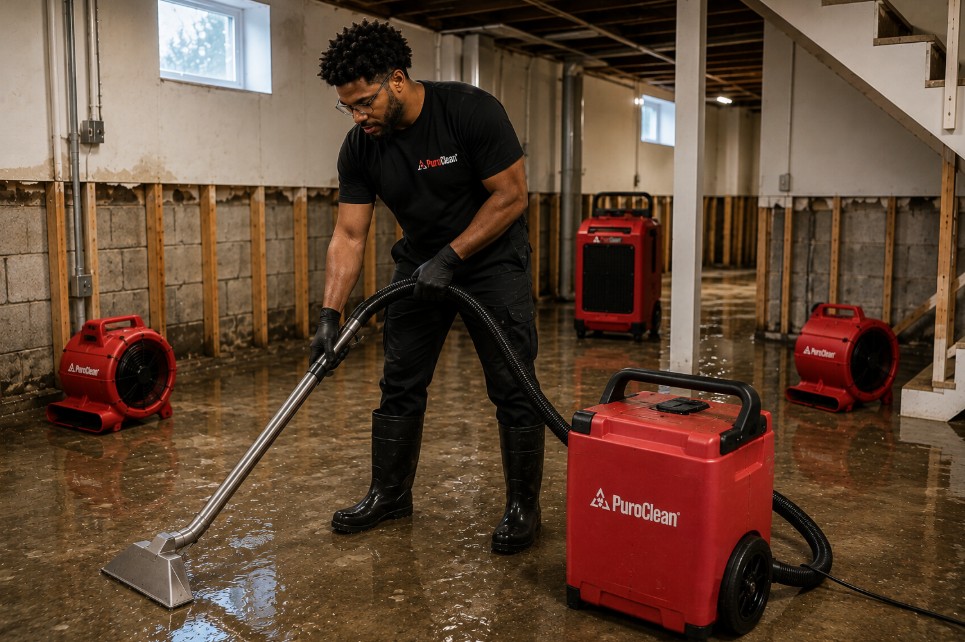
A basement can go from dry to damaging in a matter of minutes after a sump-pump failure, burst pipe, appliance leak, or heavy Minnesota rain. Knowing what to do after basement floods helps protect the people in your home first, then limits damage to flooring, walls, belongings, and the structure itself. The right response depends on where the water came from, how long it has been present, and whether electrical or sewage hazards are involved.
What to Do After Basement Floods: Start With Safety
Do not enter a flooded basement if water is near outlets, appliances, an electrical panel, or extension cords. If you can safely reach the main electrical panel without standing in water, shut off power to the affected area. Otherwise, wait for a qualified electrician or restoration professional. Water and electricity are a dangerous combination, even in a shallow flood.
If the water came from a sewage backup, floor drain, toilet overflow, or unknown outdoor source, keep children and pets out of the area. This water may contain bacteria and other contaminants. Avoid trying to clean it yourself with a household wet vacuum or shop vacuum. Sewage losses require protective equipment, controlled removal, cleaning, and disinfection.
Once the area is safe, take these immediate steps:
- Stop the water source if possible. Shut off the home’s main water supply for a burst pipe or plumbing leak, turn off an appliance supply valve, or address a failed sump pump if it is safe to do so.
- Call your insurance carrier to report the loss, especially when the damage involves finished walls, flooring, furniture, or stored contents.
- Take photos and video before moving items. Capture the source, water level, affected rooms, damaged materials, and personal belongings.
- Move dry, undamaged items to a safe location. Put aluminum foil, plastic blocks, or wood supports under furniture legs if the floor is wet.
- Contact a water damage restoration company when water has reached carpeting, drywall, insulation, wood flooring, or concealed building materials.
For homeowners in Waconia, Chaska, Victoria, and across Carver County, a quick call is often the difference between a contained water loss and a larger reconstruction project.
Identify the Source Before You Begin Cleanup
The source determines how cleanup should be handled. A clean-water loss from a supply line or water heater can still cause extensive material damage, but it generally has fewer health concerns at the start. The situation changes if water sits for an extended period, passes through dirty materials, or mixes with soil, drain water, or sewage.
A sump-pump failure after rain may introduce groundwater through cracks, window wells, or a floor drain. Floodwater can carry dirt, bacteria, and contaminants into the basement. A sewage backup is more serious and should be treated as contaminated from the beginning. Porous items such as carpet padding, upholstered furniture, cardboard boxes, and some insulation often cannot be safely restored after a sewage loss.
Do not assume clear-looking water is clean. If you are unsure where it came from, treat it cautiously until a professional identifies the source and conditions.
Remove Standing Water Carefully
If the water is clean, shallow, and the power is confirmed off or safely isolated, you may be able to remove some water with a wet vacuum, mop, or buckets while waiting for help. Do not use a standard household vacuum. If your basement is heavily flooded, the water is contaminated, or the affected area includes finished rooms, professional extraction is the safer and more effective choice.
Restoration crews use commercial extraction equipment to remove water from carpet, pad, concrete, and hard surfaces. Extraction matters because every gallon removed directly is a gallon that does not need to be removed later through evaporation. In a finished basement, water can travel underneath floating floors, behind baseboards, into wall cavities, and under built-in cabinetry without being obvious from the room.
Be cautious about pumping water from a basement during widespread flooding. If surrounding soil is saturated, rapidly removing a large volume of water can create pressure differences around foundation walls. This is uncommon in a typical appliance leak but can matter during significant storm or groundwater events. A local professional can help assess the situation.
Begin Drying, But Do Not Rely on Fans Alone
Opening windows, running fans, and using a dehumidifier can help in limited situations, particularly with a small clean-water spill on an unfinished concrete floor. But fans alone do not prove that hidden materials are dry. Minnesota’s humid summer days and cold-weather conditions can also make natural ventilation unreliable.
Proper structural drying begins with moisture inspection. A restoration technician checks materials such as drywall, framing, subflooring, trim, insulation, and flooring with moisture meters and thermal imaging when appropriate. Based on those readings, the crew may remove wet carpet padding, detach baseboards, make controlled openings in drywall, or use air movers and professional dehumidifiers to dry assemblies from the inside out.
The goal is not simply to make the room feel dry. The goal is to return affected materials to an acceptable moisture level and document progress. This reduces the likelihood of odor, material deterioration, and mold growth later.
Protect Belongings and Know What Can Be Saved
Move contents out of wet areas when it is safe, but do not throw everything away immediately. Many hard, nonporous belongings can be cleaned and dried. Some solid wood furniture, metal items, plastic storage bins, and washable clothing may be recoverable depending on the water source and duration of exposure.
Paper records, photos, electronics, area rugs, upholstered furniture, and sentimental items need a more careful assessment. Do not turn on wet electronics. Photograph contents for your claim, then separate wet items from dry items to prevent secondary damage. A restoration team can document, pack out, clean, and assess affected contents when the loss is extensive.
For lake homes and seasonal properties near Lake Minnetonka, Mound, Minnetrista, or Excelsior, water may go unnoticed longer. In those cases, hidden mold, warped flooring, and damaged insulation are more likely, even when the standing water is gone by the time someone arrives.
Document the Loss for Insurance
Documentation supports both the restoration plan and the insurance claim. Take wide photos of each room, then closer photos of damaged floors, walls, contents, appliances, and the apparent source. Keep damaged items until your insurer or restoration professional advises otherwise, unless they present a health or safety concern.
Your coverage may depend on the cause of loss. A sudden pipe break is often handled differently from groundwater seepage or a sewer backup. Some policies include water backup endorsements, while others require separate flood coverage for certain events. Your insurer makes coverage decisions, but a restoration contractor can provide itemized records, moisture documentation, photographs, drying logs, and estimates that help explain the scope of work.
Avoid authorizing permanent reconstruction before the emergency mitigation and scope are understood. Drying, cleaning, and removing unsalvageable materials come first. Rebuilding drywall, flooring, cabinetry, or trim should follow once the structure is dry and the claim process is clear.
When Professional Water Restoration Is Needed
Professional help is strongly recommended when water has been present for more than a few hours, reached finished materials, affected multiple rooms, came from sewage or outdoor flooding, or involved a burst pipe, failed sprinkler line, or ceiling leak. It is also appropriate when you smell mustiness, see staining at baseboards, notice buckling floors, or cannot identify the source.
The same principles apply to apartment buildings and commercial properties, but the stakes can be broader. A water loss in one multifamily unit can migrate into hallways, units below, electrical spaces, and shared building systems. Property managers need quick extraction, tenant communication, documentation, and a drying plan that minimizes disruption while protecting occupants.
PuroClean of Waconia provides 24/7 water damage mitigation for homes, businesses, and multifamily properties throughout the western Twin Cities. The work begins with stabilizing the loss, extracting water, identifying hidden moisture, and communicating clearly about drying, cleaning, insurance documentation, and any needed reconstruction.
Watch for Problems After the Basement Looks Dry
A basement may look normal before hidden moisture has fully dried. Over the following days and weeks, watch for a musty smell, bubbling paint, swollen baseboards, soft drywall, warped laminate, rusting metal, or recurring dampness. These can signal moisture behind finished surfaces or an unresolved drainage, plumbing, or sump-pump issue.
If you experience repeated basement water, address the underlying cause after the emergency is stabilized. That may include servicing the sump pump, adding battery backup, improving grading, repairing a foundation crack, cleaning gutters, correcting appliance connections, or insulating vulnerable pipes before the next freeze.
A flooded basement is disruptive, but prompt, methodical action can prevent a temporary water event from becoming a lasting property problem. Focus on safety, stop the source, document what happened, and get the affected materials properly dried before moving on to repairs.