


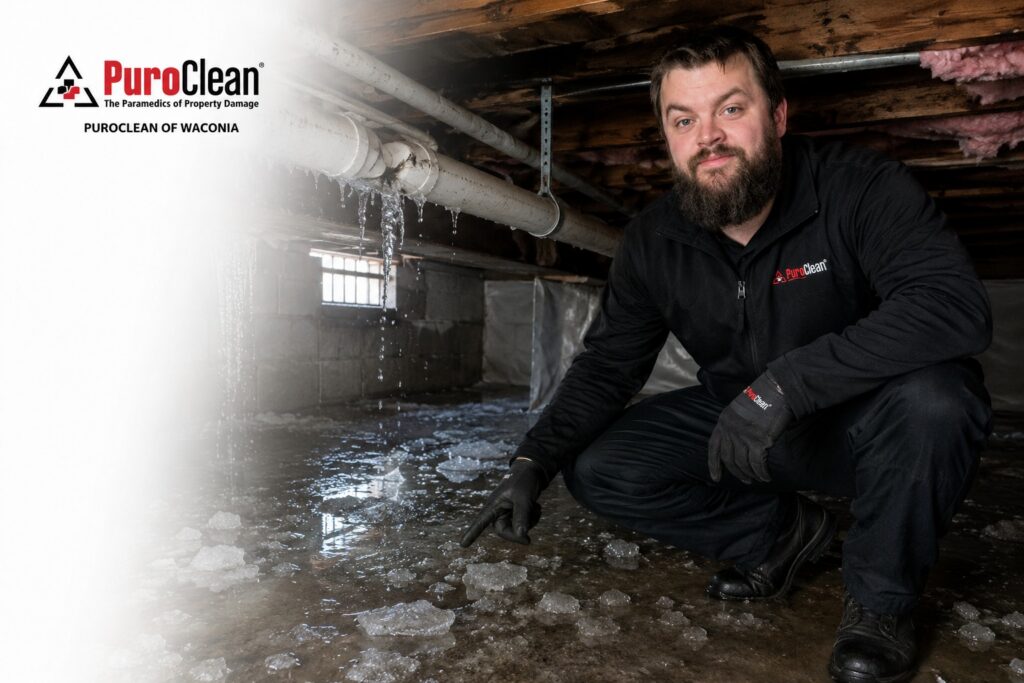
A frozen pipe can go from a small winter concern to a wet ceiling, flooded basement, or damaged apartment unit within minutes of thawing. Frozen pipe water damage cleanup starts with stopping the water and protecting people, then moves quickly into extraction, drying, documentation, and repairs. In Minnesota, where prolonged cold can affect exterior walls, crawl spaces, garages, lake homes, and vacant properties, the visible water is often only part of the loss.
If water is actively flowing, turn off the main water supply if you can safely reach it. Then call a qualified plumber to address the broken pipe and a restoration professional to assess and dry the affected areas. The sooner wet materials are stabilized, the better the chance of limiting damage to flooring, drywall, insulation, cabinets, and belongings.
Frozen Pipe Water Damage Cleanup: First Steps
Your first priority is safety. Keep away from standing water near electrical outlets, appliances, power strips, or a breaker panel. Do not enter a room with a sagging ceiling or attempt to puncture it yourself. A ceiling holding water can release suddenly, and the underlying framing, wiring, and insulation may be affected.
Once the water source is shut off, take clear photos and short videos before moving damaged items if conditions allow. Capture the broken pipe area, water paths, wet flooring, damaged contents, and any affected rooms below the leak. This documentation can help support an insurance claim and gives the restoration team a clearer record of the initial conditions.
Move dry, undamaged belongings away from wet areas. If you can do so without spreading water, place aluminum foil or plastic blocks under furniture legs on wet carpet or flooring. Remove small rugs, books, electronics, and contents from the floor.
Do not assume that towels, fans, and a space heater will solve a significant loss. They may help with a very small, clean spill caught immediately, but a burst pipe commonly wets materials behind walls and under finished flooring. Heating a wet area too aggressively can also drive moisture deeper into building materials or create uneven drying conditions.
Why Fast Drying Matters After a Burst Pipe
Water follows gravity, gaps, wiring penetrations, duct openings, and framing cavities. A pipe break on a second floor may affect the ceiling below, wall insulation, first-floor flooring, basement finishes, and contents stored underneath. Water can travel much farther than the obvious stain suggests.
Drywall absorbs water quickly and can lose structural integrity. Insulation may retain water against wood framing. Wood floors can cup or buckle, while laminate flooring may swell at seams. Carpet padding often holds water long after the carpet surface feels dry. If the affected area is not properly dried, moisture can contribute to odors, material deterioration, and mold growth.
The right response depends on the source and duration of the loss. Water from a clean domestic supply line is generally less contaminated than a sewage backup, but it still needs prompt attention. If water has passed through dirty building cavities, contacted sewage, or sat for an extended period, the cleanup plan may require more extensive removal and cleaning.
What Professional Water Mitigation Usually Includes
A proper cleanup is not simply about removing puddles. Restoration technicians begin by identifying the source, determining which rooms and materials are affected, and taking moisture readings in walls, floors, ceilings, and contents. Thermal imaging can help identify temperature differences that point to hidden moisture, but moisture meters and physical inspection confirm what is actually wet.
For an active loss, water extraction comes first. Commercial water extraction equipment can remove water from carpet, pad, hard surfaces, and affected areas before it migrates farther. Technicians may remove wet padding, damaged drywall, saturated insulation, or baseboards when those materials cannot be dried reliably or safely.
Next comes structural drying. Air movers circulate air across wet surfaces, while commercial dehumidifiers remove moisture from the air. In some cases, technicians create controlled openings to dry wall cavities, use floor drying equipment, or establish containment to keep dust and moisture from spreading through occupied areas. The equipment remains in place until moisture measurements show that materials have returned to an appropriate drying standard.
Daily monitoring matters. A room can feel dry while moisture remains behind a wall or beneath flooring. Thorough documentation of moisture readings, equipment placement, affected materials, and drying progress also provides useful information for property owners and insurance carriers.
Protecting Your Insurance Claim Without Delaying Cleanup
Many homeowners policies may cover sudden and accidental water damage from a burst pipe, though coverage depends on the policy language, the cause of the freeze, maintenance history, occupancy, and other details. Coverage for the pipe repair itself, upgrades, long-term seepage, or damage caused by a vacant or insufficiently heated property can vary.
Do not unnecessarily delay reasonable emergency steps to protect the property while waiting for an adjuster. Document the conditions before and during cleanup when it is safe to do so, and contact your insurance carrier promptly for guidance on your specific policy and claim.
Save photos, videos, invoices, plumbing reports, damaged material samples when appropriate, and a written timeline of what happened. Note when the home was last occupied, the thermostat setting, when the water was discovered, and when the water was shut off.
A restoration company can document affected areas and communicate with the adjuster or carrier while keeping the work moving. That coordination is especially helpful when there are questions about wet flooring, ceiling cavities, contents, or the scope of reconstruction after drying is complete.
Special Concerns for Minnesota Homes and Seasonal Properties
Homes around Waconia, Victoria, Chaska, Chanhassen, Minnetrista, Mound, Excelsior, and Lake Minnetonka often have features that increase winter pipe risk. Exterior-wall plumbing, bonus rooms over garages, additions, poorly insulated rim joists, unheated utility spaces, and lake or seasonal homes can all be vulnerable during prolonged cold snaps.
For a vacant property, a small leak may run unnoticed for days. If you own a cabin, second home, or rental property, arrange regular winter checks, maintain safe indoor temperatures, and know where the main shutoff is located. Smart leak sensors and temperature alerts can be useful, but they are not a replacement for proper insulation, heat, and periodic inspections.
After a frozen-pipe loss, ask the plumber and restoration team to help identify why the pipe froze. A repair that restores water service is necessary, but it may not prevent a repeat failure. The long-term solution could involve insulating a pipe, sealing air leaks, improving heat circulation, relocating a vulnerable line, or addressing an unheated area.
Water Losses in Apartments, Offices, and Multifamily Buildings
In a multifamily property, a frozen pipe on one level can affect several units quickly. Water may travel through ceiling assemblies, shared utility chases, electrical penetrations, and corridors. Property managers need a response that protects residents, documents each affected unit, and limits disruption while drying is underway.
Commercial buildings face similar concerns, especially where sprinkler lines, break-room plumbing, rooftop units, or unoccupied suites are exposed to cold. The priority is to stop the source, protect occupants, address electrical and slip hazards, and maintain a clear record of affected spaces, equipment, inventory, and tenant property.
For these losses, an experienced restoration team can coordinate extraction, structural drying, contents handling, and reconstruction planning with building ownership, tenants, and insurance representatives. Clear communication is as valuable as equipment when multiple decision-makers are involved.
When to Call for Professional Help
Call for professional water mitigation right away when water has reached drywall, ceilings, insulation, carpet padding, wood or laminate floors, cabinets, multiple rooms, or a lower level. Professional help is also warranted if the leak was undiscovered for an unknown period, the water came through a ceiling, electrical safety is a concern, or you smell mustiness after initial cleanup.
PuroClean of Waconia provides 24/7 response for frozen and burst pipe losses across Carver County and the western Twin Cities. The goal is to stabilize the property, thoroughly dry what can be saved, document the work clearly, and help you understand what comes next, whether that includes insurance coordination, repairs, or reconstruction.
A burst pipe is disruptive, but prompt action can keep a winter emergency from becoming a long-term property problem. Shut off the water, stay safe, document what you see, and bring in qualified help before hidden moisture has time to create a larger repair.
For 24/7 frozen and burst pipe water damage response in Waconia, Carver County, Lake Minnetonka, and the western Twin Cities, call PuroClean of Waconia at 952-246-0200.