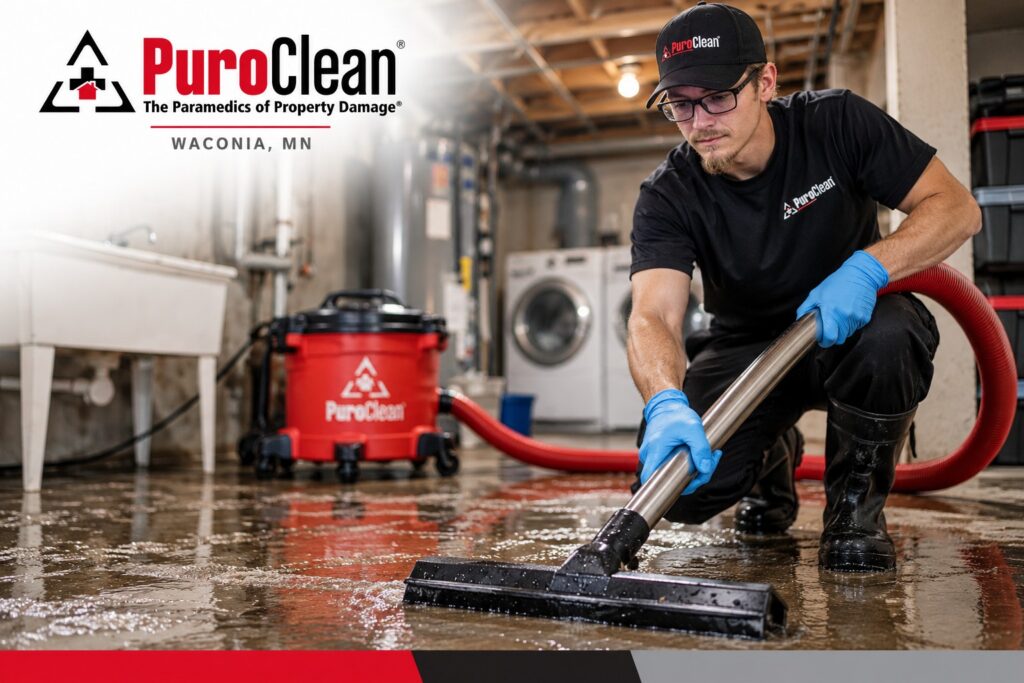
A sewage backup in a basement, bathroom, or lower-level apartment is not an ordinary water problem. These sewage backup cleanup steps focus first on safety, then on stopping additional contamination and documenting the loss before proper cleaning and drying begin. Whether the backup follows a clogged sewer line, heavy rain, a failed ejector pump, or a municipal sewer issue, treat the affected water as contaminated.
For homeowners and property managers in Waconia, Carver County, and the western Twin Cities, the right response in the first hour can limit damage to flooring, walls, belongings, and adjacent units. The wrong response – especially attempting to shop-vac contaminated water or drying only the visible surfaces – can leave odors, bacteria, and moisture hidden in the structure.
Immediate Sewage Backup Cleanup Steps
If sewage is actively entering the property, keep people and pets out of the affected area. Children, older adults, and anyone with a compromised immune system should not enter contaminated spaces. Close doors to limit foot traffic, and do not walk through the area and then into clean parts of the home.
Next, stop using water throughout the building. Do not flush toilets, run the dishwasher, take a shower, or start laundry. In a single-family home, this may prevent more wastewater from entering a blocked private sewer line. In an apartment building or commercial property, notify occupants and building management quickly so other fixtures are not sending more water into the affected area.
If it is safe to do so, turn off the electricity to the affected area at the breaker panel. Do not enter standing water to reach outlets, cords, appliances, or the electrical panel. If you cannot safely isolate the power, stay clear and wait for qualified help.
Then take photos and short videos from a safe, dry location. Capture the source if visible, the water level, affected rooms, damaged materials, and any belongings involved. This documentation can help establish the scope of the loss for an insurance claim and gives the restoration team a clearer starting point.
For an active backup, contact a licensed plumber or drain professional to address the blockage or failed system, then call a qualified sewage cleanup team. Clearing a drain does not make the property safe or dry. The contamination still needs to be removed, affected materials evaluated, and the structure dried to appropriate moisture levels.
Why Sewage Requires a Different Response
Water from a clean supply line can become a major drying project, but sewage carries an added health concern. Wastewater may contain bacteria, viruses, parasites, and other contaminants. When it soaks carpet, padding, insulation, particleboard cabinetry, drywall, or upholstered contents, cleaning the surface alone is rarely enough.
Porous materials often cannot be reliably returned to a sanitary condition after direct contact with sewage. Carpet and carpet pad are commonly removed. Wet drywall may need to be cut above the contamination line, particularly where water wicked upward. Insulation, paper-faced materials, and swollen composite wood products also require careful evaluation.
There are exceptions. A small, contained overflow on a hard, nonporous surface may be manageable with appropriate protective equipment and cleaning methods. But if water has spread into finished flooring, walls, HVAC components, crawlspaces, stored contents, or multiple rooms, professional mitigation is the safer choice. The same is true when the source is unknown or when the backup involves a multifamily property, where contamination can move between units.
What Not to Do After a Sewer Backup
Well-meaning cleanup efforts can spread contamination or make insurance documentation harder. Avoid these common mistakes:
- Do not use a household vacuum, shop vacuum, or standard carpet cleaner on sewage-contaminated water.
- Do not place fans in the area before contaminated materials are removed and surfaces are properly cleaned. Air movement can spread particles and odors.
- Do not keep contaminated carpet, padding, cardboard boxes, mattresses, or upholstered furniture simply because they appear dry later.
- Do not use bleach as a substitute for thorough extraction, removal of unsalvageable materials, and controlled drying. It does not penetrate every affected material and can create irritating fumes.
- Do not throw away everything before documenting it for your insurer, unless an item creates an immediate health or safety concern.
Avoid opening windows if heavy humidity, rain, or freezing Minnesota weather will make drying conditions worse. Controlled drying is more effective than relying on outdoor air, particularly during humid summer storms or winter sewer backups in a cold basement.
How Professional Sewage Cleanup Works
A proper cleanup begins with an assessment of the source, affected materials, and migration path. Restoration technicians identify how far water traveled, including beneath flooring, behind baseboards, and into wall cavities. Moisture meters, thermal imaging, and other monitoring tools help locate damage that is not obvious from the surface.
The next stage is extraction and containment. Technicians remove standing water, isolate the work area when needed, and prevent contaminated foot traffic or debris from spreading into clean rooms. In a commercial building or apartment complex, containment and communication are especially important because an interruption in one area can affect residents, customers, or neighboring tenants.
Then comes removal and detailed cleaning. Materials that cannot be safely restored are removed and documented. Remaining structural surfaces are cleaned using appropriate antimicrobial products and methods for the situation. Contents may be assessed individually. Solid, nonporous items can sometimes be cleaned and restored, while porous items that absorbed sewage may need disposal.
Drying follows cleaning, not before it. Commercial dehumidifiers and air movers are positioned to dry framing, subfloors, and remaining materials under controlled conditions. The goal is not simply to make the room feel dry. It is to verify that building materials have returned to acceptable moisture levels, reducing the chance of secondary mold growth, warping, or lingering odors.
Finally, the area is prepared for repairs. Depending on the loss, that could mean replacing insulation and drywall, reinstalling trim, replacing flooring, repainting, or coordinating reconstruction. A full-service restoration partner can help keep mitigation records, drying documentation, and repair decisions organized for the property owner and insurance carrier.
Insurance Questions After a Sewage Backup
Sewer backup coverage is not automatic on every homeowners policy. It is often an endorsement or separate coverage category, and coverage limits may differ from the rest of the policy. Damage caused by a sewer or drain backup may also be handled differently from damage caused by a burst pipe, surface flooding, or a failed sump pump.
Call your insurer as soon as practical, but do not wait for an adjuster before taking reasonable action to protect the property from additional damage. Document the conditions, save receipts, keep a list of affected belongings, and ask what information the carrier needs. If a municipal sewer issue may be involved, report it to the city as well, but continue treating the interior contamination as an urgent restoration matter.
Property managers should also document unit numbers, common areas, resident communications, and any business interruption or relocation needs. In multifamily losses, a backup can quickly become both a health issue and an operations issue.
Preventing the Next Backup
Some backups cannot be predicted, especially during severe storms or a sudden municipal line issue. Still, preventive maintenance can reduce risk. Have older sewer laterals inspected when there are recurring slow drains, gurgling toilets, or backups after heavy rain. Keep wipes, grease, paper towels, and hygiene products out of drains, even when packaging suggests they are flushable.
For homes with a history of sewer backups, ask a qualified plumbing professional about options such as sewer line cleaning, repair, or a backwater valve. Lake homes and seasonal properties near Lake Minnetonka can benefit from an inspection before extended vacancy, particularly if the property has older plumbing, a lower-level bathroom, or a sewage ejector system.
If sewage has entered your home, business, or rental property, the priority is to protect people and keep the contamination from spreading. PuroClean of Waconia can respond with the equipment, documentation, and careful cleanup process needed to move the property from an active emergency toward safe, verified restoration.